
ItInsightsWorld Guide: What the $694 Million AGM-183A ARRW B-52 Deal Means
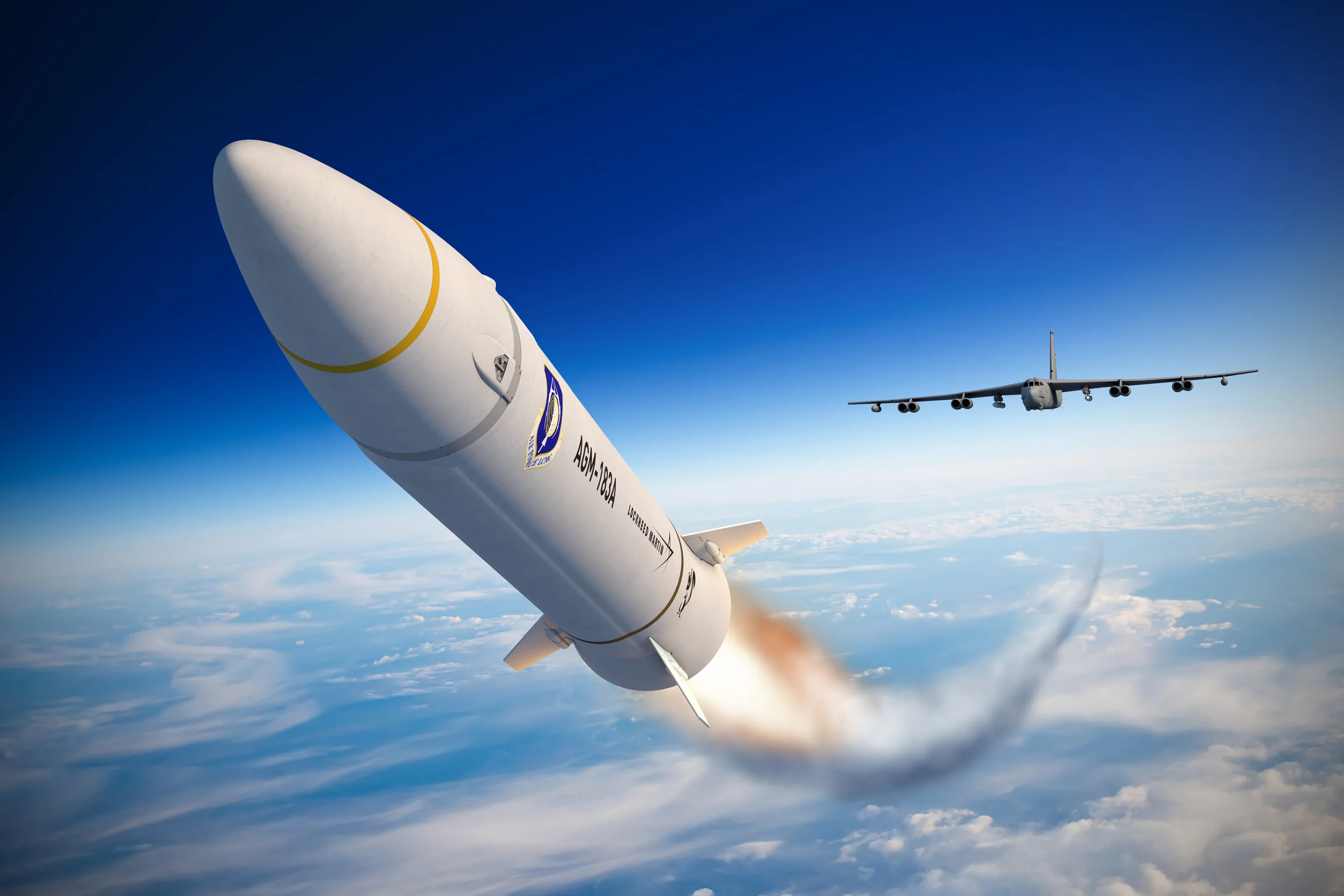
Short answer: the U.S. Air Force has turned AGM-183A ARRW into a production weapon, pairing a 21st century hypersonic missile with B-52 aircraft that have served for more than 70 years. The newly announced $694 million contract moves the program from test risk toward fielding a boost-glide weapon that can fly more than Mach 5 under GPS system guidance.
For general readers, the story is not simply about a faster bomb or a louder defense headline. It shows how modern military programs often combine old, mature airframes with new weapons because the most practical upgrade can be the missile, not a brand-new airplane. The B-52 Stratofortress, first fielded in 1955, remains useful because it can carry large payloads over long distances. The practical question is how this changes deterrence, procurement priorities, and what the public should watch next.
What changed with the AGM-183A contract?
The U.S. Air Force public award record links the $694 million Lockheed Martin contract for production and fielding of the AGM-183A Air-Launched Rapid Response Weapon to September 29, 2026, with the announcement reaching public view on October 26. The significance is not only the dollar figure. The contract follows a period in which the U.S. military considered ending the program in 2023, before renewed hypersonic competition made it attractive again.
ARRW's full name points to its role: it launches from an aircraft, climbs rapidly, and attacks without the slow, predictable flight path associated with older cruise missiles. For readers tracking defense news, the key signal is the shift from a test program that may die to a production program that must deliver hardware, training, safety, maintenance and deployment plans.
Why pair a hypersonic missile with a bomber from the 1950s?
B-52 was born in the Cold War. In 1955, it entered service at a moment when the United States expected strategic bombers to penetrate hostile airspace and carry nuclear weapons toward the Soviet Union. As air-defense technology and missile technology matured, that concept changed. The airframe became a standoff launch platform that can release nuclear and conventional precision-guided weapons before entering the most dangerous layers of an enemy defense.
The aircraft's continued usefulness rests on durability, payload capacity and upgrade flexibility. The U.S. Air Force believes the basic airframe can remain active into the 2050s. If that projection holds, B-52 may serve for a century, longer than many weapon programs that were designed to replace it. The pilot generation that flew early variants could be long retired, while descendants may still see aircraft in uniform.
How does ARRW work, step by step?
ARRW is a boost-glide hypersonic weapon. A practical sequence looks like this:
- Carriage: The missile is carried by a B-52 aircraft, which already served as the platform for ARRW flight testing from 2020.
- Launch: The weapon separates from the bomber and ignites a rocket booster.
- Boost: The booster accelerates the vehicle and lifts it toward high flight conditions.
- Glide: The booster releases the glide vehicle, which travels at speeds more than Mach 5 and uses its trajectory to complicate interception.
- Guidance: An inertial navigation system and GPS system guidance direct the weapon toward its target.
Compared with a traditional cruise missile, the difference is not just speed. It is energy, geometry and reaction time. A cruise missile can be fast, but a boost-glide weapon aims to arrive with a less predictable flight path and a compressed defensive timeline. That is why the U.S. Air Force has treated hypersonic weapons as an important component of future long-range precision strike planning.
Five common misconceptions
- A $694 million award equals immediate readiness. Production and fielding include manufacturing, delivery, training and integration; they do not all happen at once.
- A new missile makes B-52 new. No. The airframe is still from the 1950s, and its value comes from upgrades, payload capacity and existing support infrastructure.
- Hypersonic speed means stealth. ARRW's advantage is speed and maneuver, not invisibility. The launch platform can still be detectable even when the weapon is hard to intercept.
- B-21 Raider makes older bombers irrelevant. Analysts say the U.S. military still values mature platforms. While B-21 enters the fleet, B-52 can host new weapons without replacing the whole airframe.
- If a program was considered ending in 2023, it is weak. The revival reflects changing strategic calculations, not just budget preference. Global hypersonic competition pushed the program back into favor.
Comparison table: where ARRW fits
| Capability option | Practical strength | Main limitation | What readers should note |
|---|---|---|---|
| AGM-183A ARRW on B-52 | High speed, standoff launch, mature bomber platform, weapon-focused upgrade. | Integration, production reliability, training and defense adaptation remain part of the story. | The old airframe becomes a weapons bus rather than the main innovation. |
| Traditional cruise missiles | Proven logistics, mission planning and integration experience. | Lower speed and more predictable trajectories can create defensive windows. | Slower does not mean useless; mature systems can be available in quantity. |
| B-21 Raider stealth bombers | Designed for future contested operations with stealth and new architecture. | Production, basing, sustainment and full weapon integration take time. | ARRW on B-52 does not make B-21 irrelevant; the two serve different timelines. |
| Legacy B-52 conventional strike | Large payload capacity and long airframe support base. | Not built for hypersonic-era defensive challenges by itself. | Adding new missiles can extend strategic value without replacing the airframe. |
How to read the strategic meaning without overclaiming
The B-52 and ARRW pairing has been tested for years, and the production contract accelerates its deployment pace. This suggests that the U.S. Air Force is not choosing only one future path. It is investing in next-generation stealth bombers while extracting more value from platforms that already have engines, airfield support, training pipelines and command familiarity.
Tim Cahill, president of Lockheed Martin Missiles and Fire Control, said the production contract demonstrates the company's ability to develop and build advanced weapon systems at unprecedented speed and scale. For general readers, that wording should be treated as a supplier's assessment, not independent proof that deployment is already smooth. It does show that the industrial phase has begun, which is a different signal from a laboratory milestone.
A practical checklist for following future ARRW news
- Is the report about award, delivery, or operational use? A contract award is not the same as missiles at squadron storage.
- Is B-52 integration fully tested? The 2020 test record is meaningful, but production and fielding require separate validation.
- Are maintenance and safety cases published? Hypersonic programs often face quiet challenges in supply chains, handling equipment and ground training before they make headlines.
- How does the program fit near competitors? The revival after 2023 reflects global competition, not isolated U.S. preference.
- What is the budget trajectory? A single $694 million award gives useful insight, but recurring costs and future orders reveal seriousness.
What general readers should do next
Use the deal as a decision frame: when a military program combines an old platform with a new weapon, judge it by integration risk, not by novelty alone. Watch four milestones: first production deliveries, flight testing with operational-style procedures, squadron training, and deployment basing. If these align, ARRW becomes a credible fielded tool. If they lag, the contract becomes evidence of policy ambition rather than proven capability.
For a broader way to judge aerospace programs, compare how we evaluated experimental aircraft milestones in our X-70 Fractal guide: define the platform, the payload, the test plan and the service use case before accepting the hype.
FAQ
Why is this contract newsworthy?
Because the U.S. Air Force is moving AGM-183A ARRW from a contested test program into production and fielding, using the recently announced $694 million Lockheed Martin award as the dividing line.
Why use B-52 if stealth bombers exist?
B-52 provides a proven launch platform that can carry large weapons. It has served since 1955, and its projected future into the 2050s lets the U.S. military attach modern weapons to a platform that is already supported by infrastructure. Stealth bombers such as B-21 Raider solve a different problem.
Does ARRW make current missile defenses obsolete?
Not by itself. A boost-glide weapon flying more than Mach 5 compresses response time, but defenses adapt through sensors, tactics, interceptors and geographic placement. The weapon raises the challenge, but it does not erase it.
What was the most important recent date?
The public award record associates the production contract with September 29, 2026. That date matters because it anchors the transition from test uncertainty to procurement commitment.
Is the U.S. military relying only on hypersonics now?
No. The broader approach is mix: legacy bombers, new stealth bombers, cruise missiles and hypersonic weapons all serve different missions. ARRW is one piece of a larger precision-strike toolkit, while B-52 remains strategically relevant in the coming decades.
Reference sources
- U.S. Air Force: DAF awards ARRW production contract, establishes new hypersonic capabilities
- Lockheed Martin Missiles and Fire Control statement by Tim Cahill, as cited in the original program reporting.