
ItInsightsWorld Guide: Donald Trump's Energy Revolution Is Over — Your Practical Playbook for the New Climate Majority
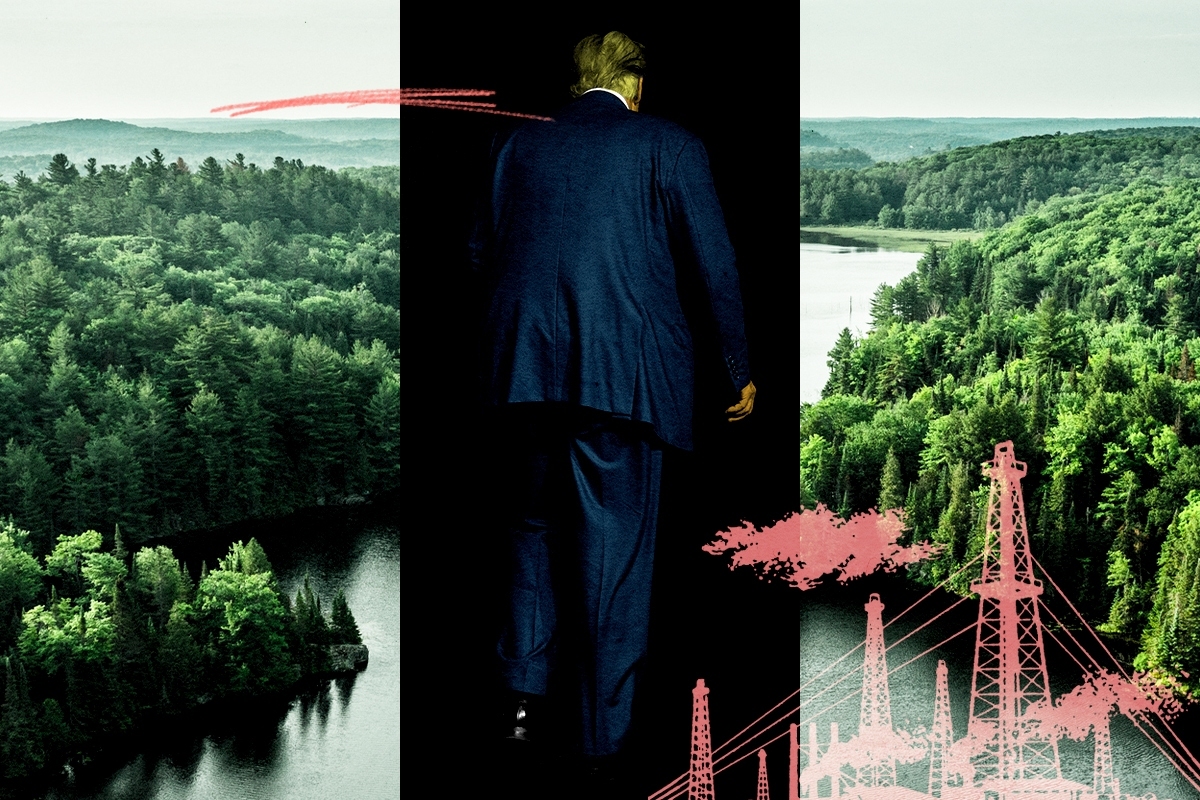
Short answer first: the political project ran out of Congress, out of public backing and out of money — but your electricity bill outlived it. Donald Trump's fossil-fuel revolution is finished as a governing program after a lopsided midterm result. What follows is not a Green New Dealers-style transformation. It is a cost-first coalition that wants cheaper power, faster permitting and a harder line on who pays for data centers. The practical consequence for readers is a change of address: the decisions that set energy prices are drifting away from the White House and toward state utility dockets, tariff filings and tax-credit deadlines — arenas where households and small businesses can genuinely act.
This guide is organised around that shift: what ended, who now holds the levers, where the fastest wins on your bill are located, a seven-step checklist for the next 12 months, and the traps most casual readers fall into.
What exactly ended — and what survives until 2028
Conclusion: voters revoked a mandate, not a statute book. Nothing was repealed last night; the administration simply lost the room to finish its agenda.
The scale is difficult to overstate. Democrats captured at least 54 seats in the Senate and could hold more than 260 seats in the House, while the national House vote snapped more than 15 points in their favor; Hispanics, young men and white voters without a college degree all swung in double digits. For millennials, the reference points were 2006, when liberals took back Congress from a desperately unpopular George W. Bush, and 2010, when the Tea Party caroused against Barack Obama. This contest was bigger than either — closer to the anti-Watergate tsunami of 1974 that reshaped the Democratic Party for a generation. The difference is that this majority does not lean on an old guard of state's-rights conservatives: the South turned indigo on Tuesday night, yet the movement came from the ordinary politics of booming American cities and suburbs.
Two facts matter for planning. First, Donald Trump defined himself by climate change denial from the moment he rode down the escalator 11 years ago, and his second term went further than his first: a war on renewables, the dismantling of federal greenhouse-gas authority, and a blank cheque for the artificial-intelligence build-out. On Sept. 14, his administration completed the repeal of most greenhouse-gas emission limits on coal- and gas-fired power plants, S&P Global reported — and deregulation of that kind is sticky.
Second, the sequence from here is knowable:
- In the next few weeks: expect at least a few Cabinet resignations, confirmed quickly by the expiring GOP Senate.
- Through 2028: federal agencies will keep rolling their regulatory agendas uphill in case the GOP wins the White House; Donald Trump has two years left and will limp to 2029 without a pliant Congress, a supportive public or an aura of invincibility.
- In the new year: scrutiny of everything done since he took office, including his family's penetration of favored mining firms. Some leftovers, notably his nuclear plan, may win Democratic approval.
Why price beat carbon: the numbers behind the verdict
Conclusion: this was a cost referendum. Climate was the background, never the demand.
A few months ago, the newest result from the Heatmap Pro poll conducted with Embold Research landed on the analysis desk with a number that beggared belief. For more than a year Americans had been asked the same question — would you support a data center planned near your home? — and the "support" share had been falling steadily. The latest reading: 75% of Americans would oppose one in their town, most of them strongly. Michigan's newest senator-elect Abdul El-Sayed had put it bluntly earlier this year: "People really effing hate data centers."
Then came the Iran war, which broke two promises at once — no new foreign wars, energy bills cut in half — and nearly doubled some energy prices. By one estimate, Americans have paid more than $100 billion in higher fuel costs since March. Electricity tells the same story: EIA put the average U.S. retail price at 14.36 cents per kWh in February 2026, up 9.0% year over year, and its September outlook projected record consumption rising from 4,195 billion kWh in 2025 to about 4,270 billion kWh in 2026.
Democrats learned this before they won it. Since Kamala Harris lost, the party has treated Donald Trump as a normal opponent rather than framing the fight as a "battle for the soul of the nation," as Biden liked to put it. Jung's line — "We cannot change anything unless we accept it," — describes the pivot: the No Kings rallies and the Minneapolis rebellion settled the verdict on his conduct; accepting the real force of his politics settled the argument. Zohran Mamdani, Mikie Sherill and Abigail Spanberger pioneered those affordability appeals last year, playing down their climate goals, and Sherill ran explicitly on cheaper power bills. State and congressional Democrats in 2026 ran the same playbook. Republicans answered with a rival fantasy — reinthrone fossil fuels, give birth to a "superior intelligence," resurrect a gloomy spoof of midcentury economics — without admitting a single trade-off. Voters hated that even more than they hated Biden.
Who is actually arriving: the profile of the new climate majority
Conclusion: an "all of the above" coalition that excludes coal and, newly, excludes free rides for data centers.
Take Annie Andrews, the new Democratic senator from South Carolina (!). She wants to "suspend the gas tax, unleash American energy, and get gas prices down" — a tax cut on fossil fuel — while also restoring the solar and wind tax credits, increasing public transit spending and devoting a full paragraph of her platform to bipartisan permitting reform. Her real distinguishing position is the two-year nationwide moratorium she has proposed on data centers, plus ending their tax breaks and forcing them to stop passing higher electricity costs to ratepayers. Almost every Senate Democrat who won on Tuesday has promised to make data centers pay their full cost of electric service; that may be the caucus's most unifying policy, and the bipartisan permitting bill would mandate it.
Senator-elect James Talarico, a Democrat of Texas, promised voters that "we can add to our hundreds of thousands of oil, gas, wind, solar, and battery jobs by creating new jobs" in geothermal and hydrogen. Mary Peltola argued for oil and gas's ongoing importance in Alaska. Adam Hamilton of Kansas, Scott Colom of Mississippi and Andrews all speak of an "all of the above" energy policy. None are climate deniers; all want the wind and solar credits restored; many back more climate resilience funding; none promise to revolutionize the system. Even Abdul El-Sayed, who wrote a 2019 Guardian op-ed advocating the Green New Deal, now disavows that policy and opposes a government EV mandate.
| Policy area | Likely direction under the new coalition | What it means for readers |
|---|---|---|
| Fuel prices | Tax cuts plus supply-side rhetoric ("unleash American energy") | Pump-price relief framed as affordability, not environmental policy |
| Wind and solar | Tax credits restored and sold as cost savers | Cheaper new supply wherever it beats gas |
| Data centers | Two-year moratorium proposal, end of tax breaks, full cost of service | Sitings and utility filings become contested locally |
| Permitting | Bipartisan reform sought, but its fate remains uncertain | Faster lines, possibly with cost rules attached |
| Transport | EV subsidies revived as an answer to high gas prices | Rebates back; no federal mandate expected |
| Agriculture | No radicalism on the 10% of U.S. emissions | Beef and biofuel politics stay potent |
Two caveats on how moderate this majority really is. At state level, Gina Hinojosa will govern Texas with a much more direct role in managing the Permian Basin, forcing the same realism Mamdani showed in accepting Wall Street's centrality to the economy of New York City. And nobody will be radical about agricultural emissions: Scott Colom's Mississippi race was helped by a viral ad in which the Republican incumbent advised voters to choose a cheaper protein than beef. "Pick another protein?" an everyman griller asked the camera. "I'd rather pick another senator instead." Progressives such as El-Sayed proved they can win battleground states; moderates stormed the heart of MAGA America. Both had to say something less ambitious than the science implies. As recently as 2020, belief in the climate crisis unified the coalition; the 2012 dream of a permanent progressive majority is now officially dead, replaced by a congressional coalition with energy moderates at its core.
Decarbonization is not abandoned, though. Expect this new class to expand clean energy, push for more transmission lines and revive electric vehicle subsidies. Jon Ossoff of Georgia, winner of one of the night's most convincing victories, repeatedly mentioned microplastics and "forever chemicals," linking contaminated bodies to a corrupted body politic — so the old fight against air and water pollution returns. Nationally, data centers and Big Tech may eclipse fossil fuel companies as the villain of climate politics, since artificial intelligence is the country's fastest-growing industrial energy use and creates far fewer jobs than a chip fab or steel mill.
Where the leverage moved: state utility dockets, not Capitol Hill
Conclusion: if you want a change on your bill inside 12 months, look at your commission, not at the cabinet.
The arithmetic explains why. U.S. government analysis put data centers at roughly 4.4% of national electricity in 2023 and projected something like 6.7% to 12% by 2028, while EIA expects record generation in 2026 and 2027. Regulators were already moving before Tuesday night: as of May 2026, 23 states had approved at least one large-load tariff and seven more had proposals pending, and the DELTa database now tracks 77 approved and proposed large-load rates across 60 utilities. Pennsylvania's commission adopted a modified Large Load Tariff framework on April 30, 2026, explicitly to protect ratepayers; Minnesota's commission states that utilities cannot pass the cost of serving a data center to other ratepayers; and in late June 2026, the federal regulator FERC ordered grid operators to promptly revise or justify their interconnection rules for data centers and other large loads.
Politics now amplifies that machinery. Democrats won state offices their party has not held in a generation — public utility commissions, fossil fuel regulators and state legislatures — and they will be eager to use them. With its new Democratic trifecta, Pennsylvania could allow community solar, mandate battery storage and restrict utility profits. Independent research underlines the stakes: academics at Harvard Kennedy School's PESKOE center have warned that conventional cost-of-service regulation risks shifting the cost of serving a handful of giant customers onto ordinary bills. Decarbonization remains, in Max Weber's phrase, "a slow boring of hard boards," and the officials who turn the screws hardest may not sit on Capitol Hill.
A seven-step playbook for the next 12 months
- Step 1 — Name your decision-maker. Read your bill and write down the utility and the state commission that approves its rates. That commission, not the president, sets most of what you pay.
- Step 2 — Search your state's docket for "large load", "special contract" or "data center" tariffs. Note whether the rate is approved or merely proposed, and whether joining it is voluntary.
- Step 3 — Read three clauses before believing any headline. Cost allocation (who pays for substations, transmission and new generation); firmness (whether the big customer can be curtailed in an emergency); and co-funding (whether the developer builds or finances the infrastructure).
- Step 4 — Calendar the tax credits, not the speeches. Restoring wind and solar credits turns on construction and in-service deadlines; the permitting bill could attach cost rules to large loads.
- Step 5 — File a comment before the deadline. Rate cases and long-term utility resource plans accept free written and oral public comment, and commissions do change wording under it.
- Step 6 — Benchmark your own exposure. Track your cents per kWh against the national average of about 14 cents; small-business customers negotiating new space near a data center should request large-load terms before signing a lease.
- Step 7 — Watch the right races in 2027 and 2028. Commission seats, governorships and state legislatures will decide transmission, storage and community solar faster than any federal rule will.
Five mistakes readers keep making
- Reading this as a Green New Dealers victory. It is a cost-first coalition; the language of transformation has left the building.
- Assuming federal deregulation reverses itself. The Sept. 14 repeal of power-plant carbon standards stays on the books until a statute replaces it.
- Confusing "cheap energy" with anti-renewable. Wind and solar credits are returning as affordability policy, not as environmentalism.
- Taking permitting reform for granted. Its fate is uncertain precisely because data-center cost rules were its main Democratic hook.
- Ignoring local politics. The 75% opposition figure only becomes power at a county hearing or a commission docket, not in a presidential briefing.
FAQ: what readers ask us most
Does this end Donald Trump's energy policy?
It ends the political protection around it. He still has two years in the White House, agencies keep working toward 2028, and finalized rules stay until replaced. The new Congress's tools are hearings, subpoenas, appropriations and, later, legislation.
Will my electricity bill go down?
Not automatically. Expect slower growth where new supply gets approved quickly and where large-load tariffs stop shifting infrastructure costs onto homes. Fuel-tax cuts and revived EV credits move pump and purchase prices faster than retail rates move.
What is a large-load tariff in plain English?
A special rate for customers drawing hundreds of megawatts — typically data centers — that spells out how much of the grid build-out they must pay for themselves rather than borrowing from the ratepayer pool.
Are data centers still getting built?
Yes, but the terms changed: a two-year moratorium is now a live federal proposal, and cost-causation rules are spreading through the states, which raises the price of the cheapest kind of siting deal.
What should a non-expert actually watch?
Three items only: the fate of the bipartisan permitting bill, the wind and solar credit deadlines, and your own commission's next rate case.
Bottom line: steady work, not a revolution
The United States really does need to get better at commercializing batteries and making electric vehicles; it must cut pollution, lower energy prices and significantly boost generation. Both parties have failed at those goals so far. One of them has just proved it can learn from Donald Trump's mistakes; the open question is whether it can learn from its own, because since 2020 Democrats tried to remake the economy without naming a single trade-off and lost. If you want the practical version of this story — docket deadlines, tariff language, plain-English explainers — write to contact@itinsights.com. By James Hartley, IT Insights / ItInsightsWorld.
Sources and further reading
- S&P Global: Trump administration completes repeal of most power-plant carbon emissions standards (Sept. 14, 2026)
- U.S. Energy Information Administration: EIA expects record electricity generation in 2026 and 2027 (Sept. 9, 2026)
- Reuters: US power use to beat record highs in 2026 and 2027 as AI use surges
- U.S. Department of Energy: report evaluating the increase in electricity demand from data centers
- Columbia Law School climate blog: what local governments should know about large-load tariffs (June 2026)
- Southeastern Power Administration DELTa: surge in new utility large-load tariffs (April 2026)
- Pennsylvania Public Utility Commission: Large Load Tariff framework (April 30, 2026)
- Minnesota Public Utilities Commission: data centers and cost responsibility
- Utility Dive: average US electricity prices rose 9% year over year in February 2026