
ItInsightsWorld Guide: Trimble WorksManager Drone Cloud Processing, Timeline, and Risk Checklist
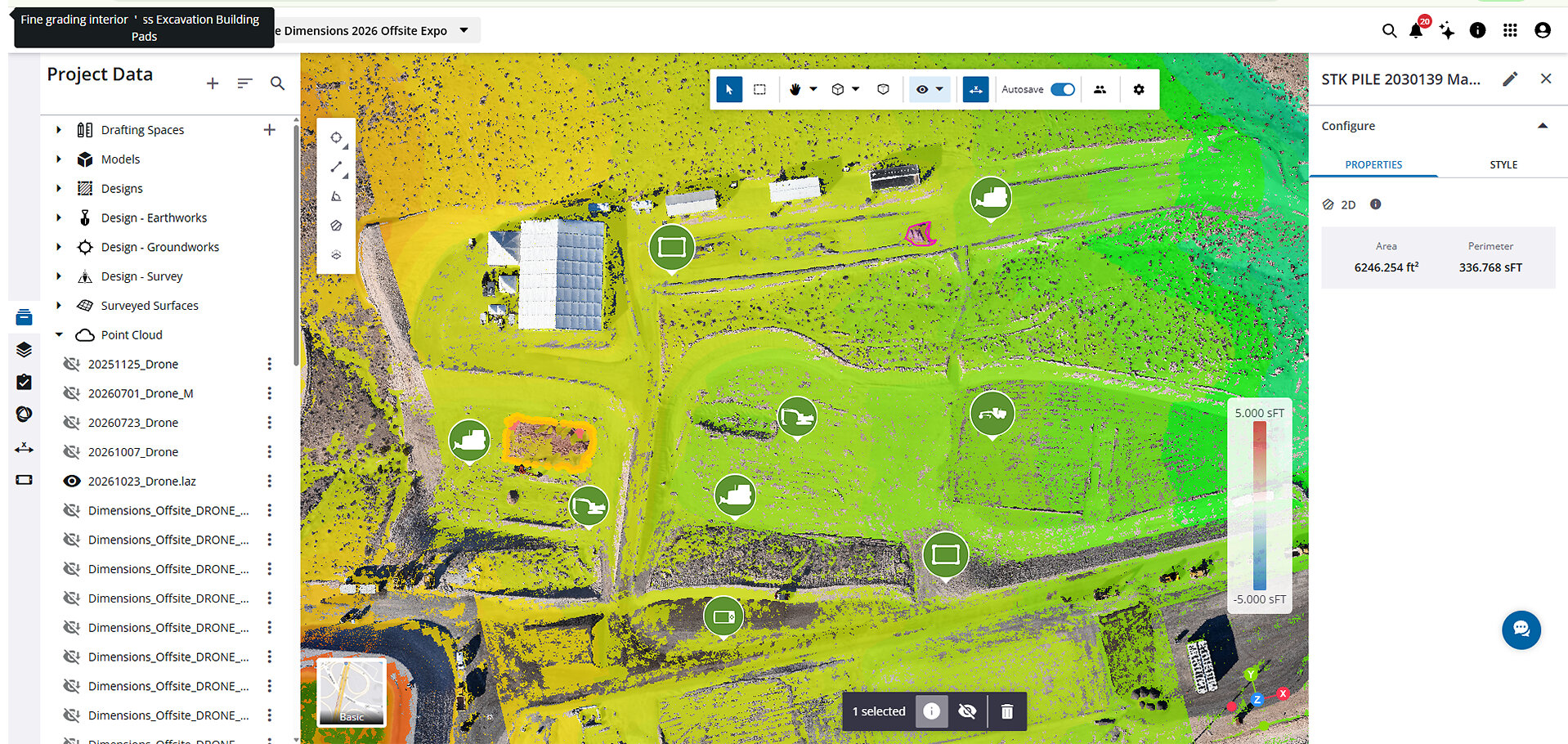
Trimble WorksManager Drone is Trimble's cloud drone processing module for civil contractors, announced in 2026. It uses photogrammetry to convert flight data into measurable site evidence: volumes, dimensions, material checks and progress updates. DJI and Wingtra support is planned, with availability expected in January 2027 through Trimble's global dealer channel. For general readers, the story is not simply a drone update; it is a workflow change that reduces manual file handoffs while raising governance questions.
What changed in the Trimble workflow?
The short answer: drone files are moving closer to the place where construction decisions already happen. Trimble's new cloud drone processing capability is designed for civil contractors who need aerial survey information to sit alongside designs, machine data, as-built records and other site information. In practice, the intended output is not just a map; it is a set of project facts that can support volume calculations, measurement checks and material verification while progress is tracked.
Before such a change, a team may fly, process in a separate tool, re-upload deliverables and manually match versions. With WorksManager Drone, the emphasis is on a connected platform. The existing Trimble WorksManager environment already connects office and field teams; the new module adds cloud processing so supervisors and project managers can access drone results next to the latest design files and machine data. Trimble's product release frames the benefit simply: the software "turns flight data into actionable site data — all from one integrated and connected platform."
What are the key data points?
For a data-led reading of the announcement, five details matter more than the product name.
- Announcement date: Trimble publicized the move on November 5, 2026, according to its newsroom release, placing the software inside a broader 2026 automation push rather than as a distant prototype.
- Availability window: Users are expected to gain access in January 2027 through Trimble's global dealer channel. This gives contractors a preparation period, not an immediate switch.
- Planned drone targets: The initial compatibility list is DJI and Wingtra. It signals a focus on common survey platforms, but buyers still need to confirm model, firmware, data types and project workflow fit.
- Live demonstration context: Attendees at Trimble Dimensions 2026 in Las Vegas can see product and customer sessions and live demonstrations, according to the release. The event page lists the conference dates as November 9-11, 2026, giving the announcement a practical review moment before launch.
- Market demand context: Independent research from Fact.MR valued the global drone surveying market at about USD 2.0 billion in 2025 and expects about USD 2.4 billion in 2026. Mordor Intelligence separately estimated the land survey equipment market at USD 9.22 billion in 2025 and said UAV/drone-LiDAR solutions represented 12.6% of that market. These figures do not predict adoption of this module, but they show why aerial data processing is becoming a mainstream operations topic.
Why Trimble Connect is the bigger story
The most useful way for general readers to understand this product is through data governance, not hardware. The new module is described as extending Trimble Connect, the unified construction platform that brings site data into workflows across the project lifecycle. Trimble has previously described Trimble Connect as a common data environment, or CDE, intended to give project teams one place where information can be reviewed instead of scattered through downloads, chat attachments and local copies.
When drone processing is connected to that environment, three benefits become possible: fewer duplicate file versions, clearer review cycles between office and field, and an easier audit trail when quantities or material claims are questioned. The risk is equally visible: if permissions, naming conventions or model updates are weak, a cloud system can also spread a wrong version faster. A common data environment is only as trustworthy as the humans maintaining it.
Checklist before the January 2027 release
For contractors, procurement teams and site managers, the sensible response is to treat this as a workflow pilot. The following checklist turns the product news into usable preparation.
- Inventory the current fleet: separate DJI and Wingtra equipment from any other drone brands, because those are the planned compatibility names, not a universal guarantee.
- Map the handoff path: record today's steps from flight to volume estimate, then identify where WorksManager Drone could remove file transfer, waiting time or reformatting.
- Define accuracy expectations: state which decisions require survey-grade checks, which accept relative comparison, and where ground control or known benchmarks are still needed.
- Set data roles before upload: who can publish processed outputs, who can comment, who can issue changes and who can override an estimate.
- Test connectivity assumptions: field teams should check how cloud uploads behave on low-signal sites, not only in office demonstrations.
- Estimate total cost: beyond software, include training, pilot hours, dealer support, storage governance and possible changes to survey routines.
- Run one bounded pilot: choose a site with repeatable flights, clear design baseline and a team member who can document problems as well as benefits.
Cloud drone processing vs manual offline processing
| Dimension | Manual offline route | Cloud route through WorksManager Drone | Decision signal |
|---|---|---|---|
| Where data is processed | Often on a workstation or separate service, then re-imported. | Within the Trimble cloud ecosystem, linked to project records. | Choose cloud when handoff delay is the main cost. |
| Who sees results | Often whoever received the file; access may lag. | Site supervisors and project managers can review drone data alongside current designs and machine data. | Strong value when many roles need visibility. |
| Version control | Depends on disciplined naming and manual uploads. | Can become cleaner if Trimble Connect is used as the common data environment. | Needs rules, not just software. |
| Adoption timing | Available with current practices. | Expected January 2027, so teams should pilot processes first. | Do not rewrite contracts around an unreleased module. |
| Risk profile | Slow but isolated. | Faster but more dependent on permissions, connectivity and integration quality. | Treat speed as the benefit and governance as the price. |
Common misconceptions
- "DJI and Wingtra support means any drone will work." The public plan names DJI and Wingtra as target categories, but contractors still need to confirm exact compatibility through their dealer channel and project software configuration.
- "Cloud processing makes accuracy automatic." Photogrammetry can support measurements and volumes, but flight quality, ground control, data selection and review still determine confidence.
- "This is only a surveyor upgrade." It affects project managers, machine operators, quantity checkers and commercial staff because it changes when data appears in decision forums.
- "January 2027 availability is the same as immediate rollout." A date on a product roadmap is not a business-ready plan; pilot scope, training and governance must be built first.
FAQ: quick answers for general readers
What is Trimble WorksManager Drone?
It is cloud drone processing software for civil contractors. Its purpose is to connect flight data, project designs, machine data, as-built records and site information so teams can calculate volumes, take measurements and verify progress within a connected platform.
When can users expect it?
The expected availability date is January 2027, distributed through Trimble's global dealer channel.
Which drone brands are planned at launch?
The planned target list includes DJI and Wingtra. Buyers should verify compatibility with their actual fleet before making budget assumptions.
Does it replace Trimble Connect?
No. The announcement describes the software as extending Trimble Connect workflows, not replacing it. Trimble Connect is the platform layer that helps bring site data into broader project workflows.
Where can people see it in person?
The product's live demonstrations and customer sessions were tied to Trimble Dimensions 2026 in Las Vegas, with the event page listing November 9-11 as the conference schedule.
Action advice: how to judge the value in 30 days
If your organization wants a practical view before January 2027, run a low-cost readiness test rather than waiting for the release. First, time a real drone-to-volume task from start to finish and note where files stall. Second, identify the people who need the same result on the same day: estimator, supervisor, machine team and client contact. Third, draft the governance questions that any cloud processing module must answer: who publishes, who approves, who archives and how old versions are handled. If those steps feel unclear now, the technology will not solve them by itself. If they are already orderly, the next launch window may genuinely shorten the gap between flight and decision.
Prepared by IT Insights editorial team. For feedback, contact IT Insights at contact@itinsights.com.