ItInsightsWorld General Insights: Thailand's Three-Tier EV Excise Tax Raises the Top Rate to 35%
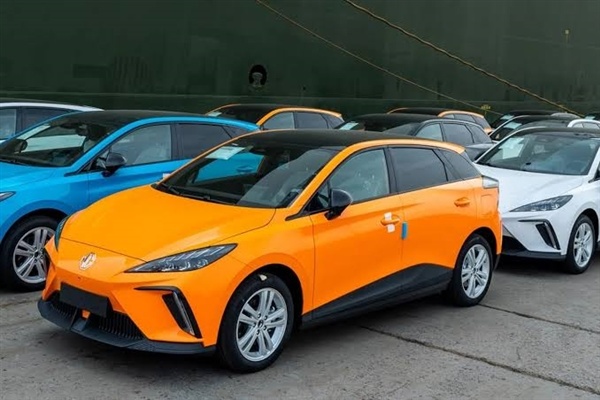
Thailand has reframed its electric-vehicle tax debate from a narrow import-duty question into a broader industrial test: whether brands are willing to build, source and manufacture locally. The new structure places EVs into three tiers, with fully imported vehicles that have no Thai production plan facing the top 35% excise rate. For shoppers, the headline is simple—some cars may become more expensive. For automakers, the message is harder to ignore—market access is increasingly tied to factory commitments. This ItInsightsWorld general guide explains the background, the price math, the likely winners and losers, and the practical steps readers can take before the transition takes hold.
Why the rule is best read as a three-layer tax map
The easiest way to understand the Thai policy is to stop thinking about "EV tax" as one number and start thinking about it as a ladder. A vehicle assembled in Thailand with a high share of locally made components can move into the lowest tier. A vehicle that is still being built out through local assembly plans, but relies on imported parts, may sit in an intermediate tier. A completely built-up import, sold without any credible local manufacturing roadmap, is exposed to the highest rate.
The Thai Ministry of Finance has presented the tiering as a policy tool, not merely a revenue tool. The objective is to reward companies that already invest in Thai production and to push brands that are still considering a local footprint to make a firm commitment. According to Bangkok Post reporting, Thailand's Cabinet approved raising the excise tax on fully imported electric vehicles from 10% to 35%, with the change scheduled to take effect on January 1, 2027. That effective-date detail matters: it gives automakers and dealers a planning horizon, while also signaling that Thailand is willing to adjust consumer-facing incentives once local manufacturing maturity arrives.
Why Thailand moved through excise tax rather than tariff policy
A common question in general-interest markets is why a country cannot simply raise the tariff on imported EVs and stop there. In Thailand's case, the answer lies in regional trade rules. Under ASEAN-China Free Trade Area arrangements, some electric-vehicle import duties have already come down to zero. That makes the traditional customs lever less flexible. Thailand therefore shifted attention to the excise-tax layer, where local production and local content can be rewarded more directly.
The design logic is also more selective than a blanket tariff. The benchmark for "local" is not simply where the final screw is turned. The standard is being pushed toward higher-value components, especially motors and batteries, which are the parts that determine whether localization is shallow assembly or real industrial capability. For readers, this is the key nuance: the Thai market is no longer judging a car only by its country of shipment, but by the depth of its supply chain.
How a 10% tax becomes a bigger sticker price
The Thai Ministry of Finance made the consumer-side effect concrete with a single example: one imported EV priced at 1 million baht (approximately 200,000 RMB). Under the earlier 10% calculation, the tax burden on that car is 100,000 baht. Once the rate rises to 35%, the Ministry's example says the car price would increase by at least 250,000 baht (approximately 50,000 RMB), a rise exceeding one quarter. The implication is clear: a model that once looked price-competitive can lose much of that advantage in one policy step.
| Scenario | Earlier tax burden | Higher-rate burden | Consumer implication |
|---|---|---|---|
| One imported EV with a 1 million baht price point | 100,000 baht at 10% | At least 250,000 baht more, or roughly 50,000 RMB | A top-tier imported model may lose more than one quarter of its value proposition if the tax is fully passed through |
This example also clarifies why the policy has an asymmetrical effect. It is not designed to make every electric car expensive. It is designed to make imported, factory-free offerings comparatively expensive while preserving—or strengthening—the position of vehicles with deeper Thai production ties.
Tier comparison: what each category signals to buyers and brands
| Tier profile | Most likely tax position | What the brand is expected to show | What buyers should read into it |
|---|---|---|---|
| Local factory plus high local parts content | Lowest tier | Genuine manufacturing, component sourcing and durable local commitment | Price stability is more likely, but final retail still depends on model strategy |
| Assembly in Thailand with imported components and filed production plans | Middle tier | A credible roadmap to deeper localization, including higher-value parts | The car may still be more competitive than CBU, but the brand's localization path matters |
| Fully imported vehicle with no Thai production plan | Top tier at 35% | Nothing beyond import economics; the vehicle does not contribute to local manufacturing depth | Expect sharper pricing pressure and a weaker long-term position in the Thai market |
For general readers, the practical takeaway is that "electric car" is no longer a single category. The next purchase decision may turn on whether the vehicle is CBU, locally assembled, or backed by a manufacturer that is already producing in Thailand.
Common misconceptions worth clearing up
- Myth: This is a tariff increase. It is primarily an excise-tax restructuring. The tariff route is constrained where ASEAN-China Free Trade Area rules already bring some EV import duties to zero.
- Myth: Every imported EV will be hit identically. The system is tiered. The 35% figure is the top-rate case for fully imported vehicles without local production plans, not a universal surcharge on every foreign-built car.
- Myth: Local assembly automatically means the lowest rate. The rules push the local-content calculation toward meaningful components, especially motors and batteries, so shallow final assembly alone is not enough.
- Myth: This is only a China story. China-origin EVs are central to Thailand's import mix, but the policy is framed around manufacturing footprint rather than a single country label. Brands from elsewhere can also feel the incentive to localize.
Who benefits most from Thailand's tax reset
The clearest beneficiaries are automakers that already have Thai production capacity, or that have announced credible manufacturing projects with substantial local content. In that group, BYD already operates a plant in Rayong; Changan Auto has placed its first overseas new-energy-vehicle manufacturing base in Thailand; and Chery and GAC Aion are also accelerating localization. For these companies, the policy strengthens an existing position: locally produced EVs are not directly hit by the 35% top import tax, while competitors that remain import-dependent face a harder price gap.
That dynamic can also reshape model choice. If a brand can produce locally, it may decide to route more volume through Thai factories, not only to cut tax exposure but also to gain a story about resilience, supply security and industrial participation. For buyers, that may mean more locally built options, and for Thailand, it may mean faster growth in components, jobs and technology transfer.
A practical checklist before Thailand's next price cycle
Readers who care about timing should not wait until the announcement headline disappears. The transition window is where information value is highest.
- Confirm whether the EV is fully imported or locally produced. This is the first tax-relevant fact.
- Ask what "local content" actually covers. A model assembled in Thailand is not automatically in the best position unless higher-value parts are also sourced locally.
- Review invoices carefully before the scheduled change point. Price increases may be phased, negotiated or absorbed differently by brands.
- Compare model portfolios. If a brand is already investing in Thai production, future pricing may be more stable than that of a purely import-dependent seller.
- Watch supply-chain announcements. Battery and motor localization will be the best early signal that a company is serious about the middle or lower tax tiers.
FAQ: General questions readers are most likely to ask
Is 35% the new tax rate for every EV in Thailand?
No. The 35% figure applies to the top-tier case: fully imported electric vehicles with no Thai production plan. The structure is tiered precisely because Thailand wants to differentiate between local manufacturing, partial localization and pure importing.
Does this mean Thailand is closing its market?
Not exactly. It is adjusting how market access is priced. If the vehicle is imported only, the tax burden is heavier. If the manufacturer builds in Thailand and deepens local parts sourcing, the system is designed to be more favorable. The message is less about exclusion than about conditional integration.
Why would automakers localize just to save tax?
Because tax is only one part of the equation. Factories also reduce logistics exposure, create policy alignment and strengthen a brand's claim that it is a long-term participant in the Thai market rather than a short-term exporter of excess capacity.
Does this help existing factories immediately?
Yes, at least in relative terms. The Thai Ministry of Finance example shows that pure import economics can weaken quickly. If a brand already produces in Thailand, it enters the new framework with a structural advantage over rivals still relying on CBU supply.
What to watch next: three signals that will shape the outcome
The most useful forward-looking signal is not the headline tax number. It is whether the local-content rules become stricter, or softer, when they are applied to battery packs, drive motors and high-value assembly processes. If the definitions remain loose, brands may be tempted to optimize on paper rather than transform real production. If they stay tight, the tax system will become a de facto industrial upgrade program.
A second signal is whether the Thai market's model mix shifts toward locally produced vehicles. The policy is designed to reward factories, but the consumer outcome depends on how quickly brands can convert announced plants into saleable models. A factory that exists only on a slide deck will not help much in a tier based on actual local content.
A third signal is the interaction with Thailand's broader EV incentive framework. The Board of Investment's EV3.5 discussion has linked import relief to local-production commitments and battery-related goals. If the incentive architecture and tax design converge, Thailand's approach may look less like a one-off tax hike and more like a long-term industrial roadmap. That could attract more serious investment—but it could also squeeze brands that cannot move from import sales to real production quickly enough.
Trend judgment: Thailand is turning EV demand into manufacturing leverage
The bigger lesson here is that Thailand is using one of the most consumer-sensitive variables—car price—to achieve an industrial objective. That is a classic policy move, but its speed is what makes it notable. By tying the highest rate to pure imports, the government is not just defending local investment already made; it is making the case that the country's EV future should be built, not merely sold.
For ordinary readers, the most reliable conclusion is this: Thailand's EV market is still open, but it is becoming less forgiving of imported convenience. A brand that can prove local factory presence, parts depth and a credible production roadmap will usually be in a stronger price position than a brand that simply ships vehicles and waits. The result may be a more disciplined market, better local value capture, and a clearer hierarchy among EV sellers in Thailand.