
ItInsightsWorld General Guide: Tesla Cybercab Halloween Clip vs Robotaxi Rollout
By James Hartley, ItInsightsWorld General
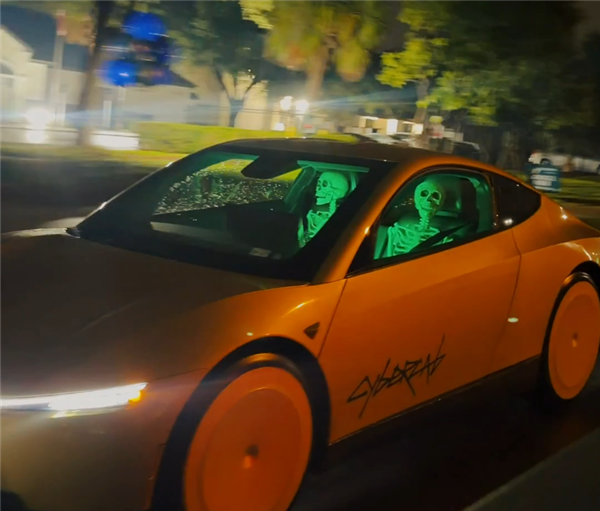
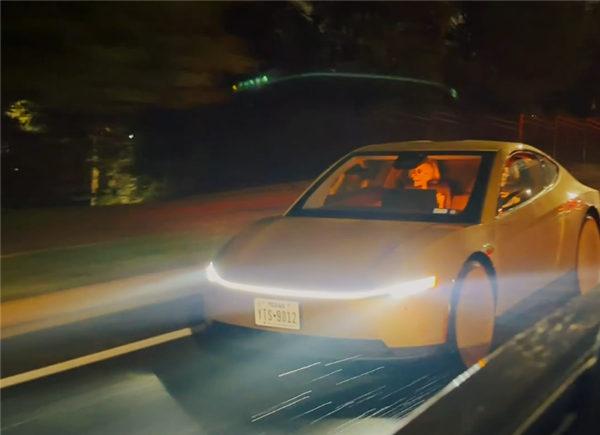
A 19-second night drive is not the story; the operating calendar behind it is. During the Halloween weekend, Tesla's official Robotaxi account released a playful clip showing a yellow Cybercab moving through city streets after dark. Two skeletons sit inside, green ambient light fills the cabin, and the steering-wheel position is empty because Cybercab has no steering wheel. The video, about 19 seconds long, was published on a Friday evening and shot from a car traveling alongside it. For readers deciding whether to try Tesla's autonomous ride-hailing service, the useful takeaway is simple: the clip is seasonal marketing, while the real decision rests on service hours, promotion terms, vehicle availability, and the still-limited map of supported cities.
Why the holiday post is an operations message, not a software update
Earlier the same day, the same account told users: "Make smart decisions this weekend and ride home in a Robotaxi." That line turns a holiday moment into a demand prompt: after parties, riders need a night ride. It is not presented as a new Halloween mode or a software feature. The Robotaxi account is marketing the service itself, using the Cybercab's most visible trait - no steering wheel - as a joke. Tesla's public Robotaxi page already positions the offering as a fleet of Model Y and Cybercab vehicles providing autonomous rides in Austin, Dallas, Houston and Miami, which makes the holiday post a reminder that the company wants new users to convert curiosity into bookings.
What changed just before the Halloween clip
| Decision factor | What Tesla has shown | How to judge it |
|---|---|---|
| Service hours | Days before the clip, Robotaxi hours were extended from midnight to 2 a.m., creating a daily 6:00 a.m. to 2:00 a.m. the next day schedule of 20 hours. | Useful for late-night exits, but it still does not guarantee a vehicle at every hour. |
| Trial cost | Dallas and Houston launched a first-order $0 experience. Rider app screenshots also showed a $0.00 fare for first-time users, according to Not a Tesla App. | The free option is a funnel, not a permanent price. Check whether the trip is inside the eligible area. |
| Vehicle mix | On April 18, Dallas and Houston launched at the same time. On April 25, Cybercab entered production at the Texas Gigafactory. On June 22, Cybercab's Austin debut used only a few vehicles. | Cybercab is still a specialized product, while Model Y remains the broader ride-hailing base. |
| Growth | By early October, Cybercab vehicles passed 300; within one month, the count rose 8 times. By late October, the Texas Robotaxi fleet was nearly 1,000 vehicles, with Cybercab taking nearly half. | Scale is moving quickly, but a larger fleet can still be uneven by neighborhood and by hour. |
| Cabin controls | Share feature lets passengers share a trip; Calm Mode can turn off FSD visualization for a quieter cabin. | Good for nervous first-time riders, but it does not remove the need to follow app pickup rules. |
Three choices riders are really comparing
| Option | Best fit | Trade-off |
|---|---|---|
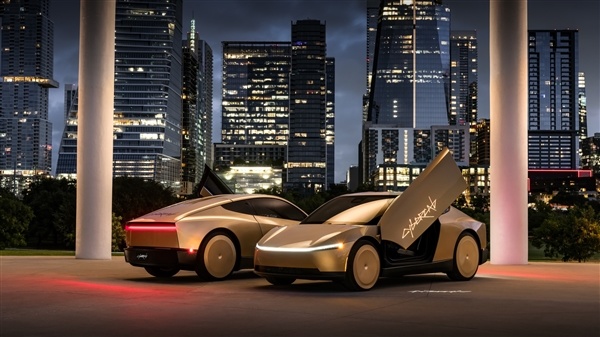
| Cybercab | Short autonomous rides in supported areas, especially two passengers who want a purpose-built robotaxi experience. | Two-seat form, no steering wheel, and availability tied to Tesla's service zone and fleet size. |
| Model Y Robotaxi | Users who want Tesla's robotaxi network but may need more familiar cabin space or better chance of immediate availability. | It may still operate under Tesla's Robotaxi rules, not like a private chauffeur service. |
| Conventional ride-hailing or taxi | Trips outside Tesla's city map, late hours beyond 2 a.m., or passengers who need a human for luggage, accessibility or uncertainty. | No first-order $0 promotion and no Cybercab novelty. |
Checklist before booking a Robotaxi
- Confirm the pickup and drop-off are inside Tesla's supported service area; current public coverage includes Austin, Dallas, Houston and Miami.
- Check the app time window: daily 6:00 a.m. to 2:00 a.m. the next day helps party-night use, but it stops before the early morning hours.
- Read the promotion terms. A first-order $0 offer in Dallas or Houston is a trial lever, not proof of a permanent free fare.
- If the passenger is anxious, enable Calm Mode and use Share feature to send trip details to a trusted contact.
- For three or more people, heavy luggage, medical needs or a route outside the mapped area, compare a conventional ride before accepting an autonomous vehicle.
Common misconceptions
- The Halloween clip is not a Halloween-mode update. Tesla's official Robotaxi account used it as seasonal marketing, not software launch.
- The empty steering-wheel position is not a driver hiding in dark clothing. Cybercab's design has no steering wheel; the two skeletons are props.
- Free first rides are not all-city, all-time. The first-order $0 experience was promoted in Dallas and Houston, while the broader Robotaxi service already covers Austin, Dallas, Houston, Miami and other United States cities.
- Nearly 1,000 Texas Robotaxi vehicles does not mean every Cybercab is on the road at once. Production at Texas Gigafactory and fleet growth by late October are separate from moment-to-moment availability.
FAQ
1. Is the video real footage? Yes, but it is staged. The video shows a yellow Cybercab in motion while two skeletons sit inside; it is not evidence that a person is driving the car.
2. Why mention midnight and 2 a.m.? The extension of Robotaxi hours from midnight to 2 a.m. is important because late-night rides are a common pain point during holiday weekends. The schedule becomes 20 hours, running daily 6:00 a.m. to 2:00 a.m. the next day.
3. Should a new rider choose Cybercab first? If the app offers it and the route is short, yes, especially with a first-order $0 test. If the rider needs more passengers, complex accessibility or a human response, compare another option.
Action advice
For riders, treat Tesla's Halloween video as a low-stakes invitation to test a service that is still being built. For companies watching autonomous transport, treat it as a sign that marketing is now attached to operational pressure: longer hours, promotional free rides, new cabin settings and rapid Cybercab output. If Tesla can keep expanding from Austin, Texas to Dallas, Houston, Miami and additional United States markets while holding daily 6:00 a.m. to 2:00 a.m. the next day service, the holiday joke becomes a practical demand hook for late-night mobility.
Company snapshot
Tesla was founded in 2003 and is headquartered in Austin, Texas. It listed on Nasdaq in 2020 and produces electric vehicles including the Model 3/Y/S/X series and the Cybercab autonomous taxi. Its Robotaxi service now covers Austin, Dallas, Houston, Miami and other United States cities. This background matters because the Cybercab's novelty is not only a marketing device; it is a product line built to fit the company's larger autonomous mobility plan.