
Tesla Details Optimus’s Early Robotaxi Charging Role and CyberCab Line Economics
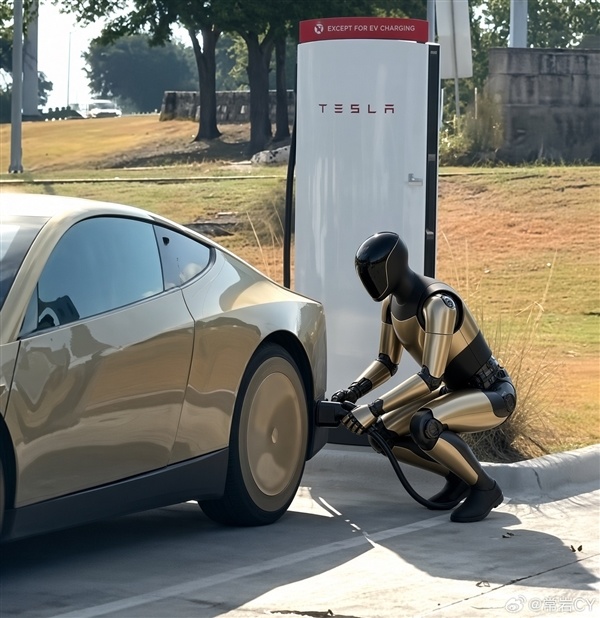
Interview frames Optimus around charging
Recently, Tesla engineering vice presidents Lars Moravy and Eric Earley appeared on Munro Live to discuss Optimus and CyberCab. The conversation made clear that the humanoid robot is learning to charge driverless taxis, and that plugging in Robotaxi vehicles is expected to be its first short-term job.
Cost, tasks and transport system
In cost structure, Optimus uses an independent battery module of about 2.5kWh. Moravy contrasted this with cars, where battery packs commonly consume a quarter to one-third of total cost, noting that the battery is not the robot’s leading expense. He said charging may be only the opening use, “may provide maintenance services for vehicles and may also enter delivery.”
He widened the discussion to fleet and transport: “Think about CyberCab, Optimus and Robovan. The triangle formed by these three will be extraordinary, and Tesla Semi can also be added for long-distance freight.”
CyberCab assembly and battery design
CyberCab final assembly was described with newly concentrated detail: the line contains 25 fully automated stations, only one-fifth to one-tenth of the Model Y production line, while automation reaches nearly 80%.
By using the unboxed process, the footprint per vehicle during production falls by about 50%, and the vehicle design life is stated as 500,000 miles. Because CyberCab skips paint and eliminates the paint shop, Tesla saves hundreds of millions of dollars.
Currently, the line’s manufacturing cadence is already faster than Robotaxi fleet expansion, so production does not run every day.
The 4680 cells are installed in independent potting modules. If one module fails, only that module needs replacement rather than the whole battery pack. The pack uses a steel outer shell for the first time, and space is reserved so that cheaper lithium iron phosphate cells can be adopted in the future. Moravy said, “We found that the actual number of batteries needed is smaller than originally expected.”
For drivetrain, CyberCab uses front-wheel drive with an 11:1 final drive ratio because it does not require a very high top speed. The new inverter will also be used on Model 3 and Model Y this year.
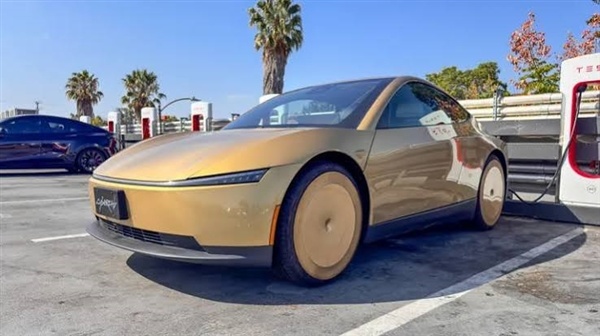
The disclosed picture connects two threads: Optimus begins with a narrowly defined Robotaxi charging task, while CyberCab production is shaped by fewer assembly stations, no paint, modular 4680 battery replacement, and a front-drive layout tuned to low-speed fleet use.