
ItInsightsWorld General: Apple’s First Ternus Earnings Shows Price Power, but the Memory Flood Is Still Rising
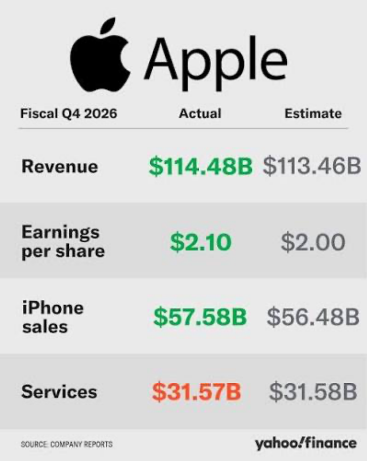
The short answer is simple: Apple protected the top line, but the cost curve has not peaked. Several months ago, Tim Cook called the AI data-center-driven memory squeeze "This is a once-in-a-century flood." On Pacific time November 2, John Ternus filed his first report as CEO for the 2026 fiscal fourth quarter: revenue of $114.5 billion, up 12% year over year, and net profit of $30.7 billion, both ahead of Wall Street expectations. The headline driver was iPhone, which produced $57.58 billion of revenue, up 17%, a September-quarter record. Yet IDC’s shipment view told a different story: global iPhone shipments fell 4%. The company earned more while selling less, a pattern that points to price increases and tariff refunds rather than broader unit demand. Apple shares fell directly by 3% in after-hours trading.
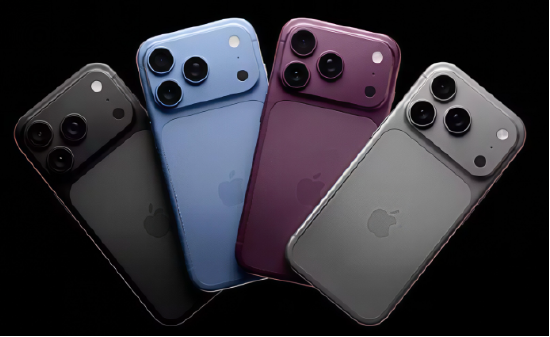
Reader takeaway: the buffer works, but the water is still rising
For general readers, the most important conclusion is not that Apple beat estimates. It is that Apple has moved from being a cost controller to a cost transmitter. A separate IDC forecast frames the environment: worldwide smartphone shipments are expected to fall 16.7% in 2026 to just over 1 billion units as the memory crisis hits, while average selling prices rise 27.6% to $581. That is a consumer-market version of the same flood: fewer phones, richer bills. Apple’s earnings release confirms the 47.9% gross margin in the quarter, and MacRumors’ summary noted a quarterly dividend of $0.27 per share, payable on November 16 to shareholders of record on November 12. The payout signals confidence, but the guidance below signals limits.
Why revenue rose even as units dropped
One nuance: IDC counts shipments, while Apple confirms revenue from sales to channels. The measures are not identical, but the gap is still telling. With iPhone revenue up 17% and shipments down 4%, the implied average iPhone price would need to rise about 22%. Three forces created that cushion.
- The iPhone 17 Pro already started at a price $100 higher than the previous generation, so July and August this year were dominated by a richer model.
- Buyers moved toward Pro and larger storage, so the product mix itself became more expensive.
- In early September, Apple raised prices across the iPhone line.
At the September 9 event, the price ladder shifted visibly. iPhone 18 Pro rose from $1099 to $1199, while Pro Max rose from $1199 to $1299. The bigger storage tiers became even more lucrative: the 1TB version jumped by $300, and the Pro Max 2TB version rose by $500 to $2499.
Older devices were not spared. iPhone 17 moved from $799 to $899, while iPhone Air, iPhone 17e and iPhone 16 each rose by $100. Apple also introduced the folding iPhone Duo at a $1999 starting price, and removed the lowest-priced Plus from the lineup. Across the United States, the average iPhone price rose 13%.
The more revealing decision was what Apple did not launch. This fall, it offered no budget model: the iPhone 18 series arrived only in Pro and Pro Max form, while iPhone 18 and 18e are expected in spring next year. Analysts pressed John Ternus for the reason; he avoided the question.
Timing also matters. Because the fiscal quarter ended September 26, iPhone 18 Pro was on sale for about 9 days. The full pricing effect will become visible in the next quarter, not this one.
Supplier power reversed: the NAND market became a seller’s market
Apple raised prices because it had to. Two years ago, Apple was the industry’s most powerful buyer. Its flash purchases were nearly twice the combined volume of Microsoft, Amazon, Meta and Google, four companies that now dominate AI infrastructure. Apple demanded most favored customer treatment, making sure no other buyer could get a lower price, and reserved the right to audit supplier books. Almost every supplier accepted those unequal requirements because the Apple order was too valuable to lose.
The old discipline had teeth. More than a decade ago, Apple discovered that Micron had not given it the lowest price and recovered tens of millions of dollars through arbitration. In 2023, flash prices fell to 5 cents per GB, leaving the industry with a loss of about $19 billion, while Apple reportedly earned about $14 billion of gross profit from storage upgrades in the same year.
That leverage has weakened. Cloud giants are now buying flash for AI data centers, and their purchases are about twice Apple’s. Meta, Microsoft and Amazon also signed longer and more expensive contracts. TechInsights estimates flash prices rose about 4x in one year. Apple is expected to spend about $25 billion on flash this year, while the same volume cost about $6 billion last year. A Kioxia executive said plainly that he hopes days like 2023 never return.
Whole-industry data shows the shock. IDC reported that global smartphone shipments plunged 22% year over year in July to September, a record decline. Apple’s shipments declined only 4%, the smallest drop among the top five vendors, and its market share moved closer to Samsung. As 9to5Mac reported IDC’s Q3 figures, Apple shipped about 57.3 million phones, while Samsung led with about 57.8 million.
What the numbers mean: a quick comparison
| Layer | Unit or market signal | Revenue or margin signal | Reader interpretation |
|---|---|---|---|
| iPhone | shipments fell 4% (IDC) | revenue $57.58 billion, up 17% | price mix, not unit demand |
| Mac | shipments down 11.3% (IDC) | revenue $10.79 billion, up 24% | largest hardware growth came from price |
| Greater China | China smartphone market shrank 15.4% in Q3; Apple shipments fell 4.3% | Greater China revenue $17.54 billion, up 21% | Apple lost less ground, but did not win volume |
| Gross margin | total gross margin 47.9% | excluding tariff refund, about 46.9% | cost pressure is real but masked temporarily |
Apple’s tactic is straightforward: shift the bill to the buyer. John Ternus said the company raised prices "reluctantly" to offset component costs. That was not evenly spread. The biggest increases landed on high-capacity models, the long-standing invisible money printer. In one cost example, adding storage to iPhone 17 Pro moved Apple’s parts cost from about $15 to about $66, but the user still paid $200. Where cost pressure is sharpest, price pressure is sharpest too.

Mac made the logic even clearer. The segment earned $10.79 billion and grew up 24%, the best hardware performance, even though IDC showed Mac shipments down 11.3%. The answer was price: in June Apple raised Mac and iPad prices, including a $300 increase for MacBook Pro. The first touchscreen MacBook Pro announced last week starts at $2899.
The margin math is where caution begins. Reported total gross margin was 47.9%, higher than 47.2% in the prior-year period. Kevan Parekh said about 1 percentage point came from tariff refunds, which were largely collected. Excluding that effect, margin was about 46.9%, slightly lower than the previous year, and Parekh added that the refund-adjusted margin fell by about 1 percentage point from the prior quarter because of memory prices.
China mirrors the pattern. Apple reported Greater China revenue of $17.54 billion, up 21%. John Ternus said the United States and Greater China achieved strong double-digit growth and set a September-quarter record. But the result was still about $1 billion below Wall Street expectations. IDC saw China’s smartphone market shrink 15.4% in Q3; Apple shipments fell 4.3%. Apple’s share improved from 15.8% to 17.8%, not because it sold more, but because rivals fell harder.
Holiday outlook: growth is priced, not proven
The next test is the holiday quarter. Apple shares fell nearly 3% after guidance that pointed to December quarter revenue growth of 7% to 10%, below the 11.4% consensus Wall Street had expected and the lowest forecast in the past five quarters. The company also guided gross margin to 45% to 46%, down two to three percentage points from 48.2% a year earlier. In plain language, the pressure can be summarized as roughly three percentage points of margin risk, driven by continuing memory costs and the new expense load created by Siri AI.
Relying on higher prices has one obvious risk: consumers may stop paying. For now, iPhone customers have kept buying. Apple said the September quarter set records for switching users and for active iPhone users. Yet iPad and wearable devices missed expectations this quarter, showing that not every product line can absorb the same increase.
Apple’s strongest evidence is scarcity demand. iPhone Duo orders opened October 16 and sold out within hours; the website still shows delivery in late January next year. John Ternus said Apple is doing everything it can to get devices to buyers, but he could not say when supply will catch up. The foldable also faces a quality issue: users reported inner-screen cracking, Apple acknowledged the problem exists, said only a very small portion of units were returned, and offered replacements. For a $2000 product, that is not a minor detail.
Because iPhone Duo went on sale October 23, it did not appear in this earnings report. Its first complete quarter will be the biggest swing factor of Apple’s this Christmas season.
Common misconceptions
- "Apple grew because demand grew." Not exactly: revenue grew, units did not.
- "Price hikes solved the cost problem." They offset it temporarily; the margin guide says the problem remains.
- "iPhone Duo proves the premium strategy is risk-free." It proves demand, but supply reliability and early quality issues are still unresolved.
- "China improved because Apple won volume." Apple improved share mostly by losing less.
Frequently asked questions
Is this a good sign for Apple’s pricing power?
Yes, but selectively. iPhone and Mac users accepted higher prices, while iPad and wearables did not. That tells buyers are tolerant for core devices and less tolerant for discretionary accessories.
What should consumers do if prices keep rising?
Check total cost of ownership, not sticker price. A higher storage tier can avoid replacements, but unnecessary upgrades can turn a device into a financing decision.
Why did the stock still fall if earnings beat?
Markets care about the next quarter. The guidance, not the record revenue, made the share price fall by nearly 3%.
What is the biggest watchpoint?
Whether memory prices continue rising without pushing iPhone users into older models, especially while iPhone Duo supply remains constrained.
Action advice for general readers
- Use the "flood test": compare price increase against expected ownership length. If a $100 step-up buys you two more years, it may be rational.
- Prioritize storage only if you hit a real bottleneck; high-capacity pricing is the invisible money printer, not necessarily the best personal value.
- Watch the December quarter, because the iPhone 18 Pro pricing effect, Siri AI costs and iPhone Duo shipments will all appear there.
- Treat China and other regional data as a relative resilience story, not an absolute volume recovery.
- Use the IDC forecast, the Apple earnings release, and the earnings-call guidance together: one describes the market, one confirms Apple’s quarter, and the third reveals the next pressure point.