
ItInsightsWorld Report: Solidigm Weighs 45 Billion Dollars for a U.S. NAND Fab as Dalian Equipment Export Approval Stays Central
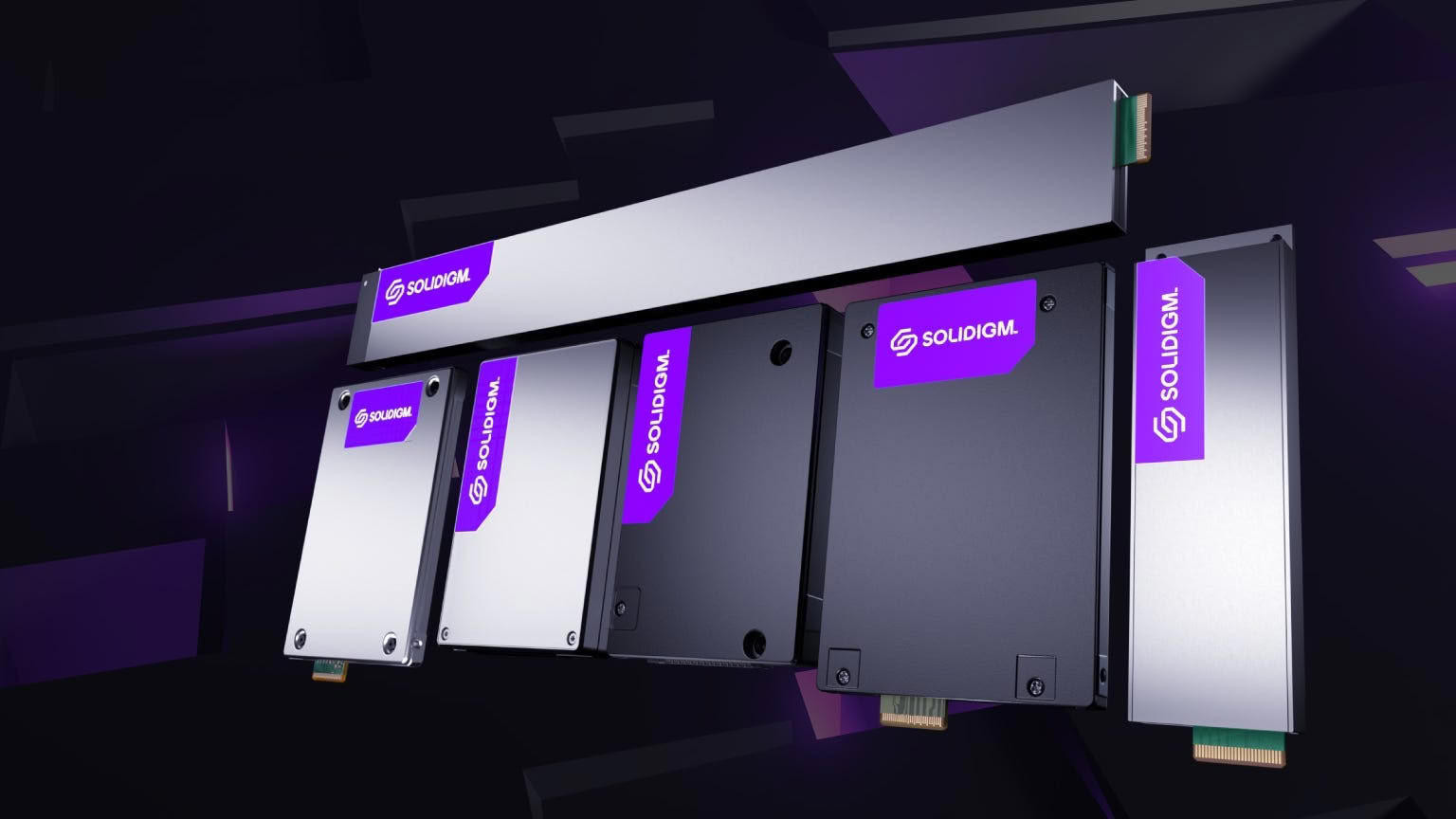
ItInsightsWorld reads the reported proposal as a linked bargaining package rather than a simple capacity decision. Solidigm has tied its idea for a 45 billion dollars NAND flash factory in the United States to a request for U.S. government permission to move equipment to China, specifically to upgrade the Dalian factory. The two arrangements are being pursued as one package, making equipment approval as important as the investment figure itself.
A linked request: U.S. factory hopes and China equipment approval
People familiar with the matter said the company is seeking U.S. government approval to ship relevant equipment to China so the Dalian factory can be upgraded. As part of the discussion, Solidigm presented a plan to build a new factory in the United States, aiming to make progress on both fronts together.
From Intel NAND roots to SK Hynix enterprise storage
The Dalian factory has an important position in SK Hynix's NAND flash business. The site previously belonged to Intel's NAND flash business; after SK Hynix acquired that related operation, it was integrated into the company's storage portfolio. Solidigm focuses mainly on enterprise-grade solid-state drives, with products used heavily in data-center and enterprise storage workloads. AI infrastructure expansion has increased data-storage demand, making flash capacity expansion and facility upgrades a priority for suppliers.
Scale, timeline and site remain conditional
Solidigm also told the U.S. Department of Commerce that long-term investment in a U.S. plant could ultimately reach 100 billion dollars, and that northern New York is one location under review. Construction could begin as early as 2027. Those figures describe a potential long-term scale, not a company commitment to fund the entire amount. The final site, construction timing and detailed investment arrangements have not been settled.
Export controls create the critical variable
U.S. restrictions on semiconductor manufacturing equipment exports to China are a central uncertainty. In 2025, the U.S. government revoked validated end-user, or VEU, related waiver arrangements for some China plants operated by SK Hynix and Samsung Electronics. Since then, companies must apply for licenses year by year to bring equipment into those facilities. U.S. officials have said they will allow equipment needed to keep existing plants running, but apply stricter review to tools aimed at expanding capacity or advancing technology.
Mod B: idle space, upgrade target and financing bridge
The Mod B area of the Dalian factory is an important element of the negotiation. Built in 2023, it still has partially unconfigured space because the memory-chip market was weak at the time. Solidigm wants to install more manufacturing equipment in that area to lift NAND output. If the U.S. government approves the equipment export, the added production could support revenue used to fund the proposed U.S. plant and serve as a transition while future U.S. capacity is built.
AI demand pushes NAND priorities toward data centers
The AI buildout has shifted the storage-chip industry's focus. Enterprise solid-state drives and high-performance storage demand continue to rise as AI data centers expand, tightening global memory supply. Samsung Electronics, SK Hynix and Micron are rebalancing capacity toward higher-margin data-center products. NAND flash is the core storage medium in SSDs, so its supply condition directly affects cloud and AI infrastructure costs.
Cost and policy trade-off
| Factor | Strategic upside | Open risk |
|---|---|---|
| U.S. factory | Adds production capacity and reduces reliance on a single Dalian base | Higher construction costs than South Korea and other existing bases |
| Equipment approval | Could raise output at Mod B area | U.S.-China licensing and policy conditions remain uncertain |
| AI demand | Supports enterprise SSD growth | Long fab cycles raise return-on-investment questions |
For SK Hynix, a new NAND plant in the United States could increase production capacity and reduce dependence on a single Dalian manufacturing base, while lowering future trade-policy exposure. Still, U.S. fab construction costs are generally higher than those in South Korea and other existing production locations, and semiconductor factories take a long time to build, so long-term returns remain uncertain.
Funding path changes, capacity need persists
SK Hynix had previously considered listing Solidigm through an initial public offering to raise money. The company recently paused its evaluation of a Solidigm IPO and pre-listing financing options, citing market conditions and share-price performance. Despite the change in funding approach, SK Hynix has said Solidigm needs additional production facilities to meet capacity demand driven by AI storage growth, and will continue to evaluate investment scale, timing and financing sources.
Why this is still one plan, not a final commitment
Overall, Solidigm's reported consideration of a 45 billion dollars U.S. NAND flash plant sits at the intersection of U.S. semiconductor localization, AI storage demand and U.S.-China export controls. Whether the project moves depends not only on returns from a U.S. factory, but also on whether Washington approves the Dalian equipment export and whether SK Hynix can balance U.S. construction costs, global supply-chain placement and future market demand. At present, this remains one plan still in negotiation and evaluation, not a formally approved factory project.