
SK Hynix Q3 Revenue Tops 100 Trillion Won as AI Memory Tightness Is Seen Lasting Through 2030
A record quarter shaped by AI demand
SK Hynix announced its third-quarter results on October 28, 2026, reporting revenue of 104.6155 trillion won, operating profit of 83.3338 trillion won and net profit of 39.7756 trillion won. Revenue crossed 100 trillion won for the first time, while an 80% operating margin showed how strong demand for artificial-intelligence memory and higher prices for premium products have improved profitability.
DDR5, HBM4 and 321-layer NAND carry growth
The company attributed the improved performance mainly to shipments of DDR5 server memory, high-bandwidth memory HBM4 and sales growth in 321-layer TLC enterprise solid-state drives. As AI models scale, data centers need larger capacity, higher data-transfer bandwidth and lower access latency, making memory a central hardware component in AI infrastructure.
Why HBM shifts industry priorities
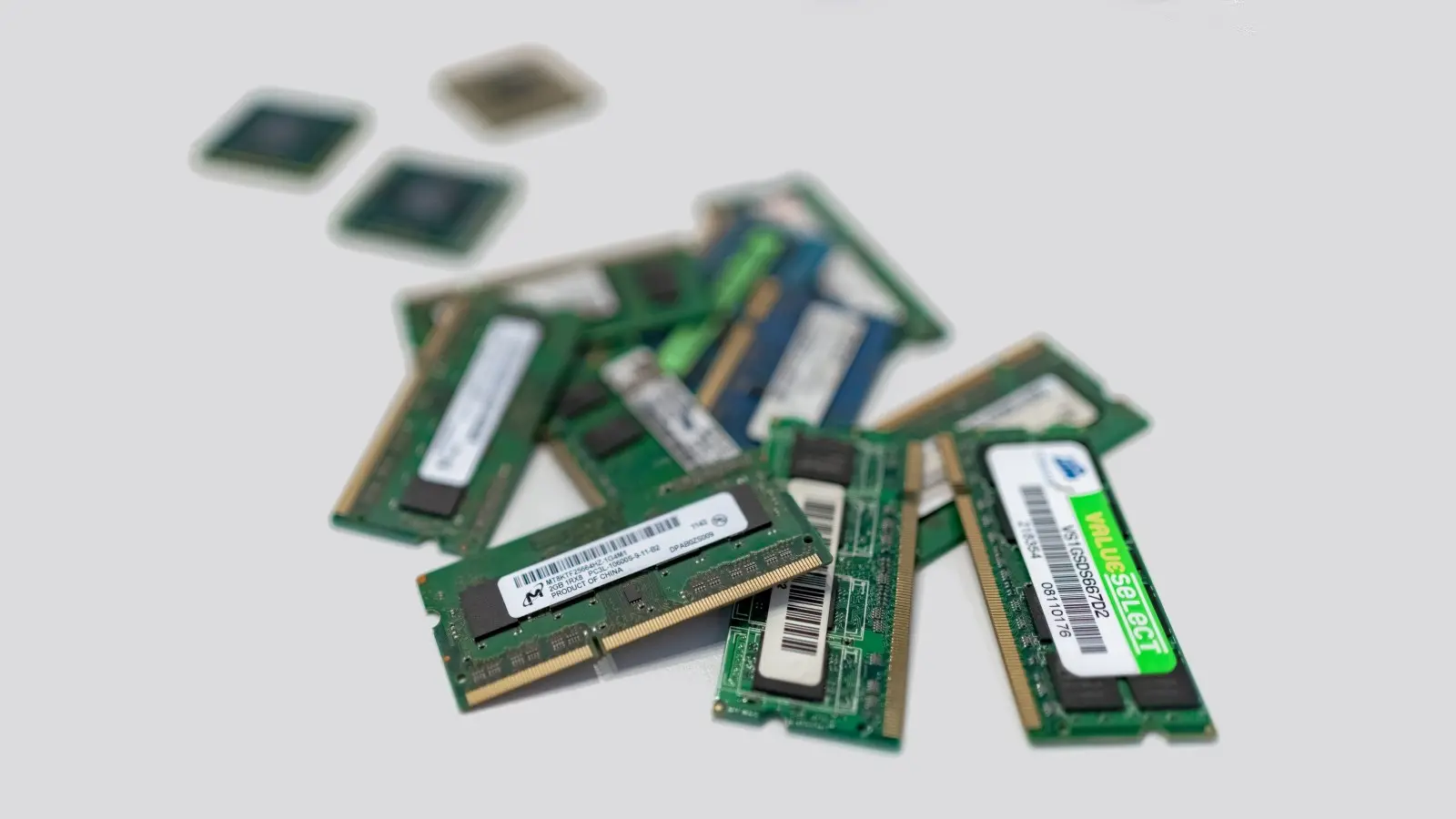
Compared with conventional personal-computer memory, HBM has a more complex manufacturing process: multiple memory dies are stacked and integrated through advanced packaging with compute chips. Nvidia and other companies continue releasing new AI accelerators, rapidly lifting HBM demand and prompting memory makers to allocate more capacity to higher-margin products.
Self-reinforcing AI spending
SK Hynix said current AI investment is forming a broadening cycle: enterprises improve software development, customer service and search efficiency with AI, generate new revenue, then invest further in applications and infrastructure. Investors are no longer limited to a few major technology companies; ordinary enterprises and national projects are also entering, sustaining data-center construction demand.
Future demand will not come only from large language models and cloud data centers. When physical AI such as autonomous vehicles and robots matures, devices must process more sensor, camera and real-time control data, raising requirements for memory capacity, speed and reliability.
Capacity cannot expand as quickly as demand
Memory production cannot grow in step with the market. Advanced DRAM process development and volume production have become increasingly difficult. New semiconductor plants require building construction, cleanroom installation, equipment setup, process tuning and yield ramp-up, usually taking several years. Even large new investments cannot immediately become supply.
On that basis, SK Hynix expects a structural undersupply in the global memory market to last until 2030. It had previously warned that 2027 may be one of the tightest years for memory supply. Even with capacity expansion in coming years, added output may fail to fully satisfy the ongoing expansion of AI infrastructure.
Expansion plans target HBM4, 1c DRAM and 321-layer NAND
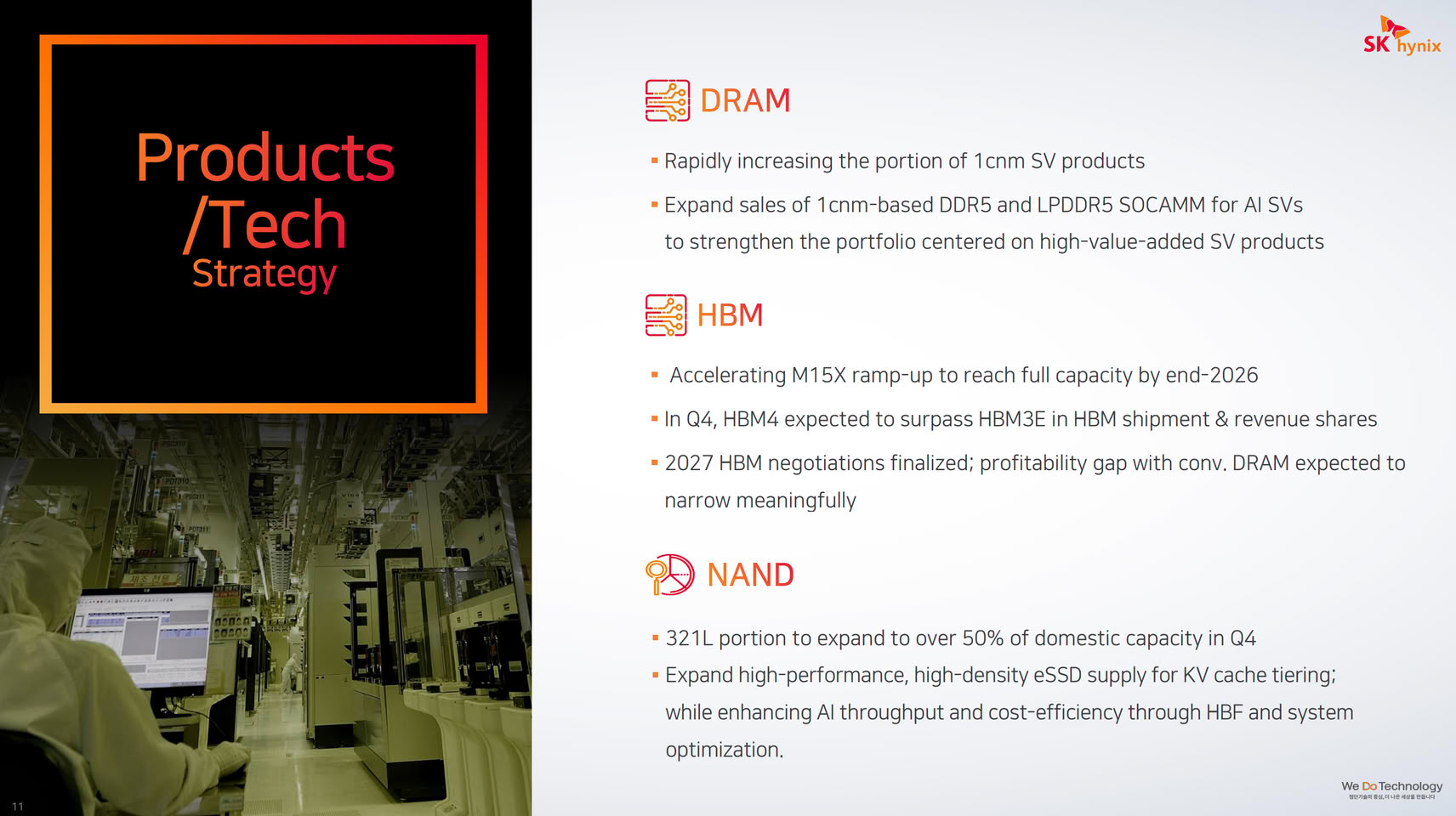
The earnings release also showed faster capacity building. SK Hynix plans to raise output at its M15X plant in South Korea to its highest level by year-end to increase HBM4 production. It expects HBM4 shipments and revenue to surpass HBM3E in the fourth quarter of 2026, making the newer product mainstream over time.
In conventional DRAM, the company will lift the share of sixth-generation 10-nanometer-class technology, known as 1c, and expand sales of DDR5 and LPDDR5-based SOCAMM products for AI servers. It also plans to increase the proportion of 321-layer NAND flash to supply more high-performance, high-capacity enterprise SSDs.
Such investments can ease future supply pressure, but near-term market structure may remain difficult. SK Hynix expects DRAM and NAND flash demand in 2027 to keep growing quickly. Because supply is constrained by fab construction cycles and advanced manufacturing processes, new capacity is likely to be absorbed by strong demand.
Long-term agreements reduce risk but do not stabilize retail supply
To manage demand volatility, SK Hynix is expanding long-term supply agreements with key customers. It has signed 14 major customers, including global cloud service providers. According to the company, contracted volumes cover more than 50% of its total capacity for 2027 and 2028.
These contracts often have longer terms, helping customers secure supply and allowing SK Hynix to plan equipment purchases, construction and capital spending more accurately. The company said it is also discussing longer contract terms with more customers; five years is a common period.
Still, long-term agreements do not guarantee stable procurement for all consumer-market customers. Large cloud providers and AI chip companies have strong purchasing power and can lock in substantial capacity through contracts, while PC makers, smartphone brands and retail channels may be exposed to leftover supply and price swings.
What it may mean for consumer products
For ordinary consumers, the supply-demand structure can have several effects. Higher memory and flash prices raise manufacturing costs for computers, phones and solid-state drives. Vendors may reduce base configurations, raise prices for high-capacity versions, or change price gaps between products. Some may delay upgrades or prioritize scarce memory chips for higher-margin devices.
Growing server-memory demand may also reshape traditional memory supply. When wafer and advanced-packaging resources shift toward HBM and other premium products, conventional DRAM can be indirectly affected. Even if PC memory is not identical to HBM, it remains influenced by production resources, investment priorities and overall semiconductor supply-demand conditions.
The forecast of shortage through 2030 does not mean every memory product price will rise for the next four years or every part will always be scarce. Different memory types may show very different supply-demand patterns; fab expansion pace, competitor investment, customer purchasing plans and changes in AI development can all affect actual prices.
An industry reoriented around AI infrastructure
The results show that the AI boom has changed investment direction in the global memory-chip industry. In the past, memory markets often moved cyclically with PC and smartphone demand. Now, large AI data centers have become a major new demand source, and related infrastructure projects have longer build cycles.
If AI adoption continues to widen, memory suppliers will be motivated to maintain high capital spending and prioritize HBM, server DRAM and enterprise SSDs. If AI investment slows, or new capacity arrives in concentrated waves, the market could again move toward supply-demand rebalancing.
For now, SK Hynix’s assessment is that expansion of advanced memory manufacturing capacity remains slower than demand growth. For consumer electronics, memory may no longer be a relatively stable cost item; it may become a major variable affecting product prices, hardware configurations and supply-chain planning over the coming years.