
ItInsightsWorld Analysis: U.S. AI Data Center Plans Could Erase 15 Years of Power Decarbonization
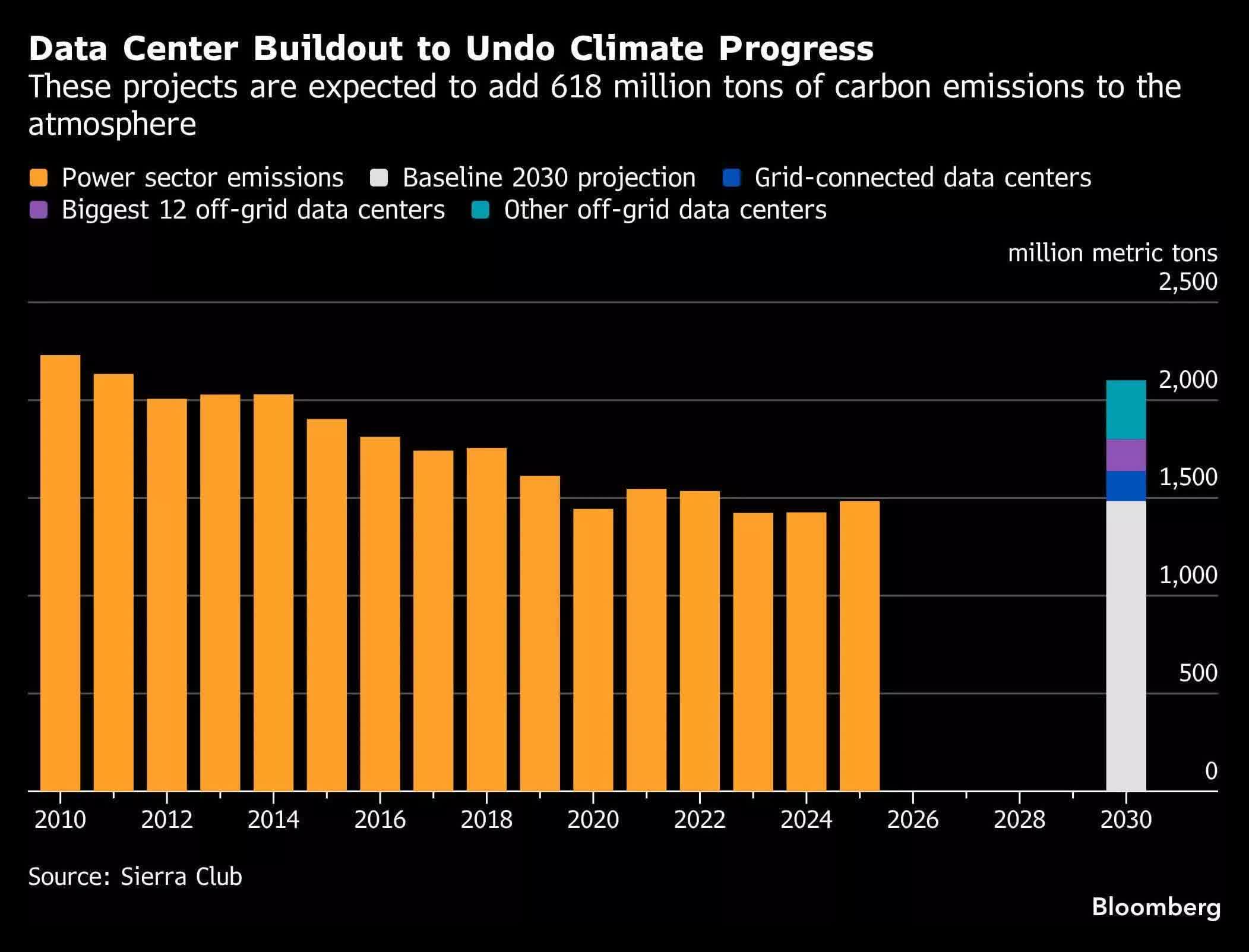
Bloomberg obtained a report in which the Sierra Club warns that the AI data center pipeline in the United States could add about 618 million tons of carbon dioxide from 2025 through 2030. The projection puts the related rise in power-sector emissions at 42%, putting 15 years of gains from coal decline, efficiency upgrades and renewable expansion at risk.
Latest numbers are much bigger than earlier forecasts
Under the same projection, emissions from the U.S. electricity system could climb to 2.1 billion tons by 2030. That figure is 2 to 4 times above the estimate made one and a half years ago, showing how quickly expectations around AI construction have changed.
Off-grid energy may reduce local strain but not global impact
Some operators are building dedicated power supplies to avoid lengthy grid queues. This approach can reduce pressure on residential networks and limit regional price effects, yet off-grid systems may still create more than 460 million tons of extra emissions, about the size of Mexico's one-year national carbon output.
The forecast spread is unusually large
- The distance between the highest and lowest projected emissions is larger than the combined electricity demand of California and Florida.
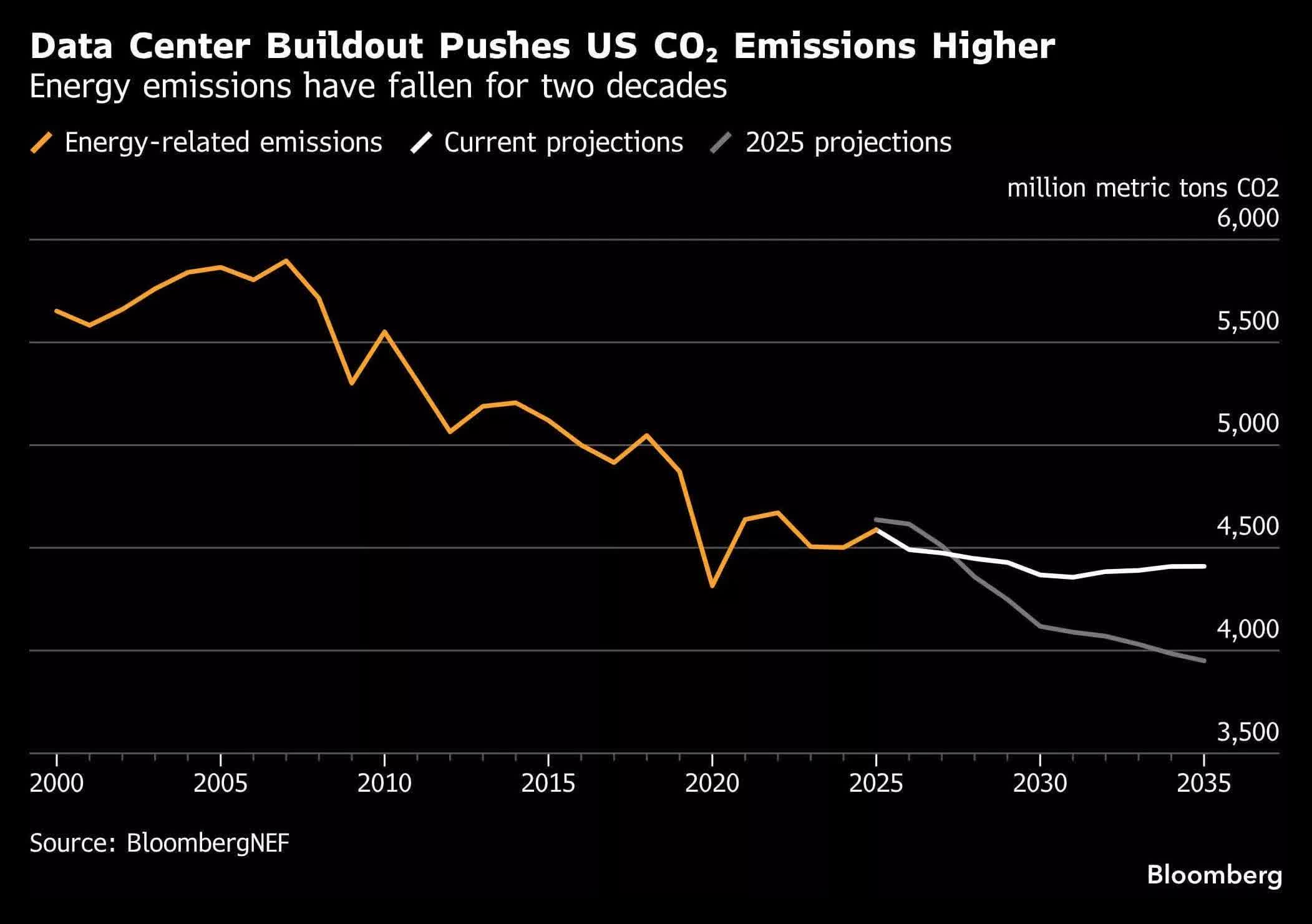
- Rhodium Group believes broad renewable deployment can soften the outlook; in its view, even the most pessimistic scenario leaves U.S. power-sector emissions in 2040 24% lower than 2025 levels.
- Sightline Climate says it is still unclear whether all announced AI data center projects will actually be built; it previously estimated that roughly one-third to one-half of U.S. projects planned to start this year could slip into delay or cancellation.
Power limits are already affecting deployment
Energy bottlenecks are beginning to slow the AI buildout. Electricity infrastructure is not keeping pace with demand, and some GPU rollout has proceeded more slowly. In some cases, purchased high-performance machines are waiting for sites with enough power.
A Texas project illustrates the tradeoff
The report highlights an Amazon data center planned in Texas that would rely on a natural-gas plant with capacity of 7.65 gigawatts. Approved filings indicate the facility could emit as much as 33 million tons of carbon dioxide annually, which would make it one of the largest single carbon emission sources in the United States if that ceiling is reached.
The compute-versus-climate balance becomes the test
In recent years, data centers have drawn criticism for electricity demand spikes, heavy water use and burden on local communities. As AI models become larger, the question is no longer only how to expand computing capacity, but how technology companies, energy providers and regulators can align that growth with emission reduction goals.