
Singapore Airlines' $2 Billion Cabin Redesign: A Practical Guide to the Backlash | ItInsightsWorld
The short answer: SIA is committing more than SG$2 billion to new First Class, Business Class, Premium Economy and Economy products that enter service from the second half of 2027, and the Instagram-led reveal produced a design argument rather than a collapse in demand. CARMA recorded 49.4% negative sentiment, but the analysts tracking the conversation treat that as a debate about what a premium national carrier should look like. Here is what actually changed, how to read the numbers, and what travellers and product owners should do next.
What changed, and where you will see it first
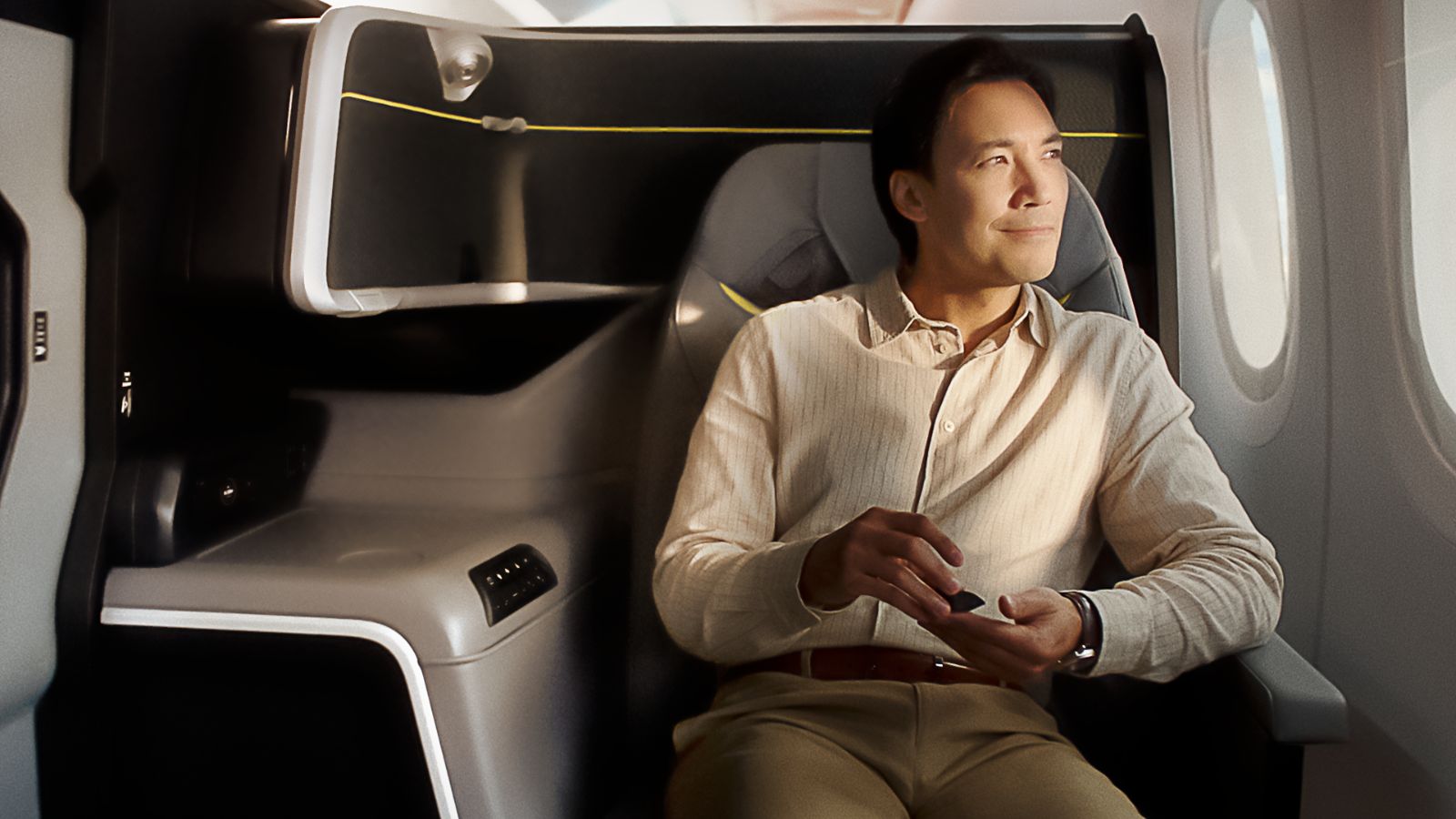
Singapore Airlines appeared repeatedly on Instagram after its launch event, when creators shared first looks at the seats, interiors and in-flight dining. Munah Bagharib and Bellywellyjelly were among the local personalities who walked followers through the new cabins. The refresh covers all four long-haul classes, with design work split between PriestmanGoode, Designworks and Factorydesign — three design studios inside one programme.
Two dates and one aircraft list decide whether this affects you. The cabins are expected to enter service from the second half of 2027, and the hardware is not being fitted uniformly. Coverage of the launch points to 41 retrofitted Airbus A350-900 long-haul and A350-900ULR aircraft plus the incoming Boeing 777-9: the 777-9 is expected to carry all four new products, the A350 retrofit concentrates on Business Class, and the ultra-long-haul A350-900ULR gains First Class for the first time. SIA's own November 2024 press release described a S$1.1 billion multi-year installation programme across the A350-900 fleet, one component of the total the airline now describes as more than SG$2 billion. Reuters framed the same spend at roughly US$1.6 billion, a useful currency check for readers comparing it with rival capital plans.
The airline also used the launch to talk up its KrisFlyer overhaul, which signals that the refresh is a loyalty and revenue story, not only an interior story.
Which cabin drew which reaction
| Cabin | What the reveal emphasised | Where the pushback landed | Practical takeaway |
|---|---|---|---|
| First Class | Retained luxury cues; 32,649 engagements, or 28.8% of the conversation | Fear that the warm, expensive-looking palette disappears | Existing First Class product is still flying; compare before you judge |
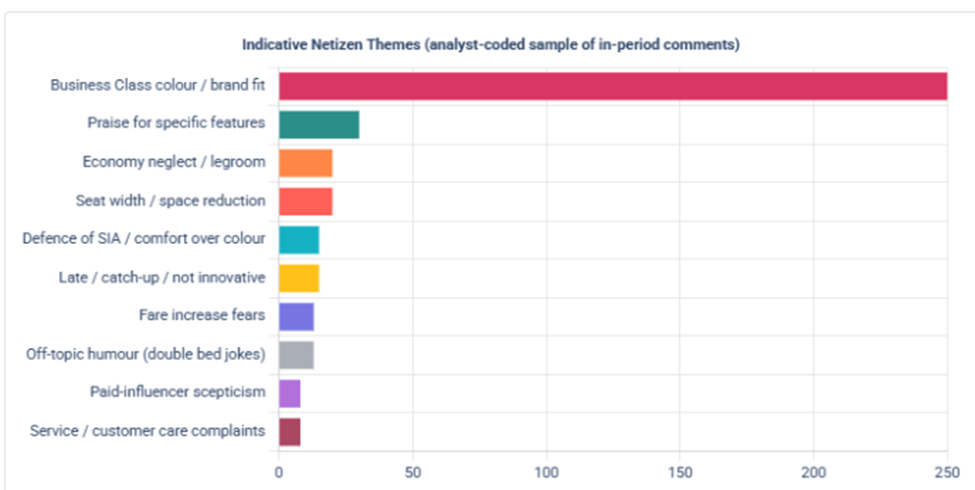
| Business Class | Sliding doors, larger beds, privacy suites | Grey, white and neon-yellow palette; 40,506 engagements, or 35.7% | This is the cabin where most premium travellers meet the brand |
| Premium Economy | Part of the all-cabin scope | Little specific criticism in the listening data | Check aircraft type before assuming an upgrade |
| Economy | Product refresh included in the programme | Seat width, Economy Class comfort and perceived fairness | Facebook debate here concerns value, not aesthetics |
Why the reaction turned negative so quickly
Three mechanisms, all visible in this episode, explain the speed of the backlash: a creator-first reveal that handed the narrative to outsiders; a colour change on the cabin that carries most premium revenue; and a fragmented design signature across classes.
DJ Jade Rasif posted an Instagram reel of the existing First Class cabin with the text “Last chance to fly Singapore Airlines before they make it ugly”, adding in the caption: “Goodbye warm colour palette, goodbye expensive looking things.” It is unclear whether she was among the creators invited to the launch event, which is itself part of the problem.
Local influencer Darshen, a former Singapore Airlines cabin crew member, welcomed the sliding doors for Business Class passengers but attacked the aesthetics, comparing the new seats to dental chairs, which he said usually is not a good experience, and urging a rethink of the colour palette. He posted: “As a PPS Club member, I'm very loyal to you guys, but after seeing the new business class seats, it's very hard to be loyal,” followed by “Please change the business class colour palette. It's not too late,” and “We are the world's best airline, we must look classy. We can't look like a dental chair.”
In the US, travel influencer Maxmilespoints made the same comparison to a doctor's examination or dentist's chair and linked the dark grey and neon yellow detailing to Spirit Airlines' seats. Having worked in visual design for 10 years, he questioned whether separate cabin designs would add up to one experience: “When you have that many cooks in the kitchen working on one project, you kind of lose that visual cohesiveness,”
How to read the sentiment numbers correctly
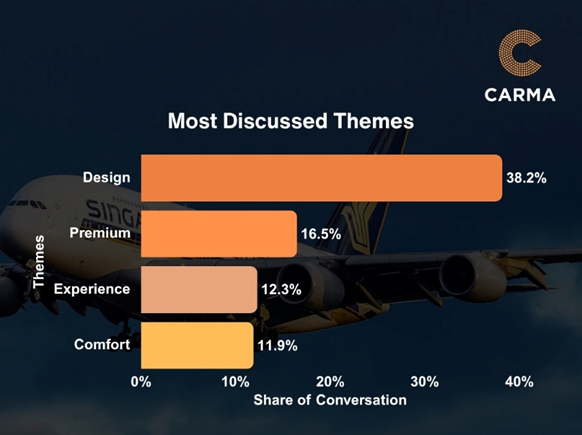
Conclusion first: the data measures a loud aesthetic argument, not a withdrawal of demand. CARMA's social listening recorded the shares below, with the Business Class palette the single most discussed item.
| Measure | Result |
|---|---|
| Negative sentiment | 49.4% |
| Positive sentiment | 14.46% |
| Neutral sentiment | 36.14% |
| Design share of conversations | 38.2% |
Truescope separately recorded 113,392 engagements and approximately 3.47 million views around the cabin refresh. Business Class generated 40,506 engagements, or 35.7% of the total, while First Class accounted for 32,649 engagements, or 28.8%. Discussion moved beyond looks to seat width, Economy Class comfort, the rollout timeline and whether the investment could eventually affect fares, and some recognised the practical improvements even while rejecting the visual direction.
Platform choice shaped how the story travelled. Truescope found that TikTok generated the highest engagement and accounted for 92% of shares; Instagram recorded approximately two million views and the highest number of comments; and Facebook discussions leaned towards Economy Class comfort and perceived fairness.
Truescope Singapore managing director Kelvin Koh cautioned against reading the reaction as a verdict: “The social response is not a rejection of Singapore Airlines' investment. It is a debate about what people expect from a premium national carrier, and even many of the critics recognised the practical improvements in the new cabins,”
What the airline and its designers answered
SIA's leadership pointed to customer research and to the wider journey. In a video shared by Australian travel creator The Points Wanderer, vice president of product experience Ong Wah Li said customers wanted a more contemporary aesthetic: “We spoke to our customers, and they said they wanted a more modern refreshed look. We worked with Designworks and Julia de Bono to come up with the colour palette that is modern and refreshed, yet elegant and refined that's suited to business travel,”
Chief commercial officer Lee Lik Hsin argued that different cabin colours do not break brand consistency, because the brand is not only a cabin: “The cohesive customer experience for Singapore Airlines goes far beyond colour. It even goes far beyond a cabin. It is the end-to-end experience that we provide.”
In another circulating on Instagram, Designworks CEO Julia de Bono compared the grey tones to a business suit and the white accents to linen and sneakers, with yellow adding energy, and described it as bringing zestiness to the cabin. “I think it works very well for Business Class. You have the silver accents that pop in front of the yellow, so I think it works very well,” De Bono said.
Is the criticism fair? Benchmark it
Two facts cut against the loudest critics. First, the functional gains are real: every Business Class seat in the new layout gets a sliding door, a fully flat bed reported at 79 inches and a large 4K OLED screen, according to InsideFlyer's seat-by-seat breakdown. Second, privacy doors are no longer differentiating: Business Insider reported in April 2026 that door-equipped business suites from American, Delta and United are effectively standard on new airplanes, which means SIA is closing a gap rather than opening one.
That is the same logic Nafe Tong, founder and chief creative officer at ABrandADay, applied to the programme, noting that some upgrades, including flat beds and greater privacy, have been available from competitors for some time. As a later mover, he argues, SIA can learn from others and deliver a more polished result.
The brand-risk reading is harsher. Professionals quoted by MARKETING-INTERACTIVE saw value in distinct cabin identities but warned of fragmentation. Vantage Branding managing and creative director Simon Lee said the different designs give each class character, adding: “Business Class is a better product, with more space and more privacy, but if you showed it to me on its own, I'm not sure I'd guess the airline. And that matters, because Business Class is where most premium customers actually experience the brand,” Lee noted that three design studios can provide reasons to trade up, and that the automotive influence is apparent given Designworks' association with BMW — but differentiation should not cost recognisable brand cues. “Being different is fine. Being disconnected is the risk.” He pointed to SIA's batik motifs, warmth and attention to craft as the shared cues that can hold the cabins together.
Bonsey Design chief creative officer and CEO Jonathan Bonsey went further: “I understand the choice of BMW DesignWorks. The association with precision and premium engineering is obvious, perhaps too obvious. But the result is so different that Business Class feels like another airline altogether,” For Bonsey the question is not whether one cabin is well designed in isolation but whether it strengthens the whole identity: “If the goal was to elevate the brand through a more advanced experience, the outcome has done something else: it has fragmented it.”
Tong offers the commercial counterweight: “It's also a smart commercial move. Each cabin becomes a proposition in its own right, with its own appeal and reasons for people to trade up,” He also cited SIA's amenity collaborations with brands such as Sisley, Byredo and Ink & Water as extensions of the experience: “A good brand experience should have a life beyond the point of purchase, or in this case, beyond the flight,” As Bonsey put it of the tension between distinct cabins and one brand: “For a brand built on seamless consistency, that's no small risk.”
A six-step playbook for redesigning a flagship product
- Model the loyalty response before the reveal. The sharpest criticism came from insiders — a former cabin crew member and a self-declared PPS Club member. Test concepts against your most loyal segment, not a general panel.
- Appoint one design owner. With three design studios across four cabins, someone must own the shared visual grammar; cohesiveness is a governance decision before it is a taste decision.
- Protect at least two heritage cues. Batik motifs, warmth and craft are the cues Lee identifies as transferable across classes; keep one or two in every cabin so each product remains guessable as your brand.
- Show the spec sheet with the mood board. The practical wins — 79-inch flat beds, sliding doors, larger screens — were underplayed relative to the palette, which let colour dominate the debate.
- Choose platforms by conversation type. TikTok drove 92% of shares, Instagram drew the most comments, Facebook argued about fairness; a hero video alone will not manage that spread.
- Answer fast and concretely. “It's not too late” is a request for a decision, not a design opinion. A stated willingness to adjust trim or lighting within the palette defuses most of this volume.
Common pitfalls when you judge a redesign from the reaction
- Reading sentiment as sales. A 49.4% negative share measures conversation, not bookings; the cabins do not fly until the second half of 2027.
- Assuming your booking will show the new product. Retrofit programmes mix fleets, so a single aircraft type — A350-900, A350-900ULR or 777-9 — determines which cabin you actually get.
- Treating creator coverage as endorsement. Some of the most-watched posts were criticism, and it is unclear whether all posters attended the event.
- Judging a cabin in isolation. Reviewers compared the new Business Class against First Class and Economy, not against a competitor product.
- Ignoring the loyalty mechanics. The same pattern appears in non-aviation brand disputes, such as the National Trust member vote that turned a partner decision into a governance question.
What to do now, depending on who you are
- Frequent long-haul flyers: check the aircraft type before booking post-2027 itineraries, and note whether your route is A350-900, A350-900ULR or 777-9.
- Status holders: the reveal was tied to a KrisFlyer overhaul, so review tier and mileage rules before assuming the value of your PPS Club standing is unchanged.
- Fare-sensitive travellers: there is no evidence in the coverage that more than SG$2 billion automatically raises fares; watch retrofit timing and fleet capacity instead.
- Brand and product owners: run the six-step playbook above and add a design-cohesion gate to your launch approval checklist.
Frequently asked questions
Did customers reject the Singapore Airlines cabins?
No. Negative sentiment reached 49.4% and positive 14.46%, but Truescope Singapore's Kelvin Koh described the response as a debate about expectations of a premium national carrier, with critics conceding the practical improvements.
When can travellers actually fly the new product?
From the second half of 2027, progressively, on 41 retrofitted A350-900 and A350-900ULR aircraft and the new 777-9.
Why did the colour palette trigger so much attention?
Design accounted for 38.2% of conversations. Grey, white and neon-yellow trim sat against an established image of warmth, and critics compared it to Spirit Airlines and to dental chairs rather than to a luxury cabin.
Is a multi-studio cabin strategy a mistake?
Not inherently. It can give each class its own proposition and reasons to trade up, but as Simon Lee warned, differentiation becomes risky once customers can no longer recognise the brand in a single cabin.
Sources
- Singapore Airlines press release on the long-haul cabin investment programme (November 2024).
- Reuters reporting on the cabin investment and competitive context (November 2026).
- InsideFlyer technical breakdown of the redesigned long-haul Business Class cabin.
- Business Insider comparison of door-equipped business suites at American, Delta and United (April 2026).
- CARMA and Truescope social listening data, and MARKETING-INTERACTIVE industry commentary, as recorded in the original coverage.