
Fundamentals Over Tactics: A Practical Brand Growth Checklist (ItInsightsWorld General)
By Nina Roberts, ItInsightsWorld General
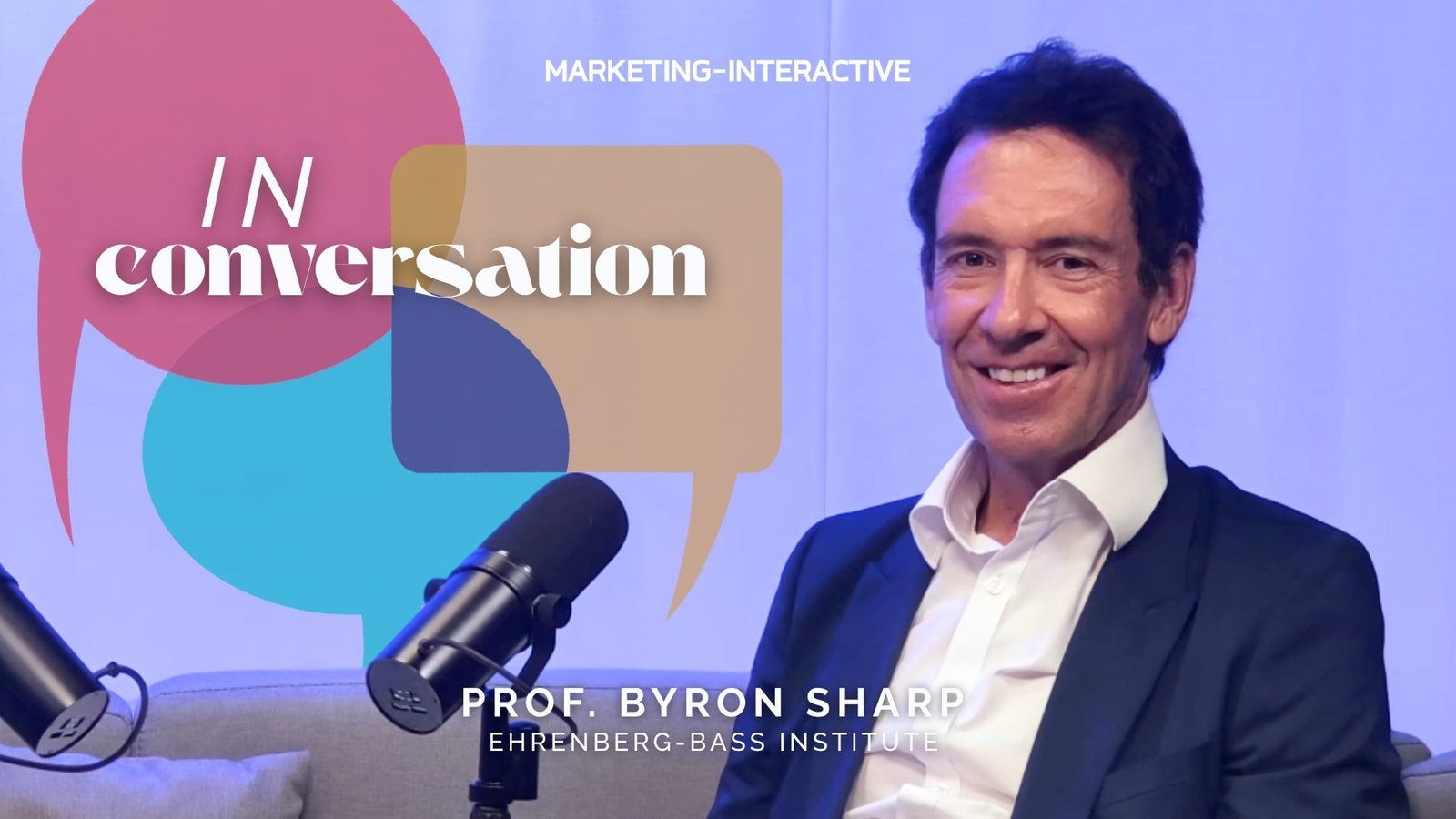
Picture a mid-sized consumer brand: 40,000 loyalty members, performance ads hitting their ROAS target, and a growth chart that refuses to move. Byron Sharp of the Ehrenberg-Bass Institute says that is not a tools problem — it is a fundamentals problem. On Marketing Connected's "In Conversation" podcast he argues that brands grow by being easy to think of and easy to buy, not by stacking on more tactics.
Sharp is the director of the Ehrenberg-Bass Institute and the author of How Brands Grow. In the conversation he took on several long-established marketing practices, and his central claim is that the basics of consumer behaviour have shifted far less than the industry assumes.
Why tactics feel productive but rarely grow the brand
Sharp's starting point is blunt. "The fundamentals about how people buy, that's pretty hard to change," he says, and his point is that new media, retail media and AI shopping tools are changes in the instruments available to marketers — not changes in the underlying principles of how people choose.
That distinction matters because the industry keeps reorganising itself around whichever instrument is newest. Marketing-Interactive's coverage of the interview on 12 November 2026 frames it the same way: too much time on tactics, too little on what actually makes brands grow.
What "the fundamentals" actually means, in plain language
Two ideas carry most of the weight, and both come from How Brands Grow:
- Mental availability — the brand is easy to bring to mind in a buying situation, because enough memory structures connect it to enough categories and occasions.
- Physical availability — the brand is easy to find and buy, in the places and moments where people already shop.
Underneath both sits the Double Jeopardy law, documented across decades of buyer-panel data by the Ehrenberg-Bass Institute: smaller brands have both fewer buyers and slightly lower loyalty than larger ones. Penetration — how many people buy a brand at all — does far more work than purchase frequency, which is why the institute's guidance is that growth comes from acquiring non-customers rather than from retention schemes. (marketingscience.info)
| Tactic-first thinking | Fundamentals-first thinking |
|---|---|
| What campaign can we run next quarter? | Who are we failing to reach at all? |
| How do we make existing buyers purchase more often? | How do we become easier to think of and easier to buy? |
| A loyalty programme as the growth engine | Distinctive brand assets plus wide distribution |
| Chasing the newest media platform | Showing up in the buying moments people already use |
The loyalty trap
Sharp is at his most pointed on loyalty. Much of what marketers call loyalty, he argues, is habitual buying: people return to brands they recognise and have bought before, without necessarily feeling any attachment to them. His warning, in his own words: "The big trap that marketers fall into is they think they have to do something extra to get loyalty."
The Double Jeopardy pattern explains why the trap is so easy to fall into. Loyalty metrics tend to rise with brand size, so a large brand looks "loyal" and a small one looks "disloyal" — but the causality largely runs the other way. A scheme aimed at existing customers is therefore fighting the harder battle, while cheaper growth sits in the much larger pool of people who already buy the category but do not yet buy the brand.
Performance marketing: useful, but structurally narrow
Performance marketing works by intercepting people who are already close to buying. That is efficient, and it is also the whole problem: it systematically under-serves the far larger group of consumers who are not in the market today and will be in a few months.
The money flowing that way is enormous. WPP Media's GroupM unit, in its 2026 midyear "This Year, Next Year" forecast, projected global advertising revenue to reach $1.3 trillion by the end of 2026, up 8.9% year on year — the highest share of GDP since 1999. (wppmedia.com) When that much budget chases people who were about to convert anyway, the incremental growth is smaller than the dashboard implies.
The cost you can measure: friction
Sharp also questions programmes that deliberately slow the purchase experience. Convenience, he argues, is an underestimated growth driver: queues, stock shortages and clumsy checkout can cost a brand sales even when demand already exists. Those losses rarely appear as a line item; they appear as a flat sales curve and a puzzled marketing team.
| Friction point | What it quietly costs |
|---|---|
| Out-of-stock on the hero product | The sale walks to a competitor, and the buyer may not return |
| Long queue or slow checkout | An abandoned purchase at the moment demand was highest |
| Forced sign-up before payment | Extra steps between intent and money changing hands |
| Weak search and discovery | The brand is never considered, so it cannot be chosen |
The AI question: a tool, not a shortcut
As AI reshapes the industry, Sharp does not treat it as a shortcut to better marketing. Its largest benefits, he believes, will go to people who already understand the discipline. "AI is going to unleash amazing abilities for bright marketers, well-trained bright marketers," he said, adding: "It won't help average marketers much at all."
The operational implication is uncomfortable: teams that have not fixed the fundamentals will simply automate their confusion faster.
A practical checklist for the next quarter
- Audit reach before frequency. Measure how many category buyers can recall and recognise the brand, not just how often existing customers buy.
- List the buying moments. Write down every occasion and channel where the category is bought, then check whether the brand is easy to think of and easy to find in each.
- Audit the purchase path for friction. Time the checkout, check stock on top products, and remove steps between intent and payment.
- Separate habit from attachment. Before funding a loyalty scheme, test whether repeat purchase is driven by convenience and memory or by genuine preference.
- Cap performance spend against a reach target. Set a floor for broad-reach activity so budgets do not drift entirely to people who were already converting.
- Link every tactic to a growth metric. If a campaign cannot be tied to penetration or availability, treat it as activity rather than growth.
Common mistakes
- Buying frequency when the data says penetration is the constraint.
- Treating a loyalty programme as proof of brand health rather than a hypothesis to test.
- Confusing distinctive advertising with loud advertising.
- Measuring last-click conversions and crediting them to the whole plan.
- Assuming AI will close a fundamentals gap instead of widening it.
FAQ
Is loyalty worthless?
No — but it is mostly an outcome. Repeat buying is real, yet much of it is habit rather than attachment, so schemes that assume deep emotional loyalty often overestimate their leverage.
Should we stop performance marketing?
Not stop, but stop treating it as the plan. Performance channels convert existing intent efficiently; growth still has to come from the much larger group of buyers who are not currently shopping.
What should we measure instead?
Penetration, mental availability (how easily the brand is recalled in buying situations) and physical availability (how easy it is to find and buy). These move more slowly than conversion metrics, but they track growth.
Will AI make fundamentals less important?
The opposite. Sharp's argument is that AI amplifies whoever already has a clear, evidence-based approach — so the fundamentals become more decisive, not less.
Where can I hear the full conversation?
The conversation is also available on Spotify and YouTube.
Sources
- Ehrenberg-Bass Institute, "Effective brand growth: Acquisition or retention?" — https://marketingscience.info/news-and-insights/effective-brand-growth-acquisition-or-retention
- WPP Media / GroupM, "This Year, Next Year 2026 Midyear Forecast" — https://www.wppmedia.com/news/report-this-year-next-year-midyear-2026
- Marketing-Interactive, "In Conversation: Marketers are busy chasing loyalty, but are they growing brands?" (12 November 2026) — https://www.marketing-interactive.com/in-conversation-professor-byron-sharp
Sharp's wider challenge to the industry is to stop mistaking marketing activity for marketing effectiveness, and to become more rigorous about which efforts genuinely contribute to growth. The next step is unglamorous: this quarter, fix one friction point in the purchase path and track one mental or physical availability metric. Fundamentals do not announce themselves — they compound.