
ItInsightsWorld General Desk: A Step-by-Step Playbook for Shared Locker Deposits That Never Land
Lead with the conclusion: on a shared luggage locker, a screen that reads "refund successful" is a status message, not proof that money moved. In a growing number of complaints, the deposit is routed into the operator's own mini program, where it waits for a manual withdrawal that most travellers never remember to make. This guide, written for general readers on ItInsightsWorld, breaks the trick into visible steps, hands you a 60-second check before you scan a QR code, and shows where existing rules already stand on your side. The one-line summary: treat a deposit as money you must actively collect, not money that returns by itself.
What Some Operators Are Actually Selling
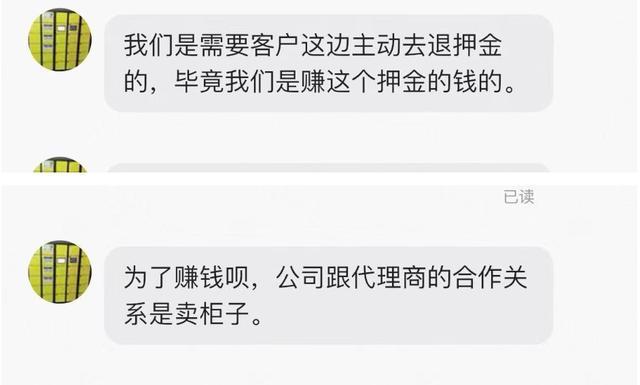
Faced with complaints, shared luggage locker operators do not always deflect. Some state the model openly: "we make our money on the deposits." That sentence reframes the entire transaction. The hourly locker fee is the visible product; the money parked against your bag is the invisible one. Small, scattered sums, forgotten by people rushing to a train, accumulate into a float the operator can sit on for weeks.
The design goes one step further. Some operators register multiple mini programs that run independently of each other and do not pool funds. Once complaints concentrate on one front, that mini program is simply abandoned and a freshly named one takes over, so the money trail never shows the operator's real scale. The intent is patient and unmistakable: quietly pocket users' deposits.
Price First, Then Trust: How a Budget Service Got Expensive
Right now, the shared lockers lined up at railway stations, metro stations and scenic areas no longer look like the low-cost, community-friendly storage of earlier years. They are a contested asset that capital races to acquire. Driven by short-window, high-intensity travel, they bill by elapsed time: a few yuan per hour, and a couple of hours already pushes a bill toward the 30-yuan ceiling. A staffed counter nearby typically charged 10 or 15 yuan for a whole day.
| Comparison point | Traditional staffed counter | Shared locker run through a mini program |
|---|---|---|
| Price logic | Roughly 10 or 15 yuan for a full day | A few yuan per hour, reaching the 30-yuan ceiling within a few hours |
| Deposit handling | Rarely required; fee paid up front | Frozen against the order before the door even opens |
| Refund trigger | Settled face to face, verbally | Automated message, sometimes into the operator's own balance |
| Evidence you keep | Paper ticket, easy to show | Screenshots plus payment-statement entries |
| Typical failure mode | Argument over the price | A manual withdrawal step nobody remembers to take |
When the price of a service rises this sharply, service discipline should rise with it. Instead, some operators keep a second layer of smoke and mirrors at the deposit stage and monetise forgetfulness, plus the high effort of chasing a few yuan back, plus the habit of shrugging and saying "forget it" when a small dispute appears. That is not a pricing strategy; it is money made from consumer carelessness and from the compromise people reach in small arguments.
How the Trap Is Built: Five Moves, In Order
- Deposit freeze. Before the locker opens, a fixed sum (commonly 30 yuan) is authorised on top of the storage fee.
- Return and close. You collect your bag; the order shows as finished.
- The reassuring toast. The screen displays "refund successful" — technically true only of a record, not of money reaching you.
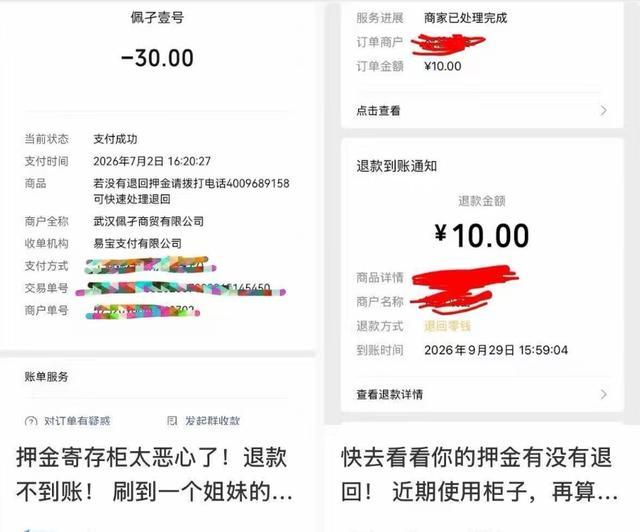
- Rerouting. The sum is parked in the mini program's own account balance instead of being returned along the original payment channel.
- Manual withdrawal with friction. A separate withdrawal action is required, sometimes behind high minimum thresholds on certain orders. Skip it, and the operator keeps the float.
Your Playbook: A 60-Second Pre-Use Check and a Recovery Sequence
Before you stow your bag
- Read the deposit line, not just the hourly price, and note the stated cap.
- Open the mini program's profile page from the in-app menu and check the verified operating entity and its filing record; save a screenshot.
- Avoid any order flow where the deposit refund path is not spelled out on screen.
- If a physical counter, a station office or a shop charges 10 or 15 yuan for a full day, compare it against a few yuan per hour before you commit.
After you pick the bag up
- Screenshot the closed order, the deposit amount and the refund message on the spot.
- Open your payment statement and confirm whether a refund entry actually appears on the original channel; an in-app badge is not a bank movement.
- Check the mini program's balance page. If the deposit sits there, withdraw it immediately, then confirm the withdrawal record.
- Set a calendar reminder for 7 days later to re-check the statement; deposits go missing in the gap between "shown as refunded" and "received".
- If nothing arrives, contact the named operating entity in writing and keep the reply.
- Escalate to the national consumer complaint channel at 12315.cn (website, official app, mini program search, or the hotline). The platform assigns cases to the local market regulator, which decides within seven working days whether to accept; progress can be queried online.
What the Rules Already Say — and How to Quote Them
Legally, a deposit is collateral for performance. Ownership never leaves the consumer; the operator carries only a temporary custodial duty and cannot unilaterally change the refund path or bolt on a withdrawal gate.
| Rule | What it requires | How to use it in your complaint |
|---|---|---|
| E-Commerce Law, Article 21 (full text published by the Ministry of Commerce) | Operators taking deposits must clearly disclose the refund method and procedure, must not attach unreasonable conditions, and must refund promptly when conditions are met | Quote it when the refund path was never displayed before payment |
| E-Commerce Law, Article 78 | Violations of Article 21 can draw an order to correct within a deadline plus a fine of 50,000 to 200,000 yuan, rising to 200,000 to 500,000 yuan in serious cases | Use it to show the issue is an enforceable violation, not a design preference |
| Implementation Regulation of the Consumer Rights Protection Law (State Council Decree No. 778, effective July 1, 2024) | Deposit refunds must have the method, procedure and time limit agreed in advance, with unreasonable conditions prohibited | Ask for the pre-agreed time limit the operator said it would meet |
| Article 17 of the same regulation | Standard terms may not unfairly shift responsibility onto the consumer or restrict the consumer's rights | Apply it to hidden "balance first, withdraw yourself" clauses |
On top of these, the State Administration for Market Regulation has repeatedly stressed in its guidance on the sharing economy that forcing a deposit into a platform balance and erecting withdrawal barriers without the consumer's explicit consent amounts to an unfair standard clause, which can be held void in law. Deliberately diverting deposits into a mini program balance therefore crosses a legal line, not merely a service line.
One more practical lever: since the filing rules tightened for mini programs — new ones required to complete registration before going live from September 1, 2023, and existing ones by March 31, 2024, according to platform notices — every throwaway front is tied to a named, filed entity. Swapping shells creates paperwork for regulators rather than invisibility, so always record the entity name shown in the mini program's information page.
Five Misconceptions That Cost People Their Deposits
- "Refund successful means the money is mine." It confirms a bookkeeping state; verify the original payment channel instead.
- "It is only a few yuan, not worth chasing." That assumption is the business model — the collective surrender of small sums is what becomes the float.
- "The deposit becomes the operator's money once paid." No: it remains your collateral, held in trust.
- "A new mini program means no one is accountable." The filing record and payment routing still identify an entity.
- "Only on-site staff can help me." A written complaint through the national hotline or platform creates a case number that the operator must answer.
FAQ: Quick Answers for Travellers
Is a shared locker deposit a fee in disguise?
No. If it were a fee, it would be non-refundable and would appear as revenue; a deposit is refundable collateral, which is why a forced transfer into an in-app balance is the tell-tale sign of the trap.
How long should a refund take?
The rules say "promptly" once conditions are met, and the 2024 regulation requires the agreed time limit to be set in advance. If an operator never disclosed a limit, that omission is itself the complaint.
What if the mini program has vanished?
Keep the payment-statement entry showing the receiving entity, screenshot the dead page, and report both through 12315; batch registration and shell-swapping are exactly the patterns regulators are asked to look through.
Does complaining cost anything?
No. The national platform and hotline are free public channels; the cost you pay is time, which is precisely why the practice relies on you giving up.
A Familiar Pattern, One Layer Up
This is not the first time pooled deposits have outgrown the service attached to them. China Consumers Association data reviews flagged the shared economy as a rising complaint hotspot back in 2018, when some operators were exposed for misappropriating deposits, collapsing, or simply refusing refunds. More recently, the association's quarterly analysis of complaints accepted in the first quarter of 2025 singled out sharing services again, this time for power banks that are hard to return and orders that keep billing after return. The recurring lesson for readers: wherever a small sum is frozen first and reconciled later, build your own verification step into the habit.
Bottom Line: Convenience Should Never Depend on Your Memory
Nowadays the lockers deployed in transport hubs and scenic areas run on foot traffic that public spaces effectively hand to them, which gives them a local monopoly. That position carries a duty to serve the public, not to plant snares in public settings. The social feed is full of warning-and-avoidance posts about deposits that never come back, and some operators admit it in plain words: "we make our money on the deposits." Since the trick has now been laid bare, the correction should not stop at the surface. Regulators need to pierce layer after layer of mini program shells, watch for batch registration and shell-swapping, and treat misleading refund notices and void standard clauses as violations worth real cost. When "refund successful" is used as a decoy, that is not a process flaw; it is engineered misdirection. A convenience business must not be allowed to turn into a business that cheats people — and readers can help close the loop by checking their own statements before they say "forget it" about someone else's carelessness.
Brought to you by IT Insights on ItInsightsWorld, General desk. For questions about this guide, write to contact@itinsights.com.