
Anthropic Co-Founders' $1.75 Billion IPO Sale Compared: Signal, Liquidity, or Control Risk?
When a filing says seven co-founders will sell $1.75 billion in next week's IPO, the number feels like a production incident: large, public, and easy to misread. Tuesday's prospectus disclosure says each co-founder may take about $250 million at the midpoint of the price range. Compared with routine insider liquidity, the signal is weaker than the headline suggests; compared with a control-risk event, the key is not the cash out, but the voting power left behind.
What are the exact numbers disclosed on Tuesday?
On Tuesday, the latest filing said the San Francisco-headquartered Anthropic is seeking as much as $90.4 billion through the IPO and a private placement, at a valuation of about $1.4 trillion. The transaction is expected to price on Nov. 18, with trading to begin the next day. Seven co-founders are selling $1.75 billion in total; the Billionaires Index values each founder at about $18 billion after the sale.
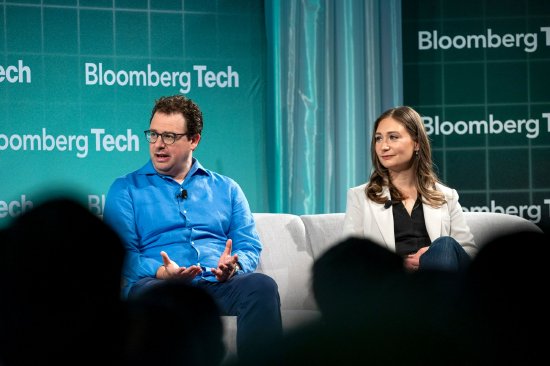
Anthropic co-founders Dario and Daniela Amodei.
| Disclosed item | Number | Decision use |
|---|---|---|
| Founder sale | seven co-founders, $1.75 billion total | Read as a partial cash-out only after comparing it with the raise size and retained control. |
| Per-founder sale | about $250 million each | Large for an individual, but small against a multi-billion-dollar personal stake. |
| Capital event | as much as $90.4 billion | The sale is under 2% of the maximum disclosed capital raise, which tempers panic. |
| Valuation | about $1.4 trillion | Makes the wealth figure high, but also makes the float question harder to ignore. |
| Timing | pricing Nov. 18, trading the next day | Leaves little time for a narrative reset once trading starts. |
Is $1.75 billion unusual for a founder IPO sale?
Raw dollar size is unusual. In Google's 2004 IPO, The Washington Post reported that Larry Page and Sergey Brin each sold about $41 million, while Eric Schmidt sold about $31 million. Anthropic's planned sale is far larger in absolute terms. But a fair comparison needs ratios: the founders are selling against a maximum raise of $90.4 billion, and Jay R. Ritter, professor emeritus at the University of Florida's Warrington College of Business, has argued that the relative scale of the offering and the changed investor attitude toward insider liquidity mean the sale is unlikely to scare buyers.
How does the founder selling map to market behavior?
- Signal strength: The headline number is large, but the sale's share of the total deal is much smaller.
- Precedent: Founder selling at IPO is not new; Google's 2004 listing included founder sales, though at a much smaller dollar value.
- Context: A $1.4 trillion valuation creates a high absolute cash figure even when the percentage of holdings sold is modest.
What makes this sale different from a post-lock-up dump?
A normal lock-up expiration is often watched because it releases a large block of shares that did not trade before the IPO. The SEC says most lock-up agreements prevent insiders from selling for 180 days, although terms vary. Anthropic's founder sale is disclosed before pricing, so it is a known input rather than a post-listing supply shock.
| Scenario | When shares become available | Why it matters | How to judge it |
|---|---|---|---|
| Founders selling in the IPO | At pricing on Nov. 18, with trading the next day | Known in the prospectus | Check percentage sold, voting control, and demand depth |
| Lock-up expiration | Commonly after about 180 days | Potential supply increase after the company has traded | Check the prospectus's release conditions and earnings triggers |
Does founder control change the interpretation?
Yes, and this is where the comparison gets practical. CNBC reported from Anthropic's IPO filing that the seven co-founders will be sole members of Founder LLC, which is tied to 50.1% of voting power through a Class F share. The same control structure appears in the company's prospectus. Selling shares for cash is not the same as selling control.
Three ways to read the $1.75 billion sale
| Reading | What it gets right | What it ignores | Best use |
|---|---|---|---|
| Bearish founder exit | Focuses on absolute cash amount | The size of the deal and Founder LLC's voting structure | Useful if buyers need proof of alignment, not just confidence |
| Routine liquidity | Reflects long paper wealth and modest salaries | The optics of selling at the first public day | Best for investors already underwriting the AI valuation |
| Governance risk | Highlights control that remains after a cash sale | Whether public shareholders can influence strategy | Most relevant for long-term owners and index buyers |
Who should care most, and who should not?
For a general reader, this is not a yes-or-no signal. It is a weighting question: the bigger the deal, the more a founder sale says about liquidity; the more entrenched the control, the less it says about commitment. For an IPO participant, the useful comparison is not just "founders sold" but "what remains unsold." For a retail buyer, the most actionable fact is whether the offering has enough demand to absorb $1.75 billion of founder stock and $90.4 billion of maximum capital movement. If the valuation conversation is already cooling, as discussed in Anthropic's IPO valuation, the sale should be read with more caution.
FAQ: What does the $1.75 billion founder sale actually mean?
Why does the sale not automatically mean the founders are bearish?
Because the number is only part of the picture. The founders are selling into a much larger capital event, and the filing shows the seven co-founders retain control through Founder LLC. Jay R. Ritter's point is that IPO scale and changed market norms can make large insider sales less frightening than they look.
How much does each co-founder get?
At the midpoint of the price range, each co-founder would take about $250 million. The total for seven co-founders is $1.75 billion. Even after that, the Billionaires Index still estimates each net worth at about $18 billion.
Does this affect the first trading day?
It can. With pricing set for Nov. 18 and trading expected the next day, the market will process the founder sale almost immediately. A strong demand book can absorb it; a weak one can make the cash amount feel more negative than the percentage sold.
Is the bigger risk the sale or the lock-up?
For many IPOs, the bigger follow-up risk is the lock-up schedule, not the one-time founder sale. The SEC notes that most lockups last 180 days but vary. In a listing as large as Anthropic's, the next supply release may matter more than the first visible block.
What reusable checklist should I take from this?
- Compare the founder sale with total capital raised: $1.75 billion against as much as $90.4 billion.
- Check retained control before assuming alignment: Founder LLC's Class F voting power is the key detail.
- Read the timing: pricing on Nov. 18 and trading the next day leave little gap between disclosure and market judgment.
- Watch wealth after the sale: the Billionaires Index estimate of about $18 billion each still shows a mostly paper balance sheet.
- Keep Dario and Daniela Amodei in context with all seven co-founders, not just the most visible names.
Where can readers verify the claims?
- Bloomberg IPO coverage for the $1.75 billion sale, $18 billion net-worth estimate, and deal scale.
- The Washington Post for Google 2004 founder-sale comparison.
- CNBC and Anthropic's prospectus for Founder LLC's voting control.
- U.S. Securities and Exchange Commission for the 180-day lock-up baseline.
- ItInsightsWorld analysis for the valuation context referenced in the decision section.