
ItInsightsWorld Case Review: Why Sequencr AI Put Former McCann SG CEO Paul Soon in Its Advisory Chair
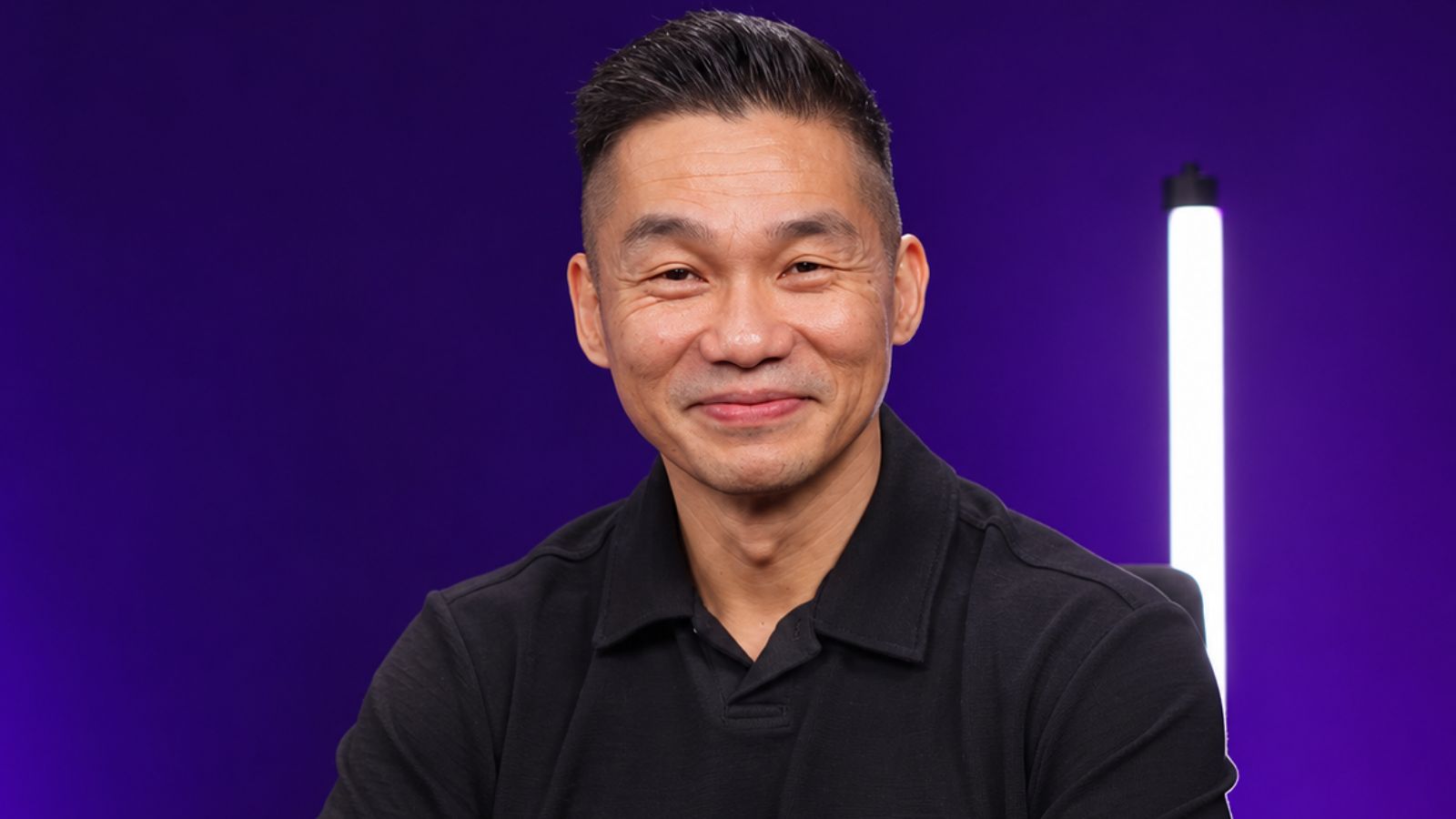
Sequencr AI has named Paul Soon, former McCann SG chief executive, as strategic advisor, drawing on more than 25 years in creative and digital businesses. For a marketing leader, the signal is blunt: agentic AI is not a plug-in tool; it is an operating-model decision about structure, skills, process ownership and the willingness to retire legacy workflows.
The dilemma is familiar across Asia Pacific: a communications team buys an AI platform, runs pilots, then hits the real question of who approves the output, who owns the data trail and who can shut the old process. Most firms are not missing another tool; they are missing a clear owner with authority.
What happened in the Sequencr AI appointment?
The headline is a strategic advisory role. The more useful reading is that a vendor selling agentic AI is borrowing operating experience from people who have had to change agencies, client teams and delivery models.
In the new role, Soon helps shape continued development of the Stratum platform and consulting services, while also supporting engagements with brands, agencies and partners. That is a practical brief: platform, service delivery and market access all meet in the same person.
Regional trade coverage reported the appointment on 2026-11-04 and 2026-11-06. The dates matter because they place the news in a broader AI conversation: vendors are no longer selling only software; they are selling a route to dependable operations.
Why does Paul Soon’s career record matter to AI buyers?
Because the role is not framed as a technical post. It brings a record of running client-side and agency-side businesses through integration, digital expansion and early AI capability work.
Soon previously served as CEO of McCann Singapore, where he led the combined business after the McCann–MullenLowe integration and oversaw efforts to expand digital and government client work and AI capabilities.
Before McCann, he was CEO of MullenLowe Singapore and China from 2020 to 2025, having first taken on the Singapore CEO role in 2018. He also led POSSIBLE Singapore from 2015 to 2018 and Mirum Agency from 2011 to 2015, following earlier roles at JWT, XM Asia Pacific, Arc Worldwide, Saatchi & Saatchi and AKQA.
| Career anchor | What a buyer can learn from it |
|---|---|
| McCann Singapore and McCann–MullenLowe integration | Large-scale combination work shows the difficulty of merging teams, systems and client promises. |
| MullenLowe Singapore and China, 2020 to 2025 | Operating across two markets during disruption is relevant for AI governance that spans brand, legal and regional teams. |
| POSSIBLE Singapore and Mirum Agency roles | The experience spans digital delivery and creative services, the two sides of many AI-enabled marketing programs. |
What is the agentic AI context behind the move?
Sequencr positions itself around organisations integrating agentic AI into operations, developing new capabilities and rethinking operating models. A LinkedIn post announcing the appointment frames the same issue around organisational structures, capabilities and the role of technology in business operations.
This is where adoption evidence adds pressure. Forrester’s June 2026 state-of-agentic-AI blog says three-quarters of enterprise leaders are adopting agentic AI, but few have scaled it to meaningful production value. The gap between a pilot and a dependable workflow is exactly the kind of gap advisory leadership is meant to close.
How should the adoption gap be read in practice?
| Adoption signal | What it looks like | What to ask the vendor |
|---|---|---|
| Reported adoption is high | Teams say they are using agents or exploring agentic AI. | Ask for a customer reference with the same approval chain, not a creative demo. |
| Scaled production value is rare | Pilots stop before becoming routine operations. | Require a named process owner who can change the workflow, not just the tool. |
| Governance is the hidden blocker | Brand, legal, privacy and records teams are pulled in late. | Test audit trails, exception handling and stop conditions before expanding. |
| Infrastructure cost is rising | AI workloads eventually create power, capacity and allocation questions. | See the related ItInsightsWorld piece on AI Data Centers and Grid Capacity: A U.S. vs China Comparison of Who Pays. |
How does this fit the existing Sequencr AI leadership story?
The appointment comes after Sequencr AI's expansion of its leadership team last month, when it named Jeremy Seow as president and co-founder to support growth in agentic AI solutions for communications and marketing teams. In that role, Seow oversees client strategy, growth and AI-enabled operating models across the Stratum platform and consulting business, alongside founder and CEO Matt Collette.
The wider leadership group includes CTO and head of product Jay Hatch, head of client success and projects Sue Ann Teo, CFO Dave Scott and director David Gallagher. The pattern is clear: product, delivery, finance and client success are being arranged as a single commercial stack, not a set of separate job titles.
What should a practical buyer take from this case?
- Treat an advisor appointment as a signal about go-to-market maturity, not proof that a product works at scale.
- Ask which operating-model problem the advisor is meant to solve: pricing, deployment, governance, change management or partner delivery.
- Test the vendor on a workflow that already exists in your team, not on a clean demo path.
- Require named ownership for agent output, exception handling and the decision to stop an old process.
- Price the cleanup: retraining, audit trail, escalation and reputational correction are often higher than software licences.
What costs should an AI communications program budget for?
The cheap part is rarely the platform. The expensive part is the chain of decisions that a system must be allowed to touch. A buyer should budget for integration work, human approval checkpoints, model-risk review, staff training and a fallback process when an agent produces a plausible but noncompliant message.
Do not confuse a platform subscription with a total operating cost. If a claim can be generated, approved and distributed in one day, the old manual review chain must be redesigned; if not, the agent becomes a queue accelerator. The cost account should include retraining, exception handling, legal review, model-risk sign-off and the reputational cost of a fast wrong answer.
What are common misreadings of the Sequencr AI news?
Misreading 1: This is a technology endorsement.
It is closer to a commercial and organisational signal. The relevant question is whether the firm can move customers from experimentation into repeatable operations.
Misreading 2: A senior agency title automatically means AI competence.
It means the person has seen how client expectations, talent and delivery economics collide. That is useful, but it does not replace technical evaluation, security review or workflow mapping.
Misreading 3: Operating model is a consulting phrase.
In practice, it is a list of hard decisions: which tools agents can use, who reviews claims, how data flows are documented and which manual steps must be deleted.
Frequently asked questions
Why hire a strategic advisor instead of another product leader?
A product leader builds the platform; a strategic advisor often helps the company understand how buyers adopt, govern and pay for it. For agentic AI, the commercial blocker is usually adoption design, not feature count.
Does this appointment change what the Stratum platform does?
The appointment is described as shaping continued development of the Stratum platform and consulting services. It is not presented as a feature release, so buyers should still validate current capabilities in a controlled pilot.
Is this relevant only to Singapore and China markets?
No. The record spans MullenLowe Singapore and China, POSSIBLE Singapore and McCann Singapore, but the adoption question is common across communications teams that operate across jurisdictions, brands and approval chains.
What is the first step if we want to follow the lesson?
Choose one narrow workflow with measurable risk, such as social response drafting or brief generation, then define the owner, the exception path and the stop rule before expanding.
By Nina Roberts, IT Insights · contact@itinsights.com
References
- Sequencr AI appointment coverage: Provvoke Media (2026-11-04).
- Regional trade report on the advisory role: Marketing-Interactive (2026-11-06).
- Agentic AI adoption context: Forrester (2026-06-03).