
Sea Tridon Explained: A Practical Guide to BAE Systems' Containerised 40 mm Ship Defence
By James Hartley — ItInsightsWorld, General
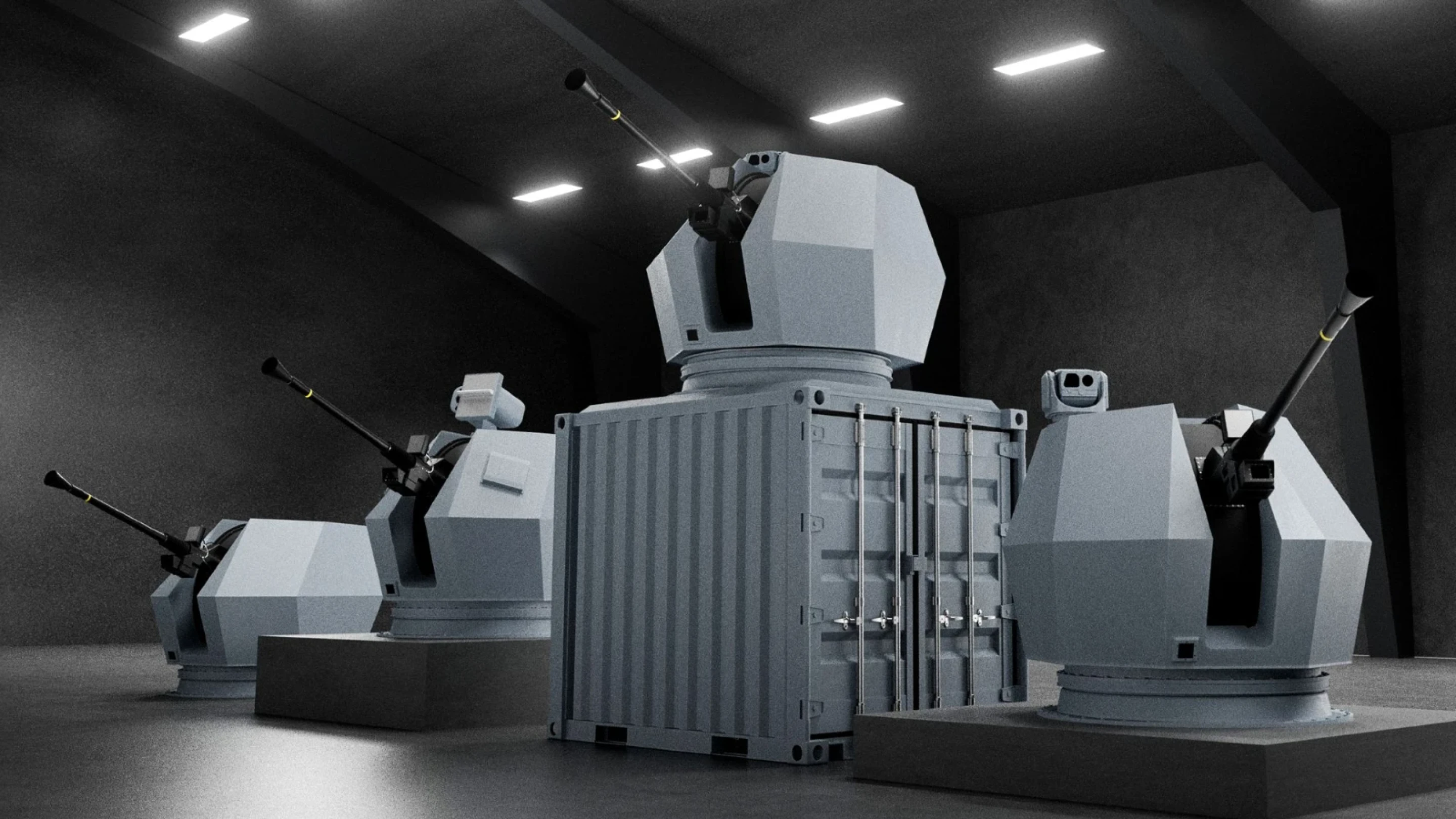
Here is the verdict up front: BAE Systems, the United Kingdom defence contractor, recently put the Sea Tridon series — a family of 40 mm naval guns — in front of the public at Euronaval 2026 in Paris, and the variant that matters to anyone outside a navy is Sea Tridon C, where gun, sensors, fire control and ammunition all sit inside shipping-container-sized modules. The pitch is not raw firepower. It is speed and reversibility: a vessel acquires one layer of close-in air defence without a shipyard conversion, and can hand the module back when the threat recedes.
What exactly did BAE Systems show in Paris?
Conclusion first: Sea Tridon is a product family, not a single weapon, and the interesting decision for a buyer is choosing a level of autonomy, not choosing a gun. The master template in the lineup is the Bofors 40 Mk 4 naval gun (shortened to 40 Mk 4 in company material); the other three entries wrap that same barrel in progressively more self-contained kits.
At Euronaval 2026 the company framed the Sea Tridon naval defence system as a scalable answer to counter-drone duties at sea, pairing the Bofors 40 mm gun with its own fire-control software, described as sensor-agnostic — meaning it can ingest data from radars or electro-optical systems the buyer already owns rather than forcing a single vendor chain. That framing is what allows the same hardware to be sold as a ship's gun, a standalone turret, a close-in weapon system, or a lift-on container module.
Which of the four configurations fits which platform?
Read this as a ladder of independence: the more the ship can already do for itself, the lower rung it can buy.
| Configuration | What it bundles | Best fit | Depends on the ship for |
|---|---|---|---|
| Bofors 40 Mk 4 naval gun | Lightweight, fully automated naval gun | Frigates and other warships with a combat system already installed | Command, fire control, target data |
| Standard Sea Tridon | Gun plus an integrated electro-optical fire-control system | Operators whose vessels lack a complex combat management system | Power and a mounting point only |
| Sea Trinity | Complete close-in weapon system (CIWS) with its own radar and programmable ammunition | Ships that need hands-off, last-ditch point defence | A fire order; the system handles the rest |
| Sea Tridon C | An automated turret carried on a small container, with the support gear inside the box | Auxiliary vessels, patrol craft and, in the high-risk-window scenario, merchant ships | A crane, a deck and a place to stow it |
Two practical notes the spec sheets tend to hide. First, the 40 Mk 4 is a fast weapon: published reference material puts its cyclic rate around 300 rounds per minute, with roughly 100 rounds carried ready on the mount in the baseline arrangement — enough for a short, intense engagement, not a long one. Second, "containerised" describes the transport and installation logic, not a smaller barrel: the gun inside the box is the same 40 mm system.
Where does the technology come from?
Nothing here is a clean-sheet design, and that is the selling point. The family rests on the Swedish firm Bofors and its 40 mm L/70 medium-calibre rapid-fire gun, a design whose technical origins trace back to the 1930s. After nearly a century of continuous improvement, the modern version combines new materials, pre-fragmented ammunition, programmable fuzes and digital fire control.
The route to Paris also looped. BAE Systems took the land-first turn in 2023, reconfiguring the system as a ground-based air defence answer to drones and loitering munitions; the family then returned to its naval roots and became the Sea Tridon naval defence system now marketed at shipowners and fleets.
Why is a gun the answer now, rather than another missile?
Because the threat bill changed. Drone swarms, loitering munitions and other low-cost unmanned platforms have rewritten the arithmetic of modern naval warfare: a large missile may be a superb killer, but its unit price means an expensive interceptor fired at a cheap airborne drone tips the cost balance against the defender.
Two data points show how expensive the alternative has become. Reuters reported in July 2026 that indicative war-risk premiums on Red Sea–transiting tonnage jumped to roughly 0.75% of a vessel's value from about 0.3% immediately before a Houthi escalation announcement — a pure insurance number, but a direct reading of how operators price aerial threat at sea. And escort capacity is finite: the EU naval operation Aspides, launched in February 2024 to protect merchant shipping in the Persian Gulf, Red Sea and north-west Indian Ocean, was reported by USNI News in September 2026 to be short of hulls as European navies rebalanced deployments toward Hormuz. A module that travels with the ship is a hedge against not being in the convoy.
The older piracy logic still applies too. In the Gulf of Aden and the Strait of Malacca — corridors with a documented history of fast-boat attacks — an ordinary cargo ship has traditionally had little answer to a boarding attempt beyond speed, a citadel and a call for help. A containerised weapon module offers the possibility of adding defensive capability temporarily on high-risk legs.
How would a containerised gun actually get onto a ship?
Treat this as the real purchasing question. BAE's own description is deliberately narrow — installation is supposed to avoid major structural work on the hull — but the sequence an operator would follow is longer than a crane lift.
- Define the threat and the window: which corridor, which transit dates, which target set (aerial only, or small boats and near-shore contacts too). This determines which of the four configurations is even sensible.
- Run the legal screen before the technical one: flag-state authorisation, coastal-state consent along the route, charterparty terms, and notification to hull and war-risk underwriters.
- Survey the platform: deck strength and top-weight impact on stability, sea-fastening points, lift capacity at the load port, available ship power, magazine segregation rules, and electromagnetic compatibility with navigation equipment.
- Decide the power architecture: ship supply versus the module's own energy source. Independent storage is what makes a "cold" ship usable, and it is also the item most likely to be under-sized.
- Fix the human chain. This is the constraint most coverage skips: BAE Systems does not imagine crews operating the weapon. Its stated concept is that naval or coast guard personnel deploy and operate the system on board during periods of high threat.
- Integrate and test: sensor hand-off, fire-control dry runs, communication links to the bridge, and live firing where a range and permission set exist.
- Plan the drawdown: who unships the module, where it is stored, and how it is certified for the next movement.
What rules and paperwork stand before the hardware?
Conclusion: the container does not create a legal category. Arming a merchant vessel is governed by international maritime regulation and national jurisdiction, and a boxed gun inherits every one of those questions.
Three reference points give the practical shape of the rulebook. Best Management Practices version 5 (BMP5), the industry's piracy-mitigation guidance, was last updated in June 2018 and does not endorse the general use of private maritime security companies on merchant ships; where such personnel are used, it is because the flag state permits it. The International Maritime Organization notes on its own site that ISO 28007-1:2015 sets the guidance for private maritime security companies providing privately contracted armed security personnel on board, and flag registries layer national rules on top — the United Kingdom's own interim guidance for UK-flagged shipping weighs safe weapons storage, misuse and accident risk, the possibility of escalation, liability and compliance with national and international law before guards embark. Any containerised gun system inherits this entire chain.
The gap between "technically possible" and "legally deployable" is not unique to weapons at sea. It is the same brake that keeps unmanned delivery vehicles working fixed routes instead of open streets: hardware matures faster than the rules, liability and recognition frameworks that let it operate.
What does "cost-effective" actually mean here?
Ammunition economics is where a medium-calibre gun earns or loses its case.
- The family fires Bofors 3P all-target ammunition — pre-fragmented, programmable and proximity-fuzed, per BAE Systems' own product description — so one round can be set to airburst ahead of a drone, delay against a surface contact, or act as a conventional fragmenting round.
- Airburst matters against small, low-signature targets: a cloud of pre-formed fragments raises hit probability in a way a single point-impact shell cannot.
- Cost per engagement is the honest number to demand. Independent counter-drone analyses published in 2026 estimate a programmable airburst kill at roughly tens of thousands of dollars per burst, an order of magnitude below a point-defence missile — useful, but not free, and still expensive when a swarm arrives in waves.
- Whole-life cost sits outside the gun: power, spares, crew or guard time, port handling and the insurance conversation.
What the manufacturer says the product is for
Lena Gillström, president of BAE Systems Bofors, says the maritime threat environment is changing quickly and that navies and maritime operators increasingly need flexible, effective protection. In her framing, the Sea Tridon series lets users select the level of defence that matches the actual mission while sharing one mature technology platform and one advanced programmable ammunition family. That is the right lens for this product: a procurement menu that happens to arrive in a box.
Common misconceptions to retire
- "Containerised means plug and play." The box hides integration work: power quality, cooling, vibration, sensor hand-off and deck certification.
- "Buying the module arms the ship." Ownership is not authorisation; flag-state and coastal-state consent, and an operator with the legal standing to use force, still decide.
- "It replaces a warship's point defence." It adds a layer beneath missile layers, and the four configurations differ enormously in how much autonomy they carry.
- "More ready rounds equals more endurance." Baseline stowage on the mount is limited; sustained multi-wave defence depends on how much ammunition the module actually carries and how fast it can be replenished.
- "The technology is unproven because the family is new." The barrel lineage is decades deep; what is new is the packaging.
What still has to be proven?
Whether a containerised design survives the realities of a working merchant ship depends on power supply, platform stability, sensor integration, operator training and live firing trials — none of which a trade-show display can settle. What Sea Tridon demonstrates today is a modular weapons product family, and both its deployment scale and its eventual user list remain to be seen.
Frequently asked questions
Can an ordinary container ship simply order a Sea Tridon C?
It can order the hardware, but not the permission. The concept BAE Systems puts forward assumes naval or coast guard personnel operate the system during high-threat periods, and flag-state approval governs the rest.
Why is the container version the one drawing attention?
Because it is the only configuration designed for platforms that were never built to carry a gun — auxiliary ships, patrol craft and merchant hulls — and it can be lifted off again when the risk window closes.
Is this a close-in weapon system?
Only one of the four is. Sea Trinity is the complete CIWS with its own radar and programmable ammunition; the bare 40 Mk 4 depends on the ship's own combat system to aim it.
How much of the design is new?
The packaging is new, the shooting is not. The system builds on the Bofors 40 mm L/70 lineage from Sweden, modernised with new materials, pre-fragmented and programmable ammunition and digital fire control.
What should a non-specialist take away?
Watch the second procurement, not the first demo. Modular, low-cost, rapidly deployable weapons are a clear trend; the deciding evidence will be operational trials and paying users.
Action list: what to do in the next 90 days
- Ask the manufacturer for the module's power draw, weight, deck-loading footprint and ammunition stowage figures — the four numbers that decide feasibility.
- Get a written position from your flag state before discussing hardware with anyone.
- Put the question to your war-risk underwriter early; their answer often costs less than the gun.
- Compare the four configurations against your own crew and command reality, not against the trade-show narrative.
- Treat the current offering as analysis-grade maturity: useful for planning, not yet a proven deck fitting.
References
- BAE Systems, "BAE Systems unveils new modular naval gun system at Euronaval 2026" — https://www.baesystems.com/en/article/bae-systems-unveils-new-modular-naval-gun-system-at-euronaval-2026
- BAE Systems, "FUZE 3P Programmable All-Target Ammunition" — https://www.baesystems.com/en-us/product/fuze-3p-ammunition
- Naval News, Euronaval 2026 report on the Sea Tridon family — https://www.navalnews.com/event-news/euronaval-2026/2026/11/euronaval-2026-bae-systems-sea-tridon-gun-offers-containerised-c-uas-capability-for-navies/
- International Maritime Organization, "Private Armed Security" (ISO 28007-1:2015 reference) — https://www.imo.org/en/ourwork/security/pages/private-armed-security.aspx
- GOV.UK, interim guidance for UK-flagged shipping on the use of armed guards — https://www.gov.uk/government/publications/interim-guidance-to-uk-flagged-shipping-on-the-use-of-armed-guards-to-defend-against-the-threat-of-piracy-in-exceptional-circumstances/dddd
- Reuters, "Red Sea war insurance costs rise after Houthi blockade" (July 2026) — https://www.reuters.com/legal/litigation/red-sea-war-insurance-costs-rise-after-houthi-blockade-sources-say-2026-07-20/
- USNI News, "EU Needs More Ships for Red Sea; European Navies Adjust Hormuz Deployments" (September 2026) — https://news.usni.org/2026/09/28/eu-needs-more-ships-for-red-sea-european-navies-adjust-hormuz-deployments
- Navy Lookout, reporting on the Bofors 40 mm gun as a stand-alone close-in weapon system — https://www.navylookout.com/bofors-40mm-gun-adapted-to-become-a-stand-alone-close-in-weapon-system/