
ItInsightsWorld: NVIDIA Store Drops RTX 5090 and RTX 5080 as 24GB Plan Remains Unclear
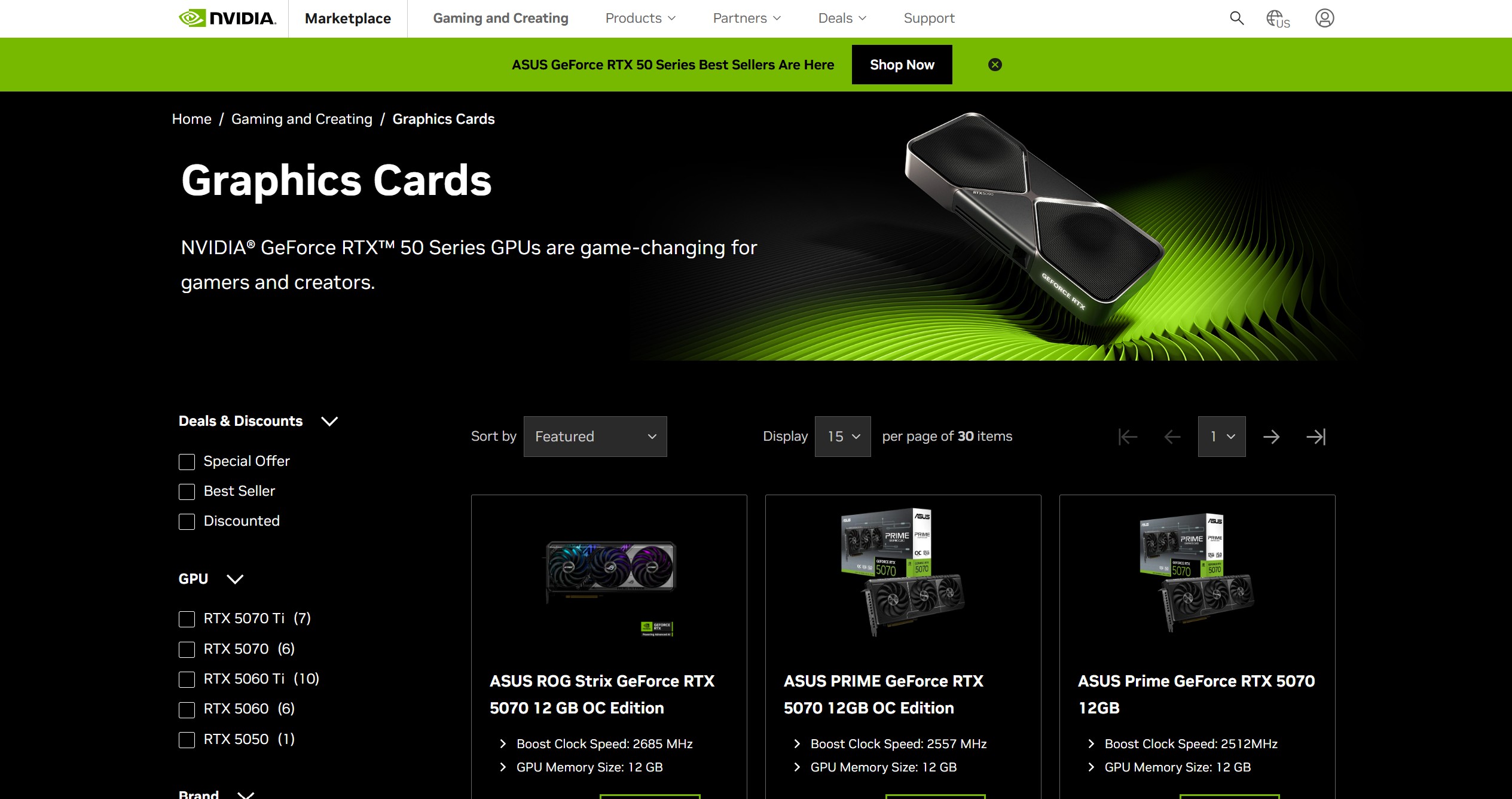
NVIDIA's consumer GPU storefront now presents a narrower lineup: RTX 5090 and RTX 5080 are no longer selectable, and partner-made models tied to those processors have also been removed. For shoppers looking for the highest-end option still displayed, RTX 5070 Ti is the remaining card listed at the top of the range, with multiple ASUS variants available at premium prices.
Signals appeared before the removal
Before leaving the official channel, RTX 5080 had already sent warning signals. Retail listings moved above $2,000, even surpassing the official launch price previously associated with RTX 5090. The pricing pattern was read as a sign that available stock was becoming scarce.
A 24GB successor still needs naming clarity
What remains unresolved is how NVIDIA will bring a 24GB version to market. Current clues point to RTX 5080 SUPER as a possible product name, although the company has not settled how the card will be positioned. Reported specifications include the GB203-450 GPU core, higher operating clocks, faster memory, increased bandwidth, a raised power ceiling, and stronger overall performance.
Why the larger buffer matters
For buyers, the larger memory pool is not only a gaming upgrade. Moving from 16GB to 24GB gives systems more headroom for quantized models around 27 billion parameters, broadening the card's appeal beyond high-end players and into local artificial intelligence workloads.
Availability and value remain the pressure points
The market picture is still mixed. Memory supply remains tight, and expectations are rising that a 24GB RTX 5080 version may not reach shelves at a satisfying price. If output stays constrained, early availability could still be shaped by shortages and premiums.
The removal of RTX 5090 and RTX 5080 from NVIDIA's official store has intensified speculation about the next phase of its high-end graphics roadmap. Until more official details emerge, the central questions remain whether the 24GB path will ease demand at the top of the market and whether it will arrive under the RTX 5080 SUPER name.