
RTX 5080 24GB and the January 2027 Window: A Case Study in GPU Scarcity | IT Insights
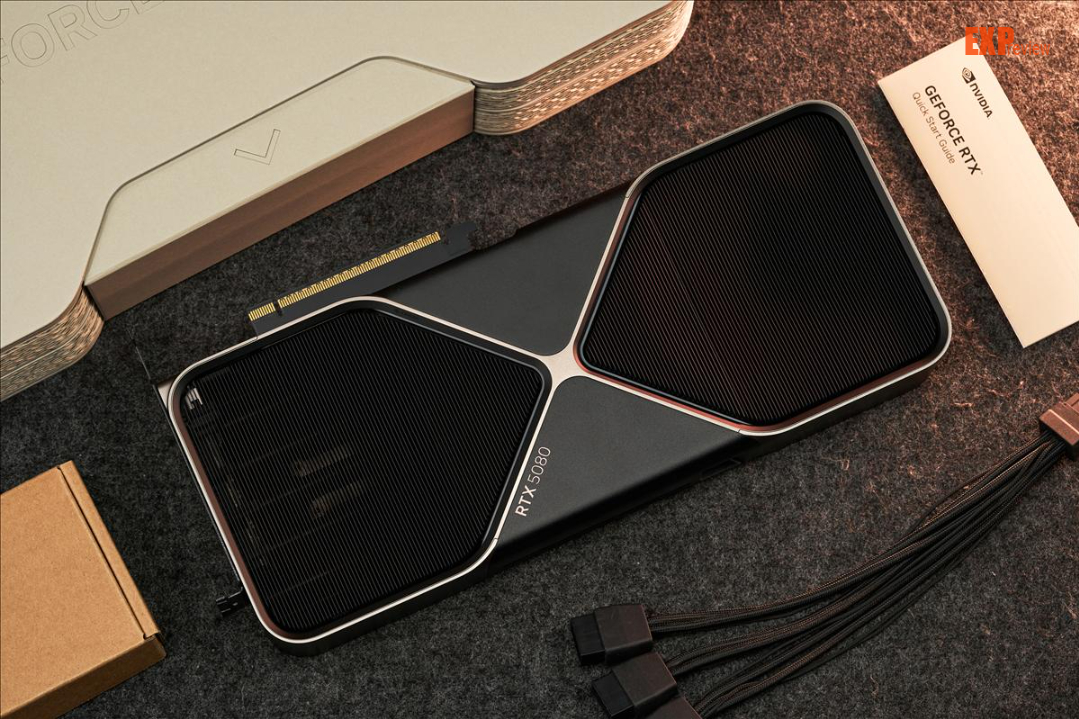
Read this first: the GeForce RTX 50 series has run into a genuine supply wall, and the plan built to route around it — a 24GB version of the RTX 5080 that would take over from the current RTX 5080 as NVIDIA's halo gaming card — has slipped. Barely anything about the direction is disputed; everything is in doubt about the calendar. As of the end of October, Benchlife reported that the design materials for the new board had still not reached NVIDIA's board partners, which makes an arrival next January improbable and moves realistic expectations into the first quarter of 2027. The practical consequence for a buyer is blunt: treat the 24GB card as a planning variable, not as a reason to hold your purchase.
The case file, in sequence
Useful post-mortems start with a clean timeline. Here is the one that matters.
- Scarcity at the top of the stack. High-end GeForce RTX 50 series models have been notably hard to source, with the RTX 5090 series and the RTX 5080 hit most visibly.
- Silicon reassigned. The GB202 chip behind the RTX 5090 series is expected to be reserved for RTX Pro series workstation graphics cards, thinning the consumer ladder at its very top.
- A replacement, not an addition. NVIDIA reportedly intends the RTX 5080 24GB to succeed the current RTX 5080 instead of sitting beside it, and earlier talk already warned that the price would land above the existing card.
- January becomes the default guess. Rumours pointed at next January — a slot that feels natural because CES 2027 is scheduled for January 6–9, 2027 in Las Vegas (ces.tech), the same stage NVIDIA has historically used for mid-cycle refreshes.
- October slips. Accounts carried in the reporting suggested the relevant design data was supposed to leave for factories in October, with verbal assurances that the packages would be sent; the handover never happened.
- Late-October status. Benchlife's update, read together with partner material preparation and component shortages, makes a January launch very difficult — so the weight of evidence settles on the first quarter of 2027.
Why the process beats the rumour as a predictor
This lesson travels well beyond one graphics card. A partner launch is not a software drop: board makers need reference designs before they can book PCBs, memory modules, power stages and coolers, and each of those orders has its own lead time. The chain runs design kit → component booking → first articles → validation → retail stock. A missed kit handover does not shift a launch by a few days; it compresses every step behind it. That is why an undelivered October kit makes next January unlikely rather than merely optimistic.
Now compare the case where nothing went wrong. NVIDIA unveiled the RTX 4080 SUPER at its CES 2024 show on January 8, 2024 and had cards on sale by January 31, 2024 from $999 (nvidia.com) — a roughly three-week sprint from announcement to shelf, possible only because designs, silicon and supply were already lined up. January launches are therefore not impossible. They are gated on paperwork that no one outside the supply chain can see.
The memory story sitting behind the delay
The 24GB question is mostly a memory question. AI server buildouts keep pulling wafer and packaging capacity toward higher-margin data-centre products, and the cost of mainstream memory has been climbing with them. TrendForce's fourth-quarter 2026 outlook projected conventional DRAM contract prices up 10–15% quarter on quarter and NAND up 15–20%, with AI server demand carrying those increases (trendforce.com). Trade reporting out of China has described the resulting GeForce RTX 50 series stocking and pricing squeeze in similarly blunt terms, with street prices rising through the second half of 2026 (eet-china.com).
Placed next to the missing design kit, that context explains the shape of the whole plan: scarce capacity moves to the lines that earn most, which is why the GB202 is expected to head into RTX Pro series workstation graphics cards, while the consumer flagship gets re-specced rather than multiplied.
What actually changes on the RTX 5080 24GB
Circulated spec summaries say the card switches to 24Gb (3GB) GDDR7 modules, moves onto a GB203-450 die, and raises core frequency along with memory speed, corresponding bandwidth and board power.
| Spec item | Reported change |
| Memory module | 24Gb (3GB) GDDR7 |
| GPU chip | GB203-450 |
| Memory speed | 30Gbps raised to 32Gbps |
| Corresponding bandwidth | 960GB/s raised to 1024GB/s |
| TDP | 360W raised to 415W |
Read the ratios, not just the numbers. Memory capacity grows by half, from the 16GB fitted to today's RTX 5080 to 24GB, while bandwidth grows only around 7% (960GB/s to 1024GB/s) and the power budget grows by 55W (360W to 415W) — roughly 15% more heat for a card of the same physical class. If you are sizing a machine, that mix matters: supply headroom, case airflow, cooler length and power-connector type all move with it. This is an "avoid the cliff" upgrade, not a "double my frame rate" upgrade.
Who genuinely needs 24GB, and who does not
Strong fit
- Local AI tinkerers: 24GB is widely treated as the practical floor for holding mid-size quantised language models on a single consumer card, which is exactly why older 24GB boards stay in demand (intuitionlabs.ai).
- Simulation, manager and heavily modded players whose add-on packs stream enormous texture sets; these are the workloads where 16GB cards are routinely reported to hit a memory ceiling at 4K.
- Video and 3D generalists who want long timelines or big scenes resident in VRAM instead of spilling to system memory.
Weak fit
- 1440p and lower-resolution gamers: capacity is rarely the limiting factor.
- Resale chasers: a scarce, premium-priced refresh invites the same shortage dynamics that caused the delay in the first place.
- Anyone whose current card already runs their workload without stutter or spills.
Common misconceptions worth clearing
- "A slipped date means the product is dead." Late kits change the calendar, not the roadmap: the 24GB model taking over the RTX 5080 slot remains the reported plan.
- "24GB equals flagship performance." The silicon is still a GB203-450 variant, not RTX 5090 series compute; you are buying memory capacity first.
- "CES guarantees a launch." The show is a marketing window. The gating fact is the design kit, and that fact is currently missing, which is why next January looks thin.
- "Spec tables are promises." Figures such as 32Gbps, 1024GB/s and 415W come from leaked summaries and can shift before retail boxes open.
- "Waiting is free." With memory contract prices forecast to keep rising, waiting can quietly raise the cost of every other component in the same build.
Actionable: what to do with this news today
- Buy for the market you can see. If a card within your budget is in stock at a price you accept, take it — a rumoured Q1 2027 alternative is not a discount.
- Name your constraint. Write down whether your problem is capacity, bandwidth or compute. Only the first is solved by 24GB.
- Track paperwork, not whispers. The signal worth watching is a documented design-kit handover to partners, followed by stock appearing at board-partner stores; the retail tail always lags the documents by weeks rather than days.
- Pre-check your chassis. If you are planning around a 415W card, verify supply headroom, connector type and clearance now, while there is no launch-week pressure.
- Keep a same-capacity fallback. For AI workloads, a second-hand 24GB board is the standard workaround when the calendar does not suit you.
- Set a decision date and honour it. Choose the week you will buy regardless of news, then judge any new leak against that date instead of resetting it.
FAQ
Will the RTX 5080 24GB really arrive in January 2027?
On current reporting, unlikely. Benchlife says partners still lacked the design materials by the end of October, which is why the first quarter of 2027 is the window most observers consider realistic.
Is today's RTX 5080 being retired?
The reported plan is succession: the 24GB model inherits the RTX 5080's position instead of launching alongside it, at a price above the card it replaces.
Should I hold off buying a GPU this quarter?
Only if you can absorb both the wait and the price risk. The GeForce RTX 50 series is supply-constrained, and memory contract prices are forecast to keep climbing.
Does 24GB help gaming or AI more?
It helps workloads that run out of memory — ultra-high-resolution texture packs, large mod sets, heavy scenes, local AI models. Frame rates in games that already fit in 16GB change little.
What happens to the RTX 5090 series?
Availability becomes a question of leftover channel stock, since the GB202 that drives it is expected to be redirected to RTX Pro series workstation graphics cards.
The reusable lesson
Two takeaways outlive this one card. First, in a shortage cycle, capacity is allocated by margin: the top-tier silicon migrates to professional products, and the consumer flagship becomes a re-specced version of the tier below it. Second, dates leak long before designs do — the dependable early indicator is always whether partners hold the documents, and that single missing fact is what turns this January story into a Q1 2027 story. Nothing here is a verdict on NVIDIA's intentions; it is a verdict on lead times.
Prepared for the General desk at ItInsightsWorld by James Hartley, IT Insights. Corrections, tips and reader questions about the RTX 5080 24GB timeline can be sent to contact@itinsights.com.