
Explainer: Why the RTX 3060 Is Outselling and Outpricing Nvidia's RTX 50 Series in 2026
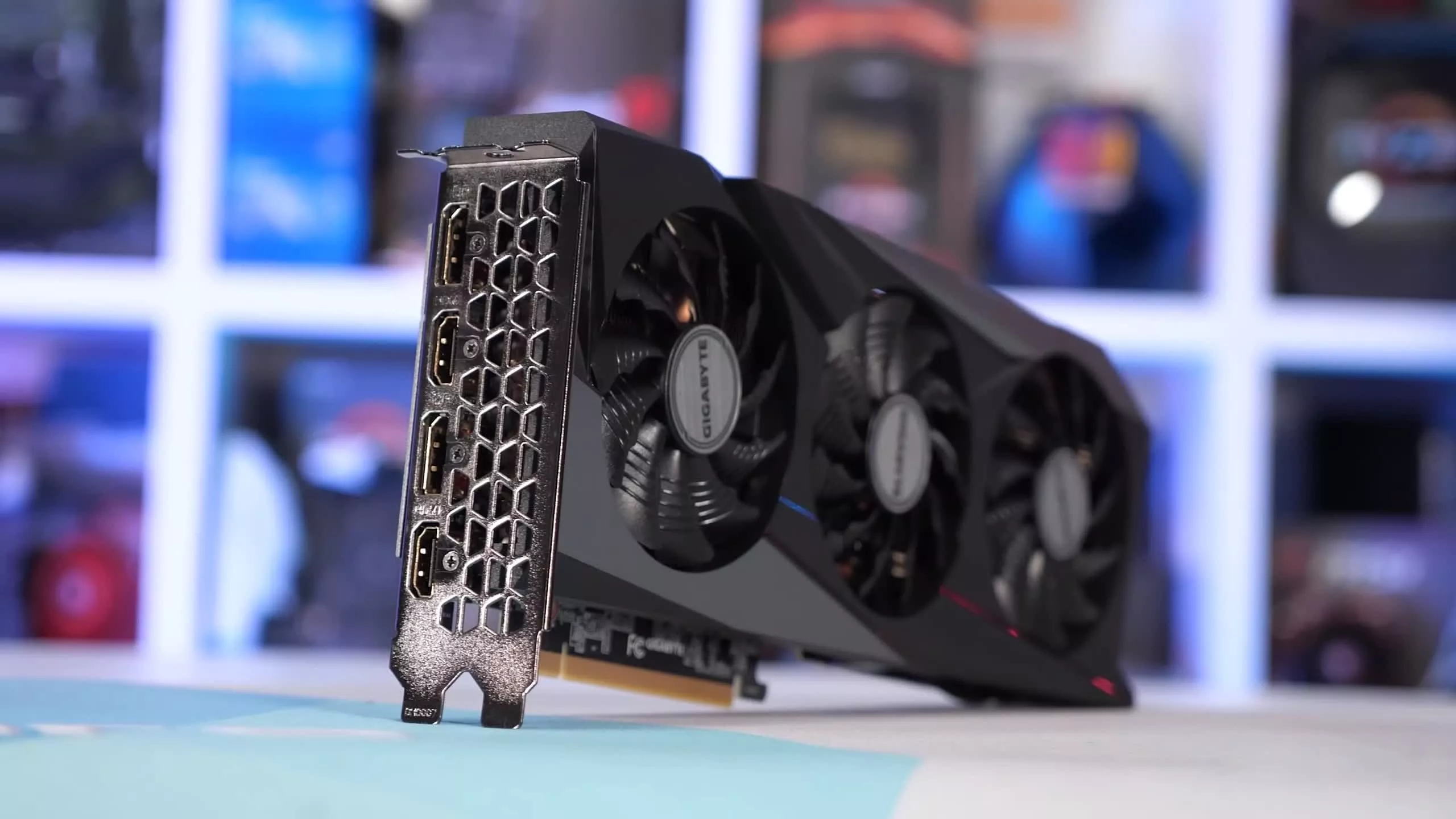
Lead with the uncomfortable conclusion: the most sought-after graphics card of 2026 is a model that first reached the market in 2021. Nothing about that is nostalgia. ChannelGate, the channel-research shop widely followed by board makers, reports that the RTX 50 series has sold out at several card partners, leaving distributors with empty shelves and no firm restock date. The gap is being filled by hardware that was quietly supposed to disappear: the RTX 3060 12GB, the RTX 3060 8GB, the RTX 3050, and selected AMD Radeon models. For anyone deciding whether to buy now, wait, or stretch a budget, the story is less about chips and more about who gets to buy memory and wafer capacity this year.
Bottom line first
- Scarcity, not obsolescence, is now setting the price of older GPUs.
- The revived RTX 3060 did not get cheaper with age: a US$329.99 relaunch price rose to US$479.99 within a month, an increase of about 45%.
- Steam's rankings did move, but a chunk of the shift reflects who answered the survey rather than what people bought.
- Practical read: treat a "new old card" as a hedge against supply risk, not as a bargain; verify memory capacity, board revision, warranty and your power supply before paying current prices.
How a sold-out generation pushed the channel backwards
According to ChannelGate's read of the China market, inventory of the RTX 50 series is exhausted at some manufacturers, while others hold only limited stock that ships out in batches. Tighter supply has pushed street prices upward at the same time. To keep dealers selling something rather than apologising to customers, manufacturers have started advising channel buyers to source the RTX 3060 12GB and RTX 3060 8GB, along with the RTX 3050; some AMD Radeon cards are being positioned as substitutes as well. The expectation is that these older models will not fall in price simply because they are old, and may climb a little further as long as new product remains hard to obtain.
Three pressures stacked on top of each other
- Mining demand is back. A fresh cycle of cryptocurrency activity has resumed lifting purchases of general-purpose cards, which competes directly with gaming demand for the same stock.
- Promo season drained the shelf. China's e-commerce sale events this year consumed remaining inventory faster than it could be replenished.
- AI absorbed the inputs. The RTX 50 series already launched with tight supply, and Nvidia was reported to have trimmed some gaming-card production as the AI industry consumed enormous amounts of memory and advanced manufacturing capacity.
That third point is the one most buyers underestimate, and it is measurable. Market researcher TrendForce projected DRAM contract prices rising 13–18% quarter-on-quarter in the third quarter of 2026, then roughly 20% quarter-on-quarter in the fourth quarter (trendforce.com). Graphics cards are, at the bill-of-materials level, partly a memory purchase; when memory keeps appreciating, a discount on a card with the same specification becomes an accounting loss for whoever is holding it.
Why a five-year-old card can be manufactured again at all
Here is a detail most coverage skips: the RTX 3060's GPU is built on Samsung's mature 8nm process, and it pairs with GDDR6 rather than the GDDR7 memory used by the newer generation. Because that node is not competing for the leading-edge capacity that AI accelerators occupy, and because GDDR6 remains broadly available, restarting the product costs a fraction of designing and qualifying a new one. TechPowerUp reported Samsung re-activating that 8nm line for the model, meaning the cards now arriving are freshly manufactured rather than five-year-old warehouse stock (techpowerup.com). That distinction matters: "new old card" carries a real warranty, but it also means no leftover inventory is waiting to be dumped at a lower price.
The price paradox: a 2021 card that costs more than a newer one
| When | What happened | Price signal |
|---|---|---|
| 2021 | Nvidia introduced the RTX 3060 with a US$329 list price | Benchmark the card started from |
| This July | RTX 3060 relisted on Newegg in the US | US$329.99 opening price |
| August | Same-generation MSI board repriced | US$479.99, about 45% higher |
| Since then | Old card versus newer RTX 5050 | The five-year-old model sells for noticeably more |
Read plainly, the anomaly is not that an ageing product still sells. It is that ageing has stopped being a reason to charge less. At US$479.99, the RTX 3060 sat above the newer and faster RTX 5050, which tells you that pricing is currently governed by availability rather than by specification.
Old stock versus new silicon: what each option is good for
| Option the channel is pushing | Memory | Why distributors like it now | Main trade-off to check |
|---|---|---|---|
| RTX 3060 12GB | 12GB GDDR6 | Real supply, familiar drivers, capacity headroom for textures and local AI workloads | Five-year-old architecture; you now pay a premium over list |
| RTX 3060 8GB | 8GB | Same family, often cheaper than the 12GB variant | Half the memory of the version it shares a name with |
| RTX 3050 | Varies by board | Entry price and volume availability | Clearly a resolution-and-settings compromise |
| RTX 5070 | GDDR7 | The card most buyers actually want | Allocation is the bottleneck; watch for bundled-inflation pricing |
| RTX 5050 | GDDR7 | Newest generation at the low end of the line-up | Currently often cheaper than the old RTX 3060, which is the market's tell |
| AMD Radeon alternatives | Varies by model | Available stock outside Nvidia allocation | Software and feature fit depends on your workload |
What the October 2026 Steam numbers really show
Valve's Steam hardware survey for October 2026 returned the RTX 3060 to the top of the global most-used GPU table with a 3.62% share, just ahead of the RTX 5070 at 3.56%. The RTX 5070, which had briefly taken first place in September, gave back 2.3 percentage points in October. On the system-memory side, 16GB reclaimed the top spot with 41.42%, while 32GB, which had earlier led the ranking, slid to 37.06%.
Analyst outlet Hardware Busters offers the necessary caution: this is not evidence that players are abandoning the RTX 5070 en masse. Users running the Simplified Chinese interface fell from about 31% of respondents in September to under 22% in October, and Valve does not weight its results by region. Since Chinese buyers skew toward certain mid-range cards, a change in the sample's composition alone is enough to reorder the leaderboard.
Five misconceptions worth dropping
- "Old model means cheap model." Not while the newer generation is allocated and rationed.
- "Steam's chart is a live scoreboard of purchases." It is a self-selected snapshot of people who log in, and its sample can shift month to month.
- "16GB versus 32GB is a spec-sheet vanity contest." Falling out of favour for larger memory tracks what memory costs, not what games demand.
- "Relaunched cards are old stock being cleared." The manufacturing reports point to newly produced boards, which is why prices are holding.
- "The shortage ends the moment supply returns." Memory contract pricing is still forecast to climb, so relief is likely gradual rather than sudden.
Pre-purchase checklist: six checks before paying a premium
- Compare the asking price against the card's original list price, not against last month's street price.
- Confirm which variant you are buying: RTX 3060 12GB versus RTX 3060 8GB are different products with one name.
- Check the board partner, cooler design and warranty terms in writing before checkout.
- Verify your power supply headroom: published specifications put the RTX 3060 12GB at a 170W board power (TechPowerUp database).
- Ask the seller whether allocation, a bundle or a "limited stock" label is inflating the quote.
- Decide your fallback in advance: a same-generation alternative, a delayed build, or a used card with a shorter runway.
Frequently asked questions
Why would Nvidia bring back a card from 2021?
Because it can be built from capacity and memory that are still available, it satisfies demand the current generation cannot serve, and the channel needs a product to sell while the RTX 50 series stays tight.
Will the revived RTX 3060 ever get cheap again?
ChannelGate's forecast runs the other way: continued strain on the RTX 50 series means older models are more likely to edge up modestly than to fall because of their age.
Is it still the world's most common graphics card?
By Valve's October 2026 survey, yes, at 3.62% versus the RTX 5070's 3.56% — with the sampling caveat above.
Should I upgrade from a card like this right now?
Only if a concrete limitation is hurting you: resolution, missing features, or memory capacity for editing and local AI tasks. If your current card still clears your targets, buying into a shortage-driven market is the most expensive version of an upgrade.
Why is a slower old card priced above a faster new one?
Because scarcity prices products, not benchmarks. The US$479.99 versus RTX 5050 comparison is the clearest illustration in this cycle.
Trend call and what to do now
Put the pieces together and the pattern is a supply-side one, not a demand fad. AI infrastructure is bidding for the same memory and advanced-node capacity that consumer graphics cards rely on; crypto demand has returned to soak up whatever is left; and promotional seasons now empty shelves instead of discounting them. The practical response depends on your position. If you need a card this quarter, buy the old model only when its effective price is defensible against the newer RTX 5050 and you have confirmed memory capacity and warranty. If you can wait, your leverage is patience plus a hard ceiling price: watch the RTX 50 series allocation rather than the "on sale" label, and treat any quote above the original US$329.99 baseline as a scarcity tax you are consciously agreeing to pay.
For now the irony stands: the RTX 3060 and RTX 3050, effectively retired from the mainstream in China, are living through a second sales peak precisely because the future they were meant to be replaced by is unavailable. That is a useful signal to keep — when yesterday's hardware outsells tomorrow's at a higher price, the market is telling you the constraint is somewhere else entirely.
Written by James Hartley, content editor at ItInsightsWorld (IT Insights). Corrections and questions: contact@itinsights.com.
Additional sources referenced: TrendForce quarterly memory-price outlooks (trendforce.com); TechPowerUp reporting on Samsung's 8nm restart for the RTX 3060 (techpowerup.com); Nvidia's original RTX 3060 product announcement (nvidianews.nvidia.com).