
ItInsightsWorld General Briefing: Reclaimed Memory for AI Deployment Continuity
For teams planning large AI systems, memory availability has become a practical bottleneck alongside GPUs, server capacity, and data center space. High-bandwidth memory (HBM) supply is lagging demand, and pressure is also spreading to dynamic random access memory (DRAM), the standard memory used across general-purpose servers. Market data point to a tightening supply environment, with shortages appearing across multiple industries.
Data centers are projected by the Center for Strategic and International Studies to consume 50% to 70% of all memory chips produced this year. In the U.S., a limited supplier base and factory construction that can take years make the constraint more difficult to resolve. When GPUs, servers, and facilities are prepared, a memory shortage can still stall rollout, and higher memory prices can raise overall infrastructure budgets.
One response being explored by operators is to recover memory from retired servers and use it inside new AI environments. When reuse is treated as a design requirement rather than an afterthought, three benefits can appear.
Using Existing Supply to Add Capacity
Previous refresh cycles leave older fleets with substantial DRAM that can be brought into newer systems through Compute Express Link (CXL) expansion hardware. Instead of relying only on the CPU's native memory channels, expansion devices attach memory over PCIe, so newer DRAM-based servers can draw on older memory generations. A single expansion controller can support a dozen reclaimed modules and deliver more than one terabyte of memory; in-line compression on some controllers can nearly double usable capacity.
Design choices matter: platforms that support open interconnect standards and allocate space for expansion devices give reclaimed modules a straightforward connection point, reducing ad hoc adapter projects for every server generation. Each recovered module also avoids competing for limited fab output, so new manufacturing is not required and dependence on remote fabrication sites is reduced.
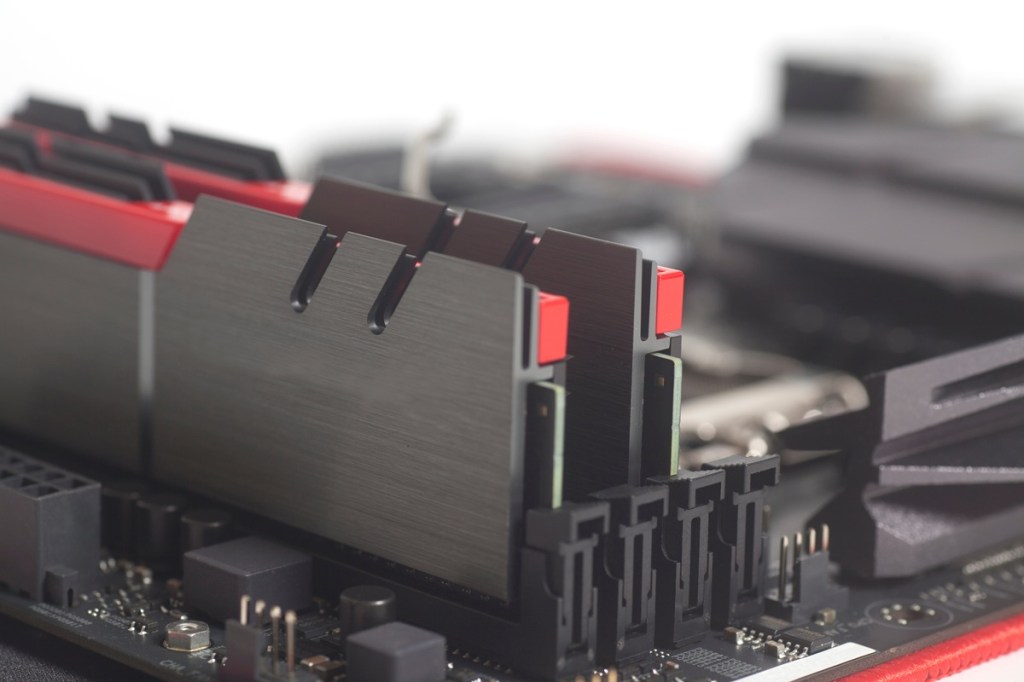 Reusing memory in new AI systems supports adding capacity before new fabs are ready, extending scarce HBM supply, and ending the full-system refresh cycle (Source: Adobe Stock).
Extending Scarce HBM Across Workload Layers
AI servers arrange memory in layers to trade speed against cost. HBM sits beside a GPU or accelerator, and one HBM stack can provide over 1 terabyte per second of bandwidth. Conventional DRAM is much cheaper, and a DDR4 module tops out at 25.6 gigabytes per second. CXL, an open interconnect standard built on PCIe, adds an expanded and pooled memory layer while preserving data coherence, making older modules useful in that position.
| Memory layer | Placement or role | Supply note |
|---|---|---|
| HBM | Next to GPU or accelerator | Most constrained; cannot adjust quickly |
| DDR4 | Conventional server DRAM | Cheaper; tops out at 25.6 gigabytes per second |
| CXL-attached memory | Expanded and pooled layer over PCIe | Older modules can fit |
Within data centers, HBM is the most constrained memory type; its vertically stacked design is more expensive and slower to manufacture than conventional memory. For systems or GPUs designed to use HBM, there is no substitute. Because each HBM-equipped accelerator is valuable, operators can run supporting services such as caching, data preprocessing, and retrieval on reclaimed memory, preserving HBM for latency-sensitive training and real-time inference. Matching system sizes to workloads also helps prevent expensive components from being overprovisioned across large server fleets.
Validation remains essential. Because CXL-attached memory adds latency relative to directly attached DRAM, teams should test configurations against actual workloads before deployment. Prequalifying older modules on new platforms helps ensure capacity when procurement tightens.
Reducing Whole-System Refreshes
Components such as accelerators, processors, and memory age on different timelines, yet conventional refresh cycles often discard an entire node when one part becomes dated. Modular, disaggregated designs allow separate replacement schedules for GPUs, CPUs, and memory chips, so memory already in the fleet can remain in service while accelerators are updated.
When memory does not have to be replaced alongside every accelerator, operators buy less new capacity at inflated prices and face fewer waits caused by long lead times. It also cuts electronic waste and Scope 3 emissions tied to producing and procuring components, helping operators meet sustainability targets.
Planning Across a Multi-Year Buildout
Across a long deployment program, these advantages compound. Operators that plan for reuse can keep total infrastructure spend lower during the least forgiving parts of the supply chain, and they can protect schedules because fewer rollouts depend on a single allocation from a single supplier.
A catch-up by memory supply is expected eventually; in the meantime, prioritizing hardware reusability in engineering plans is what enables continued, uninterrupted buildout.