
Ambient Computer or Phone Accessory? Raven Prism Compared Against Today's Smart Glasses

Most wearable displays on the market are, in engineering terms, expensive monitors: the reasoning happens in your pocket, and the glasses only render what the phone decides. Raven Resonance is arguing the opposite with Raven Prism, the device the company insists on calling the world's first "Ambient Computer" — a pair of glasses that carries its own compute, its own operating system and its own power strategy. For readers trying to decide whether this is a genuine category shift or clever marketing, the short verdict is: the architecture is real, the ecosystem is not yet. If you build software, care about on-device privacy, or work with your hands busy, this is the most interesting wearable of the season. If you want plug-and-play polish, today's tethered rivals still win on convenience. This guide unpacks why, and where each option fits.
Why the label "Ambient Computer" is more than a slogan
Raven Resonance positions the product around a simple complaint: computing has been trapped on a desk, in a pocket or inside a backpack, and it should instead appear when needed while staying out of the way of real life. That framing explains the design choices that follow. Unlike many smart glasses that must stay paired with a smartphone to function, Raven Prism computes on its own, so a user is not continuously bound to a handset. Thomas Suarez, co-founder and CEO of Raven Resonance, put the ambition plainly at the industry expo where the hardware was previewed: "For decades, the personal computer has been confined to a desk, a pocket or a bag."
The trade this creates
- Freedom: no phone in the loop means no Bluetooth handshake to babysit, and no dependence on one handset's battery or app policy.
- Cost: the glasses have to carry the processor, memory, storage and heat budget themselves, which caps performance and forces creative power solutions.
- Responsibility: without a giant platform vendor behind it, the software catalogue, developer tools and long-term updates all have to be built from scratch.
Inside the frame: silicon, storage and a Linux you can actually touch
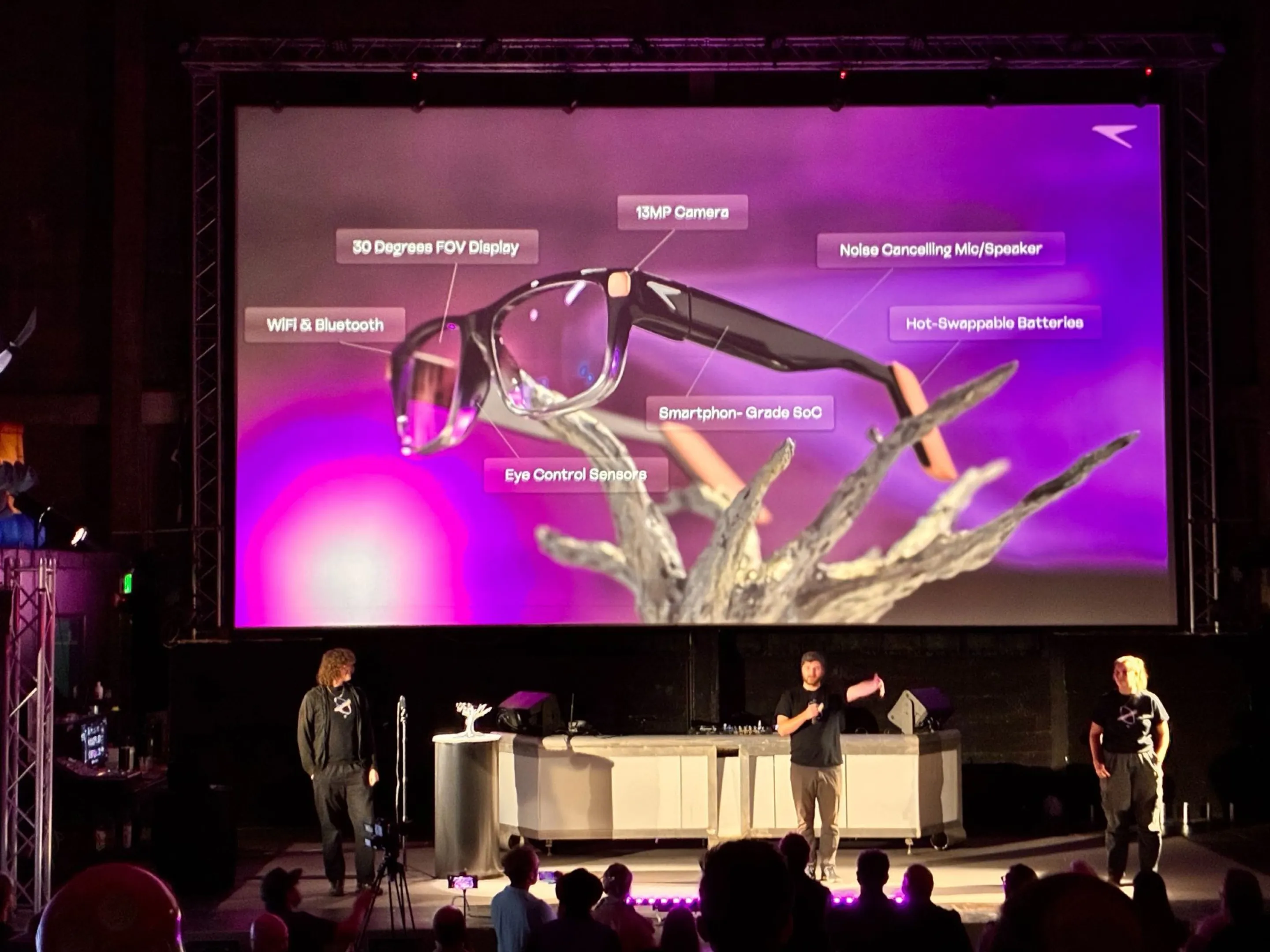
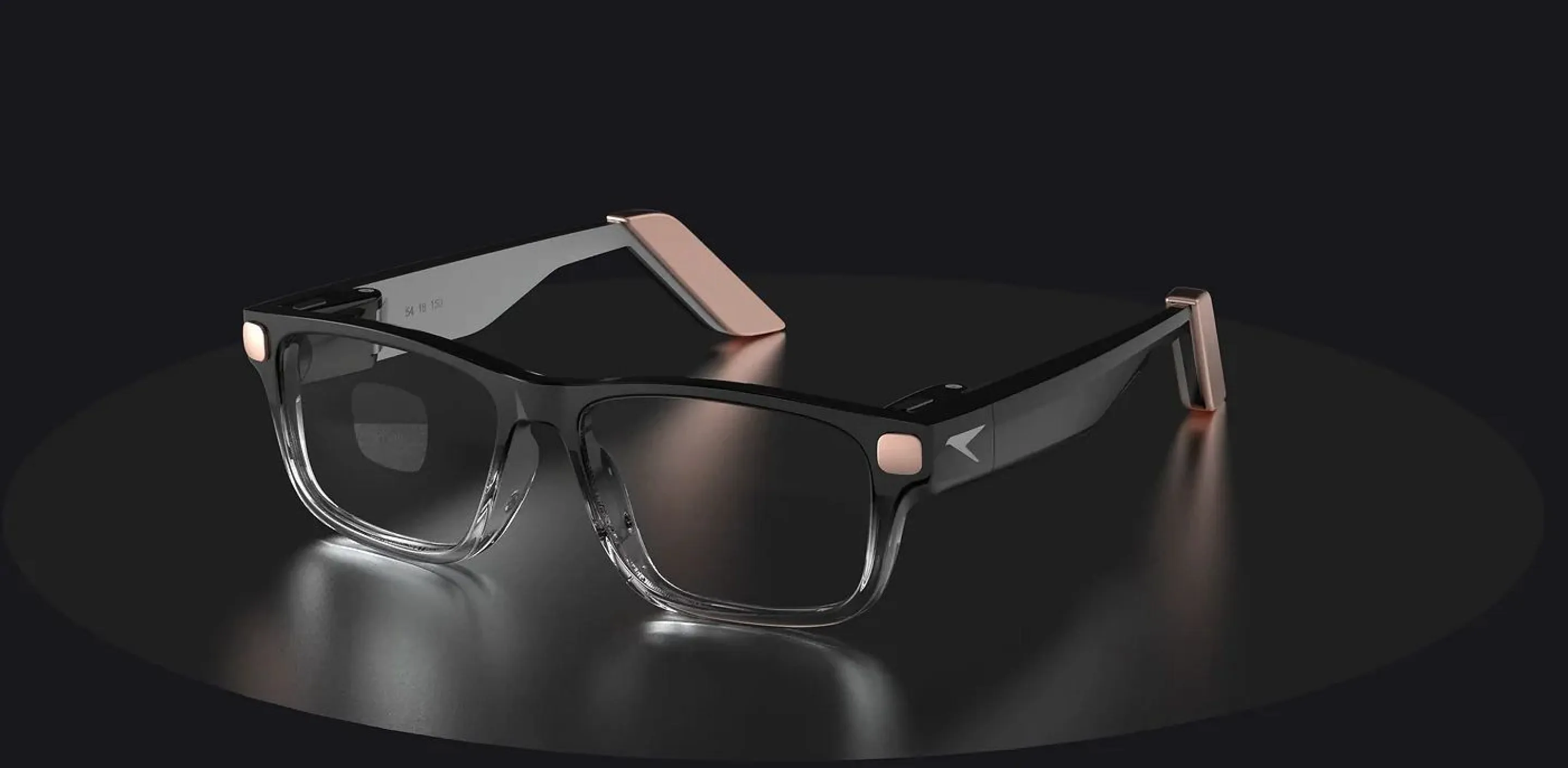
At a glance the hardware looks like ordinary prescription eyewear, but a complete computing platform sits inside it. Raven Prism runs a quad-core 64-bit ARM processor, ships with up to 4GB of memory and at least 32GB of storage, and operates on RavenOS, an operating system developed from Linux. That combination matters far more than the numbers suggest: users can run native Linux ARM64 applications, obtain SSH access to the device, and enjoy a high degree of system customisation. In other words, a developer can treat the glasses as a small server that happens to sit on their nose.
Two third-party details help set expectations for anyone comparing it against rival models. Raven's own published developer framework describes the panel as a 720×720 pixel array inside a roughly 30° diagonal field of view, and hands-on coverage at the 2026 show floor placed the complete unit under 70 grams. Treat those as supplementary context, not official headline specs, and confirm them on the company site before deciding.

Display and input: information parked at the edge of your vision
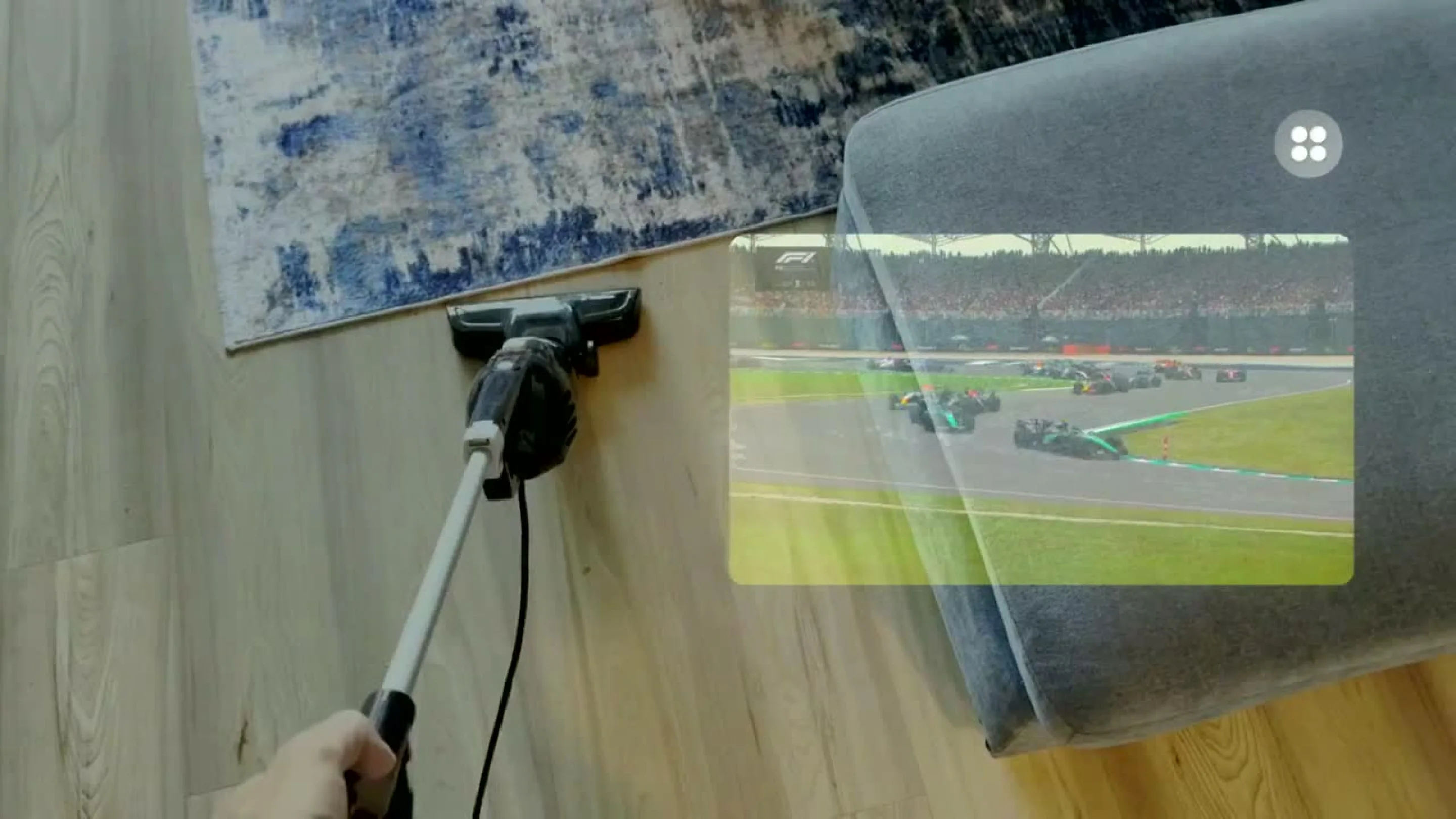
The optical design is a single-eye approach. One full-colour LCoS display uses waveguide optics to project information into the user's right field of view, with the company claiming an effect comparable to viewing a 16-inch display at arm's length. Because that content sits at the periphery, the real environment stays visible at the same time, which makes the interaction feel calmer than a screen that blocks the world out.
Control is the other half of the story. Built-in eye tracking lets users navigate and select with their gaze, and voice control is supported as well. Compared with repeatedly pulling a phone out of a pocket or reaching for a touch surface, this is simply more convenient when both hands are occupied — checking navigation prompts, reviewing work documents, reading a menu, displaying a boarding pass or tracking a to-do list.
Four ways to build smart glasses: how the options differ
| Architecture | Representative devices | Where the computing happens | Practical upside | Practical downside |
|---|---|---|---|---|
| Standalone ambient computer | Raven Prism (Raven Resonance) | On the glasses: RavenOS on Linux, ARM64 apps, SSH access | Phone-free operation, deep customisation, hot-swappable power | Young ecosystem; only more than 25 apps at launch; modest memory ceiling |
| AI glasses with a companion phone | Meta Ray-Ban Display, listed online from $799 with its wrist band | Phone plus cloud services | Mature assistants, messaging and camera features out of the box | Subscription to a platform's app choices; growing privacy scrutiny |
| Notification head-up display | Even Realities G1, rated by its maker at up to 1.5 days per charge | Phone; glasses mirror selected content | Lightest, cheapest path to glanceable text and translation | No real computing power on the frame; limited to the vendor's app list |
| Tethered virtual screen | Xreal and Viture style display glasses over USB-C | Connected phone, tablet or laptop | Largest apparent screen, best for films and multi-window work | A cable to a source device; useless as a standalone tool |
Read this table as a decision tree rather than a ranking. Only one row removes the phone from the equation entirely, and only one row gives you a shell prompt on the frame.
Raven Wings: hot-swapping as the answer to a physics problem
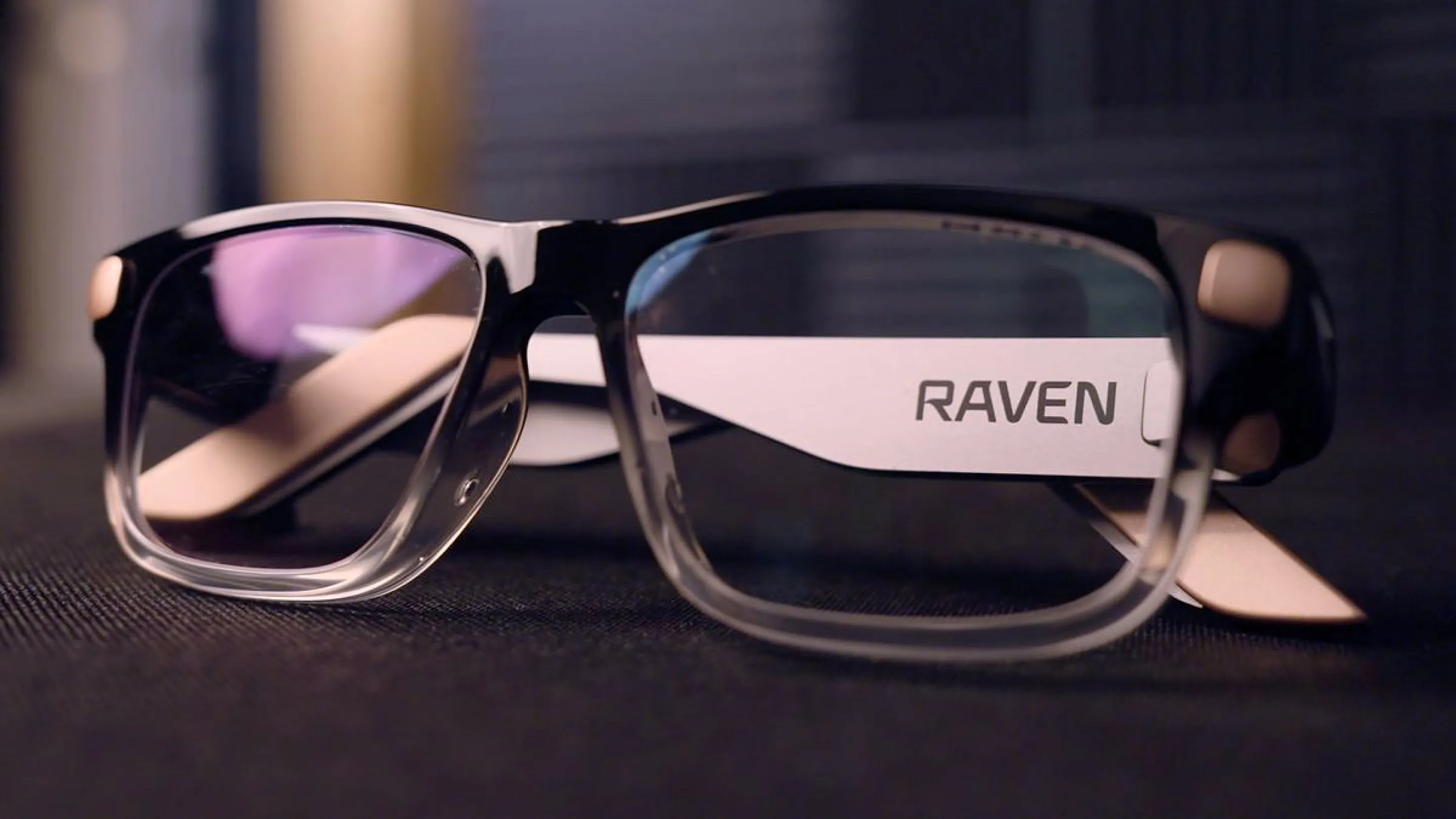
Battery life is the least glamorous and most decisive constraint in this category, and it is where the product's most discussed innovation sits. Raven Prism uses a modular battery system called Raven Wings: when a pack runs flat, the user pulls it out and clips a fresh one in place without rebooting the device, so application state and ongoing work stay continuous. Raven Resonance argues this hot-swap approach helps relieve the chronic endurance shortfall of smart glasses.
The same Raven Wings interface is also planned as an expansion path rather than a pure power port. The company has indicated that future modules could include cellular connectivity, GPS positioning and larger-capacity batteries — a meaningful distinction, because a battery bay that accepts third-party add-ons turns the frame into a modular workstation instead of a sealed consumer gadget.

Privacy: built into the mechanics, not the marketing deck
Raven Resonance says most data processing is kept on the device itself. Eye-tracking data is not uploaded to the cloud by default, and speech recognition is prioritised locally. A 13MP front-facing camera is fitted, but a mechanical lens cover must be opened by hand before capture is possible, and when the camera runs, an indicator on the frame lights up clearly to alert people nearby.
That mechanical logic is worth pricing against the current news cycle. In late October 2026, two US senators wrote to Meta asking the company to explain how it assesses the privacy risks of its camera-equipped glasses, citing reports about consent and image handling. Against that backdrop, Raven's stance — that the company opposes surveillance-style business models built on user data, and that the user decides when the camera is on, when data leaves the device and which features may touch personal information — reads less like a slogan and more like a procurement argument for employers and regulated industries.
The ecosystem question: the real risk in this purchase
On the software side, Raven Prism is planned to ship with more than 25 applications installed, while opening low-level system access to developers. Unlike mainstream smart glasses that route every app through a closed storefront review process, Raven wants developers to build and deploy directly on the platform.
Here is where the comparison turns uncomfortable. Big-platform glasses inherit messaging apps, assistants and payment rails on day one; Raven Prism has to recruit its own community. A published application framework on the company's GitHub organisation shows the intent is real, but intent is not the same as a mature catalogue. Whether enough software support arrives will be the single biggest determinant of mainstream adoption.

Why the timing matters: a fast-moving market
The bet lands while demand is visibly accelerating. IDC recorded roughly 2.25 million smart glasses shipped in the first quarter of 2026, up about 167% year on year, and forecasts around 13.6 million units for the full year, climbing toward 27.3 million by 2030. Most of that volume still comes from glasses without displays, which is precisely the gap Raven Prism is trying to fill with something more than a companion gadget.
On availability, Raven Prism has started taking reservations and has shown working prototypes publicly. According to the company's October 2026 announcement, reservations are open through the official site with a fully refundable $49 deposit, and industry coverage points to the first deliveries beginning in January 2027. The deposit is small enough to serve as a cheap option on your time; the shipping date is far enough away that you should treat the wait as part of the product.
Five misconceptions this story tends to create
- "Ambient Computer" is a synonym for smart glasses. The company deliberately rejects that label because the point is independent computation, not a phone screen mirrored onto a lens.
- Standalone means no setup effort. SSH access and native Linux ARM64 applications are a gift to people who like configuring machines — and a chore for everyone else.
- A peripheral display means augmented reality as advertised elsewhere. A single-eye panel parked at the edge of your vision is closer to a personal HUD than a world-scale AR canvas.
- Hot-swappable batteries solve endurance. They remove downtime, but the per-module capacity still sets how long one session lasts.
- A mechanical camera cover settles the privacy debate. It protects bystanders from accidental capture; it does not by itself govern what data leaves the frame when you allow it.
Before you commit: a seven-step decision checklist
- Write down the two tasks you would actually do while wearing glasses — if neither needs hands-free glanceable data, the category is not for you yet.
- Decide whether the phone is the problem. If leaving the handset at home is essential, only a standalone architecture qualifies.
- Check the display geometry before comparing resolutions: a wide field of view suits content, a narrow one suits text cues.
- Ask how you will replace power in a long day — charging case, spare modules or hot-swap.
- List the apps you cannot live without and verify they exist on the platform, not just in a press release.
- Read the on-device versus cloud data policy if you work in healthcare, finance or any regulated field.
- Size the wait: reservation today, hardware in 2027, firmware maturity in 2028.
FAQ
Does Raven Prism need a smartphone?
No. Raven Resonance defines Raven Prism as the world's first Ambient Computer specifically because it can compute independently and does not have to stay continuously bound to a smartphone.
Can I use my own software on it?
That is the core promise: RavenOS is built on Linux, the hardware accepts native Linux ARM64 applications, and users can obtain SSH access with substantial scope for system customisation.
How does the display actually look?
A single-eye design projects content through a full-colour LCoS display and waveguide into the right eye, with the official claim that it reads like a 16-inch display held at arm's length while the surrounding world stays visible.
What happens when a battery dies mid-task?
Raven Wings modules are hot-swappable, so you pull the drained pack and insert a charged one without a reboot; application state and work content continue.
Is this a safe choice for enterprise pilots?
The privacy mechanics — a mechanical lens shutter, a visible recording indicator, local eye-tracking and speech handling, plus a modular Raven Wings bay that can carry future cellular and GPS add-ons — make it unusually attractive for controlled environments. The counterweight is ecosystem depth: fewer than a few dozen preinstalled apps at launch means custom development is likely required.
Bottom line
Markets rarely change direction because one device is well marketed; they change when someone accepts the engineering cost of doing without an existing platform. In a wave of AI glasses that lean on phones and cloud services, a wearable that runs Linux on its own silicon, keeps data at home and lets you swap power without stopping is a genuinely different thesis. Its weaknesses — a small launch app list, a modest memory ceiling and a delivery date pushed into 2027 — are the predictable price of that independence. Judge it the way you would judge any first-generation platform tool: buy it to build on it, not to be convenience-served by it.
Written for ItInsightsWorld's General desk by James Hartley, IT Insights. Questions or corrections: contact@itinsights.com.