
Why the 16GB Raspberry Pi 5 Now Costs $80 More: A Memory Squeeze, Explained for Normal Buyers
By James Hartley · IT Insights
Something small and instructive happened in the corner of computing where school projects, home media servers and factory control boxes are built. The 16GB variant of Raspberry Pi 5 has climbed by $80 to $385, and the 16GB Raspberry Pi Compute Module 5 variants have gone up $40. The product names sound niche; the mechanism behind them does not. This is the clearest illustration yet of how the AI infrastructure boom travels downhill - through DRAM contracts, onto bills of materials and finally into the cart of someone who just wanted a cheap computer for a garden sensor. The useful takeaway is not the price sticker. It is that, From today, memory capacity has become the single most expensive decision in a small-project budget, and the way you size it now matters more than the chip you choose.
Three things to know before you buy anything
- Capacity, not generation, sets your exposure. The increases track the amount of RAM on the board, not how new or powerful the board is.
- Nothing here applies across the shelf. The company has repeatedly refused blanket increases: Raspberry Pi 500+ is explicitly held at its old price, the lowest-density boards have been left alone, and classic models built on older LPDDR2 memory are unaffected because stock was secured years ago.
- Price tags are now perishable. If you are planning a deployment, a quote from last quarter is a rough guide rather than a commitment, and re-sizing memory is a faster saving than re-sourcing boards.
What moved, and what stayed put
The pattern below is the one worth memorising, because it explains where your money actually goes in 2026.
| Product | Memory | This adjustment | Why it landed there |
|---|---|---|---|
| Raspberry Pi 5 | 16GB | +$80, to $385 | Largest DRAM content per unit, so the highest exposure to spot prices |
| Raspberry Pi Compute Module 5 (Compute Module 5 brief lists revised figures) | 16GB | +$40 | Same memory, sold into industrial runs where volumes and contract terms absorb part of the hit |
| Raspberry Pi 500+ | 16GB | Unchanged | Flagship all-in-one desktop built into a mechanical keyboard; holding its price protects the top of the range |
| Lowest-capacity current boards | 1GB | Unchanged | Little memory to overpay for; repeatedly exempted from the increases |
| Classic models such as Pi Zero and Pi 3 | Older LPDDR2 | Unchanged | Years of memory inventory already on hand, per the vendor's February 2026 pricing note |
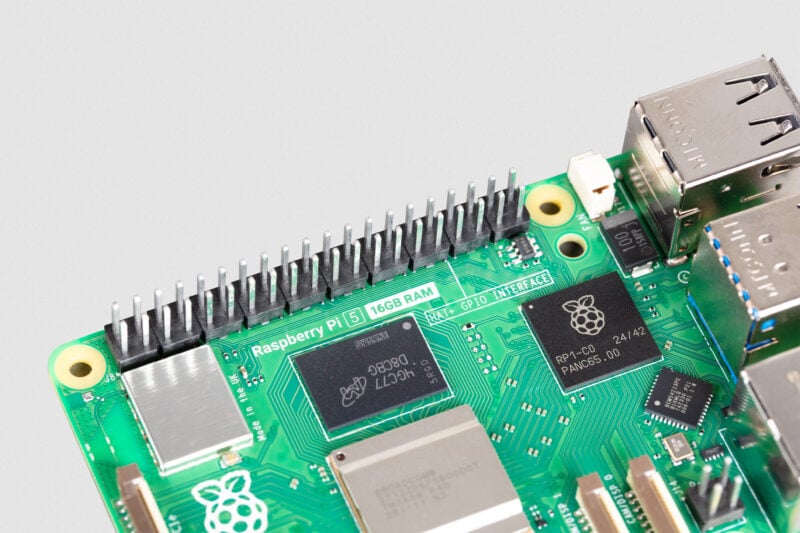
From $120 to $385 in about twenty months
The pressure has been building for two years, yet it is easiest to grasp by following one board. Placing this week's step inside the longer sequence is the fastest way to understand it. The 16GB Raspberry Pi 5 launched in March 2025 at $120, as recorded in the manufacturer's own announcement. Through the autumn of 2025 memory costs began to bite, and the first selective increases appeared. By February 2026, when the largest single step reached $60 on 16GB boards, Tom's Hardware reported the 16GB Raspberry Pi 5 at $205. In April 2026 the company introduced an unusual in-between configuration - a 3GB Raspberry Pi 4 priced at $83.75 - precisely because mid-size memory tiers had become hard to buy sensibly. The 16GB board had reached $305 before this week, which means the latest $80 step takes it to roughly three times its original retail price. Every one of those moves was explained the same way: memory that was cheap, abundant and invisible has become expensive, scarce and decisive.
The explanation given in the announcement is unusually candid about the limits of what a hardware maker can do. The company says it has been qualifying alternative memory parts to create sourcing flexibility, but the shortage of alternative 16GB DRAM supply, plus continuing component constraints, is what forced another increase on the highest-density products. In other words, the escape routes for the biggest memory configurations are the first to close, because nobody else is scrambling for 16GB LPDDR quite as hard as the AI server builders are.
Why the pain is concentrated at the top of the range
Three structural reasons turn a commodity price shock into an $80 line item on a small circuit board.
First, arithmetic. A 16GB board carries eight times as much DRAM as a 2GB board, so any change in the cost per gigabyte is multiplied eight times before it reaches your invoice. Low-capacity variants barely feel it; that is why exemption lists in every round of increases have read like a capacity chart.
Second, crowd-out. Fabs allocate wafers to whatever earns the most, and high-bandwidth memory for accelerators now earns far more than the LPDDR found in single-board computers. Gartner forecast DRAM prices to rise 47% in 2026 on undersupply across both traditional and legacy segments, and J.P. Morgan's Global Research estimates put combined DRAM price growth above 400% between the start of 2024 and the end of 2026 - a swing no accessory list can absorb.
Third, the absence of a second source. With only a handful of suppliers capable of shipping 16GB LPDDR in the volumes a board maker needs, qualifying an alternative part is a months-long engineering exercise, not a phone call. Small vendors cannot hedge their way out the way a laptop OEM can.
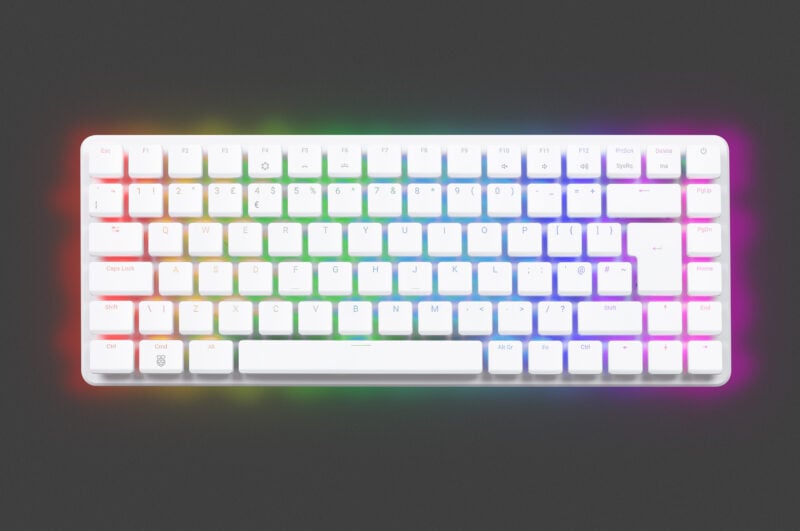 The one high-memory product deliberately left untouched: Raspberry Pi 500+, the 16GB desktop built into a mechanical keyboard, which arrived in September 2025 at $200 for the unit and $220 as a desktop kit.
Why hold that one? Partly positioning: a premium all-in-one is judged against budget mini PCs, not against a $60 board, so a mid-life price rise there does more brand damage than the money it recovers. Partly timing: a product less than eighteen months old still has costed inventory behind it. And partly signalling: keeping one flagship untouched proves the increases are cost-driven rather than opportunistic.
Five misconceptions worth dropping
- “The maker is gouging its fans.” Blanket, margin-hungry pricing does not exempt a fifth of the catalogue and launch a lower-capacity board to give buyers somewhere cheaper to go.
- “Every Raspberry Pi just got dearer.” No. Raspberry Pi 500+ is unchanged, 1GB boards have been left alone, and the older LPDDR2-based models are unaffected for now.
- “Buy the biggest buffer you can afford, it future-proofs the project.” Buying memory you never touch was always wasteful and is now the most expensive habit in hobby computing.
- “Old listings and second-hand stock are a safe hedge.” The company warns that bad actors are using shortage conditions to sell at inflated prices or to list items that are not what they appear. Only the Raspberry Pi Approved Resellers network sells at official prices, and the Approved Reseller page is where you confirm a seller belongs to it.
- “This is the permanent new baseline.” The manufacturer describes the memory landscape as difficult but ultimately temporary and expects to reverse the increases when memory costs fall.
A ten-minute checklist before you order
- Measure, do not guess. Log peak memory use for a week under real load; a board that never breaks a sweat at 3GB does not need 16GB.
- Re-shop the tier below. If you originally picked 16GB, price the 8GB and 4GB variants and compare the delta against your measured headroom.
- Let older silicon do the boring jobs. Earlier-generation boards handle dashboards, ad blocking, print serving and simple automation without you paying a 2026 memory premium.
- Optimise before you upgrade. Fewer resident services, no desktop session, a lighter runtime and trimmed caches often buy back more capacity than the next tier up.
- Read the vendor's own guidance. Practical memory tips have long run in Raspberry Pi Official Magazine, and questions posted to the Raspberry Pi forums are frequently answered by the company's engineers.
- Buy only through vetted channels. Start from the Approved Reseller page, and keep a dated screenshot of what you paid; it is the only sensible protection against listings that are inflated or misrepresented.
- Treat quotes as perishable. Re-cost any multi-unit order every quarter, and watch for a reversal announcement rather than assuming today's prices are permanent.
- For fleets and production lines, ask for a memory-optimisation review directly with the vendor, where shaving one tier across a thousand units dwarfs any single-board saving.
What happens next: a trend read
The honest answer is “not soon, and not only here”. Gartner's February 2026 press release estimates a 130% rise in combined DRAM and SSD prices by the end of 2026, translating into roughly 17% higher PC prices - so the squeeze you see on a $385 board is the same one reaching mainstream laptops. IDC has warned that rising DRAM and NAND costs threaten pricing and specifications across the smartphone and PC markets in 2026. On the relief side, analysts polled in late 2026 cluster around stabilisation in early-to-mid 2027, while Counterpoint Research argues the shortage may not be substantially resolved until the second half of 2027 because demand stays firm even as prices climb.
For readers of ItInsightsWorld's General column, three practical expectations follow. More mid-capacity configurations will appear, because the sweet spot has moved downwards and vendors need somewhere to send buyers who cannot justify top-tier memory. Selective, capacity-linked pricing will become normal rather than exceptional, with flagship SKUs frozen as proof of intent. And the cheapest lever in a project will shift from sourcing to sizing: knowing what you actually need becomes worth more than finding a marginally better deal.
FAQ
Which single change saves the most money?
Dropping one memory tier. On the 16GB Raspberry Pi 5 that is an $80 difference on the current list, and unlike shipping, bulk discounts or component substitution it can be decided in a single meeting.
Does this affect industrial Compute Module 5 purchases the same way?
Only partly. The 16GB Raspberry Pi Compute Module 5 variants rose by $40, half the headline step on the single-board machine, and the revised figures are published in the Compute Module 5 product brief.
Should I wait for prices to fall?
If the project is live, no: an idle deployment costs more than a pricier board. If you are pre-purchasing a fleet, wait only if you can absorb today's price, because most forecasts place meaningful relief in 2027 rather than in the next quarter.
Is the old price still available anywhere?
Treat anything far below the current official list as a question to answer before paying. Check the Approved Reseller page; the company states that all products remain available at official prices through its vetted reseller network.
Want this story tracked through the next pricing round? The IT Insights desk answers reader questions at contact@itinsights.com.
Written by James Hartley for IT Insights · ItInsightsWorld. Price changes described here follow the vendor's own announcement and are reported as stated; third-party figures are attributed inline.