
IT Insights Profile: Raspberry Jams in Argentina Bring Computing to Rural Schools in Santiago del Estero
Childhood on unpaved streets, a rented seat in an internet café, and a portable classroom machine all add up to a string of community workshops in the Argentine province of Santiago del Estero. The thread running through them is Raspberry Pi; the person pulling it is Eliana Otrera, whose #MakerMonday profile recounts how she has brought computing to rural schools in Argentina and helped run Raspberry Jams so that children can encounter computers and programming.
Written by James Hartley for IT Insights
Where it began: Forres, then and now
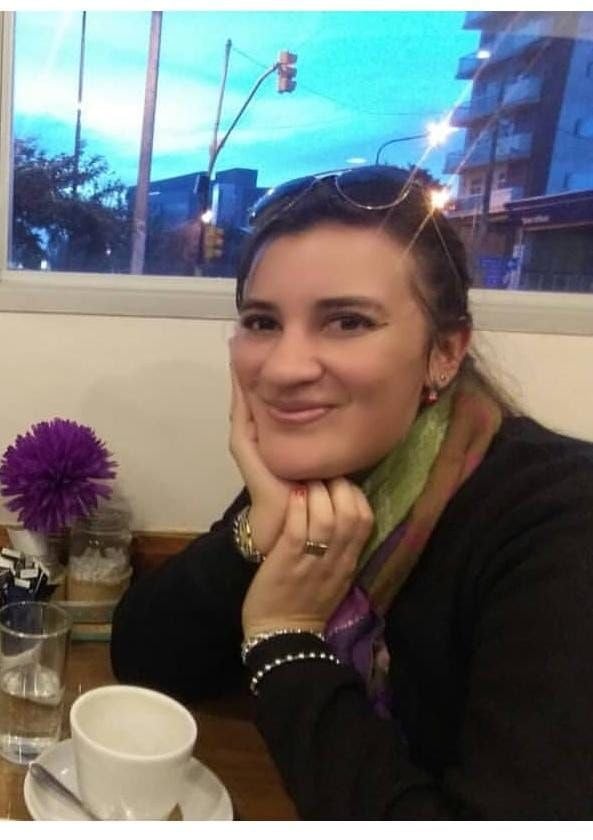
She works from Forres, a settlement in the province of Santiago del Estero, Argentina, which has become a city since her early years but was then, in her own words, a “small town with dirt roads”. Growing up there never placed technology or computing beyond her reach.
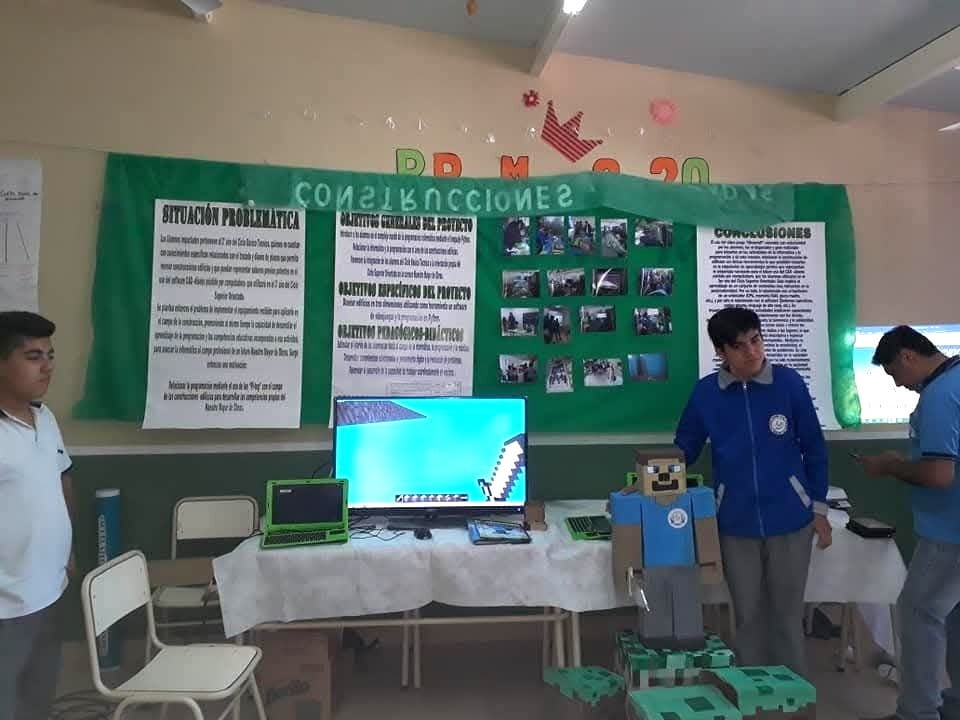
For the young makers she works with, coding in Minecraft on a Pi-Top has become the familiar face of Raspberry Pi digital making.
“That was when I decided to study Computer Science at university,” Eliana tells us. “Since I did not have my own computer, I had to go to internet cafés and rent one. I’m not talking about the 1980s – this was in 2003! But none of that stopped me from continuing my education. Obviously, as I progressed through my degree, my parents were eventually able to buy me my first computer.”
The move into the countryside happened in 2017, when she joined a programme called Conectar Igualdad (Connecting Equality) and began bringing coding and robotics to rural schools.
Her verdict on those years is blunt: “My experience in rural schools was, without a doubt, one of the stages that most shaped my relationship with technology and education,” Eliana says. “There I understood that talking about the digital divide was not simply a matter of statistics or a lack of devices. The technology gap had faces, names, and stories.”
How the first Raspberry Pi hardware reached her classroom
Also in 2017, the Conectar Igualdad programme introduced the Pi-Top distribution, a set of portable computers designed for educational use. Inside them she found a powerful little tool, and she put it to work in many projects across different schools. Since then she has stayed connected with Raspberry Pi, keeping up to date and making the most of the new features and possibilities that Raspberry Pi continues to offer.
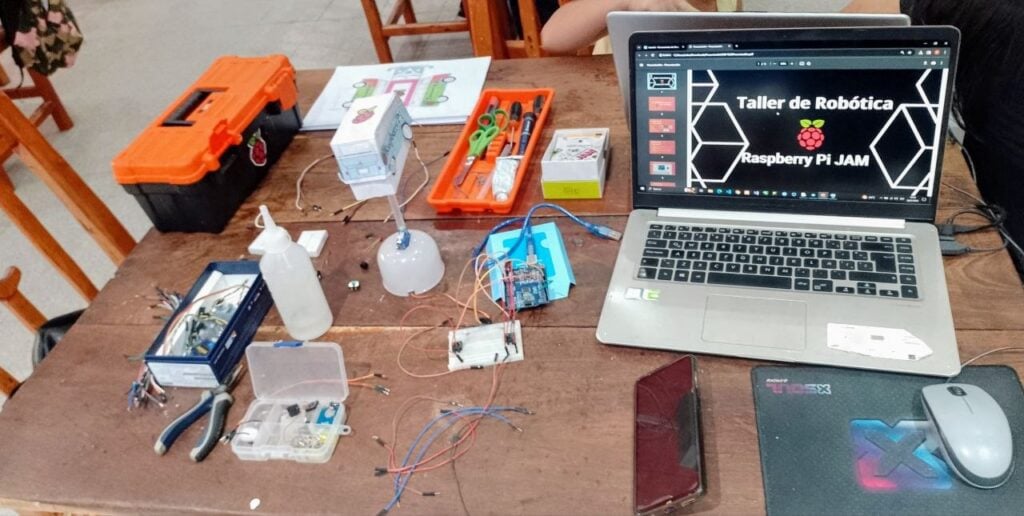
As her work shows, Raspberry Pi has become an important part of computing education.
The Raspberry Jams take shape
What became the Raspberry Jams in Santiago del Estero started as a shared passion. In 2019 Eliana began promoting Raspberry Pi among her professional circle and colleagues as an educational tool, while also looking for new ways to bring technology closer to students and teachers.
Some time later, two colleagues who share the same interests and passion for technology joined the effort, and the group became pioneers in promoting Raspberry Pi in Santiago del Estero. The province’s first Raspberry Pi workshop open to the community took place on 6 March 2020, in Forres.
- 2017 — coding and robotics enter rural schools through Conectar Igualdad (Connecting Equality) and the Pi-Top distribution.
- 2019 — Raspberry Pi gains its first advocates inside her professional circle.
- 6 March 2020 — the first community-open Raspberry Pi workshop in the province, held in Forres.
- After 2020 — workshops run more regularly and in different places: schools, cultural centres, and academies, both in Forres and in the surrounding areas.
Interest has kept climbing since that first workshop in 2020: students, teachers, families, and technology enthusiasts all turn up.
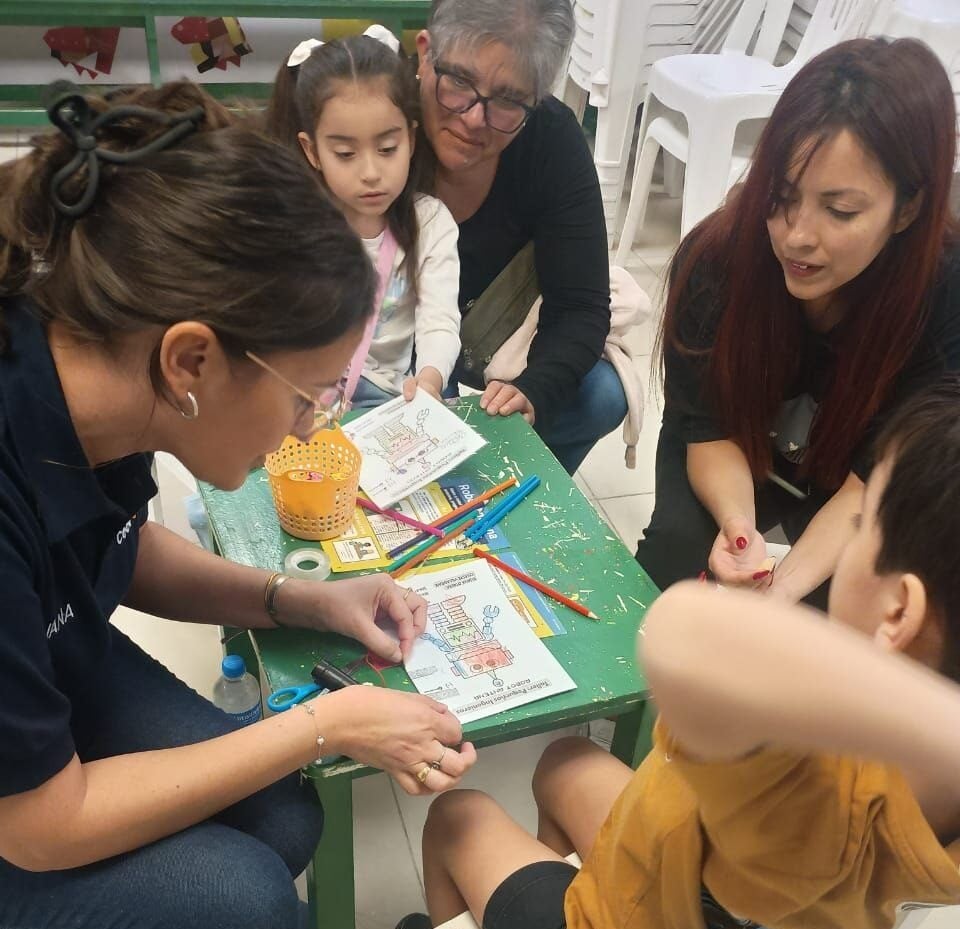
Photograph: robots and robotics during a session with Eliana teaching children.
What the participants build
At the introductory level the projects she has come across include electronic trivia games and basic robots, and what matters most is the artistic expression participants put into the finished result — the expression and emotion conveyed through decoration outweigh any other automated function that could be added to the robot.
At the more advanced level her attention goes to programming projects such as programmed constructions, where students build different institutional buildings automatically using Python and Minecraft as a foundation. In robotics, the clearest sign of progress is the evolution of an automated greenhouse project, from an initial model to the productive agricultural projects students are now implementing for irrigation control, drone deployment, and crop planning.
| Level | Work she has seen | What stands out |
|---|---|---|
| Introductory | Electronic trivia games and basic robots | Artistic expression; decoration over extra automation |
| Programming | Programmed constructions of institutional buildings | Python and Minecraft used as a foundation |
| Robotics | An automated greenhouse that grew into agricultural projects | Irrigation control, drone deployment, and crop planning |
Where the story first appeared
For readers tracing the source: this article appeared in issue 170 of Raspberry Pi Official Magazine. The original article also referenced a six- or twelve-month print subscription, a Raspberry Pi Pico 2 W, and the platforms Facebook, X, Threads, LinkedIn, and Mastodon.
A rented computer in an internet café in 2003 and a Raspberry Pi in a rural schoolyard turn out to be close relatives. From a “small town with dirt roads” to the Raspberry Jams in Santiago del Estero, Eliana Otrera’s path suggests that the digital divide closes one workshop, one robot, and one line of Python at a time — exactly the kind of computing-education story IT Insights follows.