
The Little Shop by Raffles vs. the In-Hotel Boutique: A Trade-off Review of Raffles Hotels & Resorts' first Global eCommerce Store | ItInsightsWorld General
Reviewed by Maya Brooks, IT Insights. Written as a channel comparison, not a product write-up.
Short answer: The Little Shop by Raffles does not replace the boutique inside the hotel; it reverses the order of the two channels. Raffles Hotels & Resorts has opened its first global eCommerce store, so merchandise that once reached only guests at Raffles Singapore or Le Royal Monceau – Raffles Paris now reaches people who have never booked a room. The trade-off is reach against rarity, and that trade-off can be measured against three rival models.
What actually launched, and what did not
The launch is a distribution change, not a fashion label. Raffles Hotels & Resorts has launched The Little Shop by Raffles, its first global eCommerce platform, carrying the Raffles Hotel hospitality experience into fashion, lifestyle and homeware through branded apparel and exclusive collaborations. The platform takes its name from the original boutique at Raffles Singapore, which opened in the 1940s, at a property whose history starts in Singapore in 1887.
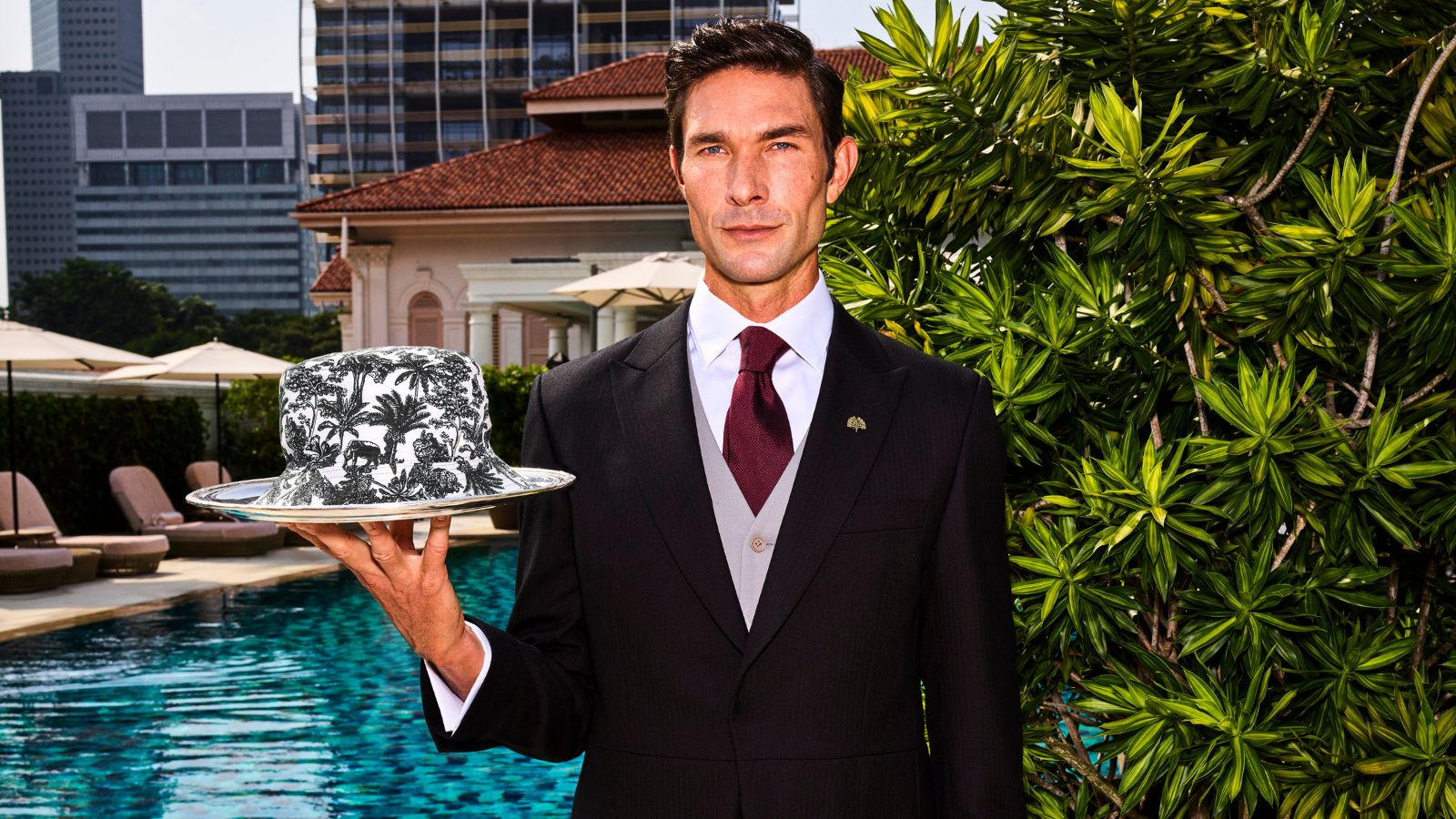
On the product side, the collection was developed with creative director Jessica Diehl and covers ready-to-wear pieces inspired by Raffles' heritage and visual identity: cashmere sweaters, polos, pyjamas, resortwear and athletic apparel. The marks of authorship are specific — relaxed separates bearing the phrase “The butler did it”, a reference to the brand's global campaign, plus the Raffles crest and signature palm print, and a personalised note from the Raffles Butler inside each order.
Diehl is not a hospitality hire. She spent twelve years at Vanity Fair, latterly as creative director of fashion and style, leaving in March 2018, and has since edited The Air Mail's style vertical, launched in spring 2024. That matters for one reason: the brief was written by someone whose work is magazine-grade visual editing, not group-wide procurement.
Two things did not arrive with the store. The launch materials do not publish price bands, so any claim about value for money is guesswork; and there is no disclosed split between direct retail revenue and group reporting. For reference on the price class alone, marketplace listings around the time of writing put a Ghiaia cashmere crewneck at about $795 and a Polo Ralph Lauren knit above $900 (FWRD). Trade coverage from JustLuxe dates the store's go-live to 2 November.
How does this compare with the other three ways hotels sell things?
Conclusion first: the four models differ less in what they sell than in who ends up owning the buyer. A hotel can sell its own collection online, sell it in its own boutiques, sell standardised comfort products at volume, or rent floor space to other people's brands.
| Model | Working example | Where the sale happens | What it optimises | Main failure mode |
|---|---|---|---|---|
| Digital-first curated store | The Little Shop by Raffles | Global online store, plus select products at three Raffles properties | Reach after checkout; a name that keeps appearing once the trip ends | Rarity erodes faster than the room product can absorb |
| Property-first apparel | The Essentials by Aman (2021) | Sold in the boutiques of four properties first; the website came later | Exclusivity; the purchase stays inside the trip | Fragmented stock and sizing; most interest cannot convert |
| Volume comfort retail | Atour Lifestyle Holdings | App and marketplace, powered by hotel stays | Repeat purchase of standardised SKUs; Q2 2025 retail GMV of RMB1,144 million, up 84.6% year on year | Scale reads as ordinary, and the brand stops signalling luxury |
| Licensed in-hotel boutiques | Third-party houses renting hotel floor space | Inside the property | Rent and brand adjacency with no merchant risk | The hotel is a landlord, not a merchant: no ownership of customer data |
Read as a system: Raffles picked the model with the widest reach and the least built-in scarcity control. Aman's 2021 decision to sell through property boutiques first is the opposite bet, and Atour proves the volume route works only when the product is repeatable, which a palm-print cashmere sweater is not.
Why open a store now rather than another property?
Because the channel is growing several times faster than the category. A PwC study on in-hotel boutique retail, reported by Milano Finanza in May 2026, sized the global market at roughly US$17.9 billion in 2024 and US$19.4 billion in 2025, expected to pass US$21 billion in 2026 and to reach US$36.7 billion by 2033 — a compound annual growth rate of 8.3% for 2024–2033. PwC's Italian research team put it plainly: the boutique is no longer an ancillary amenity but a real business line generating direct revenue for both fashion brands and hotels.
Against that, the wider luxury goods market moves slowly. Statista Market Insights puts worldwide luxury goods revenue at about US$480.33 billion in 2026, with expected growth of 2.19% a year to 2031. A hotel brand that wants retail growth has to build the channel, not ride the category.
The group layer matters here. Raffles has been inside Accor since the FRHI Hotels & Resorts acquisition completed in 2016, a transaction announced in December 2015 and reported at around US$2.7 billion. That brings shared distribution, a shared loyalty base and a multilingual booking funnel — with one honest caveat: retail folded into a group of that size is invisible from outside, so this review is a structural read, not a financial one.
What do the collaborations actually buy the buyer?
You are paying for a specification, not for a manufacturer. Ginori 1735, Christofle, Smythson and Globe-Trotter already make their own goods; the Raffles version differs only where the launch materials say so.
| Partner | Item named in the launch | What is Raffles-specific |
|---|---|---|
| Ginori 1735 | Tableware | Raffles palm print |
| Smythson | Leather goods | Brand's signature deep green |
| Christofle | Coffee cups | Not itemised in the launch materials |
| Globe-Trotter | Carry-on cases | Not itemised in the launch materials |
| Frette | Homeware | Not itemised in the launch materials |
| Orlebar Brown | Swim and resortwear | Not itemised in the launch materials |
| Vanessa Sposi | Apparel | Not itemised in the launch materials |
| Amambaih | Food and homeware | Contribution not verifiable from public launch material |
| Z Lab | Fragrance and lifestyle | Contribution not verifiable from public launch material |
Stated plainly: I could not confirm from public sources what Amambaih and Z Lab contribute beyond their presence on the partner list. That is a defect in the information published alongside the store, and the kind of gap a buyer should notice before paying a hotel premium for an unexplained collaboration.
Merchandise line, or brand-control question?
Claudia Kozma Kaplan, chief brand officer of Raffles Hotels & Resorts, framed the platform as the natural next step of the same identity, not a new business. “For more than a century, Raffles has inspired a sense of discovery and an instinct for the extraordinary. 'The Little Shop' is an invitation to bring that world home through a curated collection of distinctive pieces, created by Raffles and in collaboration with a selection of houses we deeply admire,” she said. Kaplan added that the collection offers consumers a new way to experience the Raffles brand long after their hotel stay has ended.
Two clauses in that sentence do the work: created by Raffles, and in collaboration with a selection of houses we deeply admire. The first puts design authority in-house; the second admits that most of the shelf is somebody else's craft. Whether a luxury name keeps control of its own design language once outside parties produce the goods is a live question across the industry — our review of Maserati Design tests whether the Trident can still control luxury covers the same tension from the car side.
Where you can still touch the product
The launch introduces a new retail touchpoint for the hospitality brand, allowing guests to engage with Raffles beyond their stays. Select products will be available at Le Royal Monceau – Raffles Paris, Raffles London at The OWO and Raffles Boston. Note the qualifier: select, not the full assortment.
The Paris choice is the least surprising. Le Royal Monceau – Raffles Paris already runs an art-focused bookshop and a 99-seat cinema in a Philippe Starck-designed layout (Condé Nast Traveller), so adding a shelf costs little beyond merchandising. Raffles London at The OWO and Raffles Boston, newer addresses, gain something different: a customer relationship that exists before the booking does.
Why did the communications appointment come before the store?
The eCommerce launch follows Raffles Hotels & Resorts' efforts to strengthen its brand presence across Asia. The brand appointed COMPANION Communications as its lead Asia-based PR and communications agency, covering public relations, marketing communications, strategic advisory, storytelling, partnerships, content creation and crisis support across the region. The appointment added Raffles to COMPANION's hospitality portfolio, alongside recent wins such as the launch of Capella at Galaxy Macau, Andaz One Bangkok in Thailand and a global retainer for Island Shangri-La in Hong Kong.
Sequence is the signal. Narrative capacity was bought before commercial reach was pushed, which is the right order for a launch that depends on editorial framing rather than discounting. It also creates an obligation: a store is a content machine that never switches off, and every drop needs a story with a date attached.
Four misreads this launch invites
- Calling it a clothing brand. The assortment is a merchandising layer on a hotel business; nothing published suggests the room product competes with the apparel.
- Assuming “global” means the same assortment everywhere. Only select products appear at Le Royal Monceau – Raffles Paris, Raffles London at The OWO and Raffles Boston, so the online and in-person catalogues are not identical.
- Treating hotel retail as a niche. The in-hotel boutique channel is sized near US$21 billion for 2026 at an 8.3% CAGR to 2033; that is a business line, not a gift-shop afterthought.
- Reading “The butler did it” as decoration. It is a campaign reference, and the note from the Raffles Butler is a service artefact carried into fulfilment — whether that survives at shipping scale is not answered anywhere yet.
Which buyer is this store actually for?
- You have stayed at a Raffles and want the feeling back. Buy the thing that only exists here — the palm-print Ginori 1735 piece or the deep green Smythson item. Skip the polos and pyjamas, which compete directly with mills that do that job at known prices.
- You have never stayed and like the design. Compare against the reference class first. At the marketplace knit prices cited above, a hotel premium has to be justified by the exclusive specification, not by the crest.
- You run a hotel or retail brand. Copy the ordering, not the range: build the story and the data pipeline before the checkout, and keep one physical tier for products that need touching.
- You want value. This is not the channel. The volume route — Atour's repeat-purchase bedding model — is where hotel retail gets close to ordinary pricing.
Frequently asked questions
Is The Little Shop by Raffles only open to guests?
No. It is described as the brand's first global eCommerce store, and the point of the launch is engagement beyond the stay. Physical availability is limited to select products at three properties.
Why name an online platform after a 1940s boutique?
Because the store has to be sold as inheritance rather than as merchandise. The original boutique at Raffles Singapore gives the platform a date and a room to stand in; the same logic explains the crest, the palm print and the butler's note.
Does the store change how Raffles makes money?
Not visibly from outside. No revenue guidance or margin disclosure accompanied the launch, and the business sits inside a group that took Raffles in the 2016 FRHI acquisition. Until a report breaks the line out, treat the store as brand investment that may become a revenue line.
Could I buy the same Ginori 1735 or Christofle piece elsewhere?
From those houses, yes. The difference is specification: tableware carrying the Raffles palm print, and leather goods from Smythson in the brand's signature deep green. If the specification is not stated on the product page, there is no reason to pay the hotel price.
What would tell me this is working?
Three observable signals: assortment restocking rather than a single-season drop, the collaboration list gaining named exclusives with stated specifications, and products appearing at more Raffles addresses rather than fewer.
A reusable checklist before you trust a hotel-branded store
- Find the one item whose specification exists nowhere else. If you cannot, you are buying a logo.
- Check who designed the range and what that person's record is outside this category.
- Look for published price bands before you infer luxury pricing from photography.
- Ask which touchpoint holds the full assortment: online, or the boutique at Le Royal Monceau – Raffles Paris, Raffles London at The OWO, Raffles Boston.
- Test the service promise against shipping scale — a personalised note from the Raffles Butler is a cost line, not a mood.
- Ignore the launch party; wait for the second collection before judging whether this is a channel.
Sources
- Raffles Hotels & Resorts official site and launch posts — raffles.com
- JustLuxe on the launch date and assortment — justluxe.com
- Marketing-Interactive coverage of the first global eCommerce store, 10 November 2026 — marketing-interactive.com
- PwC study on in-hotel boutique retail, reported via Milano Finanza and 华丽志 — luxe.co
- Statista Market Insights, luxury goods worldwide — statista.com
- Accor press release on the FRHI acquisition — press.accor.com
- Atour Lifestyle Holdings Q2 2025 results summary — stocktitan.net
- The Essentials by Aman and its property-first distribution — travel.ifeng.com
- Jessica Diehl's departure from Vanity Fair — hollywoodreporter.com; The Air Mail style vertical — wwd.com
- Raffles Hotels & Resorts background and FRHI history — wikipedia.org
Published by IT Insights on ItInsightsWorld, General desk. Corrections and questions on this comparison: contact@itinsights.com.