
ItInsightsWorld Comparison: Your Desktop RAM vs. the Data Center — Altman, Musk and the 5% Question
Our verdict before the evidence: nobody is asking you to surrender the memory modules already sitting in your machine, and you should not "optimise" your next upgrade around a global supply argument. The useful takeaway from this week's quarrel between OpenAI chief Sam Altman and Elon Musk is a decision rule, not a policy proposal — pay for the gigabytes you actually touch, rent the burst capacity you touch rarely, and treat "idle" capacity as insurance rather than waste. What follows is a side-by-side look at where pooled cloud memory genuinely wins, where a stick of DRAM under your own desk wins, and how to price the choice while memory is unusually expensive.
Two Positions, One Scarce Commodity
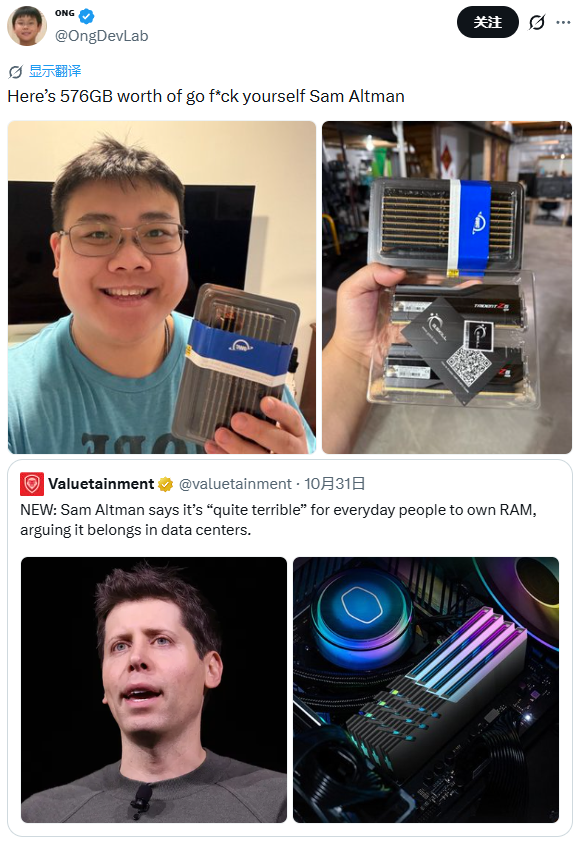
Altman set out his case in an interview on the Cheeky Pint channel. Framing it as arithmetic rather than preference, he said that people install large amounts of memory in personal computers and then use it only about 5% of the time, an allocation he described as "quite terrible". Given an extremely tight supply situation, he continued, the same chips would deliver more work if they were concentrated in cloud data centres, where schedulers can keep them busy across thousands of tenants instead of idling between your browser sessions.
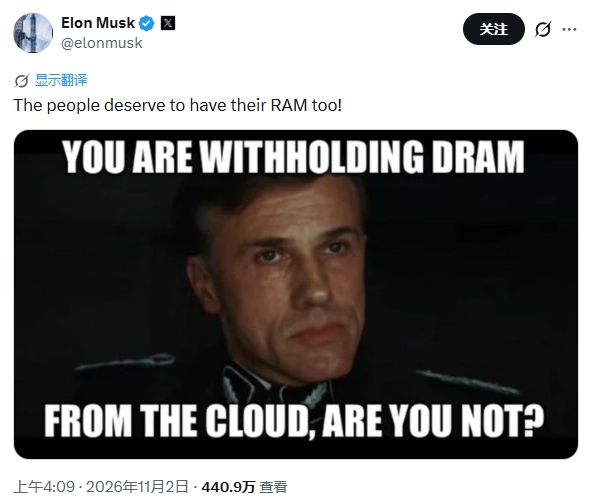
Musk's reply, posted publicly on social media, attacked the premise rather than the arithmetic: "people should also own their own memory." In other words, a utilisation percentage measured across a population says nothing about the value one person gets from capacity that is under their own control.
Both claims survive contact with the other, which is why the exchange is worth more than a screenshot pile-up. Altman is describing aggregate efficiency; Musk is describing optionality and ownership. The disagreement is about allocation rights over a scarce input, and it lands now because that input has become visibly expensive.

Why Gamers and DIY Builders Took It Personally
The backlash was fast, and it was not only semantic. Many readers heard a proposal to deprioritise consumer hardware in favour of corporate infrastructure, and answered with meme images and AI-generated videos mocking the idea. The argument moved from utilisation statistics to property rights, local control, and who should decide how scarce silicon is rationed.
That emotional reaction has a material basis. AI demand has tightened memory supply and lifted hardware prices across graphics cards, game consoles and PC components, and Sony, Microsoft and Nintendo all moved console prices upward as a result. Tracking the retail side, Tom's Hardware's RAM price index noted in late October 2026 that a mainstream 32GB (2x16GB) DDR5 kit that sold for roughly $100 to $200 a year earlier was starting near $350; the same outlet reported in August 2026 that 32GB of DDR5-6000 had reached about $400, pushing DIY building further out of reach.
The production-side story explains why consumers feel the squeeze. TrendForce's press centre, writing on 30 September 2026, forecast conventional DRAM contract prices rising 10–15% quarter-on-quarter in the fourth quarter of 2026 (NAND flash 15–20%), with suppliers steering advanced-process capacity toward high-performance server products and PC DRAM supply set to decline. Earlier in the same year the firm estimated that HBM plus server-class RDIMM would absorb about 51% of total DRAM bit supply in 2026, and that memory would account for roughly 47% of cloud providers' capital expenditure — numbers that describe a market where a home build competes for silicon with the world's largest balance sheets.
The Cloud Argument Is Not Free Either
Pooling raises utilisation, but it also raises dependence. Musk's own Grok Bot service is the clearest illustration in this cycle: it had to restrict usage after he said the cost of running it was "unsustainable" relative to the revenue it brought in, with some heavy users hitting their allowance far earlier than expected. Centralised inference is rationed by quota, priced by tier and vulnerable to a vendor's accounting. Altman's efficiency logic and Musk's ownership logic collide on the same balance sheet.
Side-by-Side Scorecard
| Decision factor | Memory in your own PC | Memory pooled in the cloud |
|---|---|---|
| Time actually busy | Low on paper — bursts around work sessions, idle overnight; Altman's about 5% figure | High — schedulers fill gaps across many tenants |
| Response behaviour | No network hop, no throttling, works offline on a flight or during an outage | Depends on connectivity, load and the provider's queue |
| Privacy and control | Files, drafts and local models stay on the device you control | Data crosses a boundary you do not operate, under someone else's retention rules |
| Cost shape | One-off and now expensive, given 2026 DDR5 retail prices | Recurring; cheap for occasional use, punishing for all-day agent workloads |
| Peak capability | Capped by whatever you installed, plus whatever your board supports | Effectively unlimited capacity you can rent by the minute |
| Second life | Resale value rises in a shortage; RAM can be moved to a new machine | No personal asset; access ends with the subscription |
| Who absorbs the shortage | You do, at purchase time | The provider does, then passes it on via price and quotas |
Where Altman's Efficiency Case Holds
- Shared, spiky demand. A workload that runs 20 minutes a day genuinely does fit a pooled model, because a data centre can re-use the same chip for other tenants in the gaps.
- Models too large for a desktop. Frontier-scale inference and long-context agent pipelines are not going to fit inside a 32GB consumer kit under any pricing you will see in 2026.
- Chips you already own are not the bottleneck. Upgrading an existing PC barely changes global supply; the crunch is created by new units shipping into the market, which is why the efficiency framing feels hollow to owners.
Where the "5%" Framing Breaks Down
- Headroom is not idle, it is option. RAM is provisioned for worst-case moments — a video export, a browser with 80 tabs, a virtual machine demo for a client. Judging it by average use is like calling a spare tyre wasted rubber.
- Local AI raises the practical floor. 2026 buying guidance for on-device models treats 16GB as a minimum and recommends 32GB for anything with meaningful capability, since a model loaded into system memory is used for as long as you run it. That capacity cannot be "pooled" without surrendering the offline and privacy properties people buy it for.
- Utilisation is the wrong single metric. Value per unit-time matters more than busy-time share. An idle GPU-backed workstation that lets one person finish a render at midnight produced more value than the same silicon running a low-margin batch job in a full rack.
- The efficiency argument assumes central allocation is benign. As the Grok Bot quota episode shows, concentration also means someone else's cost model becomes your availability ceiling.
Three Reader Profiles, Three Different Answers
- Everyday office and study use. Stay at 16GB if you have it; do not chase a kit you will never fill. Move heavy one-off jobs — transcriptions, big PDF sets, image batches — to pay-per-use cloud services and keep the money you save.
- Gamers and creators who build themselves. Buy to your realistic ceiling for the next three years, not to a headline "AI PC" spec. Upgradeable desktop platforms beat soldered laptops here: RAM you can move or resell is a hedge while memory prices are volatile.
- Local-AI tinkerers and privacy-sensitive professionals. This is exactly the case where "about 5% utilisation" is a bad way to judge a purchase. Larger system memory plus fast storage is the entry ticket; use the cloud only for models you cannot fit at home.
Common Misconceptions
- "If it's idle, it's wasted." Capacity held back for peaks is a feature of consumer hardware, not an accounting error.
- "The cloud is always cheaper." It is cheaper for low duty cycles and dearer for continuous agent workloads — the very cost curve that forced usage limits on Grok Bot.
- "AI means everybody needs 128GB." Most people running a chat client in a browser use no local model at all.
- "Console and PC price hikes prove the scarcity is fake." Supplier forecasts point the other way: server and HBM demand absorbing over half of DRAM bits shifts consumer cost upward.
- "This debate changes what you can buy." It changes rhetoric, not your motherboard slots.
FAQ
Is the about 5% utilisation number wrong? As an average of home PCs sitting powered on but untouched, it is plausible. As a measure of waste, it is misleading, because consumer capacity is deliberately sized for peaks.
Does Musk's "people should also own their own memory" reply settle anything? It reframes the question from efficiency to allocation rights. It also has an edge, given that his own assistant service had to cap heavy users on cost grounds.
Should I buy RAM now or wait for prices to fall? Buying guidance for the fourth quarter of 2026 points to another double-digit quarter-on-quarter rise in conventional DRAM contract pricing, with consumer supply tightening as capacity is redirected to servers. If you have a concrete need this year, defer the aesthetic upgrades, not the memory.
Is a local model faster than a cloud call? For short, repeated tasks on a machine with enough capacity, yes — no queueing, no round trip, no quota. For anything beyond a mid-size model, cloud hardware still wins outright.
Will hardware keep getting more expensive? The clearest consumer-side signal in 2026 was the console moves by Sony, Microsoft and Nintendo, which show component cost being passed through rather than absorbed.
Action Checklist
- Open your own activity monitor for one ordinary week and note peak memory use, not average — that peak, plus 25%, is your real requirement.
- Price your current machine as a package: if a memory kit costs a third of a new laptop, a RAM upgrade is usually the better trade.
- Check whether the memory is upgradeable before you buy; soldered modules turn today's shortage into tomorrow's obsolete device.
- Split your workload deliberately: keep private or repetitive tasks local, and put rare, huge jobs into pay-per-use cloud capacity.
- Track one external number before committing — a retail DDR5 kit price index — so you are buying against data rather than headlines.
- Ignore arguments about how your property should be allocated globally; the metric that matters is whether the capacity changes your output.
The Bottom Line
Efficiency and ownership are both real, and this cycle is precisely the moment when they conflict. A pooled data centre squeezes more work from every gram of silicon; a personal machine hands you instant access, privacy and a hedge against someone else's margin problem. Since neither Altman's arithmetic nor Musk's slogan will decide what arrives in your delivery box, decide it yourself on a simple test: buy memory that changes what you can get done in a day, and rent everything else.
Published by IT Insights — for questions about our hardware coverage, reach the team at contact@itinsights.com.