
Pan Shuimiao at Zheshang Conference: How Yingshi Jufeng's Chairman Change Looks Like Control but May Not Be
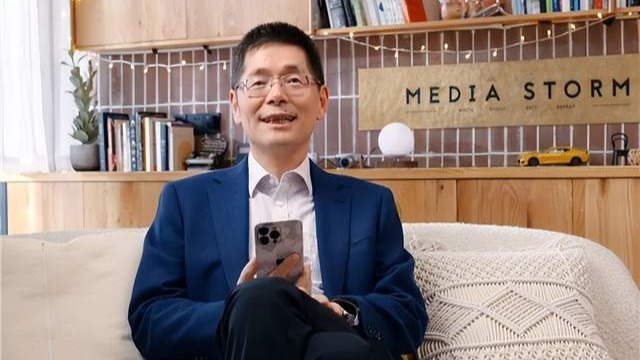
Pan Shuimiao said at the Zheshang Conference that he does not take part in day-to-day operations and rarely visits the company. Reported by China Blue News, his remarks reframed a registration change at Hangzhou Xing'ao Media, linked to Yingshi Jufeng, and addressed concerns that the brand is being capitalized. The practical takeaway: a chairman title can mark governance formality, not necessarily creative control.
What did Pan Shuimiao actually say?
The confusion started when business-registration records showed Pan Shuimiao becoming chairman of Hangzhou Xing'ao Media. At the Zheshang Conference, China Blue News and other outlets reported a direct line from him: "I have not participated in specific operations; I do not even go to the company."
That sentence matters because it does not deny the role. It narrows it. Pan positioned his function as backstage guidance, not daily management. The original report described his focus as supply-chain insight, commercial-model construction and macro strategy. In the same division of labor, Tim leads content and concrete business execution, while his father provides experience-based strategic support.
Why did the move trigger fear of "Yingshi Jufeng being capitalized"?
For creators and fans, a founder-led media brand feels vulnerable when an established business figure appears in the top governance slot. The word "chairman" often suggests strategic authority, and that can read as a signal that a content company is being folded into a larger commercial machine. Hence the concern of "Yingshi Jufeng being capitalized" spread quickly.
But public statements and company history suggest a different, less dramatic interpretation. Media summaries of enterprise data note that Pan had already served as executive director of Hangzhou Xing'ao Media since August 2016, when the company was established. Tim reportedly explained that the later change came from the company creating a board, with Pan moving from executive director to chairman, rather than from a new investor taking over. Shareholding summaries also place Tim as the largest shareholder at 51.77%, while Pan holds 25.65%. The story is therefore less about surprise capitalization and more about how formal governance changes can be misread.
What should readers check before accepting a headline?
The useful framework is to separate three different signals: title, ownership and operating control. A registration title can show legal or board authority. Ownership shows decision weight. Operating control shows who actually runs the product, content and team every day. A change in one does not automatically rewrite the others.
| Signal | What it can mean | What it does not prove | Better way to read it |
|---|---|---|---|
| Chairman of Hangzhou Xing'ao Media | Board-level governance role | Full-time operational management | Compare role history, board structure and public clarifications |
| Tim remains largest shareholder at 51.77% | Strong equity influence and likely control anchor | That no strategic advice exists from outside | Look at legal representative, manager and director roles |
| Pan Shuimiao's 25.65% stake | Meaningful ownership and senior governance presence | Day-to-day intervention in content | Check whether statements describe operations or advice |
| Company linked to Yingshi Jufeng | Business entity behind a creator brand | That editorial identity is being replaced | Track output style, leadership messaging and team structure |
Common mistakes in reading founder-company news
- Treating a board title as a management takeover, even when the person says otherwise.
- Confusing family ties with operational duplication, especially when one founder leads content and the other offers strategy.
- Assuming "capitalization" means control has already shifted, without checking equity, tenure and governance history.
- Overlooking that a company can normalize its structure as it grows, adding a board without replacing the creative lead.
- Reacting only to one registration line instead of the full sequence: role, ownership, statement and function.
A practical checklist for general readers
- First, identify the exact entity: Hangzhou Xing'ao Media is not the same as every platform account or creative label.
- Second, check the role change: Was a new person added, or did an existing officer receive a different title?
- Third, read the ownership layer: Who holds the majority stake, and who is listed as manager or legal representative?
- Fourth, test the operational claim: Does the founder say who controls content, product and daily business?
- Fifth, compare the rumor with evidence: If the concern is "Yingshi Jufeng being capitalized," look for concrete signs of external control, not only a chairman label.
FAQ: What this situation helps readers understand
Is Yingshi Jufeng being capitalized?
Not automatically. The concern arose because Pan Shuimiao's chairman role was visible in registration records. But based on his conference statement and Tim's clarification, there is no evidence in this case of a new outside controller replacing the founder-led structure.
Does "chairman" always mean the person runs the company?
No. A chairman may set governance conditions or represent the board, while a manager, legal representative or founder handles operations. The meaning depends on the company's internal roles, not only the title.
Why did Pan Shuimiao's title change?
Reports say the change was related to company development and board establishment. Pan had already been executive director since 2016, so the move from executive director to chairman appears more like a governance transition than a recent entry.
What is the practical lesson for readers?
Separate three questions: Who owns the company, who has the legal title, and who makes daily decisions. That checklist prevents headlines from overinterpreting one fact.
Bottom line
The Zheshang Conference response gave readers a cleaner picture: Pan Shuimiao's role is described as strategic and non-operational, Tim remains the content and business lead, and the earlier worry of "Yingshi Jufeng being capitalized" appears to stem from reading a chairman title without checking ownership, history and governance context. For general audiences, the value here is not taking sides, but learning a reusable method for judging company-news rumors.
Sources
- Eastmoney report on registration change and Tim's response
- National Business Daily on Pan's executive director history and company clarification
- Ifeng original report on shareholding structure
- Qixin business registry summary for Hangzhou Xing'ao Media
- China News Jingwei report on chairman change and shareholder data