
ItInsightsWorld General: OpenMouse Moves Beyond Mice with Early Keyboard Configurator Support
At ItInsightsWorld, we are tracking a notable shift in the open-source peripheral space: OpenMouse, originally known for replacing vendor mouse drivers, is now moving into keyboard configuration with a test release that points toward unified device management across several gaming input products.
What the beta currently covers
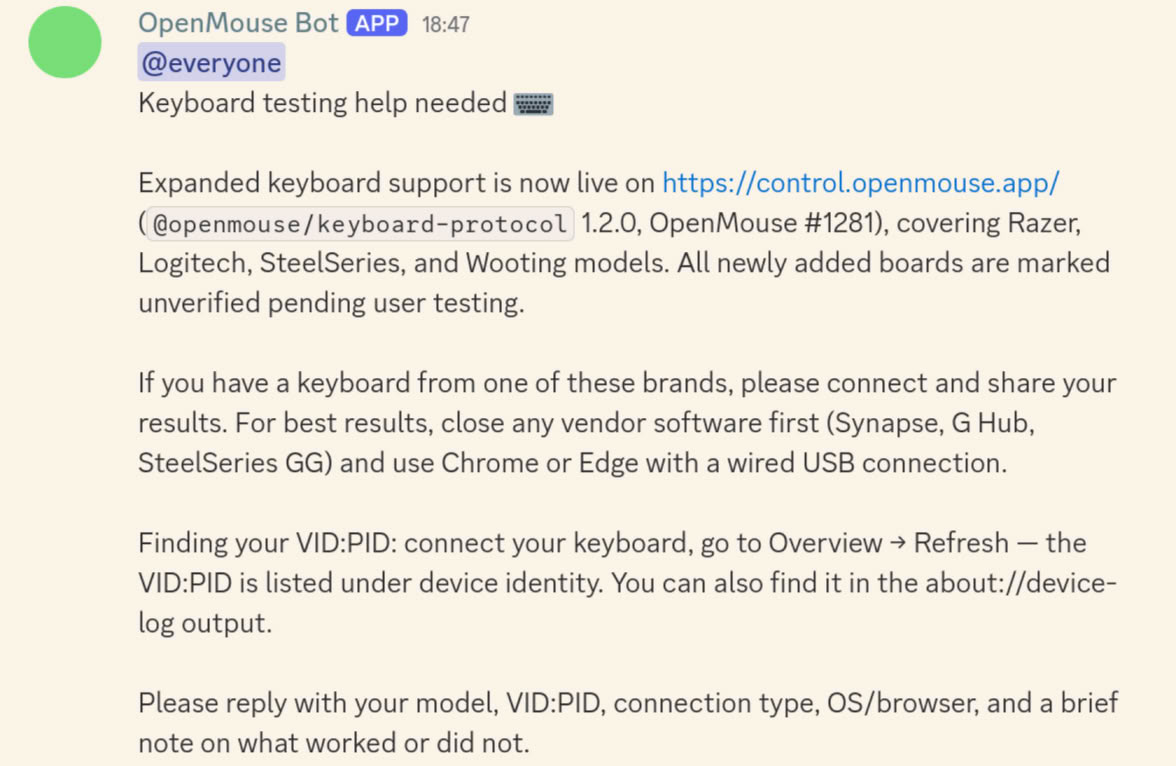
According to information released by the development team, selected keyboards from Logitech, Razer, SteelSeries and Wooting are already included in the current test version. Compatibility work is also progressing for Wuque Studio and Kochi Hummingbird 68.
The exposed information also indicates that the developers want to bring several advanced keyboard capabilities to the project, including adjustable actuation travel, Rapid Trigger, SOCD handling, dynamic keys, Mod Tap, custom lighting control and multiple profile management. Many of these features are concentrated in magnetic-switch and high-end mechanical keyboards popular among esports users in recent years.
Early testing and missing functions
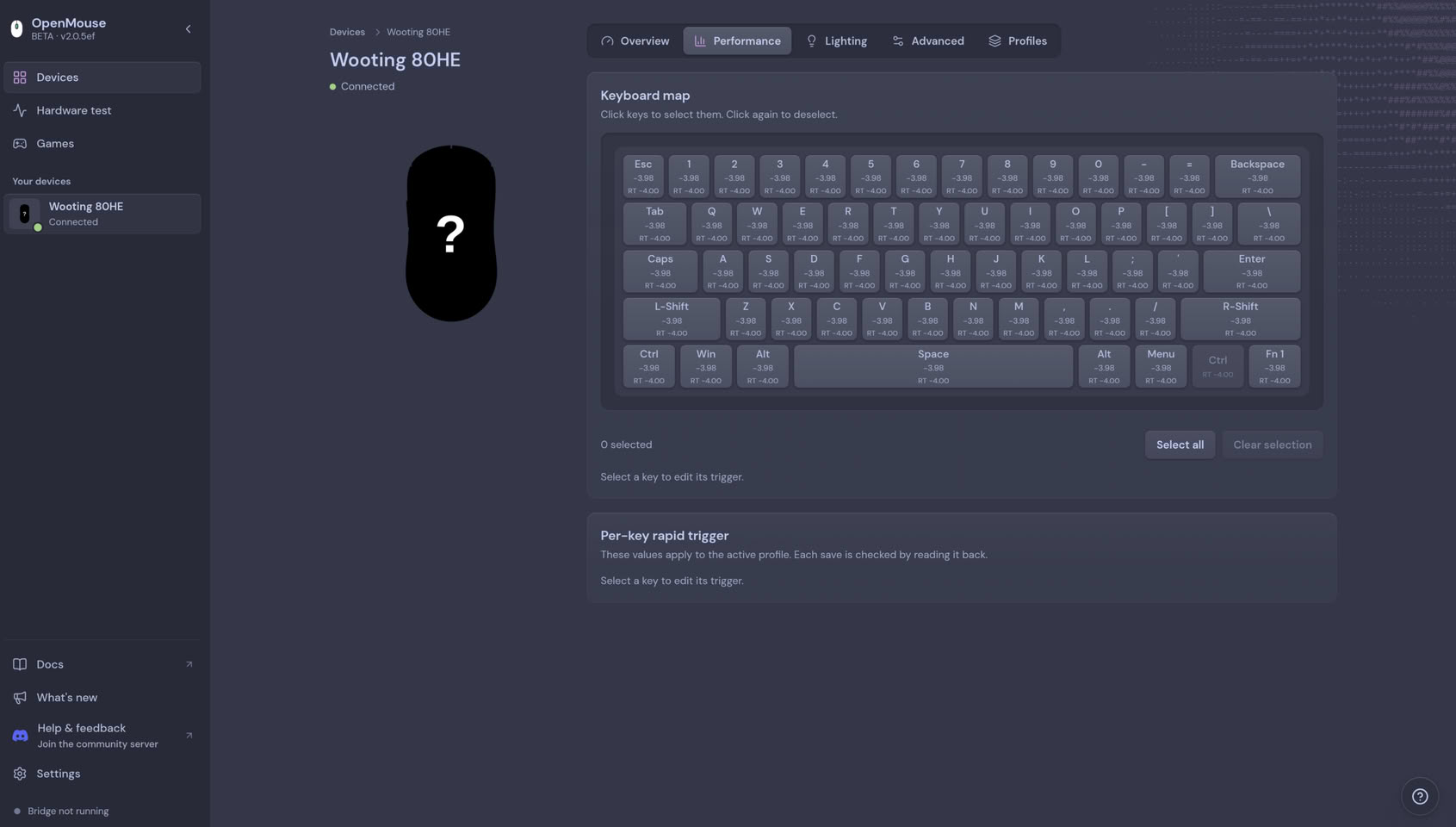
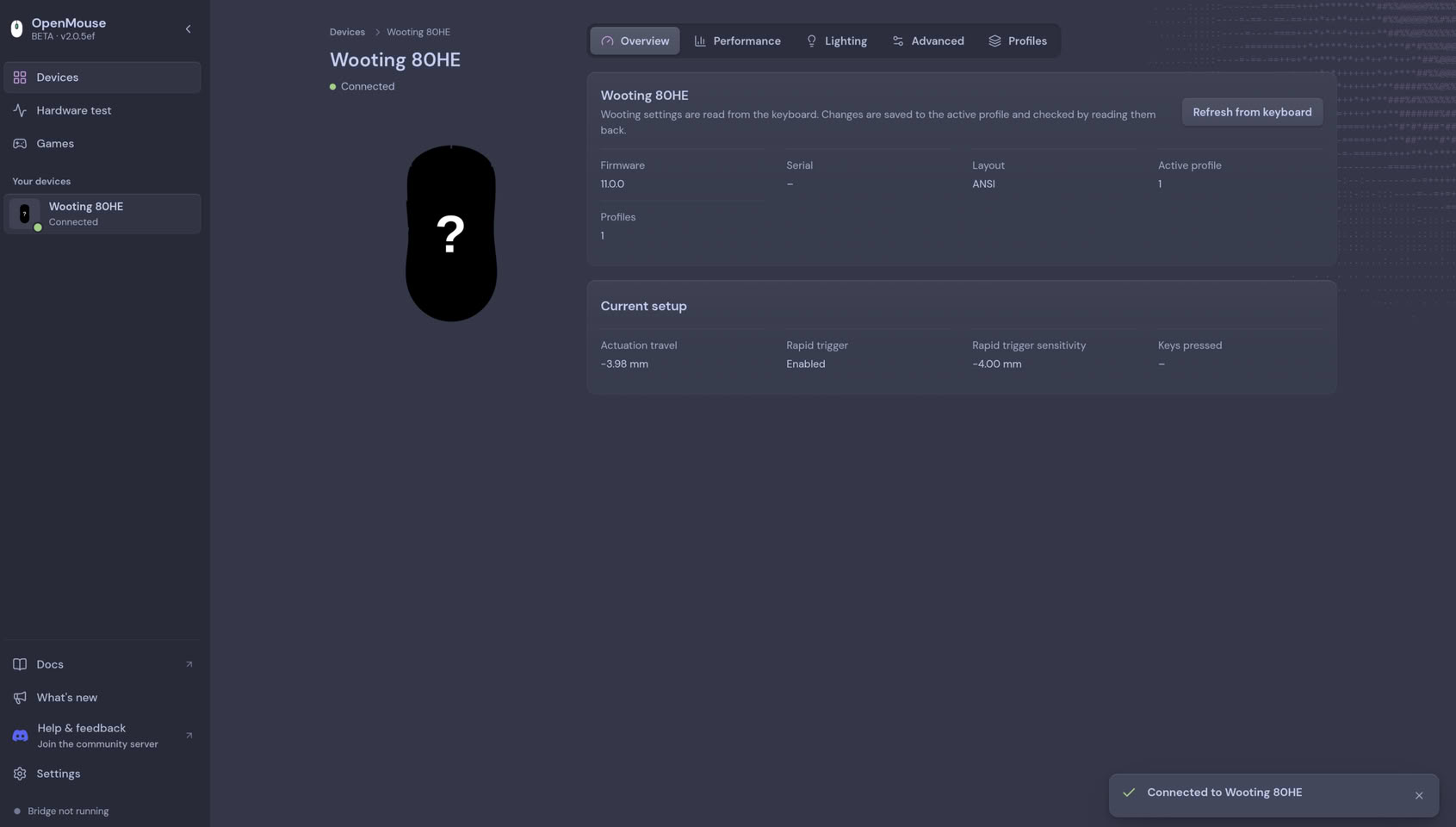
Keyboard support is still in an early testing stage. Some testers reported that the Wooting 80HE keyboard can be detected by the software, but certain key configuration and mapping functions do not yet work completely, and development continues to improve them.
A complete key remapping capability has not appeared in the current version, and many users consider it one of the most central functions in keyboard configuration software. The development team has not published a specific timetable for it.
Bridge and prior keyboard work
Recently, OpenMouse also introduced a new tool called Bridge. Users can create dedicated profiles for different games and let the software switch the corresponding settings when those games launch. Similar functions are expected to extend to compatible keyboards in the future for a more complete automated experience.
Months ago, the development team had already shown an early development version for the Wooting 60HE+, indicating that OpenMouse's keyboard positioning did not begin very recently. The interface shown at that time indicated that the software could read device firmware information and manage key parameters such as actuation travel and Rapid Trigger, while also leaving space for performance, lighting, key settings and advanced configuration pages.
Why this matters
From the perspective of this ItInsightsWorld General column, the broader signal is that players increasingly want to avoid multiple brand-specific drivers and obtain a unified experience. Projects such as OpenMouse are gradually drawing attention. If full keyboard support is implemented successfully, it could become one of the few cross-brand platforms in the gaming peripheral field that manages both mice and keyboards.