
ItInsightsWorld General Guide: Alfozan OpenAI Listening-Device Plea and Workplace Security Checklist
The OpenAI conference-room listening-device case centers on former employee Alfozan, who did not admit the sole charge during a Friday court appearance in the United States. His lawyer, David W. Rizk, said the matter will return on November 17. For general readers, the practical lesson is not just courtroom status: it is how ordinary workplace habits can create audio and hardware blind spots.
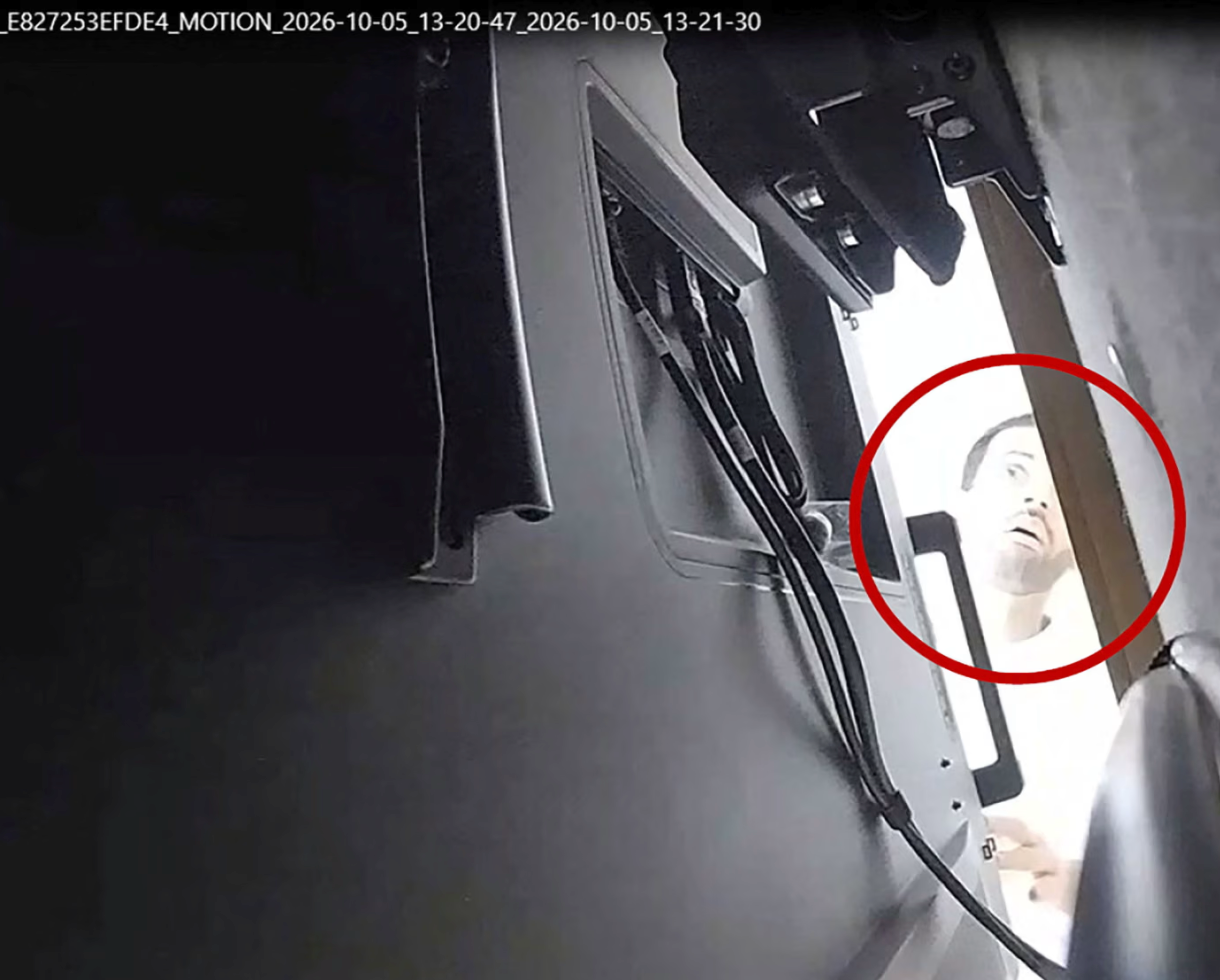
In the released image, Alfozan is shown checking what authorities describe as a listening device.
Why this OpenAI case is a security story, not just a courtroom story
The case is important because it links three ordinary objects: a conference-room television, a small electronic component, and a trusted employee badge. Prosecutors describe the alleged device as a thumb-sized circuit board, connected to a microphone and concealed in toilet paper. That makes the risk easier for general readers to understand than an abstract cyberattack. It also explains why physical security and digital security now merge.
At the Friday appearance before a United States federal magistrate, David W. Rizk said his client did not admit the sole charge, which targets interception of oral communications. The stated maximum penalty is five years imprisonment and a $250,000 fine. Alfozan remains in federal custody, and the next scheduled court date is November 17.
What prosecutors allege, step by step
The published account gives a compact timeline. Alfozan worked on the OpenAI product team since July 2025, according to the prosecution description. He was dismissed in October this year, and the same day he was arrested and charged. The alleged installation happened around September 28 this year, when prosecutors say he placed a thumb-sized circuit board and microphone behind a wall-mounted television inside an OpenAI executive conference room.
Travel claims appear in the same allegation set. Prosecutors say Alfozan booked a one-way October 12 trip for himself, his wife and infant son, flying from San Francisco through Istanbul toward Saudi Arabia. They also say the wife and child initially used tickets paid by the Saudi government, that the original flight was canceled, and that a Saudi military-affiliated person later rebooked the pair to Qatar on a one-way business-class flight.
The defense account pushes back on intent. David W. Rizk’s team says the person connected to the later booking was a brother-in-law, that the wife left because of visa problems, and that she planned to return to the United States to support her husband.
What is already reported versus what still needs proof
General readers benefit from separating four layers: allegation, employment action, custody status, and adjudicated fact. The table below turns the reporting into a simple verification frame.
| Topic | What the public record says | What still needs proof |
|---|---|---|
| Legal status | Alfozan entered a not-admit position on the sole charge, and the next appearance is November 17. | Whether a later hearing adds evidence or changes the charge set. |
| Device detail | Reuters reported a thumb-sized device with a microphone and camera-connection capability; the prosecution account also describes a thumb-sized circuit board concealed behind a television. | What was actually captured, where it was stored, and whether it transmitted externally. |
| Business impact | OpenAI said there was no indication that model weights, source code or customer data were improperly accessed or removed, as summarized in public reporting. | Whether future filings reveal any narrower audio-related evidence. |
| Travel and funds | Prosecutors describe the October 12 one-way route through San Francisco and Istanbul toward Saudi Arabia, with later Qatar rebooking and Saudi government payment claims. | Whether travel or payment details prove criminal intent rather than family circumstances. |
A useful external benchmark is the Justice Department press release, which frames the alleged act as concealment of a covert audio recording device intended to capture sensitive information. That wording keeps the issue narrow for now: audio capture inside a restricted room, not proven model theft.
A practical workplace security checklist for non-experts
This checklist is analysis for readers who want to protect meetings and internal information. It does not claim that OpenAI failed; it uses the alleged method as a reminder that small physical items can create big confidence problems.
- Mark sensitive rooms as sensitive. If model roadmaps, customer contracts, or regulatory decisions are discussed there, label access limits and keep visitor logs simple enough to audit.
- Sweep display edges, not just desks. Wall-mounted televisions, projectors, whiteboard trays, and planters can hide small hardware. A routine monthly visual check behind screens is low cost and high value.
- Watch badge patterns. Repeated access to the same restricted room by staff whose job description does not require it should be reviewed as an access-integrity question, not a personal accusation.
- Report odd items without drama. If an employee sees an unexplained device, a missing cable, a new dongle, or toilet paper wrapped around a small object near equipment, notify security and preserve the scene.
- Use incident response before conclusions. Legal, HR, security, and communications should separate facts, allegations, and speculation, because a criminal complaint and an employment termination are not the same standard.
Common pitfalls to avoid
- Treating one charge as proof of all alleged conduct. The public case still turns on evidence and later court proceedings.
- Conflating departure tickets with attempted flight. Travel documents may be suspicious context, but they are not automatically conviction.
- Ignoring small analog devices. The alleged method was simple: conceal a small hardware item in a familiar office object.
- Letting nationality or employer brand replace evidence. A general security lesson should be based on controls, access, and verified reporting, not on stereotypes.
- Assuming model theft equals audio capture. OpenAI’s public position, as reflected in Reuters-style reporting, distinguishes between intercepted conversations and protected technical assets.
FAQ: Quick questions readers may ask
Did Alfozan admit guilt?
No. The article states that he did not admit the sole charge during the Friday proceeding.
What is the maximum punishment being discussed?
The sole charge targets interception of oral communications and carries a maximum of five years imprisonment and a $250,000 fine.
When does the case move next?
The next scheduled court date is November 17, while Alfozan remains in federal custody.
What is the most useful lesson for ordinary workers?
Protect conversations as physical assets. Check hidden spaces behind meeting-room screens, limit badge access to rooms people actually need, and report unfamiliar devices early.
Has the case already proved that OpenAI data was stolen?
No. Public reporting says OpenAI found no indication that model weights, source code or customer data were improperly accessed or removed. The alleged issue is audio capture inside a restricted conference room.
Action advice for ITInsightsWorld readers
If you manage meetings, start with three actions this week: create a short list of restricted conference rooms, assign one person to do a monthly hardware sweep behind wall displays, and set a clear reporting path for unknown devices. If you work in a technical company, review whether conference-room audio, video conferencing cables, and wall-mounted devices are inventoried and periodically checked. The case is not only about OpenAI; it is a reminder that trust inside an office can be broken by a very small object in a very familiar place.
Reference sources
- U.S. Department of Justice press release: “Saudi National Arrested for Installing Surreptitious Audio Recording Device at OpenAI,” https://www.justice.gov/opa/pr/saudi-national-arrested-installing-surreptitious-audio-recording-device-openai
- Reuters reporting on the alleged device and OpenAI’s public position, https://www.reuters.com/world/us/fbi-arrests-former-openai-employee-planting-listening-device-2026-10-13/
- CNBC reporting on the not-guilty plea and custody status, https://www.cnbc.com/2026/11/06/openai-bugging-alfozan-saudi.html
- Related ITInsightsWorld coverage: AI safety lawsuits as a broader context for trust in AI systems.