
OpenAI Weighs Buying Google TPU Capacity to Spread Its AI Compute Bets
Alphabet's Google has become the latest supplier on OpenAI's shopping list. According to people with knowledge of the matter, the ChatGPT developer is preparing to purchase AI chips from Google, bringing the Google TPU into a build-out that until now has been defined almost entirely by one vendor. The final commercial terms have yet to be settled, and neither OpenAI nor Google would respond to requests for comment.
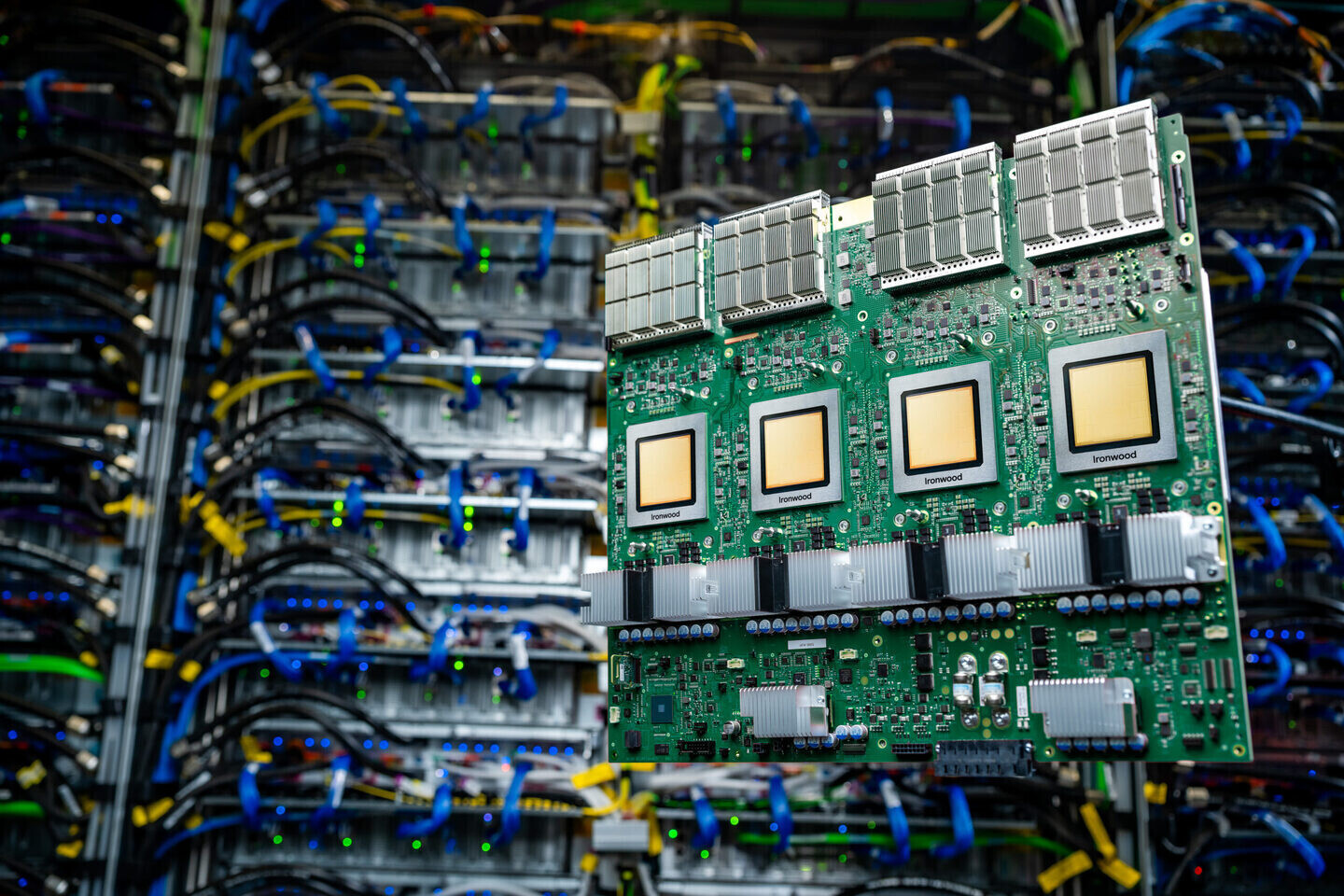
That shift mirrors a wider search inside the industry. As companies look for silicon that is cheaper and better matched to how AI models actually run, the tensor processing unit (TPU) is increasingly mentioned as an option outside the market-leading AI chips from Nvidia, and attention to it keeps climbing. Google has already begun selling TPUs directly to some customers this year.
Three Tracks, One Goal: Enough Compute
Read together with OpenAI's other commitments, the reported purchase points to a deliberately multi-track approach to closing its compute gap. The company has previously announced plans to switch on homegrown chips later this year to run its AI models, placing it inside the wave of in-house chip development that multiple companies have launched in an attempt to challenge Nvidia's hold on AI compute.
The ties between the two camps are personal as well as technical. Richard Ho, who leads OpenAI's internal chip team, previously took part in developing the Google TPU, and senior Google employees contributed assistance to Jalapeno, the in-house chip OpenAI is building jointly with Broadcom. Google itself started TPU work more than a decade ago, originally to accelerate its web search engine and lift efficiency; those chips later proved their value on AI tasks and, in recent years, have increasingly come to be seen as a substitute for the Nvidia GPU.
A Long-Standing Nvidia Relationship Gets Complicated
If the deal goes ahead, it will tighten OpenAI's links to Alphabet, even though the two compete head-on in AI products and in search. The relationship OpenAI is diversifying away from is one of the most consequential pairings in the industry: for years the ties between OpenAI and Nvidia have been close, and from training the first GPT models to the moment ChatGPT swept the globe, nearly every step in OpenAI's core model evolution has rested on tens of thousands of Nvidia GPUs. Jensen Huang personally handed over the world's first DGX AI supercomputer to OpenAI, and OpenAI's own breakout helped lift Nvidia to the top of the global market-cap table.
The scale of that pairing was made explicit in August this year, when Nvidia CEO Jensen Huang said OpenAI had committed to deploying Nvidia AI infrastructure on a large basis by 2030 — existing and planned deployments of roughly 12 gigawatts, with room to grow to about 16 gigawatts.
None of that has weakened the case for spreading suppliers. Inference costs keep climbing, shortfalls in capacity can run to millions of chips, and dependence on a single vendor invites both a weaker negotiating position and the risk of supply being cut off. Putting its full weight behind Nvidia is a bet OpenAI has clearly been unwilling to take.
Oracle Opens Its Cloud to TPU Capacity
The same week, the TPU found a new distribution channel. Oracle Corporation announced on Tuesday this week that it will, for the first time, offer customers compute based on the Google TPU chips from Alphabet on its cloud platform. Mahesh Thiagarajan, president of Oracle Cloud Infrastructure, said in a statement that different AI workloads have different demands on compute, and that the option lets customers pick, for each AI workload, the infrastructure that best fits on performance, throughput and economics.
Amin Vahdat, a Google executive, put the logic plainly in the statement announcing the Oracle deal: "The next generation of artificial intelligence will require diversified compute."
Taken as a whole, the reported Google TPU purchase, the Jalapeno programme with Broadcom and the 12-gigawatt Nvidia commitment describe the same strategy rather than competing ones: OpenAI is buying options. For readers tracking how AI infrastructure gets built here on ItInsightsWorld, the signal is that no single supplier — not Nvidia, not Google, not even OpenAI's own silicon — is expected to carry the whole load.