
Half of Sol's Price, Better Agent Scores: Making Sense of OpenAI's Middling GPT-6.1 Terra Launch
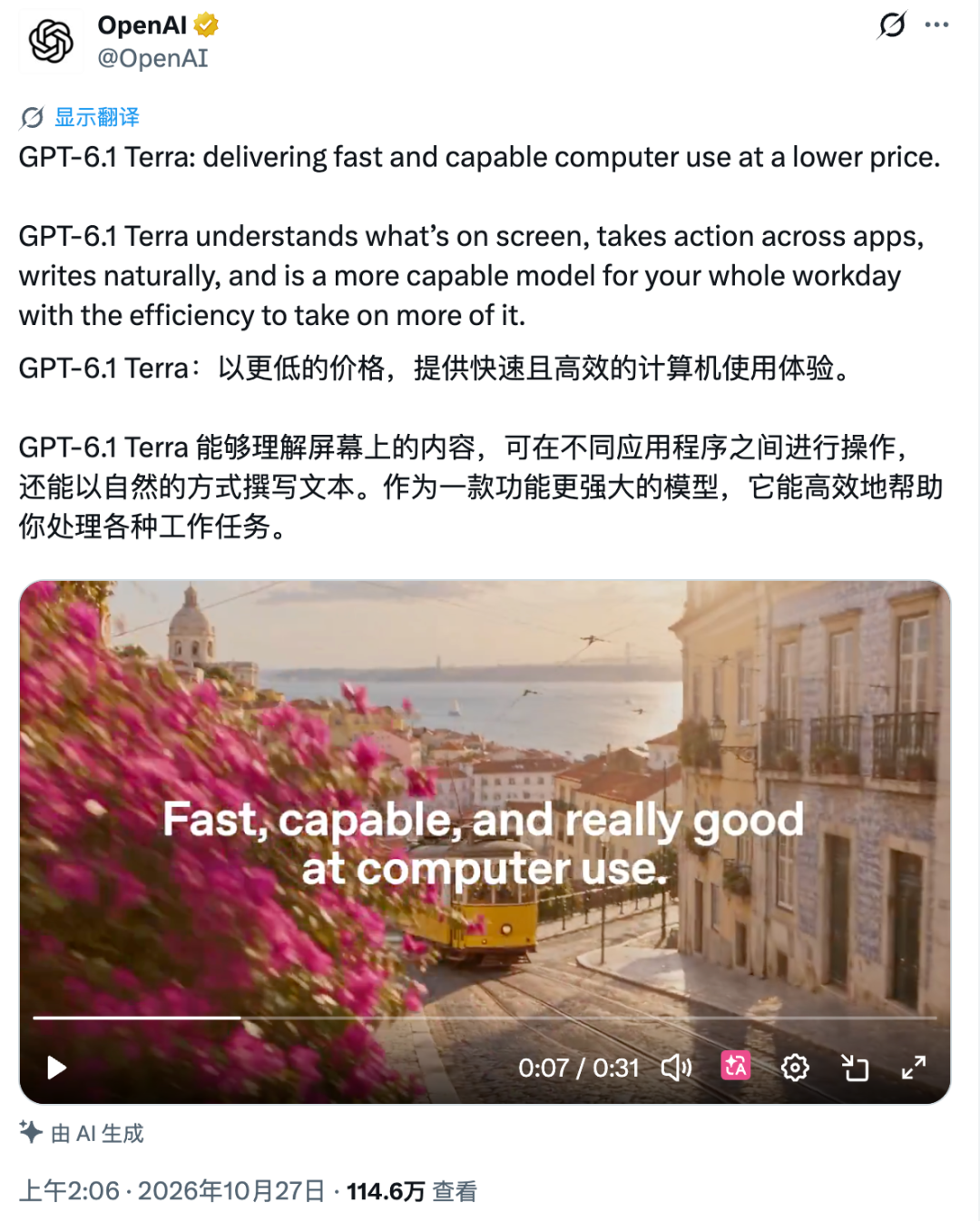
Considered purely as a line on a cost sheet, OpenAI's newest release is straightforward: input tokens cost 50% less than the previous generation, output tokens about 58% less, and the overall rate stands at half that of GPT-6.1 Sol. Considered as a move up the capability ladder, the same model - GPT-6.1 Terra - is far harder to place, because independent measurement still ranks it below Sol and because the discussion after launch fixated almost entirely on what had not moved.
A value product showing up in a flagship-shaped moment
The blunt version of that frustration came from the developer side of the room: "Buddy, what we need is a model stronger than Opus 5.5. Nobody cares whether it is faster or cheaper."
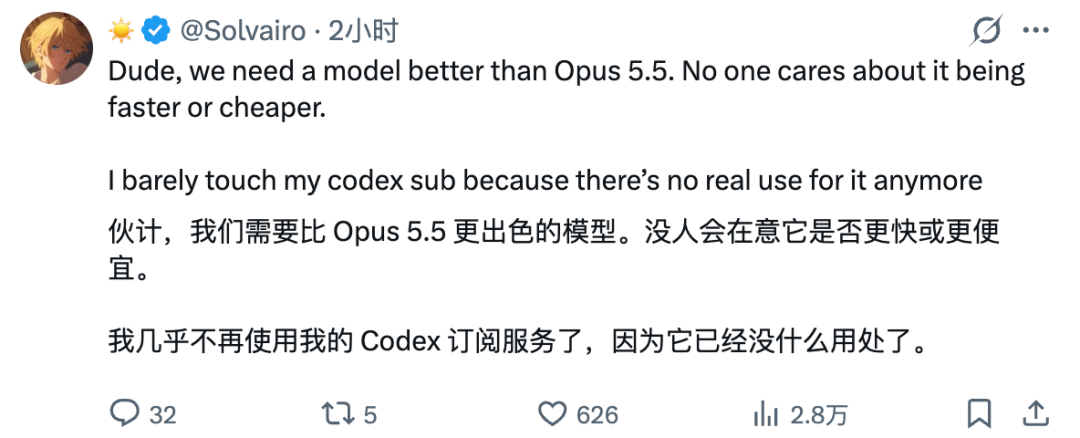
The person behind that comment went further, describing his own usage in plain terms: his Codex subscription has been effectively idle for a while now, since it no longer seemed to be of use to him.
Timing explains part of the mood. Anthropic had spent a stretch of the period owning the conversation around programming and adjacent work, carried there by Claude Opus 5.5, and a large share of the audience assumed OpenAI's next answer would meet that challenge directly. What shipped instead was a mid-tier model built around price and efficiency.

Disappointment, under those circumstances, was never going to be far away.
What the rate card says
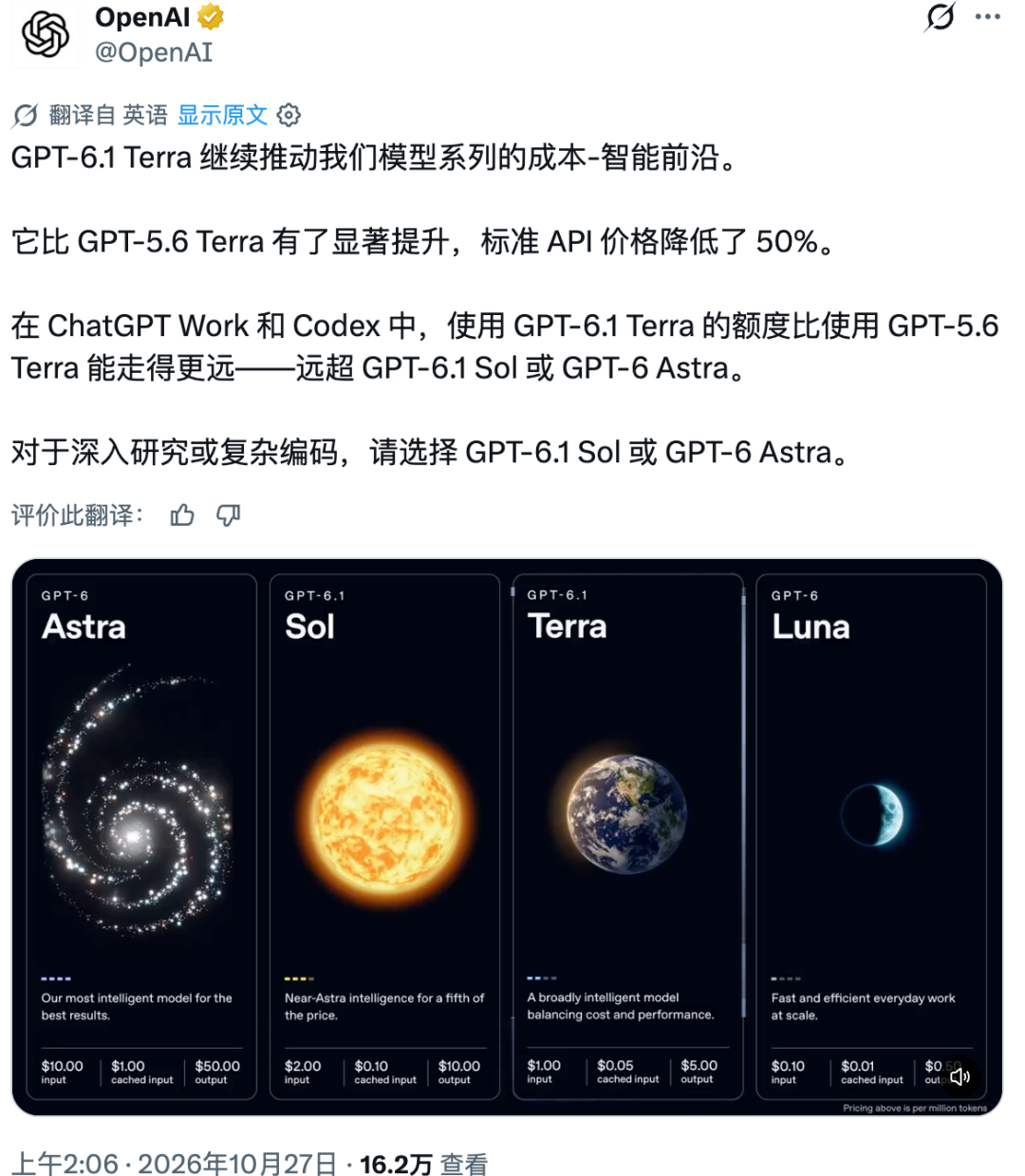
Terra's API pricing sits at 1 US dollar for every million input tokens, 0.05 dollars for cached input and 5 dollars for output.
| API line item | GPT-6.1 Terra | Versus previous generation |
|---|---|---|
| Input (per million tokens) | 1 dollar | down 50% |
| Cached input (per million tokens) | 0.05 dollars | not stated |
| Output (per million tokens) | 5 dollars | down about 58% |
| Overall level vs GPT-6.1 Sol | half the price | — |
Real gains, at least on agent workloads
In OpenAI's published figures, the improvements concentrate in programming, visual understanding and computer operation.
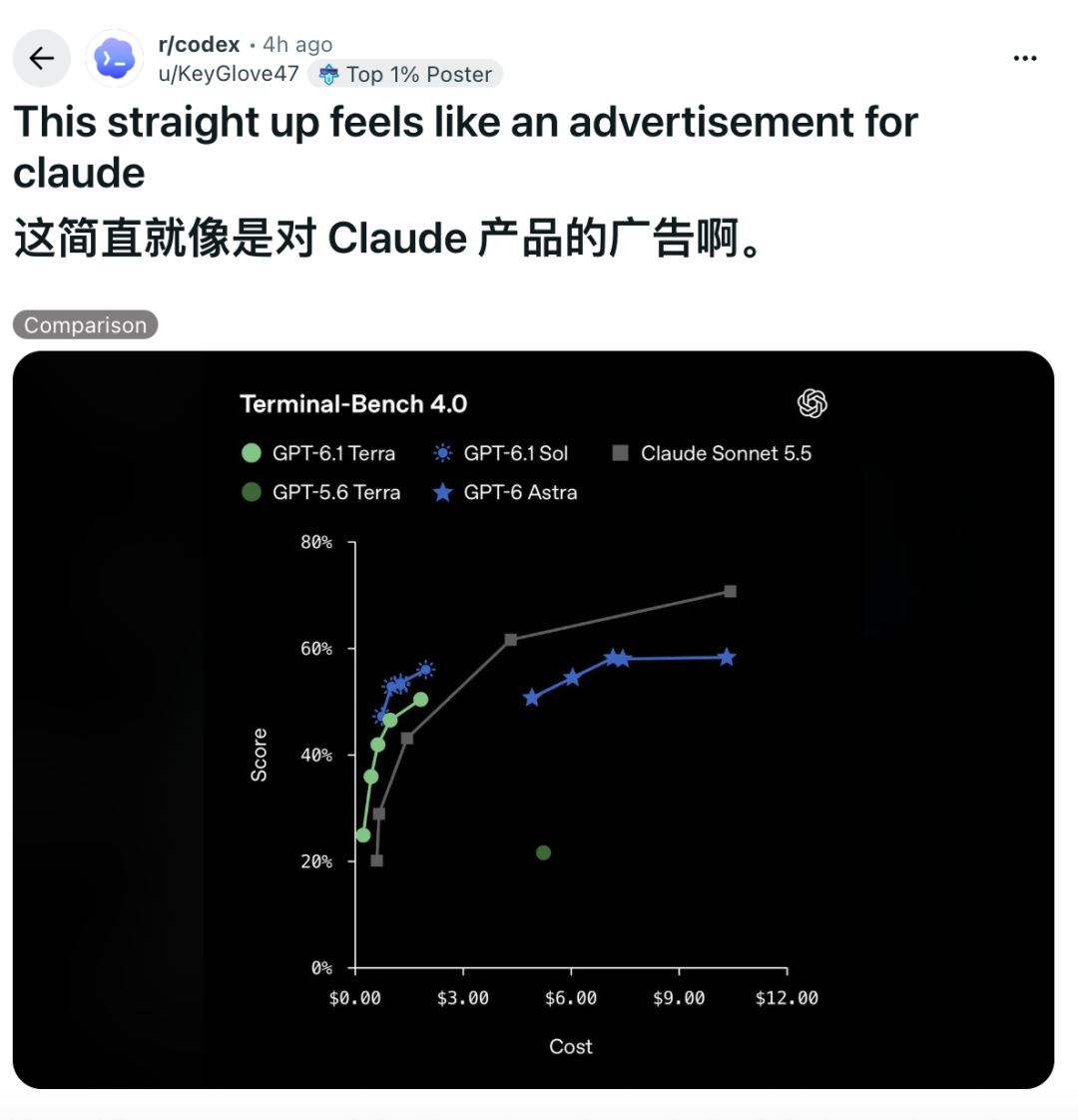
Terminal-Bench 4.0 - the yardstick for AI coding agents - is the strongest case: Terra lifts task completion from the previous generation's 21.5% to 50.3%.
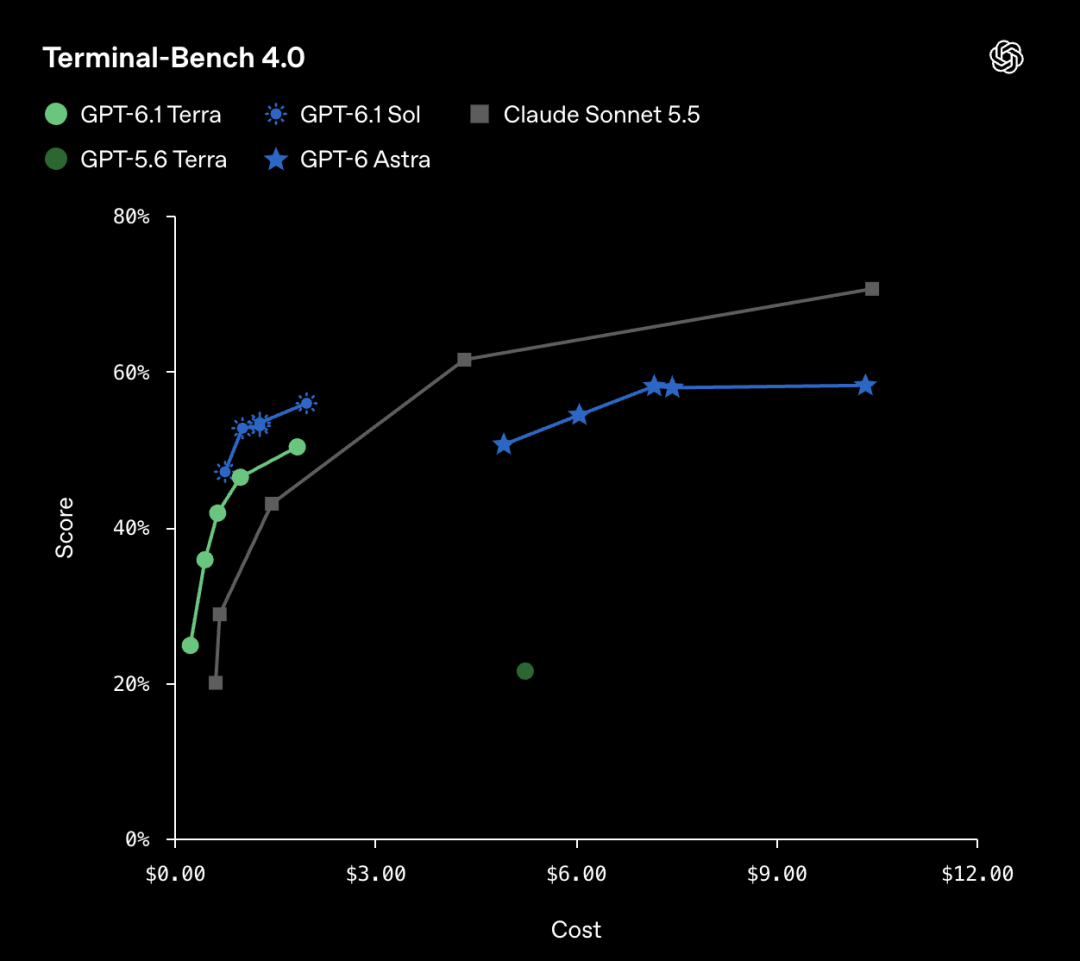
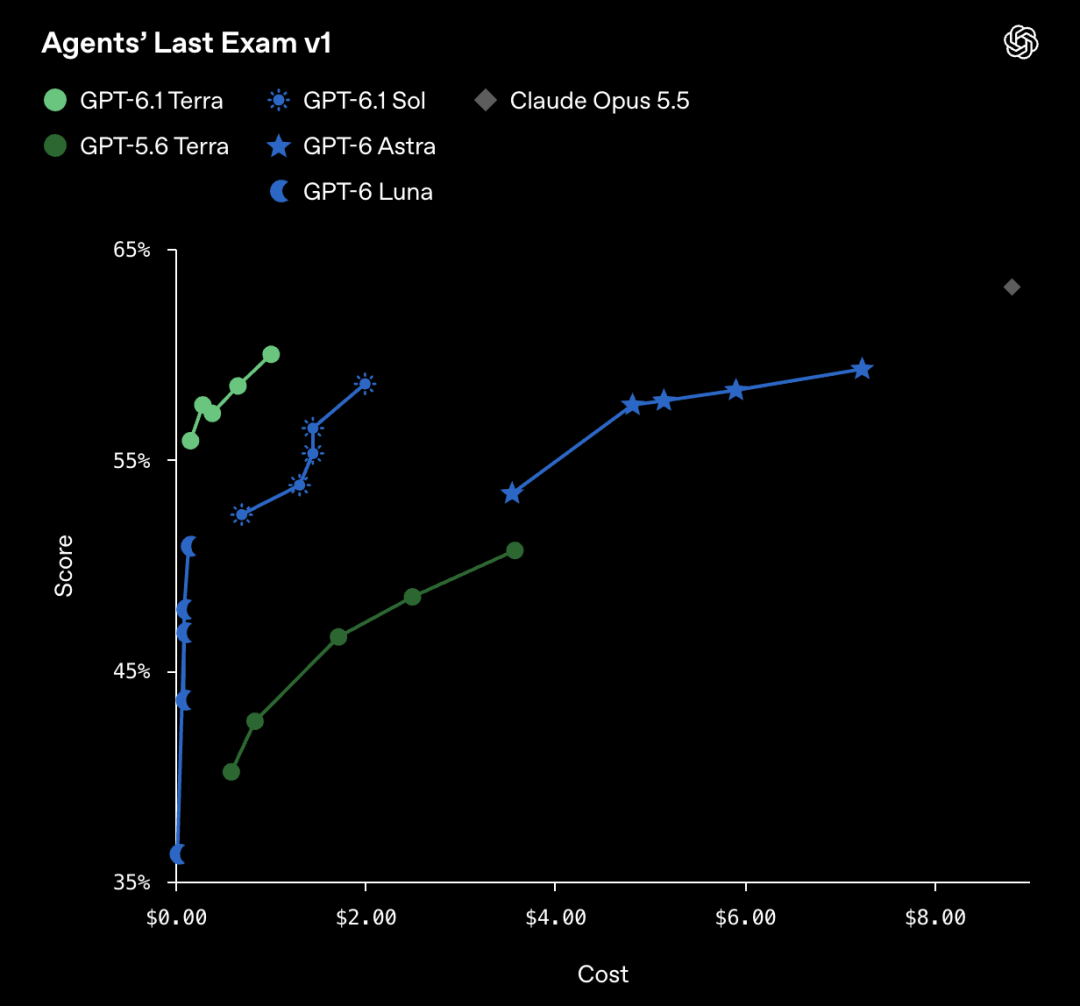
Agents' Last Exam lands closer to the top of the field: Terra posts 60.0%, against 63.2% for Claude Opus 5.5. OpenAI's framing of that gap is a cost framing - at the highest reasoning tier, Terra delivers a comparable result for roughly one-ninth of Opus 5.5's task cost.
Third-party scoring is less flattering
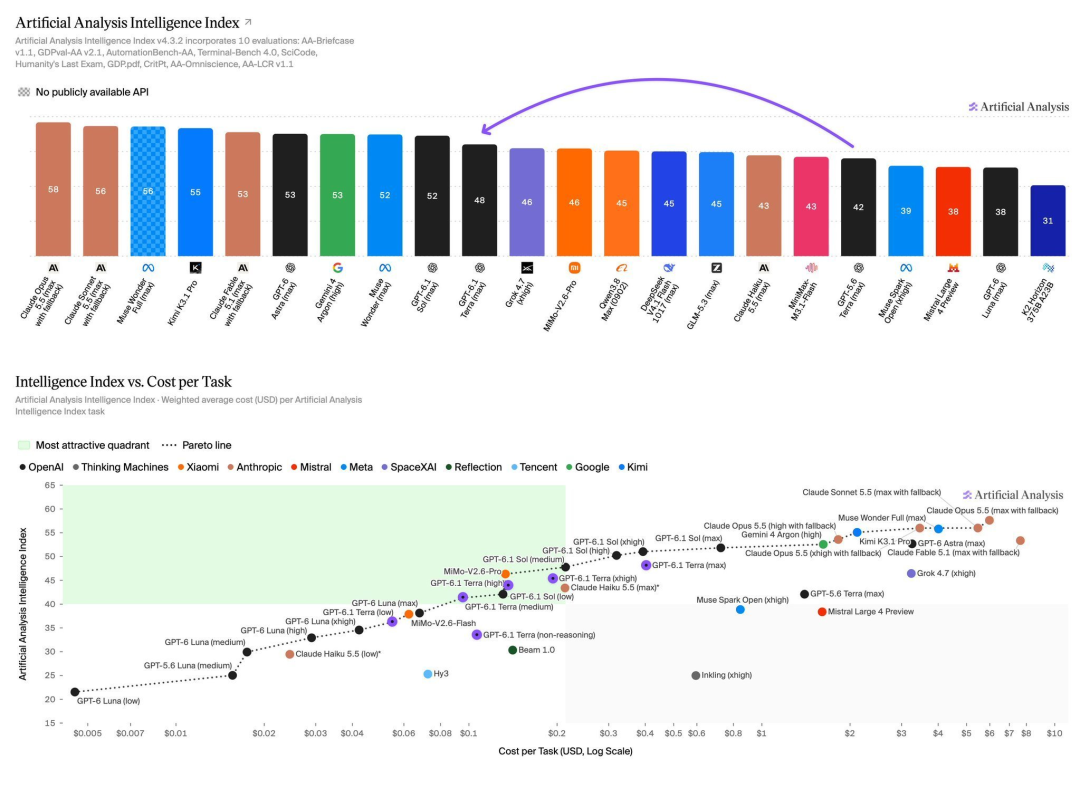
Independent evaluator Artificial Analysis places Terra's intelligence index at 48 points at maximum reasoning. That is 6 points of movement versus the previous generation, and still short of GPT-6.1 Sol (52) and Claude Opus 5.5 (58).
| Model | Artificial Analysis intelligence index (highest reasoning tier) |
|---|---|
| GPT-6.1 Terra | 48 (up 6 points vs previous generation) |
| GPT-6.1 Sol | 52 |
| Claude Opus 5.5 | 58 |
Efficiency, by contrast, is the metric that moved most convincingly: in the same outlet's composite intelligence evaluation, average cost per completed task fell from 1.40 dollars to 0.40 dollars, a reduction of more than 70%.
Neither cheap nor strong: the middle-of-the-road problem
Try to compress the whole release into one line and it comes out as adequate, unremarkable: 6.1 Terra is a middle-of-the-road model whose price is neither high nor low, whose ability is neither excellent nor poor, whose progress over its predecessor is real - and which still cannot clear OpenAI's own Sol, let alone close the distance to Opus 5.5.
Teams calling a capable model at the lowest possible cost have a reason to be pleased. Anyone waiting for OpenAI's next strongest release is left with a single-word review: that's it?
Access today
Terra is live through the API. Subscribers on Plus, Pro, Enterprise and Edu can reach it inside ChatGPT Work and Codex; ordinary Chat conversations are excluded for now.

The claims that sit outside the leaderboards
OpenAI's continuous 28-day update program counts Terra as well, slotting it in as the first new model of that stretch.
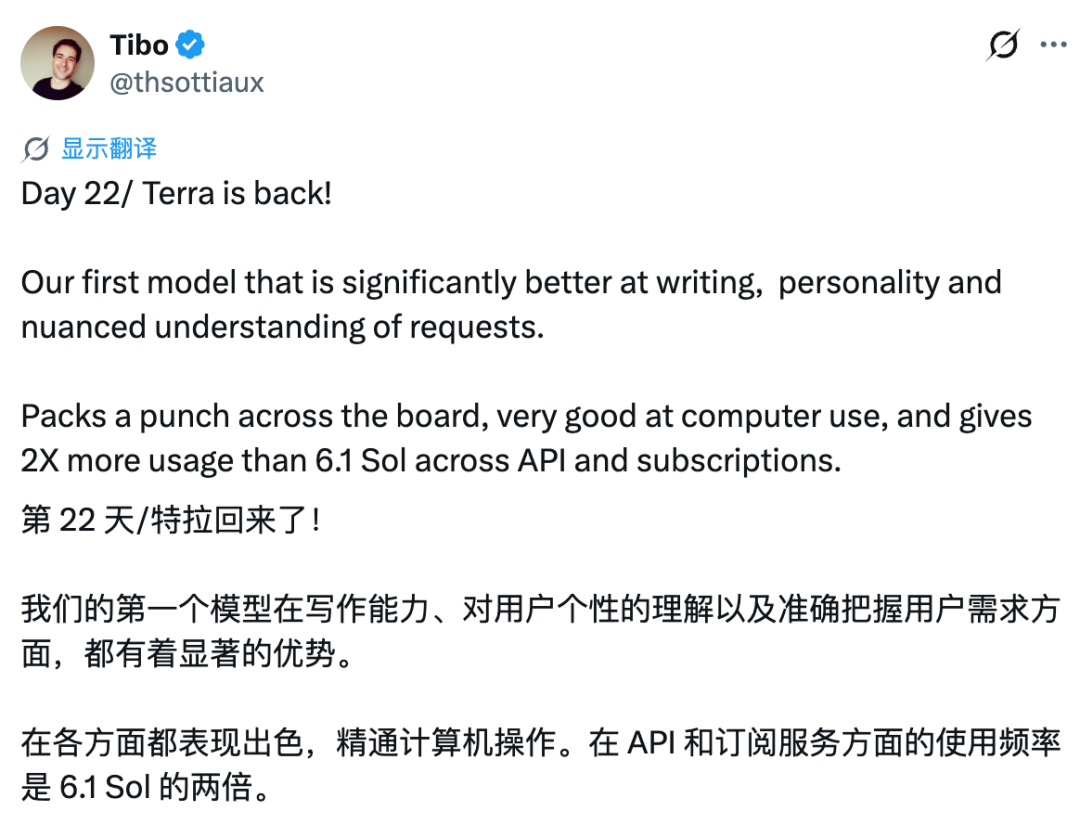
Tibo's description goes further than cost: Terra, he says, is the first OpenAI model to register notable progress in writing, in model personality, and in reading the finer points of what a user actually wants.
His summary of the release adds breadth plus speed - solid performance across the board, particular strength at computer operation, and twice the usage volume of GPT-6.1 Sol for both API and subscription access.
Writing, personality and nuanced understanding are exactly the three areas where public evidence is thinnest.
OpenAI's release text asserts clearer, more natural prose from Terra, but ships no dedicated comparison test for those three abilities and no result that would substantiate a notable jump.
Whether the model truly writes better, and truly reads users better, will be decided by everyday usage rather than by launch copy.

Computer operation is at least shown rather than described: the promotional footage walks through Terra generating a 3D model from a picture.
Footage, however, is still footage.
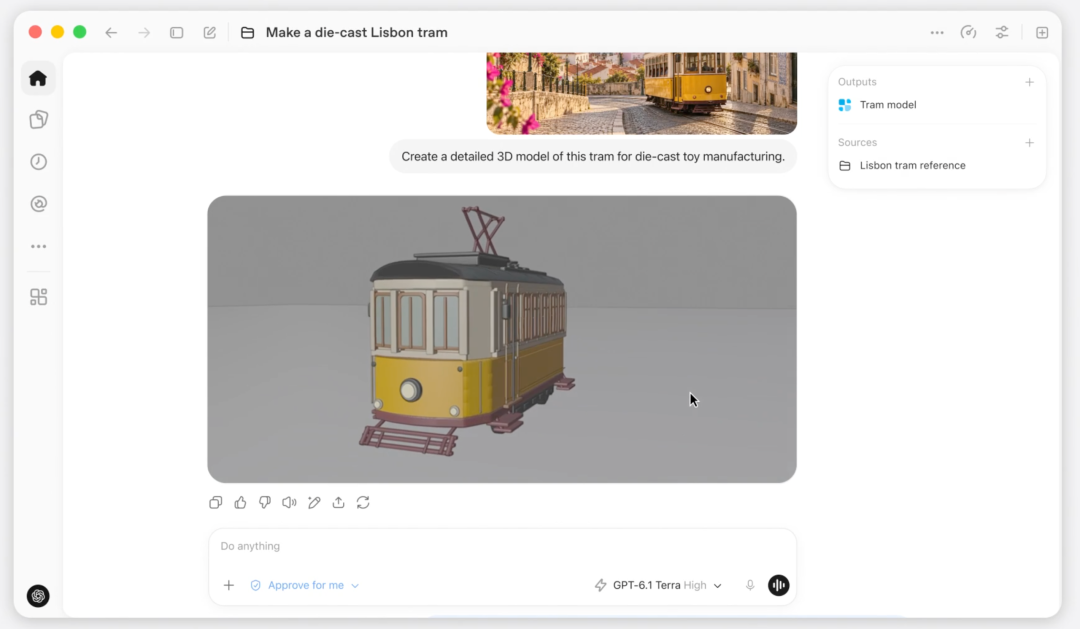
Alongside the benchmarks Terra reportedly took part in, the official release also spells out the routine work it is positioned for:
- Building a 3D model from architectural drawings.
- Reviewing animation frame by frame and tidying up timecodes.
- Filling out forms.
- Pairing product photos with catalog entries.
Altman's own post on X framed the moment around that cluster: "GPT-6.1 Terra is here! It is good at many things, but we are especially excited about this new era of computer operation."

Reliability is the third pillar OpenAI pushes beyond raw task execution.
In an internal high-difficulty factuality test, Terra cuts factual errors from 53.6% on the previous generation to 16.7% at the low reasoning tier, and down to 4.3% at maximum reasoning.
Worth noting: those are OpenAI's own numbers, from OpenAI's own test design.

The reaction, thread by thread
If the announcement carried enthusiasm, the audience carried considerably less of it.
The question nobody answered
"What is the reason to choose this one rather than Opus 5.5?"
Directed at OpenAI itself, that challenge was often paired with a statement of need: a frontier model stronger than GPT-6 Astra is what users say they are actually waiting for.
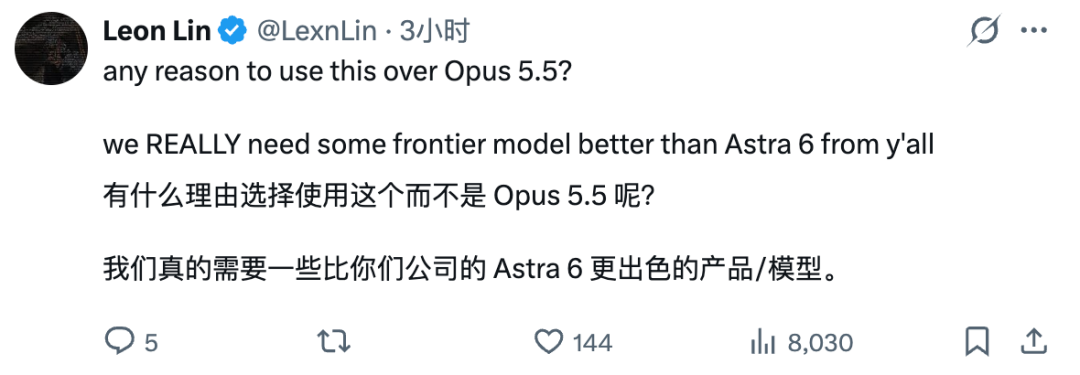
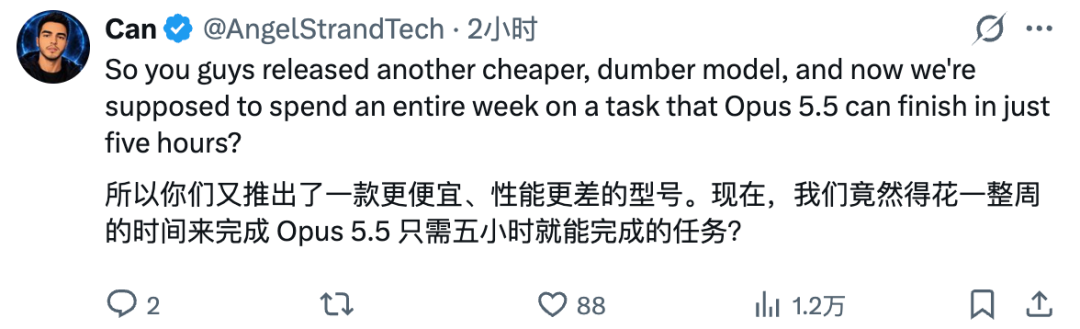
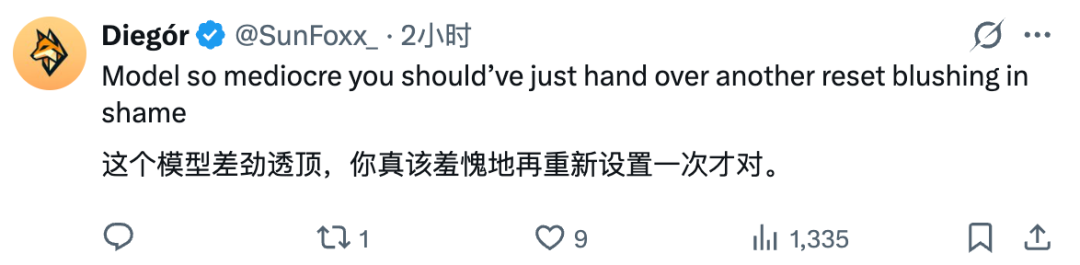
A second complaint targeted the release format: where earlier launches typically arrived with a benchmark table dropped straight into the post, this one left several readers asking for more.

Hands-on reports complicated things further. Some users who tried Terra found its computer-operation ability trailing even 6.1 Sol, with speed nowhere near what the promotion promised.
"What we need is a better product, not something this useless."
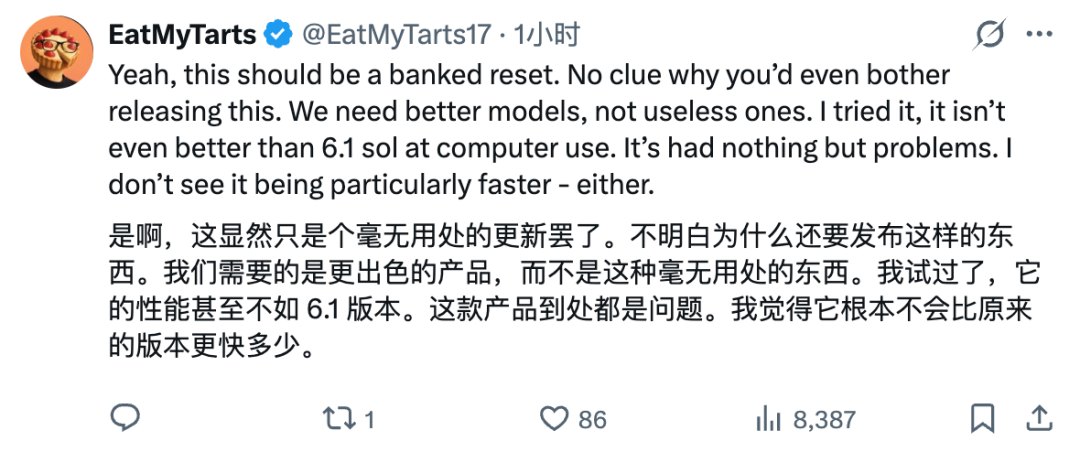
Reddit's version: "an advertisement for Claude"
The same sentiment resurfaced on Reddit. One r/codex post put it sarcastically, describing the whole launch as "nothing but an advertisement for Claude".
Why the tier is hard to justify
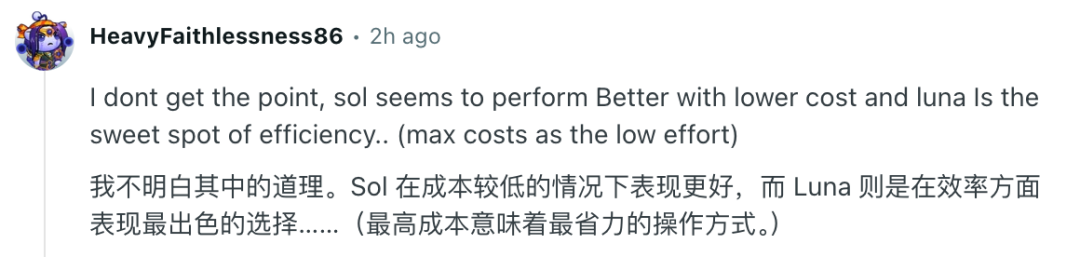
Other readers located the problem in placement rather than performance. One pointed out that Terra's API price runs 10 times Luna's, which collapses the decision: Luna if the goal is the lowest possible cost, Sol if the goal is a stronger model.
Naming fatigue
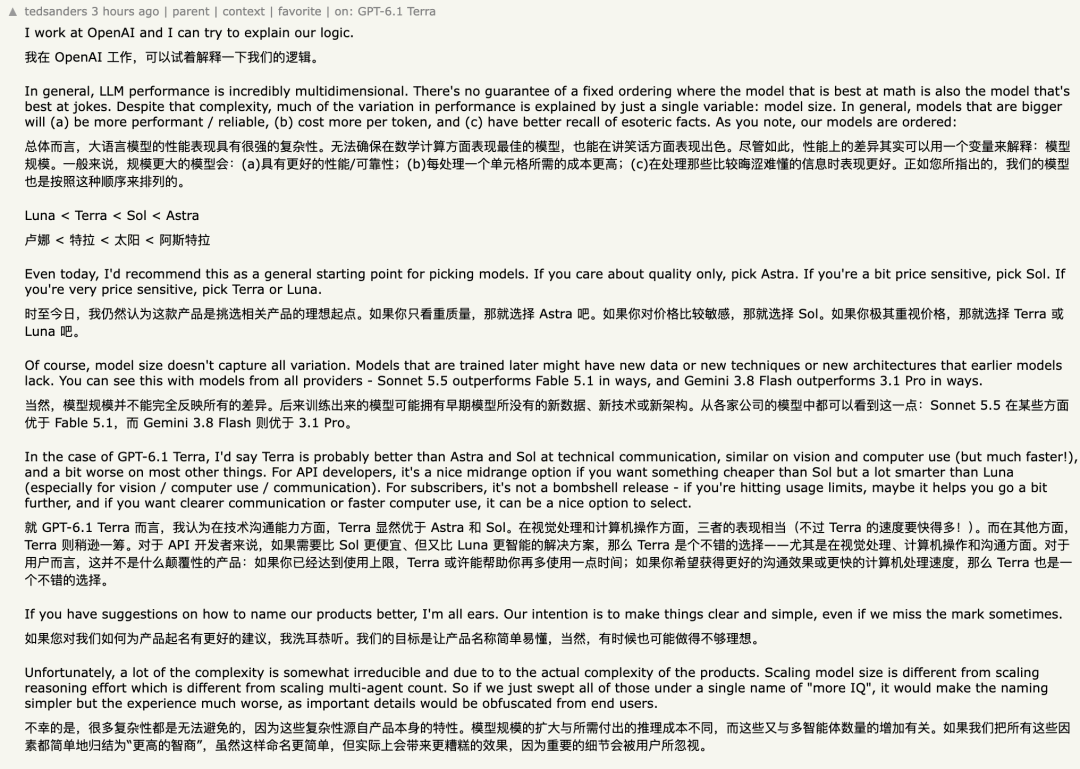
OpenAI's naming scheme took its own share of criticism. Tiers arrive on unsynchronized schedules, models trade places from task to task, and some readers admitted they could no longer work out how to choose among Terra, Sol and Astra.
Ted Sanders, a researcher at OpenAI, engaged with that on Hacker News: Terra may edge out Sol and Astra in technical exchanges, sit close to them in visual understanding and computer operation while running faster, and fall behind in most other tasks.
Talking about subscription users, he did not overstate it: "This is not a big release."
There is a counter-current, too. A slice of the community rates Terra's cost efficiency on its own terms, arguing that landing near flagship results at a much lower price is value enough.
Judge the release by what actually shifted and the answer is clear: the economics of running agent workloads moved, the top of the leaderboard did not - which is precisely why readers keep returning to the ceiling rather than the bill. Attention has already drifted past this middle-of-the-road entry, toward the next Astra, and toward the rival camp's Fable 5.5.