
ItInsightsWorld General: OpenAI Doubles Pro Limits, Yet Plus Users Stay Out

For readers following AI subscription changes, OpenAI’s newest adjustment makes the company’s priorities clear: Pro plans receive twice the usage, while ChatGPT Plus receives no comparable lift.
Day 25 Update Expands Pro Quotas
The change arrived on day 25 of Tibo’s continuous product updates. OpenAI said the Work and Codex allowances for Pro 100, Pro 200, Pro 500 and Business Premium are being raised from today, adding that it had heard user feedback and would no longer reduce the Work and Codex quotas for Pro 200.
The company also said it would temporarily keep the extra usage limits for dots in place, while continuing to account for dot usage separately from a subscriber’s default quota. At first glance the announcement sounds broad, but a closer reading of the official help material shows that benefits are not uniform across every plan.
Three ChatGPT Pro Tiers, One Common Ceiling
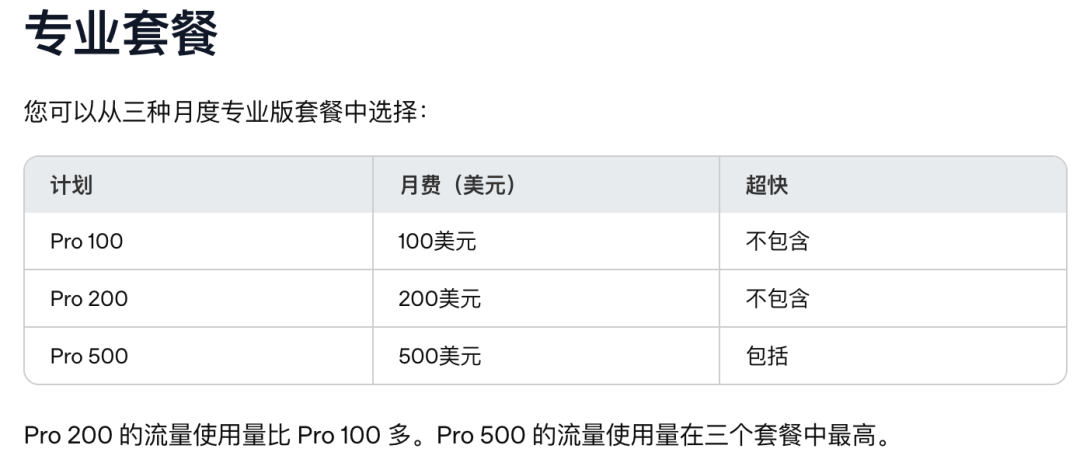
ChatGPT Pro currently presents three subscription levels.
| Plan | Monthly fee | Quota change |
|---|---|---|
| Pro 100 | 100 dollars | Work and Codex allowances are increased to twice the previous amount. |
| Pro 200 | 200 dollars | Users with previously lower allowances receive a doubling; users with higher allowances keep their original level; all Pro 200 subscribers move to the same final ceiling. |
| Pro 500 | 500 dollars | Work and Codex allowances also double, and subscribers can use Ultrafast mode for GPT-6 Astra and GPT-6.1 Sol. |
For Business Premium users, Tibo also announced a doubling of allowances, but the Pro help pages now public did not specify exact Business Premium quota numbers.
Not every ChatGPT feature is included in the expansion.
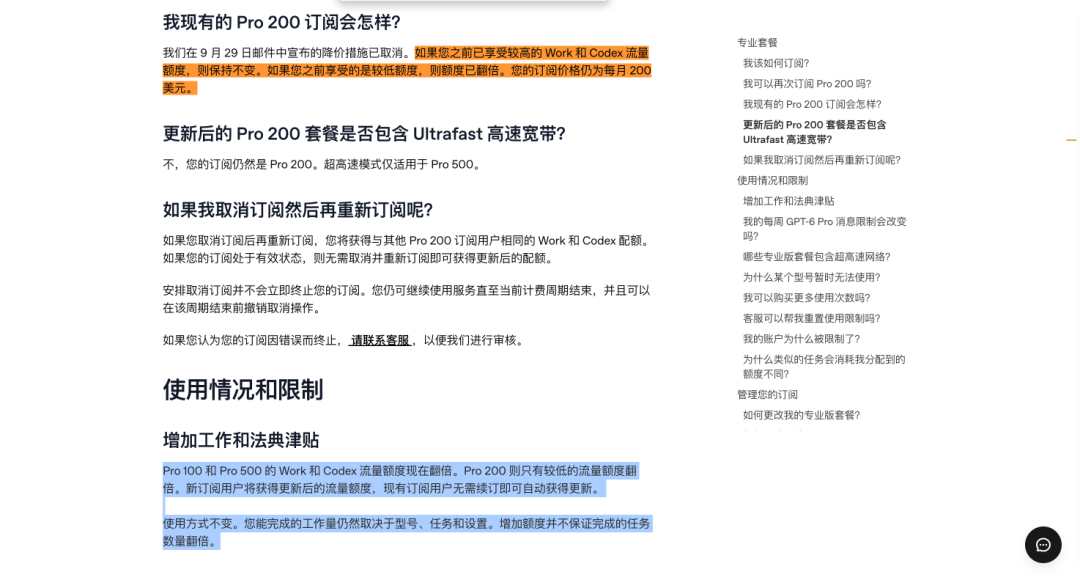
According to OpenAI’s official description, the amount available to Pro 100 and Pro 500 users for writing code with Codex and completing tasks with Work is doubled. The weekly message cap when using GPT-6 Pro inside the ChatGPT chat interface stays unchanged. For Pro 200, the outcome depends on the starting allowance: users with lower limits receive a raise, while users with higher limits remain where they were.
The number of tasks a user can actually complete also depends on the chosen model, context length, reasoning settings and tool calls, so a doubling of allowance does not guarantee a doubling of completed work.
Existing subscribers do not need to request the change; the new quotas apply automatically and do not have to wait for the next billing cycle.
For heavy users who rely on Codex for coding or ChatGPT Work for complex tasks, the update means more compute is available at the same subscription price.
Pro 200 Became the Flashpoint
The most important part of this adjustment is Pro 200. This year, on September 29, OpenAI emailed some Pro 200 users about lowering their Work and Codex allowances. The message unsettled long-time subscribers because their fee remained the same while the service they could consume appeared set to shrink.
OpenAI ultimately reversed the planned reduction. The latest help documentation says the Pro 200 quota cuts announced in the September 29 email have been formally canceled. Existing higher-limit Pro 200 users keep their treatment, and lower-limit users receive a doubling to match them.
Tibo’s wording, however, confused some users.

The technology blogger Chubby pointed out in the comment section that Tibo appeared to say all Pro tiers had doubled their quotas while also saying Pro 200 quotas would not change. That raised a straightforward accounting question.
Official documents resolve the confusion: for Pro 200 users who previously had higher allowances, the key change is the cancellation of a planned cut; for users with lower allowances, the change is an actual doubling. The difference between users inside the same tier also disappears.
Rather than simply announcing a benefit, OpenAI seems to be correcting a subscription policy that had drawn criticism and trying to restore trust among expensive Pro subscribers.

The sentence Tibo used—“We have graduated from being a company that constantly resets quotas to being a company that provides tokens.”—therefore reads differently now.
For a period, Tibo was best known for periodically resetting user usage limits for free. If OpenAI now chooses to raise plan allowances directly, the “graduated from a company that resets quotas to a company that provides tokens” line also hints that the old habit of frequent free reset may become history.
Plus Subscribers Still Face No Change
Not every paying user benefits from this round.
According to OpenAI’s official note, ChatGPT Plus usage allowances stay the same.
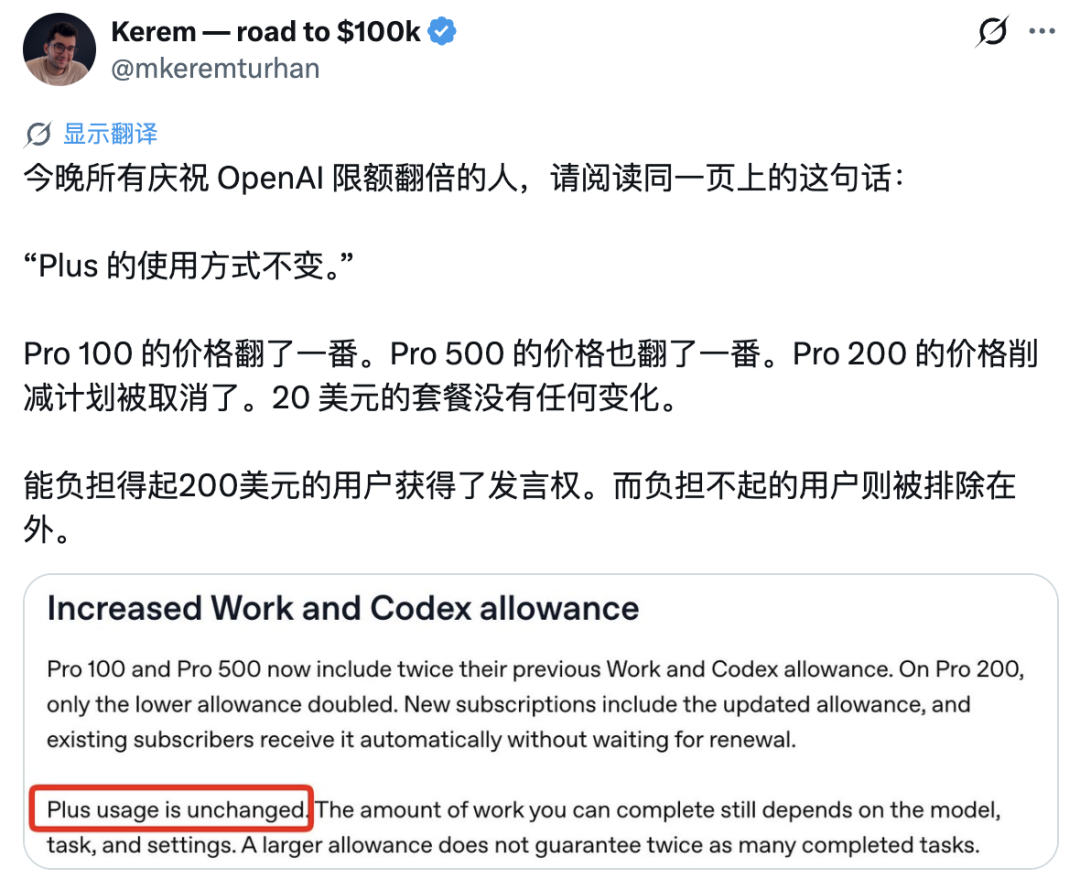
The result quickly drew frustration from some Plus users. One netizen asked in Tibo’s comment section, “Tibo, why? Do Plus users not count as users in your eyes?”

He complained that over nearly one month OpenAI had released new features and quota benefits, yet neither the extra usage allowance for dots nor this doubling of Pro plans delivered much direct change to Plus users. The limit of five hours he disliked also remains.
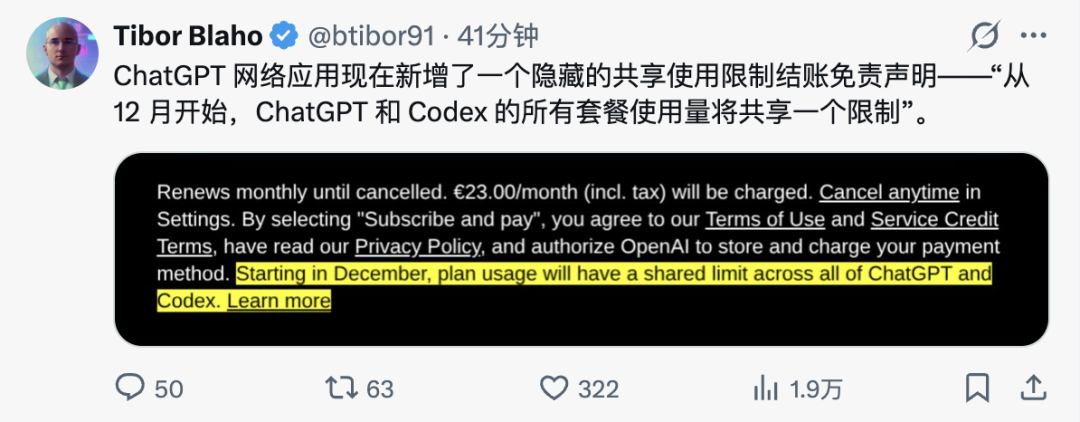
That frustration is easy to understand. Although the 20 dollars monthly ChatGPT Plus fee is clearly lower than Pro plans, for many ordinary users Plus is still the plan they are willing to pay for over the long term.
As ChatGPT moves from a chat tool into an agent that can write code, operate software and call tools, usage allowances directly affect how much work a user can delegate to AI.
OpenAI may offer differentiated service according to subscription price and may use limits to control compute costs. The problem is that frequent quota changes and different counting methods for different features have made it harder for some paying users to understand exactly how much service their money buys.
The practical takeaway is that the paid boundary is becoming more precise: Pro users receive more tokens for the same fee, while Plus users still have to watch the same constraints. If OpenAI wants paying users to keep trust, the next update may need to explain not only which plans benefit, but how each customer can read their own limits.