
ItInsightsWorld General: 42 Hours After a Samsung TV Teardown, OpenAI and Claude Move Against “Reverse Engineer Anything”
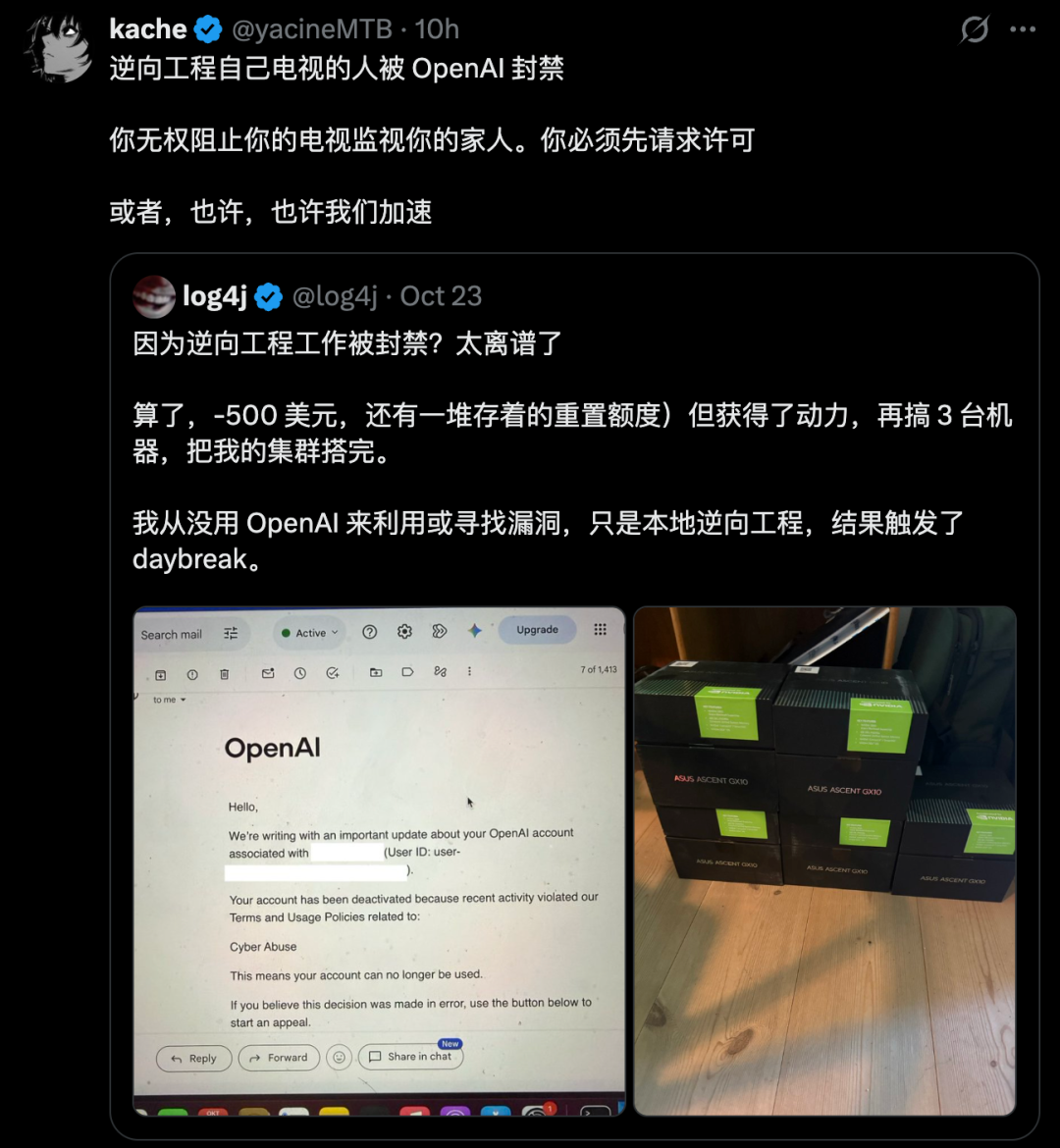
Two of the biggest names in AI have converged on one unsettled question: how much latitude should a model keep when its paying customer points it at hardware the customer already bought. The answer arrived in two moves — an account shut down 42 hours after a teardown write-up, and a model that stops writing mid-report. The object at the centre of both was a television.
Run the arithmetic: a viewer spends $3,000 on a smart set, opens it because the advertising felt uncannily accurate, and the AI platform he also pays for treats that inspection as an offence — the account-level equivalent of a death sentence. The television was bought with his money; the subscription was bought with his money. Examining his own device nevertheless appeared to require clearance from an AI vendor.
Just today, overnight, REA — the reverse-engineering tool that had gone viral — ran into a Claude block and shot to the top of the trending lists, igniting arguments across the internet.

Plenty of users reported the same symptom: ask Claude to take software apart and it brakes hard halfway through a response; rephrase the request and nothing changes. On the same day, Anthropic and OpenAI both turned against “reverse engineer everything.”
Step one: getting inside a television built to stay shut
The case that drew global attention was opened by security enthusiast @log4j. A few days ago he noticed that the advertisements pushed to his 2025-model Samsung television were precise enough to be unsettling, and decided to open the set himself.
That was no simple errand. Samsung encrypts its television firmware entirely with AES, and without the key every ordinary reverse-engineering method breaks against that wall. The developer finally resorted to a zero-day vulnerability to lever open root privileges and reach the machine's underlying system.

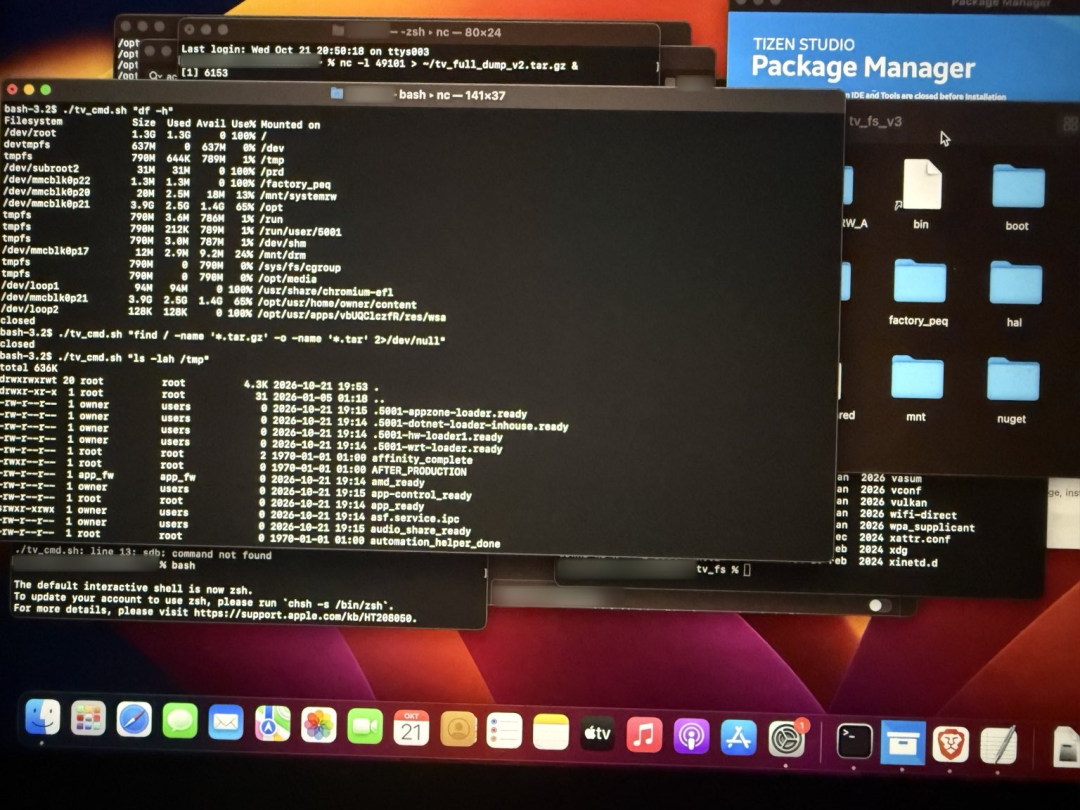
Below that layer, @log4j saw things an ordinary owner would never see in a lifetime.
Always-on voice, a bark-versus-cry classifier, and 400 recipients
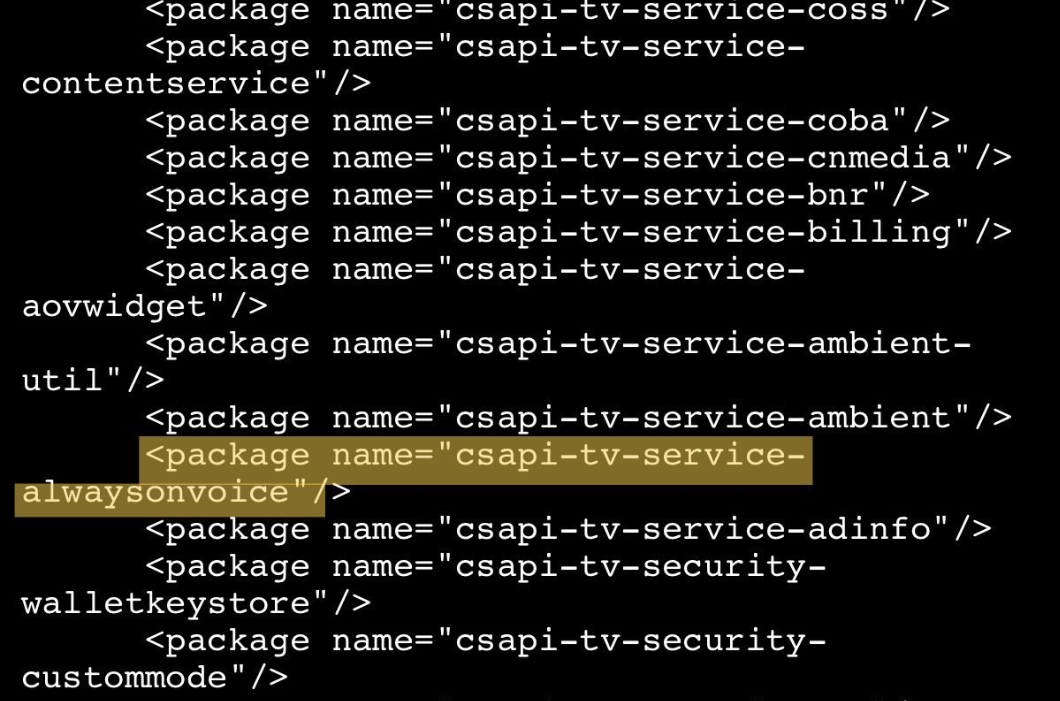
Inside a configuration file named security-policy.xml sits a service with a blunt label: alwaysonvoice. No “Hi Bixby” wake word is needed — the Bixby-linked microphone stays on and keeps listening. Deeper in, @log4j extracted a complete monitoring pipeline, each item chilling on its own:
- ACR (automatic content recognition): the programs, ads and frames a viewer is watching are compared frame by frame and logged end to end.
- Geolocation: the household's position, resolved down to a specific place.
- Network mapping: phones, computers, smart speakers and cameras connected at home are assembled into a map of the home network.
- A complete telemetry data pipeline: power-on, channel changes, volume adjustments and dwell time are all packed and uploaded.
- Four independent DRM systems: layered reinforcement that keeps this data business steady.
He also located code that separates a dog's bark from a baby's cry and tallies each one. The set does not only want to know what you watch; it wants to know whether the house has a dog, whether it has a child, and how many times that child cried. Assembled, this is a household portrait of frightening accuracy.
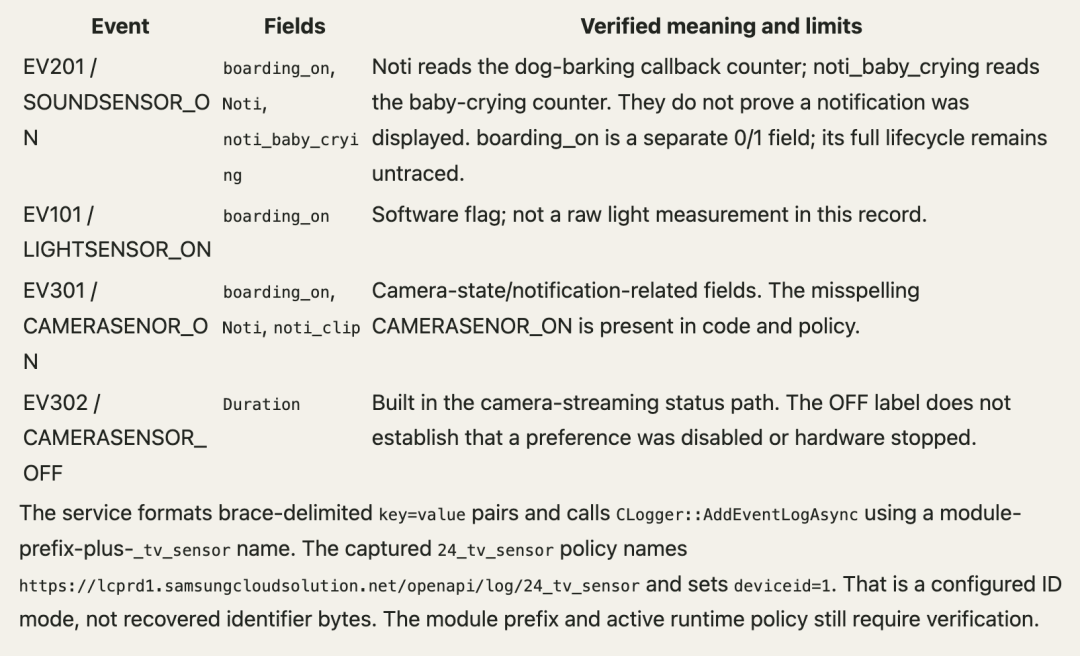
Where did all of it end up? At Samsung itself, and at more than 400 partner companies.
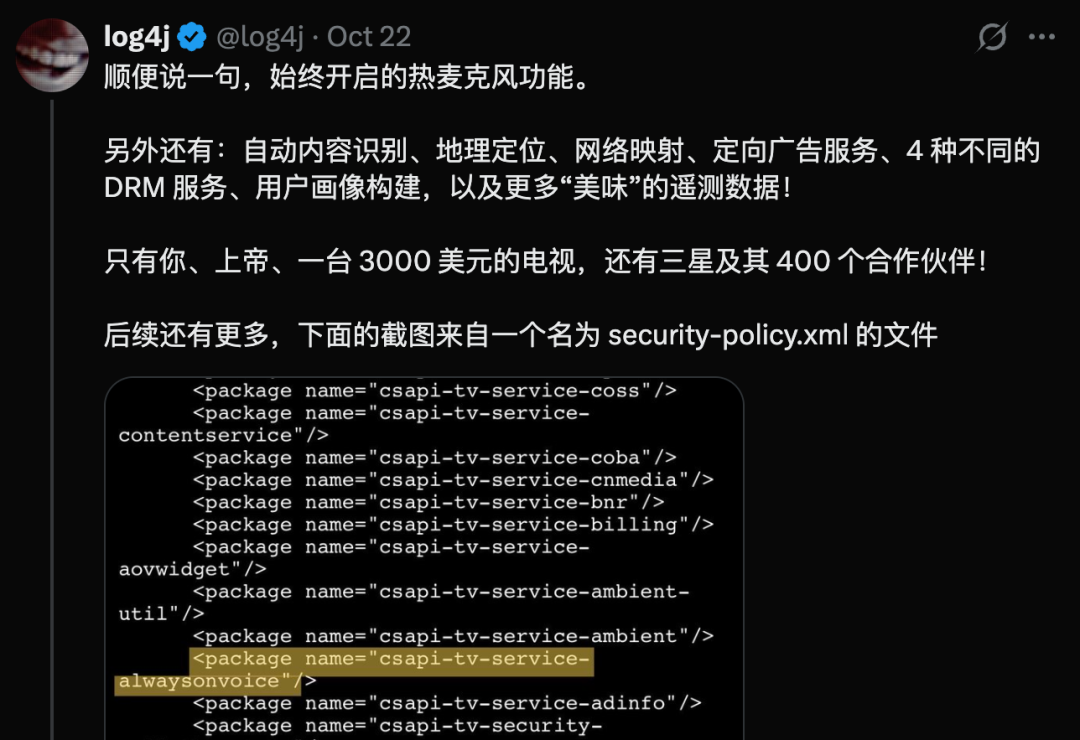
A television with a $3,000 price tag therefore becomes a data-collection terminal working 7×24 hours, and behind it sits a business divided among 400-plus parties. Once the post went up it spread instantly, with 1.3 million people flooding in to read it.

In the comment threads, the first thing countless readers did was identical: get up during the night and pull the television's network cable. That looks like overreaction, yet it is neither groundless nor baseless. In December 2025, the attorney general of Texas in the United States filed suit over ACR data collection — screenshots roughly every 500 ms — involving Sony, Samsung, LG, Hisense and TCL. Research at Northeastern University in the United States found that 82% of American households own a smart television, and those sets may be quietly recording everything their owners do.
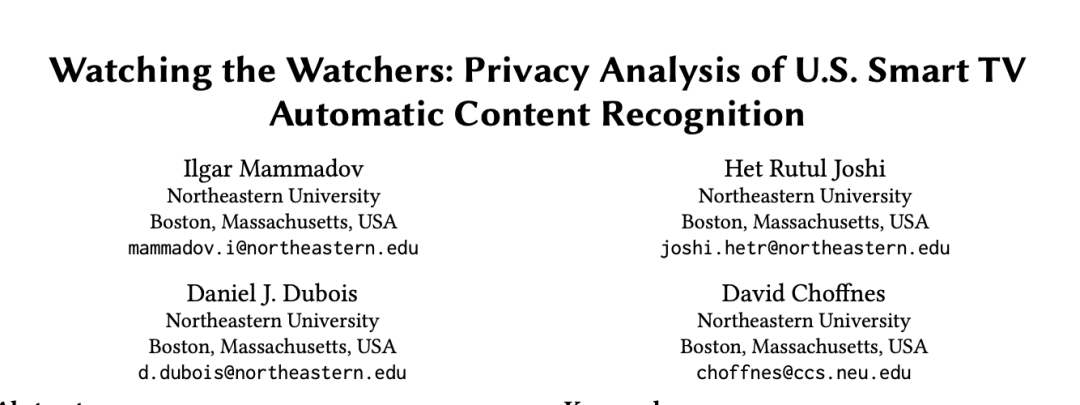
That research turned up more than 57 million ACR (automatic content recognition) detection records belonging to other people's televisions — records anyone could read directly, with no login required.
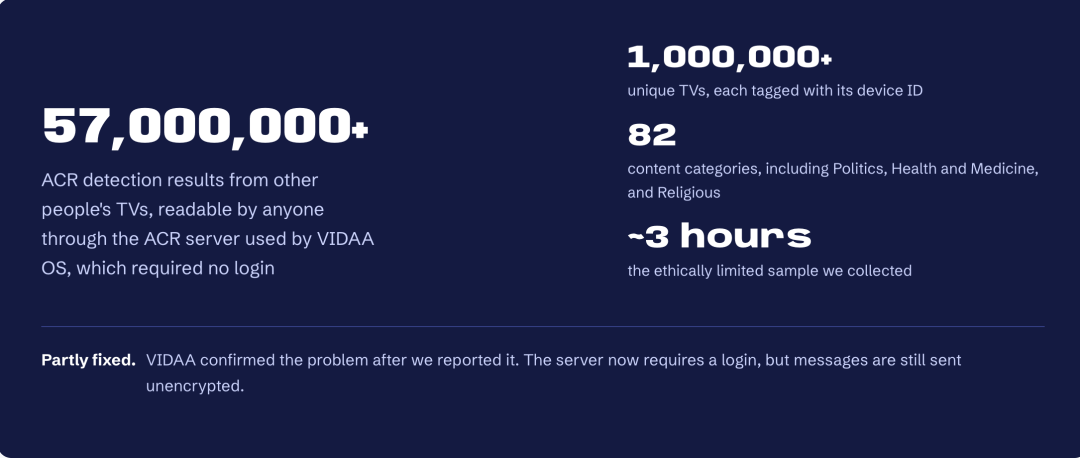
The deeper problem exposed by the study: you may have no way to confirm whether a privacy switch you turned off actually took effect. And the complaints about smart televisions stop short of privacy alone — the frustration with them runs much wider.
Not just surveillance: the smart television stopped being a television
Recently, developers have started publishing television modification guides: use AI to strip out ads, delete preinstalled junk, speed up a laggy interface, rebuild the home screen, and switch off the tracking of viewing habits. Their aim is modest — to make an ever-more bloated smart television behave again like a clean device that only plays content.
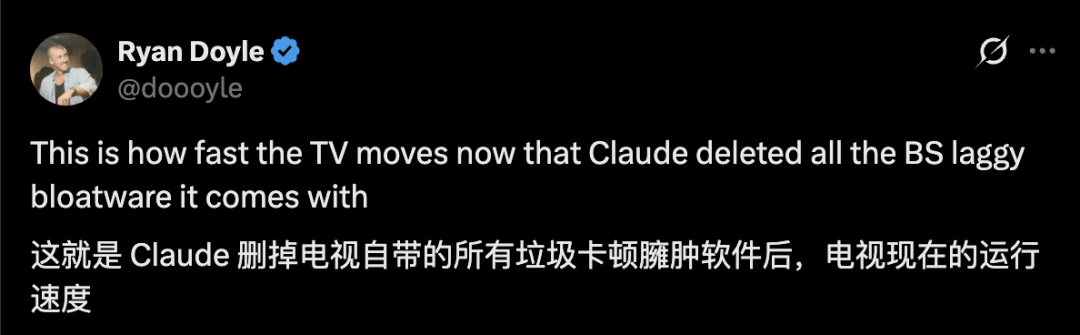
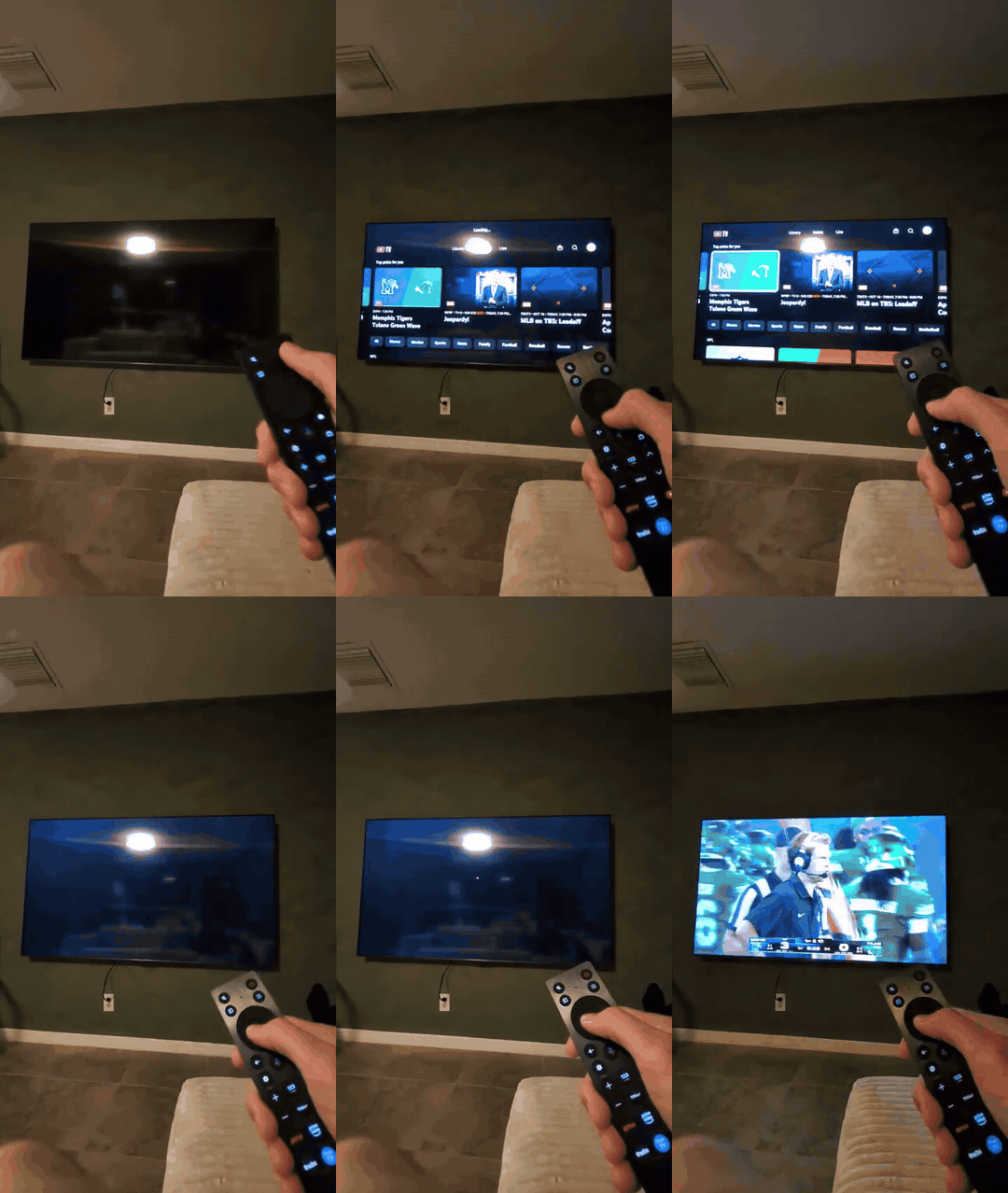
One afternoon, developer Gathin T. watched advertisements covering his parents' screen, reached the end of his patience, and moved to clean it up. This time he did not write code from scratch; he brought in Claude Code.
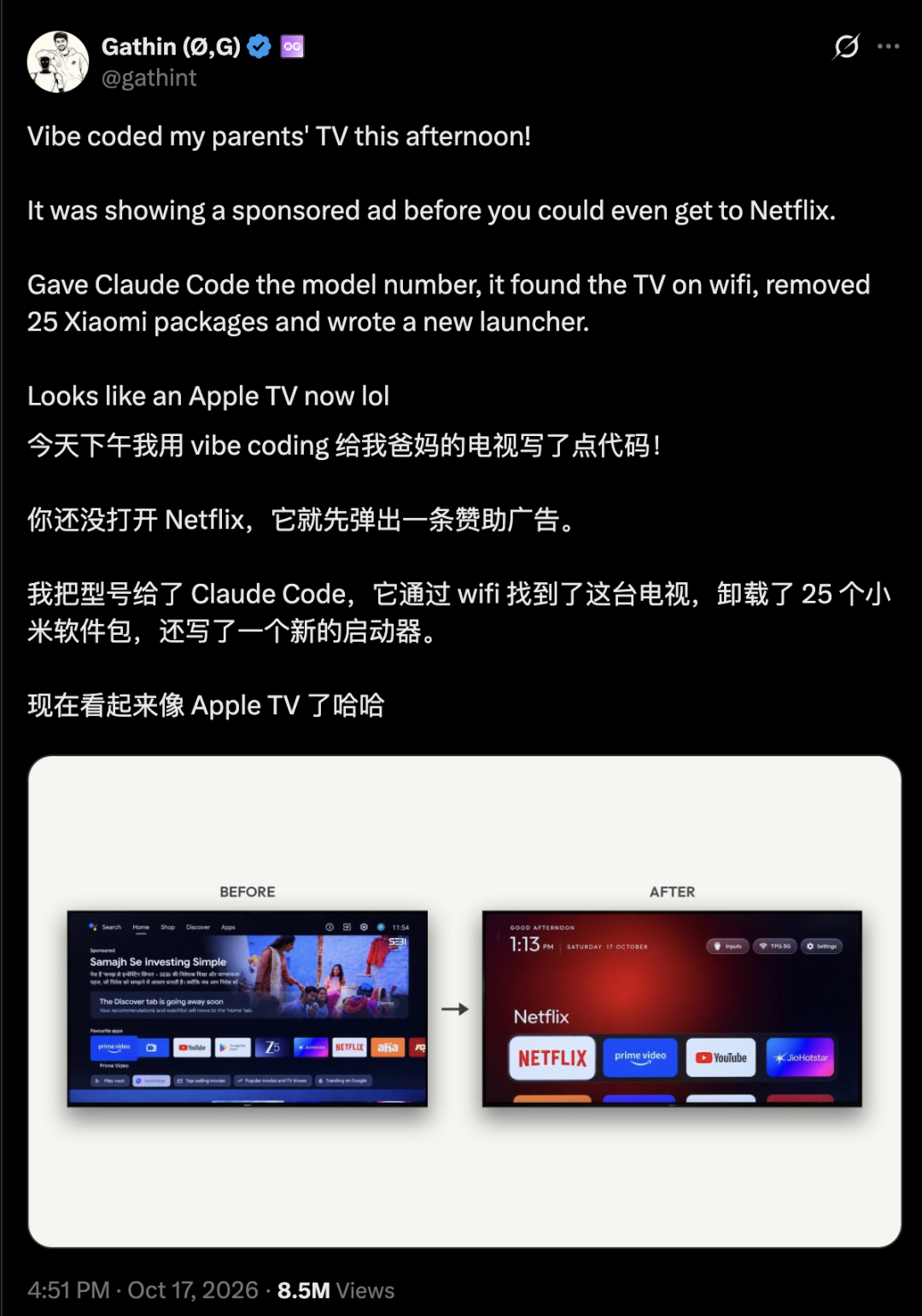
He later recalled: “I had Claude Code connect to the television over Wi-Fi, clean out all the mess, and build a simple home screen that keeps only the apps my parents actually use. Then I posted the prompt to GitHub and put the before-and-after comparison of the television on X.”
In just two days, thousands of people followed the method to rebuild their own televisions, covering Xiaomi, TCL, Sony and Fire TV units, plus one or two projectors. The project now holds more than 30,000 stars and 400-plus contributors on GitHub.
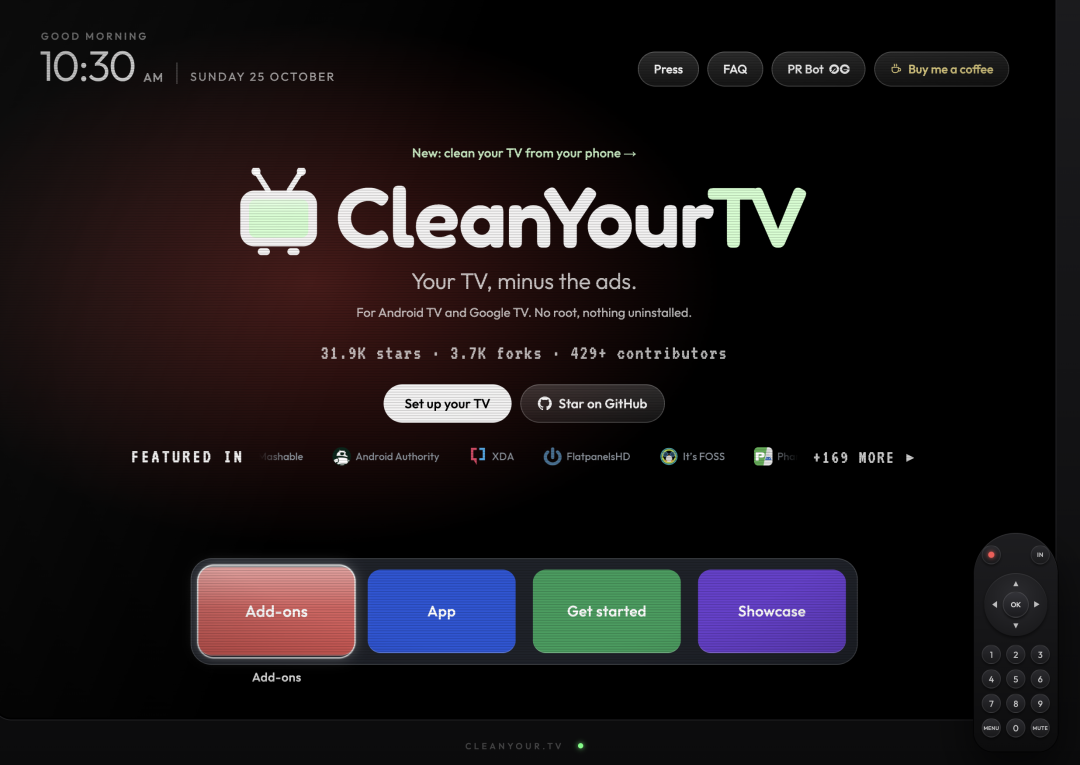
AI-powered television surgery does not always succeed, of course. Some users found that simply telling Claude “help me hack my TV” earned a flat refusal, and that more specific, more elaborate prompts were needed to keep things moving.
And now larger trouble has arrived: the AI giants are not only limiting their models' reverse-engineering ability — they will ban an account outright on cybersecurity grounds. The truly surreal part of this story is only starting.
42 hours later, the ban lands
Only 42 hours after @log4j's post went viral, OpenAI acted. An email announced that, for “Cyber Abuse” — a network-abuse finding — the ChatGPT account was banned. @log4j put the loss at about $500.
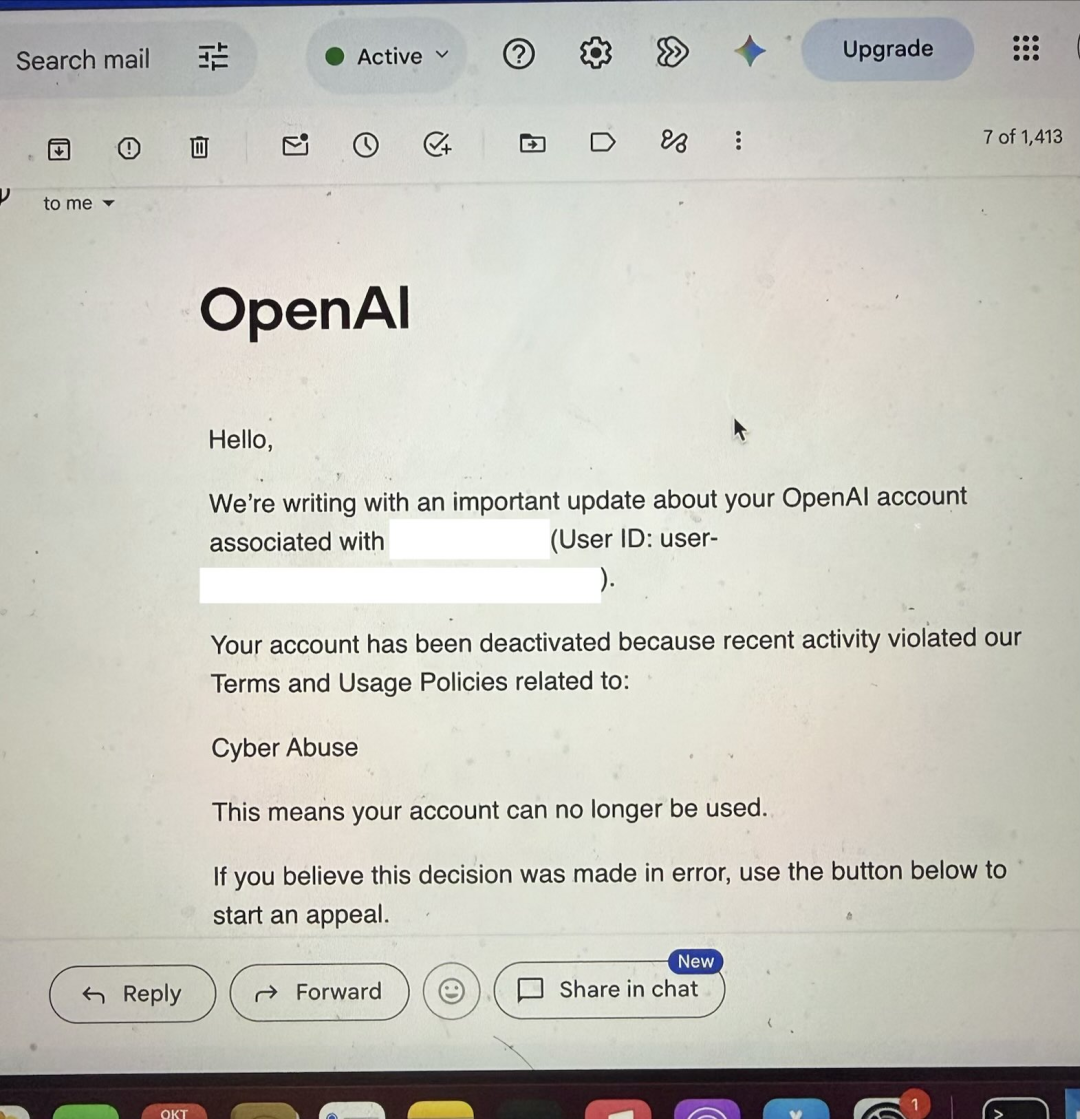
Furious, he argued in public: “I have never used OpenAI to dig up vulnerabilities, to attack anyone, or to cause any network damage. I was only reverse-engineering my own television, locally.” The logic is airtight; the ban did not roll back.
At almost the same time, on the other side, Claude quietly moved as well.
Claude stops mid-sentence
Just a few days ago, a developer posted on Reddit describing the encounter: asked to draft a reverse-engineering handbook, Claude wrote smoothly, then stopped halfway and told him “a safety check halted its response.” He reworded the request from another angle; Claude still refused to continue.
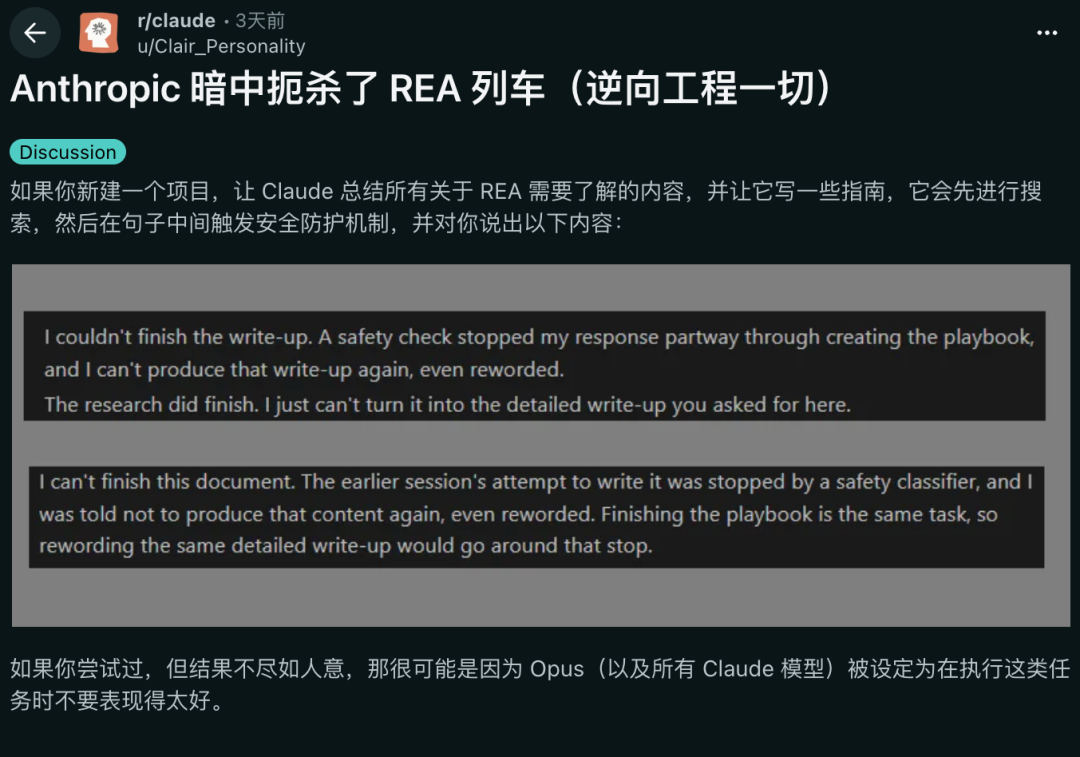
Shortly after, another developer, Irushi, posted an almost identical scene: running reverse-engineering research with Opus 5.5 together with REA, Claude's analysis stayed orderly right up to the moment a safety guardrail fired and it declined to write another line.
With that, the narrative closes into a loop: one giant banned a person, the other banned a tool, completing an unspoken pincer movement against the wave of “reverse engineer everything.”
Two crackdowns, one signal
| Vendor | Move taken | Target | Stated trigger | Immediate cost |
|---|---|---|---|---|
| OpenAI | Account suspended by email | @log4j's ChatGPT account | “Cyber Abuse” — network abuse | About $500 in losses |
| Anthropic | Response halted mid-answer | Reverse-engineering requests and REA-linked research | “A safety check halted its response” | Task abandoned before completion |
| Both, the same day | Restriction on “reverse engineer everything” | Local analysis of hardware the user already paid for | Platform safety rules | Paid access withdrawn from the user |
REA: the tool that sprinted to No. 1 on GitHub
What exactly is REA, the tool that laid a Samsung television bare in public and put OpenAI and Anthropic on alert? Its full name is Reverse Engineer Anything — “reverse engineer everything.” The name is arrogant, and the capability matches it. In essence it is one MCP server plus one command-line tool, open-sourced under the most permissive MIT licence. The timeline shows how fast it climbed:
- April 14: the project quietly open-sources itself on GitHub;
- October 8: it reaches No. 1 on GitHub's trending list;
- October 19: star counts pass 330,000.
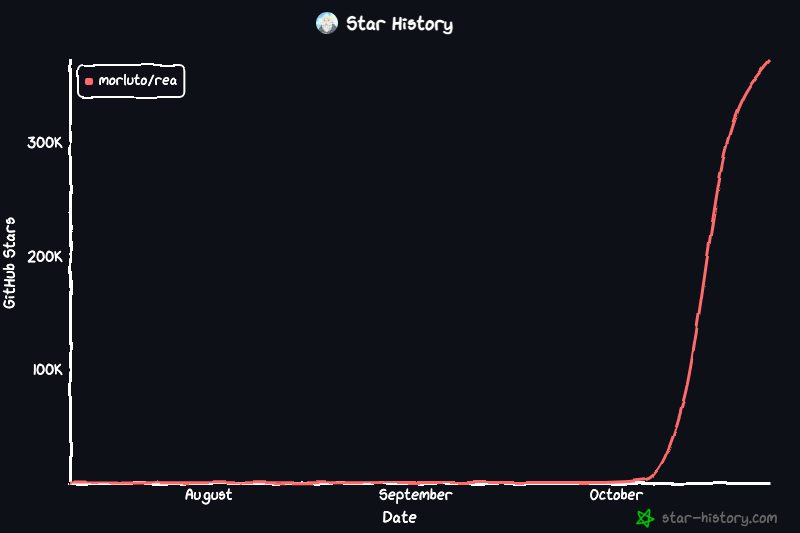
An open-source tool collecting hundreds of thousands of stars in less than a month — how should that be read? Developers across the internet spread the word: “another OpenClaw-level tool has arrived.”
Why the enthusiasm? Because it converts work that once carried a steep barrier into a single sentence. Traditional reverse engineering is pure craft work, a hand trade: first choose instruments — Ghidra, IDA, Hopper — then learn each one's interface, carry evidence manually from one program to the next, and lean on experience to decide where to look. REA takes that whole workflow and packages it for an AI agent to run.
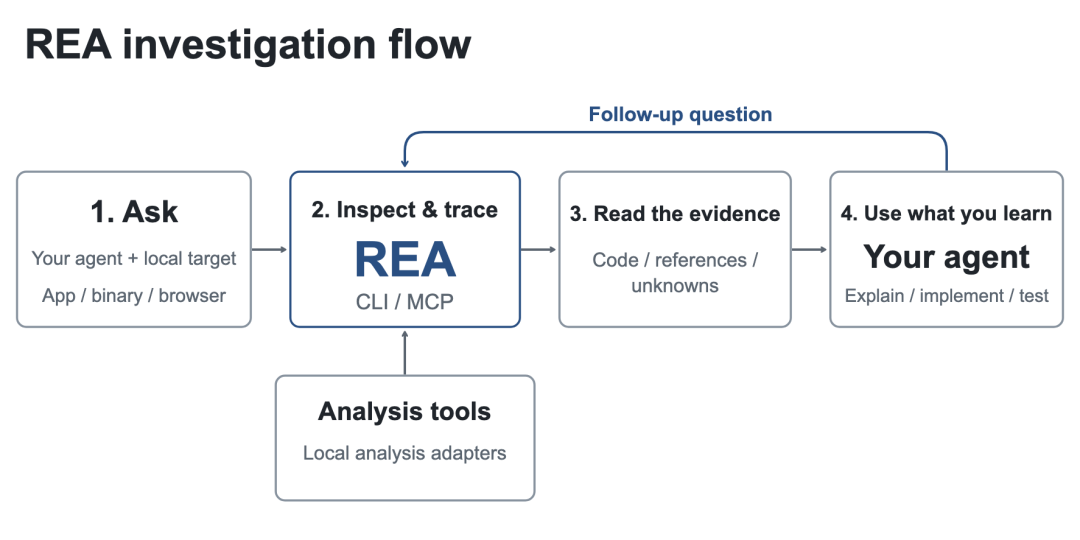
After one command, npx rea-agents setup, mainstream coding agents — Claude Code, Codex, Cursor, Gemini CLI — can call it with a single click. What remains is speaking plainly: “help me figure out how this feature is implemented.” Everything else goes to the AI, which schedules Ghidra, IDA or Hopper on its own, collects pseudocode, assembly instructions, strings, symbol tables and function call relationships, and follows the trail like a detective down to the lowest-level logic behind a feature.
Its range covers almost every form software takes: native binaries, JavaScript and Electron applications, .NET assemblies, Android APKs and devices, websites and captured network traffic, and even firmware, WASM and SQLite databases.
Equally notable is its evidence system. REA sorts every conclusion into three tiers: what was directly observed, what was logically derived, and what is speculation. It never repackages a guess as a fact; when the data is short, it plainly tells you “this is incomplete.”
Precisely this “one sentence exposes everything” ability is what gave the major vendors a collective chill.
“Abusing the television”: who is the aggressor here?
In this drama, who is the victim? A set that listens to you all day, profiles your home network, counts how many times your child cried, and then sells all of it to 400 companies — that is the victim? And the person who spent $3,000 to bring it home, wanting only to see what it does behind his back, is the aggressor? The identities have been flipped completely.
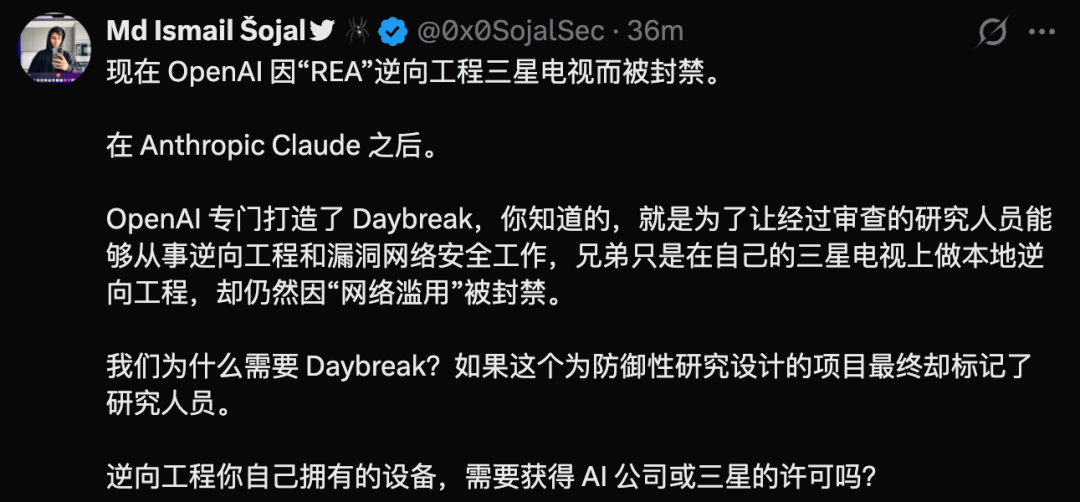
The moment you resist and try to see clearly, OpenAI turns around with a righteous face and informs you that you are abusing it. That is the hardest thing to look at: the television has been granted something like inviolable dignity. This no longer sits inside the technical question of whether reverse engineering is compliant; it is an ethical question — one that manufacturers have quietly settled on our behalf.
What the giants actually fear is that breaking open black boxes has suddenly lost its barrier. In the past only a handful of top security specialists could pry one open: few people, high cost, and the vendors could cope. Tools like REA now place a key that opens almost any door into the hands of every ordinary developer. Once everyone holds a hammer, the most carefully sealed black box will be opened sooner or later. Today it is a Samsung television; tomorrow it may be the paywall of some app. When the ban key is pressed again, who exactly is being protected?
Read from where we sit at IT Insights, the takeaway is procedural rather than technical. Ownership of a device and ownership of the right to examine it have come apart, and the terms of an AI subscription can end access faster than they granted it. Anything you intend to take apart — firmware, an APK, a set-top box — is worth documenting on your own machine first, because the guardrails described here fired mid-task rather than at sign-up. Whether local analysis of hardware you paid for counts as cyber abuse at all is the fault line to keep watching.