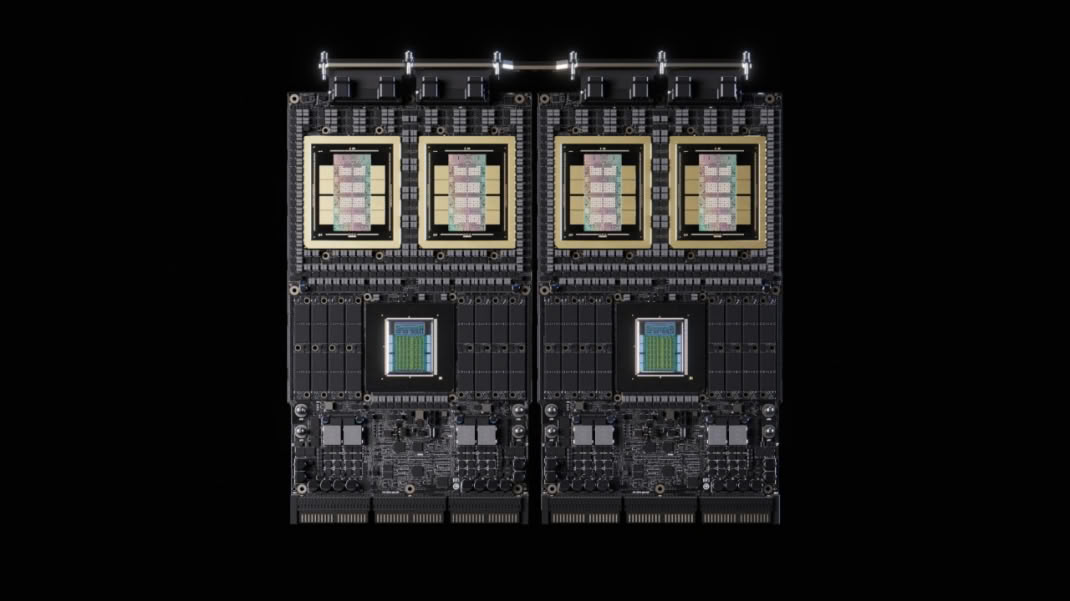
NVIDIA Vera Rubin Bandwidth Revision: HBM4 and NVLink Targets Recalibrated
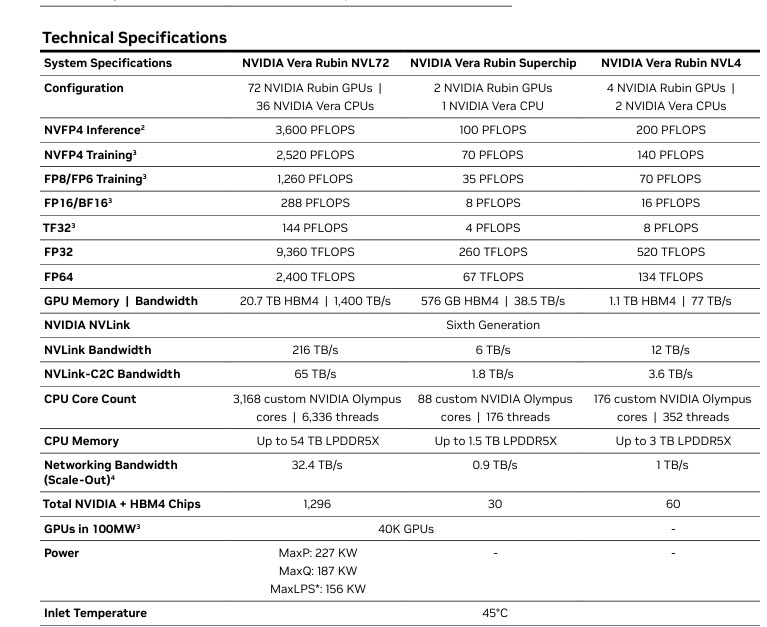
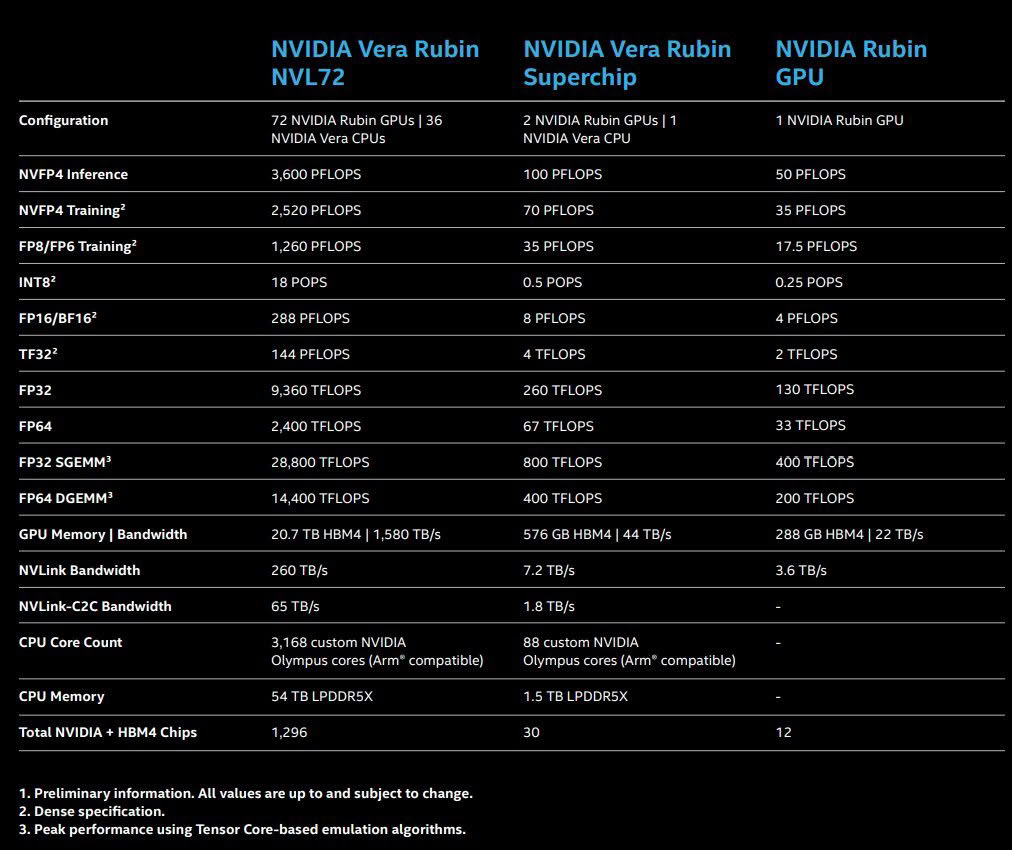
Recent published specifications for the Vera Rubin platform show that a Rubin GPU is being paired with 288GB of HBM4 memory and a memory bandwidth figure of 19.2TB/s. That is about 12.7% below the earlier “up to 22TB/s” reference NVIDIA used in technical materials. Because the prior value was phrased as a maximum achievable target, the lower published number may represent a specification alignment rather than a uniform performance drop across every Rubin product.
What the HBM4 target shift means for the memory supply chain
As the next-generation high-bandwidth memory interface, HBM4 is designed to move more data per cycle and support AI model training and inference at scale. Larger models require GPUs to stream weights and intermediate activations continuously, so insufficient memory bandwidth can leave compute units idle even when peak arithmetic performance looks strong.
The Rubin platform’s earlier push for very high HBM4 bandwidth placed a demanding bar on memory suppliers. Producing parts at higher data rates while controlling power consumption, heat, signal integrity and long-term reliability is harder, so more demanding targets can make qualification and mass production more difficult.
If NVIDIA relaxes the bandwidth requirement, the pool of HBM4 components that can meet the platform specification may become broader. That does not necessarily force memory vendors to redesign all products; it could allow parts that fell short of the previous top target but still satisfy the new spec to be used, improving qualified output and supply flexibility.
NVLink and scale-out fabric changes
Alongside the memory target, the published product materials show that the NVLink bandwidth for the Vera Rubin superchip is now listed at 6TB/s instead of 7.2TB/s, a decline of approximately 16.7%. NVLink remains NVIDIA's high-speed GPU-to-GPU interconnect, supporting data exchange in multi-GPU systems, model-parallel training and complex AI inference workloads.
Large AI clusters exchange gradients, activations and other intermediate data across GPUs. Mixture-of-experts models make inter-GPU communication especially important, so a lower NVLink target can affect communication-bound workloads. However, the actual system outcome depends on model architecture, software scheduling and real workload behavior, rather than a direct one-to-one conversion from bandwidth reduction to compute loss.
At the same time, part of the scale-out network specification has been increased. Existing materials show the scale-out network bandwidth for the Vera Rubin superchip moving from 0.8TB/s to 0.9TB/s. Scale-out fabrics connect compute nodes so data centers can organize many GPUs into a unified cluster; higher node-to-node bandwidth can help when jobs must cross server boundaries.
Design trade-offs and what to watch next
The simultaneous downward and upward adjustments reflect a platform-level trade-off: intra-GPU and intra-rack communication still matters, but as clusters grow, cross-node traffic can also become a bottleneck. NVIDIA appears to be reallocating performance budget inside the system design to match workload realities.
These changes alone do not prove a memory shortage, and they should not be read by themselves as evidence that lowering bandwidth targets was done purely to raise yield. The explanation depends on supplier qualification progress, production readiness and future disclosures from NVIDIA.
For HBM4 vendors, the competitive balance may shift. If fewer components need to meet a top-end bandwidth hurdle, the focus may move toward yield, shipping volume, power efficiency, stability and cost. Suppliers that can deliver qualified parts at scale may gain more influence.
Vera Rubin is not defined by memory bandwidth alone. Its end performance comes from GPU compute capability, memory capacity, chip-to-chip links, networking architecture and software optimization. NVIDIA's official Vera Rubin NVL72 rack configuration contains 72 Rubin GPUs and uses sixth-generation NVLink to connect multiple GPUs for large-scale AI training and inference.
The practical test is not whether one bandwidth line moved up or down, but whether NVIDIA can turn the revised Vera Rubin specifications into shipping systems at planned volume and whether customers observe the training and inference behavior they expect.