
NVIDIA, Rebellions and SK Telecom in Korea: A 2028 Sovereign AI Q and A on NVLink Fusion and MGX
This collaboration links NVIDIA's open AI platform, Rebellions' Rebel R200 processors and SK Telecom's AI data centers to strengthen Korea's sovereign AI stack. The practical takeaway for decision makers: NVIDIA NVLink Fusion and NVIDIA MGX are intended to let Korean-designed NPUs enter mainstream rack systems, with deployable R200 systems expected in 2028.
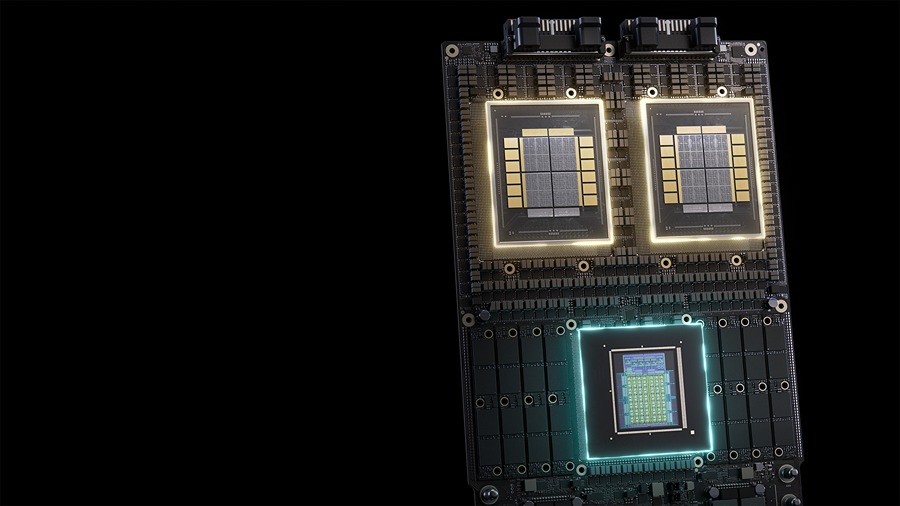
It also turns sovereign AI from a policy slogan into engineering questions: which racks can a local chipmaker use, which inference stage belongs on which processor, and who can operate the resulting services at scale.
What is the NVIDIA, Rebellions and SK Telecom deal actually building?
The short answer: a path from Korean-designed inference silicon to rack-scale AI services. Rebellions plans to connect Rebel R200 neural processing units to the NVIDIA platform using NVIDIA NVLink Fusion, while building rack-scale systems on the NVIDIA MGX architecture. SK Telecom is the deployment partner, adding AI data center operations, proprietary models and public services.
- Silicon anchor: R200 is a next-generation NPU for low-latency, energy-efficient inference with frontier models, including multitrillion-parameter workloads.
- Interconnect anchor: inside a rack, Rebellions will use NVIDIA NVLink scale-up networking to link Rebel R200 units.
- System anchor: NVIDIA MGX reference designs and its supplier ecosystem are meant to reduce integration effort and time to market.
- Service anchor: SK Telecom plans to connect the infrastructure to foundation models and public-facing services, including offerings under the government's AI for All project.
Why do NVLink Fusion and MGX matter more than the chip name?
Because the deal is less about a single accelerator than about making that accelerator usable inside an established factory pattern. NVIDIA's public materials describe NVLink Fusion as a way for custom XPUs to join NVIDIA's high-bandwidth, low-latency scale-up environment, and NVIDIA MGX as a rack architecture that lets XPU and GPU systems share a data center design. In practice, that can align power delivery, cooling, rack footprint and procurement paths.
In the company's newsroom announcement dated November 8, 2026, NVIDIA CEO Jensen Huang said: “Sovereign AI gives nations the power to turn their language, culture and expertise into intelligence.” The statement frames the project as a national capability question, not just a hardware purchase.
How does disaggregated inference change the cost equation?
One of the most reader-relevant parts is the prefill-decode split. In AI services, a request usually has a heavy setup phase before output generation. The companies intend to develop disaggregated inference that assigns different stages of response generation to the processor architecture best suited to each task. Planned work includes using NVIDIA GPUs for prefill and Rebellions NPUs for decode to improve inference throughput and power efficiency.
| Architecture choice | What it favors | What remains risky | Useful for which buyer |
|---|---|---|---|
| GPU-only | Broad software maturity and general-purpose scaling | Inference may still be over-specified for narrow workloads | Teams that prioritize maximum tooling coverage |
| NPU-only | Potential energy and latency optimization for selected tasks | Integration with memory, networking and operators takes time | Buyers with clearly bounded inference workloads |
| Hybrid GPU and NPU | Stage-level matching, as in prefill plus decode | Operation, scheduling and support complexity rise | Public and private operators pursuing sovereign AI services |
Who supports the effort beyond the three companies?
The Ministry of Science and ICT backs the collaboration. MSIT's role makes the project relevant to both government and industry, because sovereign AI infrastructure needs predictable policy support, local data and service rules, and enough compute supply to move beyond pilot projects.
SK Telecom's contribution is also operational: it plans to connect infrastructure, proprietary models and public-facing AI services in its AI data center. That full-stack view matters. A rack is not a product unless someone can run it reliably, bill for it, secure it and keep it cool.
Five questions to ask before treating 2028 as a deadline
- Is the local processor proven in real operations? Deployment readiness is not the same as benchmark visibility.
- Can the rack ecosystem deliver components? NVIDIA MGX's value depends on access to ODMs and suppliers, not just reference drawings.
- Are models and services tied to local language and rules? AI for All gives the project a public service context, but delivery quality will decide trust.
- Does the power and cooling plan match local conditions? Korea's data-center environment may not face the same public backlash seen in some other markets, yet community approval and grid constraints still shape timelines.
- What is the fallback if the split inference design underdelivers? Buyers need migration paths, not locked-in expectations.
Common misconceptions about sovereign AI stacks
- Misconception: sovereign AI means entirely local hardware. The collaboration mixes Korean-designed R200 processors with NVIDIA infrastructure, because capability can come from controlled operation, not only chip origin.
- Misconception: NPUs will simply replace GPUs. The planned work points toward complementary roles, especially GPUs handling prefill while Rebellions NPUs handle decode.
- Misconception: one interconnect standard removes risk. NVIDIA NVLink Fusion can lower integration risk, but supply chain, software validation and service operations still matter.
FAQ: high-frequency questions and short answers
Is this mainly about selling chips?
No. Chips are the visible layer, but the project is about building a service stack for Korea, from inference silicon to racks, models, data centers and public offerings.
When will R200 systems be deployable?
The stated expectation is 2028, so near-term procurement should be treated as capability planning rather than immediate mass replacement.
Why involve SK Telecom instead of a pure chip partnership?
Because deployment requires operators. SK Telecom brings AI data center experience, proprietary models and consumer-facing services, turning processor integration into usable AI infrastructure.
Does this mean NVIDIA is licensing its ecosystem away?
Not in the way suggested by the deal. It extends NVIDIA's open infrastructure platform through NVIDIA NVLink Fusion while keeping NVIDIA MGX and NVIDIA NVLink scale-up networking central to rack design.
Action advice for general readers and organizations
If you are a non-specialist, use the deal as a shortcut to understand where AI infrastructure is heading: less single-box purchasing, more rack-scale service stacks. If you are evaluating AI for a public or private group, focus on four gates before 2028: workload fit, supply-chain availability, local operating capacity and public trust. Those gates decide whether sovereign AI becomes a durable capability or a costly prototype.
Related ItInsightsWorld coverage helps readers place this news in wider debates, including local backlash against AI infrastructure and how energy prices shape infrastructure politics.