
NVIDIA Freight Loss Worth $11.4 Million: A Side-by-Side Test of Three Cargo-Security Models
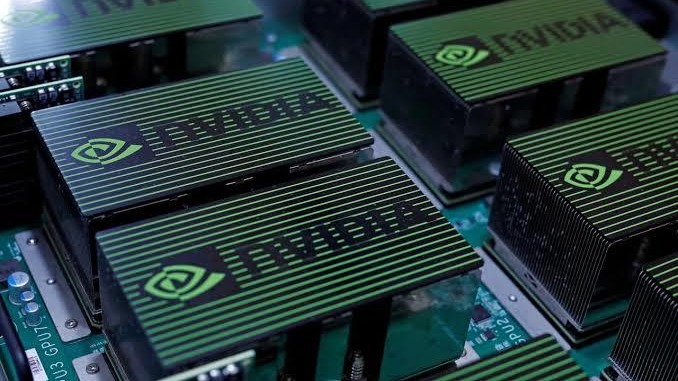
On November 6, The Mercury News reported that a shipment of NVIDIA hardware valued at about $11.4 million disappeared while in transit in the United States: the truck left Oakland, California on August 29 bound for Fort Worth, Texas, and neither the vehicle, the driver nor the six pallets has been recovered. Read as a comparison test rather than a crime brief, the case shows that the control model actually in use — paperwork that matched perfectly and nobody watching in real time — was the weakest of the three options available to a shipper of high-value computing gear.
What exactly vanished between Oakland and Fort Worth?
Everything, and quietly. The consignment was divided into six pallets holding NVIDIA AI semiconductors and computing hardware. The truck that collected it carried the logo of a food transport company, and the handover followed the shipping documents that had been planned in advance. Nothing at the dock looked irregular — which is precisely what makes the case instructive for anyone who moves technology freight.
Once it left Oakland the vehicle travelled south and gradually slipped out of dispatch and tracking coverage. Investigators trying to reconstruct the route found repeated stops along the way, some of them lasting several hours, before the trace went cold in San Bernardino County in Southern California. Police have not announced any arrest, and have not disclosed which specific products were taken, how the takeover was executed, or whether the load was already split apart.
The timing gap matters more than the geography. ABC7, quoting a statement from Oakland police, reported that the affected party filed the report on September 13 — about two weeks after the cargo left Oakland. That interval is the single most expensive variable in the whole affair: it is time in which pallets can be broken down, serials stripped and components routed into separate resale channels.
Why does a paperwork-perfect pickup worry security teams more than a cut seal?
Because a clean handover implies the fraud began before the truck ever reached the dock.
The FBI separates cargo crime into distinct patterns, and the category that fits here is strategic theft: fraud used to make shippers, brokers and carriers hand loads over willingly, through fake carrier identities, fictitious pickups and double-brokering. A public service announcement from the FBI's Internet Crime Complaint Center dated April 30, 2026 on cyber-enabled strategic cargo theft describes double brokering as the illegal re-brokering of a freight load, a trick that persuades an unwitting carrier to move stolen cargo. Volume data points the same way: Verisk CargoNet figures circulated in industry analyses show fictitious pickup events leaping from an average of roughly 66 a year between 2012 and 2022 to 576 in 2023.
Laid against that pattern, the observable facts of this case stop looking random. A vehicle whose exterior read as ordinary grocery logistics rather than guarded technology transport. A tender that satisfied the scheduled paperwork. Multi-hour pauses that resemble pre-arranged interchange windows rather than mandatory driver rest. An endpoint in a Southern California county criss-crossed by long-haul corridors. Each detail alone is explainable; together they read like a target that was studied first and intercepted second.
How large is an $11.4 million loss next to an ordinary cargo theft?
About forty times the industry average — and that ratio, not the dollar headline, is the number security teams should care about.
Verisk CargoNet's annual analysis, published in January 2026, counted 3,594 supply-chain crime events across the United States and Canada in 2025, essentially unchanged from 3,607 the previous year. Inside that flat total, confirmed cargo theft incidents rose 18 percent to 2,646, estimated losses climbed 60 percent to nearly $725 million, and the average value per theft increased 36 percent, from $202,364 in 2024 to $273,990. Spread evenly across the six pallets, the missing NVIDIA load is worth roughly $1.9 million each. (Both the per-pallet figure and the forty-times multiple are our arithmetic on published averages, not numbers released by investigators.)
Keith Lewis, vice-president of operations at CargoNet, characterised the same dataset as a shift in target selection rather than in activity levels: criminal enterprises have become more selective and more sophisticated, going after extremely high-value shipments instead of depending on opportunistic theft. The National Insurance Crime Bureau supplies the trend line — reported cargo theft rose 27 percent in 2024, with the bureau projecting a further 22 percent increase in 2025. Frequency is not what changed. Value density did.
The corridor has form. During 2025, Fremont and Union City police investigated several theft cases involving NVIDIA goods, with related losses together exceeding $7.5 million. On that record, the current disappearance is not an isolated shock but the largest entry in a running series.
Why is stolen NVIDIA hardware worth more the farther it travels?
Because regulation, not domestic scarcity, is what prices the black market.
Reuters, reporting on June 23, 2026 and citing the Financial Times, said that restricted NVIDIA AI chips had roughly doubled in price on China's black market as US export controls tightened legal supply. When a legitimate purchase channel is closed off administratively, an identical unit acquires a premium the moment it crosses a border. That is the mechanism that converts a warehouse accident into an international resale problem, and it explains why investigators' silence on the destination of the six pallets is the most consequential unknown in the file — nobody should treat a route to any particular country as established fact.
The operational lesson for shippers is that risk is not distributed evenly along a route. It spikes at three joints: the tender (is this carrier real?), the first unsupervised stop (is this load still intact?), and the border (what is this hardware worth now?). Controls that strengthen only the middle joint protect the cheapest part of the problem.
Which of three control models would actually have caught this?
No single model would have prevented a determined, well-informed interception. The honest comparison is about detection speed and handover discipline — the two variables this case exposed.
| Control model | What it genuinely covers | How it maps to this Oakland loss | Cost and friction | Best fit |
|---|---|---|---|---|
| Document-matched tender — the model used here | Confirms that the paperwork presented at pickup was the paperwork that was expected | Cleared the dock, then failed completely: tracking was lost within hours and the gap only surfaced on September 13 | Lowest cost; already embedded in most standard freight contracts | Commodity freight where a single load loss is absorbable |
| Telematics and exception monitoring | Geofence exits, unplanned or prolonged stops, door and reefer sensors, scheduled driver check-ins | Would not have stopped the takeover, but hours-long stops would have raised an alert on day one instead of two weeks later | Medium — per-asset devices plus a triage rota; false positives need human handling | Anyone running electronics between California entry points and inland data-centre markets |
| Certified high-value chain — TAPA TSR/FSR-grade carriers plus broker-vetting requirements | Vetted drivers, sealed loads, pre-approved stops only, defined escalation clocks, verification that the broker and carrier are who they claim to be | Attacks the tender step, which is where this theft appears to have been won; an unvetted vehicle wearing a food-hauler livery should not have reached the pallets | Highest — audits, security surcharges, a much shorter list of eligible carriers | Loads whose value exceeds a typical theft average of roughly $273,990 — in practice, almost any AI accelerator shipment |
Trade-off in one line: telematics buys you minutes of reaction time; the certified chain buys you the probability that the goods are still on the truck. A shipper choosing only the second option is exposed if a vetted carrier is compromised; a shipper choosing only the first is left explaining to police why a load was reported missing a fortnight after it left the building.
What should a shipper do in the first 24 hours after a load goes dark?
The recovery window is short and the case demonstrates what happens when it is missed. A practical sequence:
- Record the last confirmed telemetry timestamp and location, and treat that as the reporting jurisdiction — not the destination state.
- Re-verify the carrier's operating authority and insurance certificate against the original tender, not against any document supplied in the last hour.
- Call the driver back on a number already on file, and use a second channel for the broker; a callback number provided inside the suspicious update is not a control.
- Notify the consignee and ask whether a duplicate or rescheduled delivery attempt has been made under different paperwork.
- File a police report the same day, with pallet counts, product descriptions and serial ranges attached, so that recovery officers can match hardware rather than a truck.
- Push serial numbers into resale-monitoring feeds, since component-level tracking is where stolen accelerator hardware tends to resurface.
- Run a post-incident review of who could see the route, the tender time and the cargo value, and who touched that data — information exposure, not the lock, is what made this job attractive.
Four readings of this case that don't hold up
- "The security was bad, so it was an easy target." The handover satisfied the scheduled paperwork. The failure was of identity assurance, not of padlocks.
- "GPS tracking would have prevented this." Tracking records a vehicle; it does not authenticate a carrier. The reporting shows the load drifted out of visibility, which is a monitoring gap first and a theft problem second.
- "One stolen truck means one stolen truck." Loss data shows theft volume flat while per-event value surged — the exposure of a single high-density pallet has decoupled from the number of incidents.
- "We know where the chips went." Police have not published the specific products taken, the method or the destination. Any confident answer to that question is speculation dressed as reporting.
FAQ: what readers keep asking
Was any part of the $11.4 million NVIDIA shipment recovered?
No. As of the November 6 reporting, the goods, the truck and the driver were all still missing, no arrests had been made, and police had released no detail on the specific products taken or whether the six pallets had been split up.
Why did the truck carry a food transport company's logo?
That is the reported circumstance, and it cuts two ways: it may simply reflect how the load was tendered, or it may show a vehicle presented as ordinary grocery freight to avoid the profile of a guarded technology shipment. Police have not said whether the food hauler's identity was misused, so the case remains unresolved on that point.
Is this the first time NVIDIA freight has been targeted?
No. In 2025, Fremont and Union City police investigated multiple theft cases involving NVIDIA goods, with combined losses exceeding $7.5 million, which is why security firms treat the pattern rather than the single event as the signal.
How much of the loss is usually recoverable?
Practically little when the delay is long. With components of this value, the realistic economics favour dismantling and reselling, and a two-week reporting gap of the kind described by ABC7 removes the window in which an intact load can be intercepted.
What is the cheapest meaningful upgrade for a mid-size shipper?
Exception-based monitoring plus a documented carrier callback rule. Those two changes address the specific failure here — no alert until September 13 — without requiring a full certified-chain programme that most shippers cannot staff.
Bottom line for decision-makers
The NVIDIA matter is not a story about a stolen truck; it is a comparison exercise with a clear result. The model that was in use verified documents and nobody. The model that catches fraud verifies identity at the tender. The model that preserves recovery odds shouts within minutes, not weeks. Once a single pallet can carry the value of a dozen average stolen loads, the security tier you select stops being a logistics line item and becomes a statement about how much of that value you are prepared to lose.
Sources
- Verisk CargoNet — cargo theft losses and incident counts for 2025, published January 2026
- National Insurance Crime Bureau — cargo theft up 27% in 2024, projected rise in 2025
- FBI — cargo theft typology, including strategic theft, fictitious pickups and double brokering
- FBI IC3 public service announcement, April 30, 2026 — cyber-enabled strategic cargo theft
- Reuters, June 23, 2026 — restricted NVIDIA AI chips double in price on China's black market (citing the Financial Times)
- TAPA — 2025 freight broker security requirements for high-value cargo
- The Mercury News and ABC7, via the reporting summarised in this article's source material, for the facts of the Oakland-to-Fort Worth shipment, the September 13 report to Oakland police and the 2025 Fremont and Union City cases.
By James Hartley, IT Insights. Editorial enquiries: contact@itinsights.com