
Case Breakdown: NVIDIA's China GPU Supply Shift and What the RTX 5080 24GB Version Means for Buyers
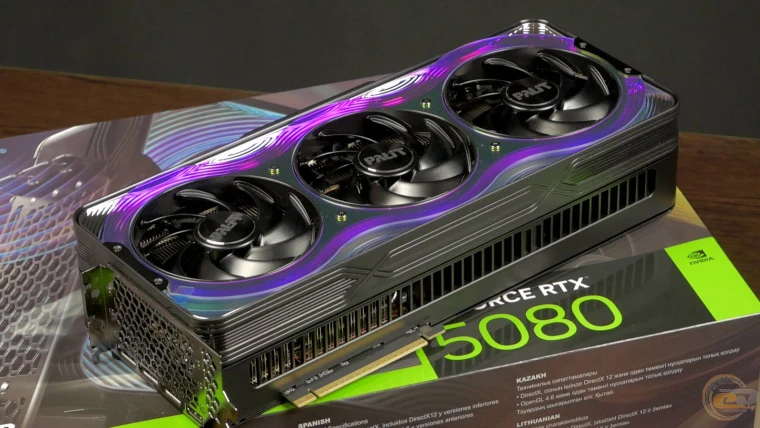
By James Hartley, IT Insights
This case is not just a rumor about a new graphics card. It is a practical example of how buyers in the Chinese market can separate confirmed product facts from channel signals, inventory timing, and price expectations. Supply-chain reports suggest that NVIDIA may halt or limit supply of the RTX 5090 D V2 and the RTX 5080 16GB version in the Chinese market. The remaining RTX 5080 16GB inventory is described as enough for about two months of sales, while RTX 5080 24GB version may become the high-end option after tail stock is sold. The useful takeaway is not to guess whether one rumor wins, but to build a rule for what to buy now, what to wait for, and what to ignore.
Case Timeline: How a Supply Signal Becomes a Buying Question
- Signal stage: The first reports were channel notices, not official launch documents. They named two models, RTX 5090 D V2 and RTX 5080 16GB, and used conditional language. That means buyers should treat the claim as evidence of supply pressure, not as a confirmed purchase order.
- Inventory stage: The RTX 5080 16GB stock was said to be cleaned down to roughly about two months of remaining sales. A short inventory window matters because it changes both price and availability, not only performance.
- Substitution stage: If the 16GB model recedes, RTX 5080 24GB version is expected to take the visible high-end position for many consumers, with remaining units of the older model selling out after the new product appears.
- Market-pressure stage: Reporting from Tom's Hardware described a leaked factory notice that claimed NVIDIA would stop making RTX 5090 models, including the D variants, while higher-value data-center and professional products received priority. The case does not need that leak to be true; it shows how production allocation can influence consumer availability.
Baseline Facts: What the RTX 5080 Already Proves
Before judging the 24GB step, it helps to anchor the story in published product data. NVIDIA's official GeForce RTX 5080 page lists 16GB GDDR7, 10752 CUDA cores, and a starting U.S. price of $999. That baseline is useful because the rumored RTX 5080 24GB version is not an unknown chip family; it appears to be a memory expansion of a known consumer GPU. Buyers can therefore evaluate the change by workload fit, not by vague flagship promises.
It also makes the price logic more testable. If the current RTX 5080 starts at $999 in official U.S. listings, a 24GB card with larger memory modules will likely not be cheaper than the RTX 5080 16GB, but it may still sit below RTX 5090 D V2 pricing. That is a practical range, not a guarantee.
The Memory Logic: From eight 2GB Modules to eight 3GB Modules
The most concrete difference in the story is VRAM capacity. A 16GB card can be understood as using eight 2GB GDDR7 modules, while a 24GB card could theoretically use eight 3GB modules. The final part arrangement is unconfirmed, but the arithmetic shows why a 24GB version may matter: it changes the buffer size available to the GPU before system memory or recomputation becomes necessary.
- Gaming: Extra memory helps most when high-resolution textures, ultra settings, ray tracing, and 4K-plus workloads push a 16GB buffer close to its limit. It does not make every game faster if the bottleneck is CPU, shader, or memory bandwidth.
- Creative work: Larger scenes, video caches, 3D assets, and complex layers can benefit from 24GB because they consume memory steadily instead of only during short peaks.
- Local AI: For smaller language models, image generators, and assistant workflows, 24GB gives wider headroom than 16GB. Bandwidth still matters, so capacity alone does not define speed, but it reduces the chance of hitting an instant memory wall.
Case Results: Three Reusable Findings
Finding 1: Capacity headroom becomes the main consumer story
When a 16GB card moves to a 24GB version, the story shifts from raw speed to buffer safety. For the next wave of games and AI workloads, the difference may be less about benchmark numbers and more about whether a system can stay inside GPU memory without stutter, spilling, or model reconfiguration.
Finding 2: The top rung can move even when the ladder shortens
If RTX 5090 D V2 version leaves the Chinese consumer scene and RTX 5080 24GB becomes the most accessible high-end option, the highest card most people can easily buy may change. But this is not a one-for-one replacement. RTX 5080 is not RTX 5090, and buyers should not confuse a new top visible model with the former absolute performance ceiling.
Finding 3: Price becomes a narrower range, not a guess
The price path is simpler than it looks. Because current GPU prices are already elevated, the 24GB version should likely cost more than RTX 5080 16GB. Because it belongs to the RTX 5080 family rather than the RTX 5090 family, it should likely remain cheaper than RTX 5090 D V2. The decision is therefore about value, not just sticker price.
Comparison Table: Which Buyer Fits Which Path
| Buyer profile | Risk if acting too fast | Best action | Case lesson |
|---|---|---|---|
| Mainly plays at 1080p or 1440p with medium-to-high settings | Buying 24GB may not improve the experience | Compare current RTX 5080 16GB offers first | Capacity solves only capacity problems |
| Uses 4K textures, heavy ray tracing, or multiple large mods | A 16GB buffer may become a practical limit | Wait for confirmed pricing of the 24GB version | Headroom protects settings consistency |
| Runs local AI models or large media projects | 16GB may require quantization, smaller models, or slower workflow | Consider 24GB only when project size is known | Local AI rewards memory space, not just marketing tier |
| Needs a premium GPU this month | Rumor-driven waiting may miss stock windows | Set a maximum acceptable price, then buy the best confirmed card | Inventory about two months is a signal, not a deadline |
Common Misconceptions in This NVIDIA Supply Case
- 24GB automatically means faster gaming. Not always. If a game uses less than 16GB, the extra memory may do little unless settings, resolution, or workloads increase memory pressure.
- RTX 5080 24GB replaces the RTX 5090. The supply report may move the accessible top choice, but RTX 5080 remains below RTX 5090 in raw capability.
- About two months of inventory guarantees a price spike. Channel stock is one factor; demand, seller margins, and product timing can all move price in different directions.
- China-specific variants are unimportant. The RTX 5090 D V2 is a reminder that regional models can reveal hardware trade-offs. Tom's Hardware has reported that export controls led to cutdown RTX 5090 D V2 cards with 24GB GDDR7 on a narrower bus, which can limit bandwidth even when capacity looks generous.
- Rumors equal launch dates. Until NVIDIA confirms availability, buyers should weigh supply signals against official product pages and retailer terms.
FAQ: What Readers Ask First
Is the RTX 5080 24GB version already official?
No. The evidence in this case points to a possible supply and product transition, not a confirmed shipping schedule. Until an official listing appears, treat it as a strong planning signal rather than a guaranteed purchase target.
Should I buy RTX 5080 16GB now?
Buy it now only if the current price fits your needs, the seller offers a clear warranty, and your workload is unlikely to demand more than 16GB soon. If your main concern is future-proofing, waiting may be rational, but not because the 24GB card will magically solve every performance issue.
Does 24GB matter most for AI?
It can. AI and large creative workloads often need memory before they need the absolute fastest compute core. But AI performance also depends on Tensor performance, CUDA software support, and bandwidth, so 24GB is an enabler, not a complete answer.
Will this affect the Chinese market differently?
Yes. The case begins with a Chinese-market supply adjustment, where both availability and pricing may change faster than global averages. A local buyer may see less choice among premium GeForce cards even if the same GPU family remains available elsewhere.
Action Checklist: A Sixty-Day Decision Framework
- Define your memory ceiling. Check whether your current projects or games regularly exceed 16GB. If not, the 24GB case may be more about future headroom than immediate benefit.
- Set a maximum price before shopping. The likely premium for 24GB is real, but the exact number is not. A price cap prevents rumor-driven overspending.
- Compare the 16GB tail-stock risk. If buying RTX 5080 16GB, confirm warranty, seller reputation, and whether stock is likely to remain after the 24GB product arrives.
- Track official pages and credible reports. NVIDIA product pages and established hardware media provide firmer evidence than anonymous channel notes.
- Use a wait rule, not a hope rule. Wait only if the possible gain, such as 24GB headroom, outweighs the cost of missing current deals or living with current hardware for another cycle.
Sources and Evidence Map
- Baseline RTX 5080 specs and price: NVIDIA official GeForce RTX 5080 page.
- Production-priority leak context: Tom's Hardware.
- Export-control variant context: Tom's Hardware.
The Reusable Lesson for General Technology Readers
The best part of this case is that it applies far beyond graphics cards. In fast-moving tech markets, scarcity, specification jumps, and regional supply changes can all arrive before official confirmation. A general reader can still make a good decision by asking three questions: What workload problem does the new feature solve? How much inventory pressure is actually confirmed? Will the higher-capacity option remove a real limitation, or simply make a familiar limitation more expensive?
For this NVIDIA story, the likely practical outcome is clear: the 24GB RTX 5080 version may become the high-end choice that many Chinese buyers can reach, while the 16GB RTX 5080 becomes a short-window option for those who need value now. The safe move is not to chase every rumor, but to match memory, price, and timing to your own use case.
Author: James Hartley, IT Insights. For editorial questions, email contact@itinsights.com.