
Super-Voting Shares After Nvidia's Jensen Huang Exit: A General Playbook for Reading Founder Control | ItInsightsWorld General
If you built a company but hold no extra votes, can your own board push you out? Yes — and the Nvidia saga shows exactly how. Super-voting shares are neither a shield nor a curse; they are a trade. They buy a founder room to make long-term calls, but they also weaken the ability of outside shareholders to say no when those calls turn into a risk. That trade is the whole story behind this week's governance argument.
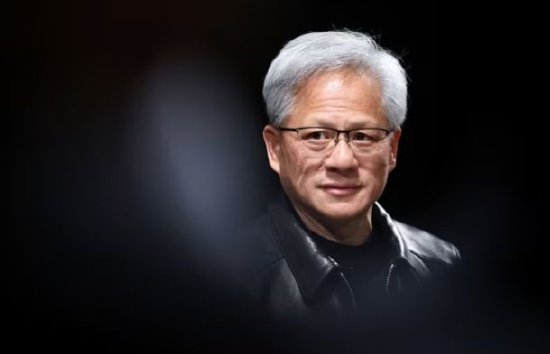
Picture the uncomfortable position. You built a chip giant, your name is effectively on the door, and a group of directors — some of whom you helped appoint — decide your personal conduct has become a company problem. That was the bind facing Jensen Huang. As You Sow, a shareholder-rights group in the United States, said on the 14th local time that the board investigation that ultimately led to Jensen Huang's resignation showed what truly effective oversight looks like. Like it or not, that sentence became the opening bid in a much larger argument about who really runs a public company.
What are super-voting shares, in plain terms?
Super-voting shares — often called dual-class stock — are a structure in which one class of shares carries more votes per share than another. The plain-language version: your money buys the economics, but your class of stock decides how loud your voice is at a shareholder meeting. A founder can own a small slice of the company yet control a much larger slice of the vote.
The baseline is "one share, one vote," where every share carries a single vote and voting power tracks ownership. Nvidia notably uses that single-class structure. Purnima Luthra of Imperial College Business School put it plainly: "Nvidia uses a single-class share structure, in which all shareholders including Jensen Huang have one share, one vote, so the board's handling of the matter would not give him much shelter." That is the mechanical reason a founder with enormous economic upside can still be exposed.
Why did Nvidia become the test case?
Because it is the rare large technology company with no founder super-votes — and the argument only gets interesting when the founder is under pressure. As You Sow's chief executive Andrew Behar said: "The Nvidia board investigation that ultimately led to Jensen Huang's resignation showed what truly effective oversight looks like." He added: "When a chief executive acts improperly, the board must have the power within it to hold him accountable."
The group points to Meta as the cautionary example. Mark Zuckerberg holds roughly 13% of Meta's equity but commands about 60% of total voting power through dual-class stock. At Meta's 2020 shareholder meeting, proposals on verified accounts, removing abusive images and stopping political misinformation ads won 63.1% support among independent shareholders. Once Zuckerberg's super-votes were counted, the same proposals collapsed to 19%.
As You Sow argues that had those proposals passed, Meta might have avoided up to $17.1 billion (about 23 trillion won) in settlements tied to youth social-media addiction lawsuits. Whether or not you accept that causal claim, the number is the point: governance structures have a price tag, and it can be measured in billions.
Luthra draws the contrast from the other direction. Comparing Nvidia with founder-controlled companies such as Meta and SpaceX, she says: "This kind of ownership structure makes it hard for shareholders to hold a powerful leader accountable." Her earlier point matters just as much: "As for Nvidia, if Jensen Huang were unwilling to resign himself, the company's existing ownership structure would still make it possible to remove him." No super-votes meant no fortress.
How does a board actually remove a CEO? The mechanics behind the headline
Here is the part most coverage skips. "The board can remove him" sounds dramatic, but it is a paperwork process with very specific rules. Nvidia's amended and restated bylaws, dated March 12, 2024, allow any officer — including the chief executive — to be removed at any time, with or without cause, by a majority vote of the directors then in office. On an 11-member board that is six votes; two directors can call a special meeting on 24 hours' notice, and the board can act by written consent without meeting, according to reporting on the filed bylaws.
That is why the "one share, one vote" debate is not academic. Removal mechanics and voting structure are two different levers. Super-votes change who elects the directors; bylaws decide what those directors can do once in office. The counter-argument is blunt: without dual-class protection, a founder pursuing a long strategy can be pushed out by outside pressure or a board vote. Jeffrey Sonnenfeld of Yale School of Management, speaking on November 8 local time, said Huang lacked super-voting rights to cement his control. He called Huang one of the few leaders to build a company of Nvidia's scale without dual-class backing, and argued that with super-votes in hand, any board effort to remove him would have been far harder.
What does dual-class stock actually cost? The index and valuation bill
Conclusion first: the cost of super-voting shares is often indirect — it shows up in which investors are allowed to own your stock. On July 31, 2017, S&P Dow Jones Indices said it would exclude newly public companies with multiple share classes from the S&P Composite 1500 family, which includes the S&P 500; FTSE Russell moved in a similar direction. In April 2023, S&P Dow Jones reversed course and reopened those indices to multi-class companies. That six-year swing is a useful reminder that the "penalty" for dual-class stock is a policy choice, not a law of nature — but while it lasted, it redirected passive capital. The original 2017 announcement was tracked here.
A second cost shows up over time. The Council of Institutional Investors notes that nearly one in four (24%) US companies that went public in the first half of 2021 used a dual-class structure, and it pushes for time-based "sunset" provisions of seven years or less. Research it cites finds dual-class firms often trade at a premium early on, but that premium can turn into a discount after roughly seven years as accountability concerns build. In other words, the founder-control trade can look cheap at the IPO and expensive later.
One share, one vote vs. dual-class: a side-by-side comparison
| Question | One share, one vote (Nvidia) | Dual-class / super-voting (Meta, SpaceX) |
|---|---|---|
| Votes per share | One | More than one for the founder's class |
| Founder control | Follows the economic stake; can be challenged | Concentrated — Zuckerberg's ~13% stake yields ~60% of votes at Meta |
| CEO removal | Easier — a majority of directors can act under the bylaws | Harder — founder votes can reshape the board first |
| Shareholder proposals | More likely to reflect independent holders | Can be overridden — Meta 2020: 63.1% independent support fell to 19% |
| Index treatment | Standard eligibility | Excluded from S&P/FTSE indices from 2017; policy eased in 2023 |
Three common misconceptions
- "Super-votes make a founder unremovable." They make removal harder, not impossible. CEO removal is governed by bylaws and board composition; a founder's votes influence director elections, not the employment contract itself.
- "One share, one vote means the founder has no power." Not true. Huang entered this episode with strong board and investor support — authority that no share class confers and no bylaw can guarantee.
- "Dual-class is only about entrenchment." Advocates such as Sonnenfeld argue it protects long-term strategy from short-term pressure. Whether you buy that or not, it is a real argument about time horizon, not a cartoon.
A practical checklist: what to do next
If you are an investor, a director, or a founder weighing structure, here is the workman's list — no trend-watching required.
- Read the share-class table first. In the 10-K or proxy, find votes per share and who holds the high-vote class. That one table tells you more than a hundred opinion pieces.
- Find the removal clause. Locate the bylaw provision on officer removal and count the directors. Six of eleven is a very different threshold from a two-thirds shareholder vote.
- Check for a sunset. If dual-class exists, ask when it converts to one share, one vote. Seven years or less is the governance-friendly benchmark.
- Price the index effect. Ask whether passive funds can own the stock under current index rules — the S&P policy has already changed once, in 2023.
- Separate control from conduct. Voting power answers "who elects the board." It does not answer conflict-of-interest or disclosure questions. A founder cannot vote away a compliance investigation.
The next step, for most readers, is small and concrete: open the latest proxy statement of one company you own, find the voting table, and circle the founder's share of the vote. Do that before the next headline forces you to form an opinion. That is the whole point of a governance debate — it is far more useful before the crisis than during it.
FAQ: the questions readers actually ask
Did Nvidia have super-voting shares?
No. Nvidia uses a single-class structure in which all shareholders, Jensen Huang included, have one share, one vote — the reason Luthra says the board's actions offered him little shelter.
Could Huang have been removed if he refused to resign?
Yes. Under Luthra's reading, the existing structure still made removal possible, and the bylaws let a majority of directors remove an officer with or without cause.
Why do Meta and SpaceX come up in this debate?
Because both concentrate voting power with founders, which Luthra says makes it hard for shareholders to hold a powerful leader accountable. Meta is the listed example As You Sow uses; SpaceX is the private-company parallel.
Do dual-class companies always trade at a premium?
Not necessarily. Research cited by the Council of Institutional Investors finds an early premium that can fade into a discount after roughly seven years.
Sources
- As You Sow statement coverage — CNBeta: https://www.cnbeta.com.tw/articles/tech/1586464.htm
- Nvidia's single-class structure — Sohu: https://timeline.sohu.com/news/FXL9LSlDK3
- Nvidia bylaws removal mechanics — Hindustan Times: https://www.hindustantimes.com/ht-explainers/nvidia-jensen-huang-removal-board-investigation-successor-ai-chips-101794462310722.html
- S&P and FTSE Russell multi-class exclusion (2017) — Harvard Law School Forum on Corporate Governance: https://corpgov.law.harvard.edu/2017/08/05/sp-and-ftse-russell-on-exclusion-of-companies-with-multi-class-shares/
- S&P Dow Jones policy reversal (2023) — Davis Polk: https://www.davispolk.com/insights/client-update/s-p-dow-jones-reopens-its-indices-companies-multiple-share-classes
- Dual-class prevalence and sunset provisions — Council of Institutional Investors: https://www.cii.org/dualclass_stock