
N722BD Crash Field Guide: A Ten-Minute Way to Judge Charter-Jet Risk Before You Board
Few readers of this guide will ever own a jet, yet many will one day sit in one: a client transfer, a family holiday split between four households, a late-night charter home after a conference. That is why the loss of N722BD at midday on 1 November (local time) in Palm Beach County, Florida, United States, deserves ten minutes of calm attention rather than a week of doom-scrolling. It is a rare, fully documented case of how quickly a private-aviation itinerary stops being routine: all 9 people on board died, and recorded flight data shows the aircraft dropping out of roughly 9,450 metres in about one minute. Below, the confirmed facts are converted into something reusable - what to verify before you pay a deposit, which warning signs genuinely matter, and how to follow an accident investigation without swallowing speculation.
Conclusion first: three takeaways
- Regulatory paperwork, not interior photos, is the useful signal. Ask who holds the operating certificate for the exact tail assigned to you.
- A weather report of icing at cruise altitude is an operational decision point, not background noise; business jets climb through weather that airliners route around.
- Early "cause" claims are guesses. Until a safety board publishes findings, treat structural failure, weather and crew handling as open questions running in parallel.
What we know, in sequence
The aircraft was a Bombardier Learjet 60 (Learjet 60) midsize business jet, registered N722BD. It lifted off from Austin, in Texas, bound for the Bahamas, and went down in a residential part of Palm Beach County, Florida.
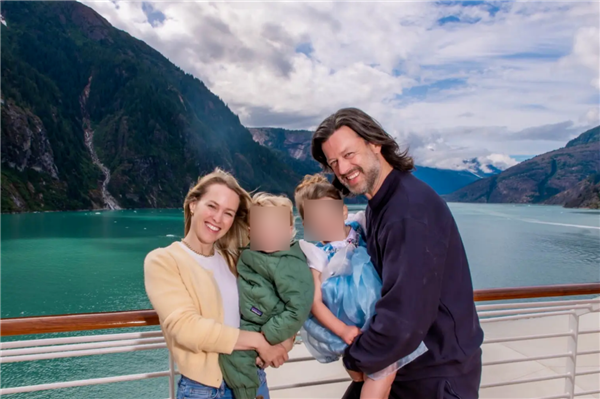
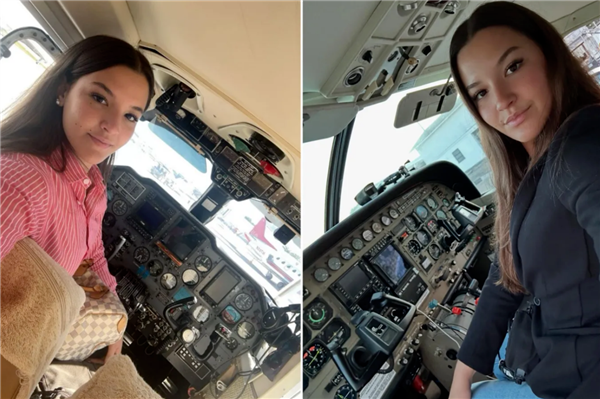
The published passenger list is what gives this story its human weight. Adam Robinson, 45, founded two technology companies whose products help businesses identify and reach website visitors; his wife, Helen Sharp, worked as a ceramic artist. Their family of four was on board: four-year-old daughter Emma and two-year-old son Charlie travelled with them, along with one nanny who looks after the children and two friends of Adam. The two crew members were 55-year-old Captain Jeff Gregory and 20-year-old first officer Nathalia Gadea Filgueiras.
During the high-level cruise segment the crew reported icing and moderate turbulence. Shortly afterwards the jet entered a violent nose-down dive, striking a residential area and bursting into flames within a matter of minutes. Radio recordings preserve the pilots' final words - "We're going to hit the ground" and "We don't have time" - before communications stopped entirely.
Reconstructed flight data shows the aircraft falling, in the space of a single minute, from about 9,450 metres of altitude, with a peak vertical descent rate exceeding 32,000 feet per minute (roughly 9,754 metres per minute) - a trajectory close to free fall.
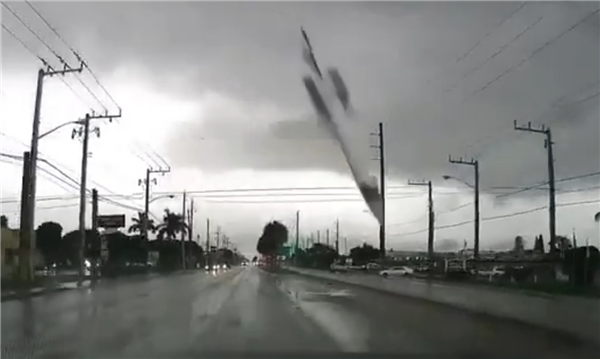
A United States NTSB preliminary read-out points to the possibility that parts of the aircraft separated in flight before the ground impact. No definitive trigger has been announced; investigators are working three lines in parallel - high-altitude icing, aircraft structure, and crew handling.
Three details the headline leaves out
- Age of the airframe. Trade coverage of the accident describes N722BD as a 2004-build Learjet 60 - around 22 years old at the time of the crash (Aviation International News, ainonline.com). Middle-aged jets are common in charter fleets; what matters is whether maintenance records, service difficulty history and any applicable airworthiness directives have been tracked, not the calendar.
- What the crew actually asked for. A review of radio recordings published by Flightradar24 (flightradar24.com) reports that the crew described icing, moderate turbulence and precipitation, and requested a climb. Whether a level-off or descent would have helped is unknowable from outside; the practical lesson is that "weather at cruise" is a live operational conversation in business aviation.
- The ground story. Chinese state news agency Xinhua (news.cn) put the number of residents evacuated from the neighbourhood at about 600, and other outlets place the impact near a busy road in the Greenacres/Cresthaven district, with NTSB board member Tom Chapman briefing media in West Palm Beach. Risk to people on the ground is a real dimension of these accidents and one that travellers rarely think about.
Why high-altitude icing keeps appearing in these cases
Supercooled cloud at cruise level can disturb the smooth airflow over a wing, add weight, and - crucially - corrupt the air-speed and angle-of-ice data the crew depends on. US aviation-safety material from the FAA Lessons Learned programme and past NTSB probable-cause findings repeatedly tie loss-of-control accidents in turbine aircraft to continued flight into known icing conditions (faa.gov; ntsb.gov). None of that establishes what happened to N722BD, and the reported in-flight separation suggests structural questions are equally live. It simply explains why "icing" is a serious investigation thread rather than a filler word.
Pre-booking checklist: ten minutes that change your exposure
- Name the operator, not the broker. Ask which company holds the FAA certificate for the exact tail number assigned to your leg.
- Verify the certificate type. Commercial on-demand charter in the United States normally runs under Part 135; see the comparison table below.
- Request third-party audit status in writing - ARGUS, Wyvern and IS-BAO are the three you will see - and confirm it is current, valid for that operator, and valid for the dates of your trip.
- Ask for the crew minimum and recent experience relevant to your route type: two-pilot operation, altitude and icing experience, recent line checks.
- Check the aircraft against the mission: 22-year-old airframes fly safely every day when maintenance is disciplined, but ask whether the type's service bulletins and airworthiness directives are complied with for that tail.
- Review the operator's weather-avoidance and de-icing policy before you fly, not after a delay.
- Confirm the airport is not the hidden risk: short runways, high-density-altitude fields and steep obstacle climbs narrow performance margins.
- Ask about insurance limits and who the underwriter is; a legitimate operator answers without friction.
Which rulebook the flight runs under
| Dimension | Part 121 (scheduled airlines) | Part 135 (on-demand charter) | Part 91 (private / owner flight) |
|---|---|---|---|
| FAA oversight frequency | Highest; continuous surveillance | Regular, certificate-based inspections | Lightest; periodic inspection of records |
| Crew duty and rest limits | Fully codified | Codified, less prescriptive than line operations | Fewest prescriptive limits |
| Training and checking programmes | Standardised, FAA-approved | Approved programmes required | Owner discretion |
| Who pays for the jet | Ticket holder | Charter customer | Owner (cost-sharing rules apply) |
| Question to ask before booking | Not applicable to charter clients | "Is this leg flown under my operator's Part 135 certificate?" | "Am I being sold a Part 91 flight at Part 135 prices?" |
Five misconceptions worth retiring
- "A bigger, more expensive jet means a safer operator." Hull value says nothing about the management system behind the flight deck.
- "The broker guarantees safety." Brokers sell access; the certificate holder carries the responsibility. Ask for the named operator.
- "A crash means private flying is suddenly dangerous." Individual accidents are not statistical trend lines; NBAA publishes operator-side accident analyses (nbaa.org) that put turbine business-aviation risk in context.
- "Social-media cause theories are ahead of the investigators." They are not; they are behind the evidence.
- "Weather was reported, so weather was the cause." The crew's icing report on N722BD is evidence, not a finding.
While the investigation runs: what to read, what to wait for
- Expect a factual preliminary document first, then a final report naming probable cause; the NTSB states it generally aims to complete an investigation within 12 to 24 months (ntsb.gov/investigations).
- Watch for the public docket and any safety recommendation, which is the item with real consequences for future flights.
- If you hold video, dashcam footage or a firsthand observation, safety boards actively solicit it - the NTSB publishes a witness inbox, witness@ntsb.gov.
- Ignore "black box decoded" claims until the agency itself confirms data read-out findings.
- Revisit your own checklist for the next trip: one accident rarely changes an industry, but it can change one traveller's questions.
If you live under a flight path
- Find out which alerting system your county uses; a six-hundred-person evacuation is ordered by text and siren, not by news feed.
- Know the plan for sheltering in place versus moving, and keep documents and medication reachable.
- Report damage claims to the local emergency management office early; aerial hazard documentation is easiest in the first days.
FAQ
Is a Learjet 60 inherently unsafe?
The type is a long-serving midsize business jet flown worldwide; the accident in Palm Beach County is being investigated as a specific event, and no general statement about the type is justified before findings are published.
Does nine deaths mean a larger disaster was narrowly avoided?
The impact occurred in a residential district and about 600 people were moved out of the immediate area, which is why ground safety questions accompany the airworthiness ones.
Should I stop booking charters?
No - book more carefully. The checklist above is a ten-minute filter that separates audited, certificate-holding operators from everyone else.
Can I ask for the pilots' background?
You can ask about crew minimums, recent icing and high-altitude experience, and the operator's checking programme; details on individuals are not usually disclosable.
Where do I read the real findings?
Follow the safety board's public docket rather than aggregator posts, and treat every summary before the probable-cause statement as provisional.
Bottom line
Nine people - a 45-year-old founder of two technology companies, his wife, their four-year-old and two-year-old children, one nanny, two friends, a 55-year-old captain and a 20-year-old first officer - did not come home from a midday flight on 1 November. The most respectful use of that story is the practical one: verify the certificate holder, verify the audit, treat cruise weather as a decision, and let investigators do their work before anyone else claims an answer.
Written by James Hartley, content lead at IT Insights. Corrections and editorial queries: contact@itinsights.com.