
Motorola Signature 27 Review: How the $1,599.99 Flagship Stacks Up Against 2026 Rivals | ItInsightsWorld
Written for ItInsightsWorld · General desk · By James Hartley, IT Insights
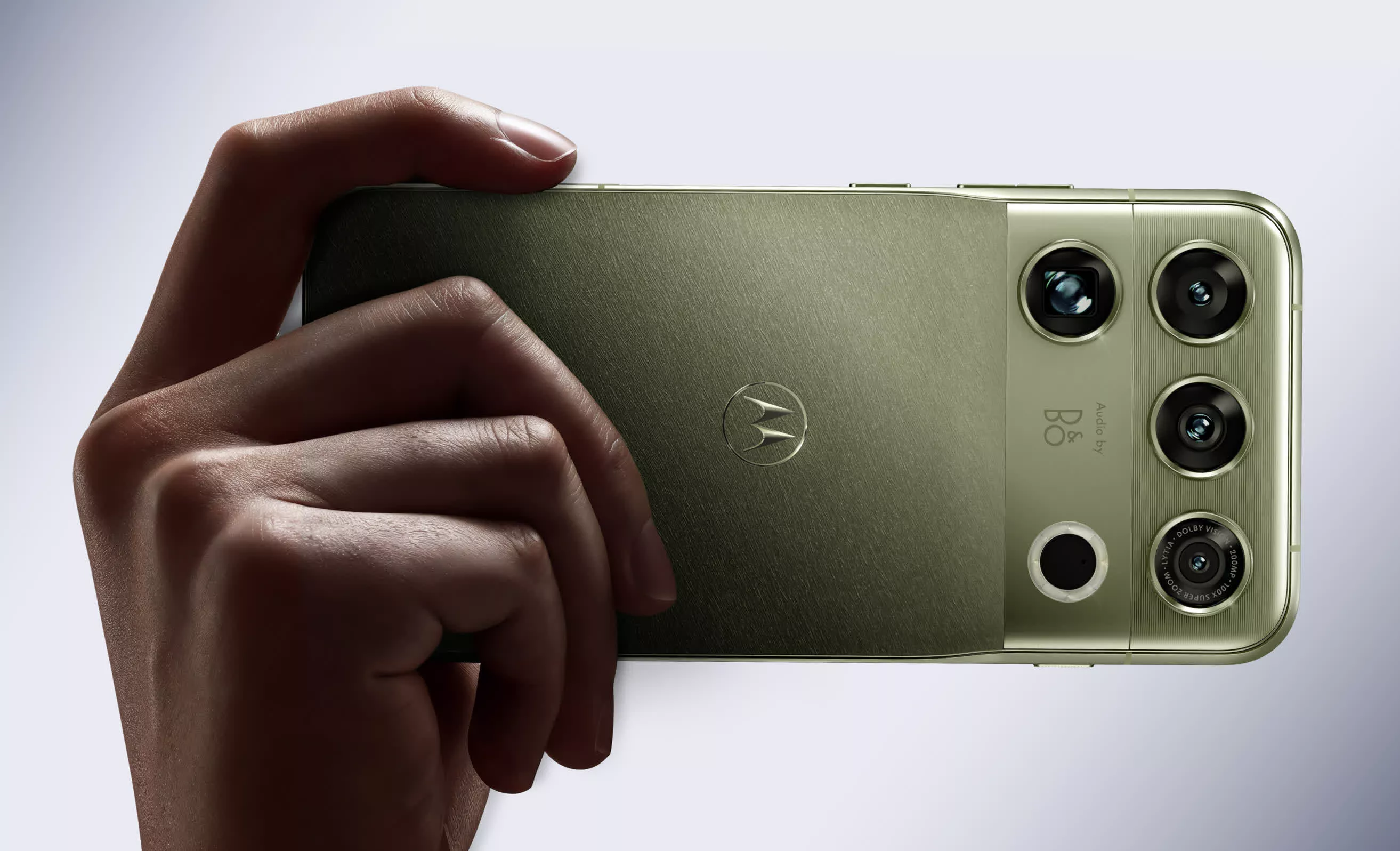
Short answer: the Signature 27 is not a bargain phone, but it is one of the cheaper ways in 2026 to buy a top-two camera ranking, a 7000mAh cell and a seven-year update promise. At $1,599.99 it sits below Samsung's $1,899.99 Galaxy Z Fold8, so the real comparison is with foldables, not with other slab flagships. Buy it if you keep a handset four years or longer; skip it if peak-nit numbers or 16GB of RAM decide your purchase.
Which numbers should actually drive your verdict?
Conclusion first: three rows in the table below carry most of the decision weight — the seven-year software commitment, the 7000mAh cell paired with 90W wired fast charging, and the 200MP periscope lens. Everything else is refinement.
| Dimension | Signature 27 figure | Why it matters in a comparison |
|---|---|---|
| Display | 6.8-inch Extreme AMOLED Duo, 120Hz, up to 12000 nits peak | Peak figure is scenario-bound; read it as sunlight and HDR headroom |
| Platform | Qualcomm Snapdragon 8 Elite Gen 6 | Current flagship tier, the base for on-device Google Gemini workloads |
| Memory and storage | 12GB of RAM, 512GB UFS 4.1 | Rivals have shipped 16GB of RAM; memory pricing explains the gap |
| Rear cameras | Triple-camera system: 50MP Sony Lytia L910 at f/1.6, 50MP ultra-wide at f/2, 200MP periscope with 3x optical zoom | High-resolution crop strategy rather than long-reach zoom |
| Extra imaging hardware | Event-Based Vision Sensor, plus a 50MP front camera | Aimed at fast motion, not at studio stills |
| Power | 7000mAh, 90W wired (12 minutes rated for a day), up to 50W wireless | The single most visible day-to-day advantage |
| Body and protection | Corning Gorilla Glass Ceramic 3, IP68 and IP69, six-antenna 5G design, Bang & Olufsen (B&O) tuned audio, ArcticMesh cooling | Durability hardware that foldables cannot easily match |
| Software policy | Android 17 out of the box, seven years of OS and security updates | Turns the price into a per-year cost question |
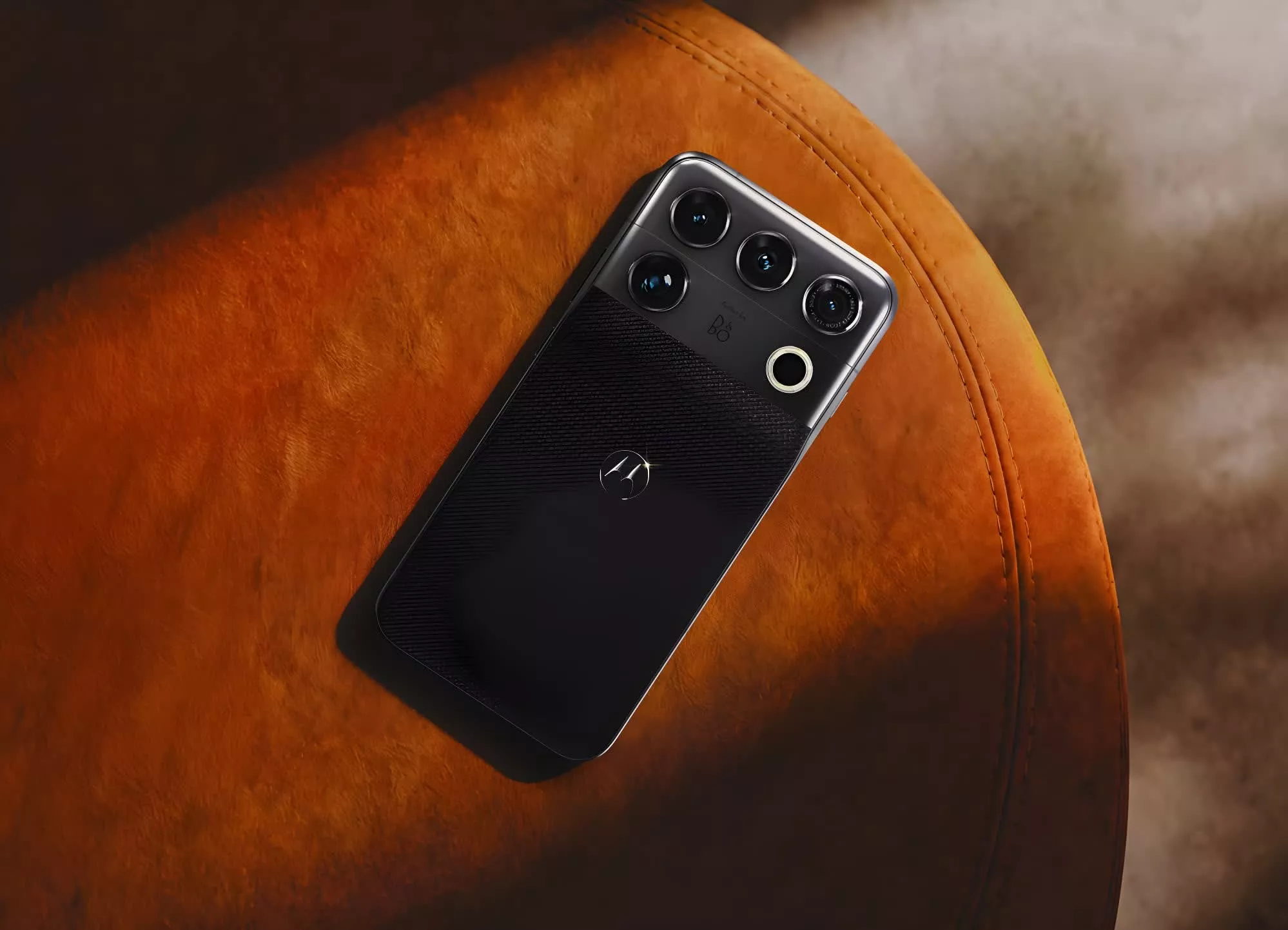
| Colourways, timing, price | Two colour options — Coal Smoke and Capulet Olive; pre-orders November 19, on sale November 26; $1,599.99 | Booked against the foldable tier, not the mid-premium tier |
What does a 12,000-nit screen mean once you are outside?
It means a ceiling, not a working level. Motorola's stated up to 12000 nits figure is one of the highest brightness claims in smartphone panels today, and the caveat in the announcement itself holds: the number appears only in narrow conditions, while daily sustained brightness sits below it. Panel brightness is normally measured over a small bright window — a 1-5% bright area of an otherwise dark frame — so full-screen daylight readability is governed by sustained brightness and by the 120Hz panel's own boost behaviour.
Practical reading: the 6.8-inch Extreme AMOLED Duo is a strong panel with real glare margin, but brightness is a tiebreaker, not a reason to spend an extra $300. If you compare handsets, ask for typical or high-brightness-mode numbers, not the peak headline.
Is 12GB of RAM a compromise in 2026?
Treat it as a supply-chain outcome. Some rival flagships had already moved to 16GB of RAM, yet memory supply pressure has kept 12GB at the top of the market. The macro context is measurable: IDC attributed a forecast record 16.7% decline in 2026 smartphone shipments to the memory crunch, with the industry average selling price rising 27.6% in a single year to $581, and Tom's Hardware reported DRAM and NAND prices still climbing through the third quarter of 2026 even as consumer affordability limits kicked in.
Two consequences for buyers:
- Storage is the better long-term hedge here: 512GB UFS 4.1 is generous for a seven-year hold, while RAM headroom affects only heavy app switching and on-device AI caching.
- Price stability across the memory cycle is now a purchasing variable. A flagship bought at the end of 2026 is less likely to be discounted mid-cycle than one whose bill of materials was locked in before prices rose.
Risk flag: for users who keep more than a dozen live apps plus heavy gaming, the 12GB ceiling is the spec most likely to feel limiting in year four or five.
How far behind the camera leader is it?
Close enough that the ranking matters more than the gap. On the current DXOMARK ranking, the Signature 27 sits at global second place, behind the Huawei Pura 80 Ultra — a device that DXOMARK has scored at 175 points in its camera ranking, the number-one result on its own scoreboard. So the practical comparison is not "best versus average" but "number two versus number one", which is the strongest imaging position a Motorola phone has held.
Hardware logic behind that result:
- The 50MP main camera uses the Sony Lytia L910 sensor at f/1.6 — a light-gathering-first approach that favours night video as well as stills.
- The ultra-wide is also 50MP at f/2, which keeps colour and detail consistent when you switch lenses.
- The 200MP periscope with 3x optical zoom is the unusual choice: instead of pushing reach to 5x or 10x, Motorola buys resolution and lets in-camera crop cover the middle distances. If you shoot concerts or wildlife at long reach, a rival with a higher optical magnification may still serve you better; if you shoot people at portrait distance and crop afterwards, the 3x design is arguably more useful.
- The Event-Based Vision Sensor targets fast-moving subjects, a scene class where conventional rolling readout blurs. It is a niche that parents, sports shooters and street videographers should weight heavily.
Does the battery and charging story hold up against the competition?
Yes, and it is the least marketing-dependent part of the pitch. The 7000mAh cell combined with 90W wired fast charging is what lets Motorola claim that 12 minutes on the cable covers a day of use, with wireless charging rated at up to 50W. Compared with typical 4,700-5,500mAh flagship cells, the margin is structural rather than software-tuned.
Heat is the hidden half of the equation. ArcticMesh combines diamond-particle thermal gel, liquid metal, a large vapour chamber and a copper mesh layer — a stack aimed at AI processing, gaming and long video sessions, where throttling, not capacity, decides the experience. The six-antenna 5G design belongs in the same category: more signal headroom means less power wasted on re-negotiated connections in weak coverage.
Trade-off to expect: a cell of this size plus that cooling stack and IP68 and IP69 sealing normally buys weight rather than thinness. If in-hand comfort outranks endurance for you, test the device before ordering — that is a judgement this spec sheet cannot settle.
Is the software promise the real differentiator?
It is the differentiator with the longest tail. The handset ships Android 17 and Motorola commits to seven years of system version upgrades and security updates from global launch, matching the longest Android pledges on the market — Google's Pixel 8 line onward, Samsung's Galaxy S24 line onward and Fairphone's seven-year term — while most Android brands still promise four years or fewer. Depth of optimisation for Google Gemini is the other half of that promise: generative workflows for content creation, task automation and real-time assistance need a long update runway to stay useful.
The surprise line is security. As reported by ExtremeTech in September 2026, the Graphene Foundation confirmed the Signature 27 as the first non-Pixel phone supported by GrapheneOS, the privacy-focused Android build that has historically run on Google hardware only. GrapheneOS strips built-in tracking and isolates Google Play services in a sandbox, which makes the ownership proposition unusually flexible: a mainstream flagship that a privacy-minded user can also convert into a hardened device.
Caveat, flagged as analysis rather than fact: installing a third-party OS can interact with warranty and with Motorola's own update path, so treat it as a power-user option rather than the default purchase reason.
What does $1,599.99 actually buy you?
Read the price as a per-year number, because the update promise makes that arithmetic possible.
| Device | Opening price | Form factor | Update promise |
|---|---|---|---|
| Motorola Signature 27 | $1,599.99 (512GB, 12GB of RAM) | Slab, 6.8-inch | Seven years |
| Samsung Galaxy Z Fold8 (256GB) | $1,899.99 per Samsung's US store listing | Foldable | Long-cycle flagship policy |
| Samsung Galaxy Z Fold8 Ultra | $2,099.99 | Foldable, larger | Long-cycle flagship policy |
| Global smartphone average, 2026 | $581 (IDC forecast) | — | — |
Cost logic: $1,599.99 amortised over the seven-year support window is roughly $229 a year; spread over the four-year replacement cycle that Counterpoint says the memory crisis is pushing the market toward, it is closer to $400 a year. Counterpoint and IDC both describe hardware prices and holding periods stretching at the same time, which is precisely the environment where a long update pledge changes value more than a faster chip does.
Positioning read: Motorola is pricing a non-foldable into the entry of the foldable bracket. That is a brand statement as much as a margin calculation — the company is betting that IP68 and IP69 sealing, Gorilla Glass Ceramic 3, the 200MP imaging stack and Bang & Olufsen tuning will look more durable to buyers than a folding hinge, whose own owner ratings on Samsung's US product page sit at 4.0 for performance against 4.8 for value.
Which beliefs should you drop before checkout?
- "12000 nits means a blinding screen every day." No — it is a peak under specific content and window conditions.
- "200MP means sharper than every rival." Not on its own; the sensor is paired with only 3x optical zoom, so long-reach sharpness still depends on optical magnification.
- "Seven years of updates means seven years of full performance." It means OS and security support; battery chemistry, thermal material and app demands all still age.
- "GrapheneOS support means the phone is secure out of the box." Out of the box it runs Android 17 with Motorola's software; hardened operation is a manual, power-user route.
- "7000mAh must mean a heavy brick." With today's higher-density cells that trade-off is no longer automatic; weigh it against the cooling stack instead.
Who should buy it, and who should wait?
- Keep-for-years buyers: if your last phone lasted four or more years, the seven-year pledge plus 512GB UFS 4.1 storage makes this the cleanest value case.
- Action and event shooters: the Event-Based Vision Sensor and the f/1.6 Sony Lytia L910 main camera are the two specs that answer real missed-moment complaints.
- Privacy and security users: the first non-Pixel GrapheneOS target is a genuine reason to prefer this hardware over equally priced rivals.
- Wait if you want maximum zoom reach, the slimmest possible flagship, or a folding inner screen — those are exactly the categories where the alternatives keep their advantage.
- Wait if a discount cycle matters more than hardware: with memory prices elevated, early price cuts on this tier tend to be shallow.
FAQ: the questions buyers keep asking
Is the Motorola Signature 27 cheaper than a foldable?
Yes. At $1,599.99 it is $300 below Samsung's $1,899.99 Galaxy Z Fold8 opening price, which is why Motorola's premium push reads as a value argument rather than a pure halo product.
Is 7000mAh and 90W enough to stop thinking about charging?
Motorola's own benchmark is the closest thing to a yes: 12 minutes of charging is rated to cover a day of use, with wireless charging supported at up to 50W.
How long will it stay updated?
Seven years of system version upgrades and security updates, counted from global launch, with Android 17 preloaded.
Is the camera really number two in the world?
On the current DXOMARK ranking, yes — the Signature 27 sits in global second place behind the Huawei Pura 80 Ultra.
When can I order it and what colours exist?
Pre-orders open November 19 and sales start November 26, with two colour options: Coal Smoke and Capulet Olive.
Action plan: five checks before you place the pre-order
- Write down how long your current handset has been in service; if the answer is under three years, discount the seven-year promise in your own maths.
- Compare the price per gigabyte of storage, not per camera megapixel — 512GB UFS 4.1 against foldable rivals at $1,899.99 and above.
- Decide which zoom distance you actually photograph; only then does the 200MP plus 3x optical combination look good or merely odd.
- Check sunlight readability in person, because sustained brightness, not the peak figure, is what you will see.
- If GrapheneOS is the reason you are interested, read the project's supported-device documentation before ordering, and confirm Motorola's warranty terms for modified software.
Reference sources
- DXOMARK — Huawei Pura 80 Ultra camera score and global ranking
- IDC — 2026 smartphone shipment decline and $581 average selling price
- Counterpoint Research — replacement cycles extending toward four years
- Tom's Hardware — DRAM and NAND prices climbing through Q3 2026
- ExtremeTech — GrapheneOS selects the Signature 27 as its first non-Pixel phone
- Samsung US store — Galaxy Z Fold8 256GB listing and owner ratings
Questions or corrections for the General desk: contact@itinsights.com · Published by IT Insights · itinsightsworld.com