
Microsoft's $45.2 Billion Capex Falls Short of Wall Street Forecasts: An ItInsightsWorld Read on the Deferred AI Spend
A gap of about $6.5 billion between what Microsoft spent in the latest quarter and what Wall Street had modeled has reopened a familiar question: is the AI infrastructure buildout cooling? The disclosure points the other way. This is a schedule problem rather than a strategy problem, because outlays that were supposed to land in this quarter have instead been pushed into later fiscal quarters.
Reading the quarter: the headline figures
Microsoft reported capital expenditure of $45.2 billion in the quarter that ended in September 2026, a figure that includes finance lease-related spending. Analysts had modeled $51.7 billion, leaving the shortfall of about $6.5 billion. Even with that miss, the total is up roughly 30% compared with the same period last year — hardly the profile of a company stepping back from the capital-intensive work of standing up AI infrastructure.
- Latest quarter capex (quarter ended September 2026, including finance leases): $45.2 billion
- Consensus expectation: $51.7 billion, a gap of about $6.5 billion
- Growth versus the same period last year: approximately 30%
- Full-year 2026 outlook: trimmed from $175 billion to $170 billion
Where the missing dollars went
Chief financial officer Amy Hood attributed the difference to delivery rather than demand: certain third-party suppliers did not hand over the required data center capacity on time, so the associated spending moved later. Those facilities are expected to come online during the second half of the fiscal year, and management projects that outlays will accelerate again as construction catches up. Rising prices for memory and other hardware are expected to push infrastructure costs further upward.
Building in-house, buying capacity from others
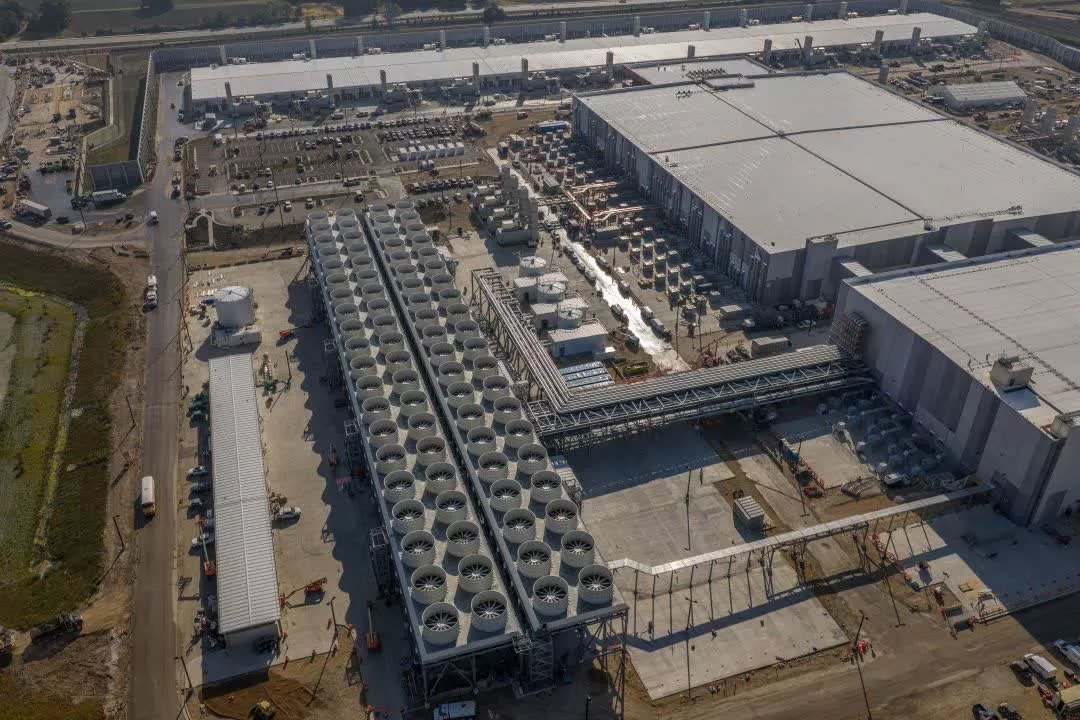
Microsoft added 24 new data centers in the latest quarter. Not every piece of infrastructure is built and operated by the company directly; to scale cloud capacity faster, Microsoft also works with several smaller cloud infrastructure operators. Since 2023, contracts with CoreWeave, Nebius and Nscale have been signed for a combined value of more than $80 billion to secure additional data center capacity.
The bottlenecks are power and pace
Third-party projects carry real obstacles. Microsoft recently abandoned a data center capacity arrangement tied to Nscale because of insufficient power supply, and one Nebius facility in New Jersey, United States, is progressing more slowly than planned. With AI compute demand rising quickly, expansion depends not only on funding and chips but also on electricity resources and construction progress.
How the peers compare
| Company | Full-year capex plan | Latest quarter | What the disclosure shows |
|---|---|---|---|
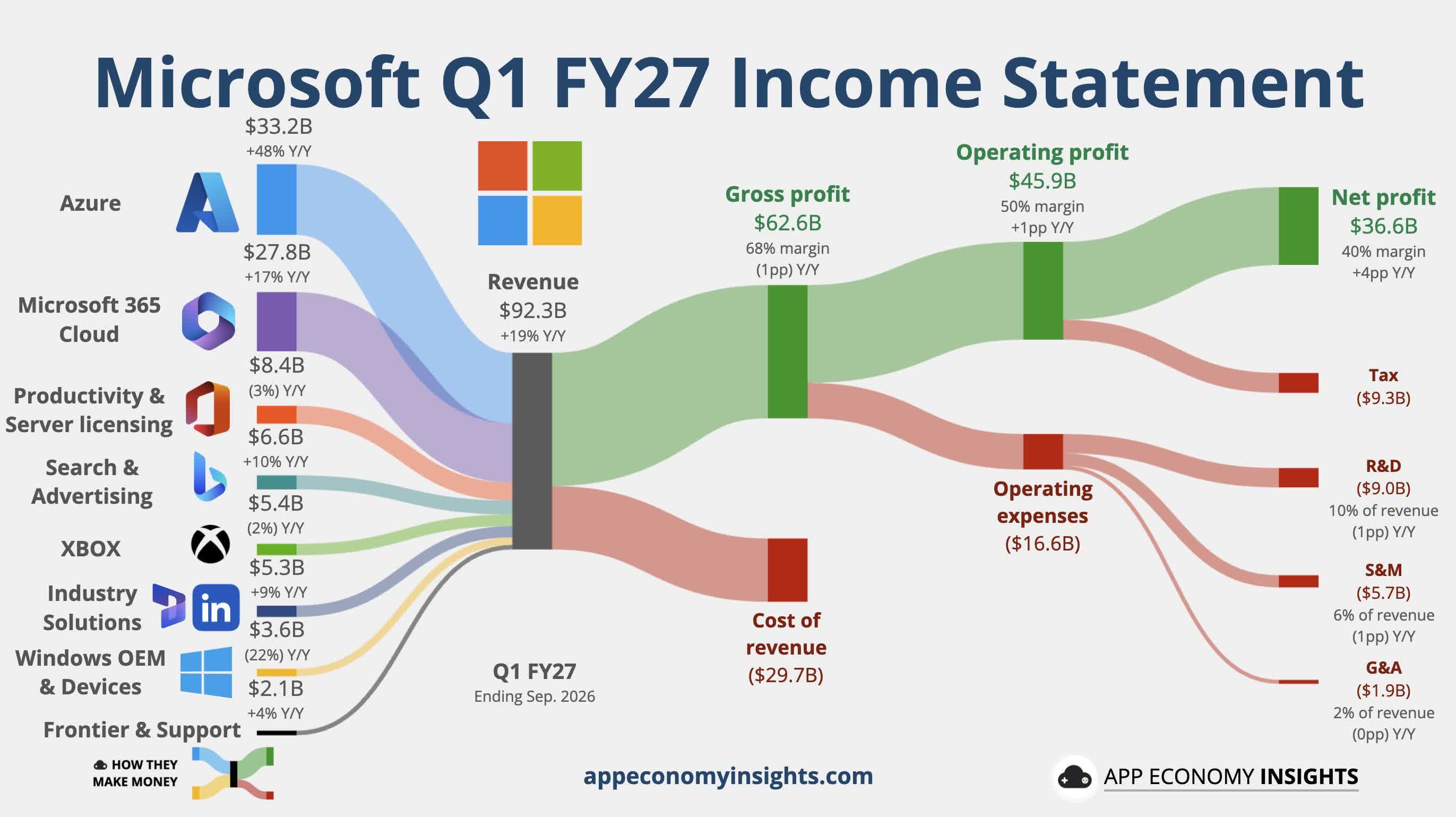
| Microsoft | $170 billion, revised down from $175 billion | $45.2 billion | Azure revenue up 48% year over year to $33.2 billion; free cash flow still positive $18.6 billion |
| Amazon | about $220 billion this year, roughly $50 billion above Microsoft's adjusted plan | not disclosed here | Purchasing and stockpiling Nvidia GPU server racks, but some data centers lack the power to put them into operation |
| Google parent Alphabet | $195 billion to $205 billion | $51.4 billion, also below expectations | Expects a significant increase next year; free cash flow of negative $9.1 billion this quarter, continuing earlier pressure |
Those figures frame the competitive context: the AI infrastructure race among large technology companies is still running. Alphabet's cash position shows the strain such programs place on a balance sheet, while Microsoft currently retains stronger cash creation, giving it more financial room to keep investing in AI infrastructure.
Cost discipline on the people side
While AI infrastructure spending expands, Microsoft continues to compress some labor costs. Measures already taken include offering employees voluntary separation packages that could involve as many as 60,000 people. That points to a re-allocation of resources toward AI, cloud computing and the underlying infrastructure, with restraint in other areas.
The takeaway
Judge the miss as a timing artifact rather than a turning point: the shortfall mainly reflects the interval between data center construction and third-party capacity delivery. As the delayed projects enter service, spending over the next few quarters may still grow noticeably, and the binding constraints on global AI compute scale — power availability, construction cycles and the cost of key hardware such as memory — now matter as much as any single budget number.