
ItInsightsWorld Tech Brief: How Meta’s Claude AI Story Moved After the No Kings Instagram account Suspension
By James Hartley · IT Insights
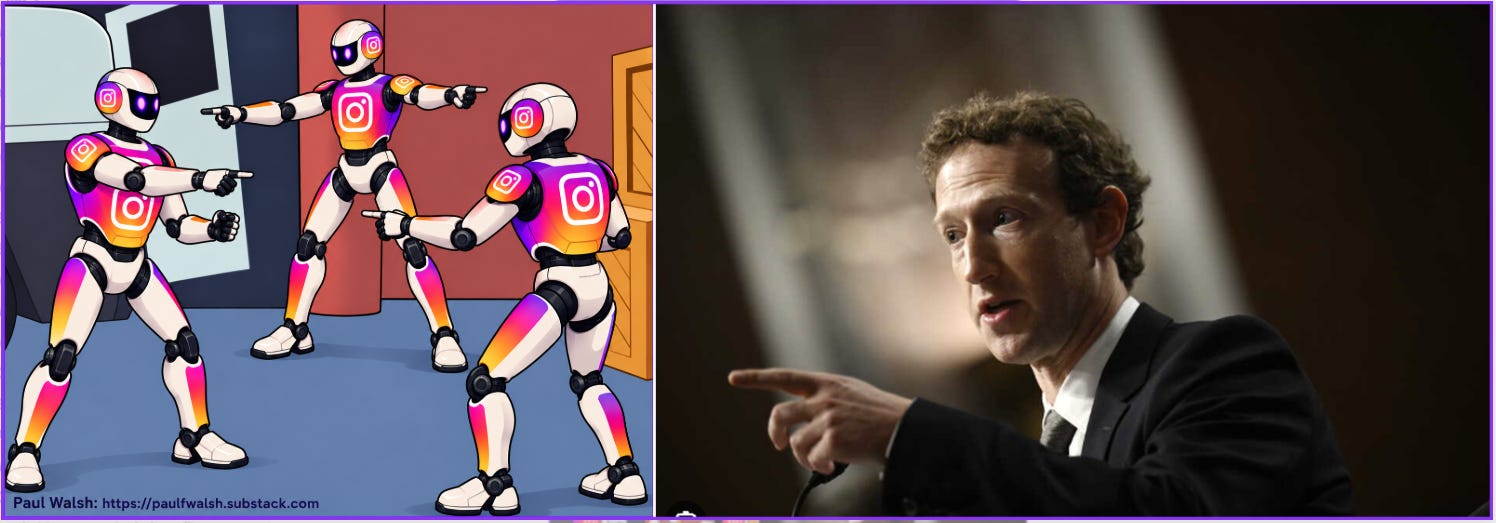
James Hartley’s independent review for ItInsightsWorld is not an endorsement of the No Kings Coalition or its politics. The technical concern is narrower: Meta gave multiple explanations for restricting the No Kings Instagram account during a national voting campaign before the 3 November midterm elections.
At a glance
- On 17 October, the official account of the No Kings Coalition was suspended while almost 3,000 events were planned across the United States; access stopped at 1:30pm Eastern Time.
- The following day, Meta’s Vice President of Communications, Andy Stone, pointed to software using Claude AI reading Instagram profiles, posts and hashtags at 4 times the normal rate.
- The page was visible again after approximately 90 minutes, but posting remained blocked until 5:33pm.
The recorded statements
Stone first wrote:
When accounts post, share or comment at very high frequencies it can trigger automated systems. That's what happened with the No Kings IG account in the lead up to today's day of action. Unfortunately, that automated action was clearly taken in error. Everything is now working as…

Andy Stone @ andymstone
10:07 PM · Oct 17, 2026 · 362K Views; 894 Replies · 37 Reposts · 217 Likes
Organisers disputed that account, saying they had only published a handful of posts and were livestreaming events.
A day later, Stone shifted emphasis to reading rather than posting.
Andy Stone @ andymstone

Andy Stone @ andymstone
8:41 PM · Oct 18, 2026 · 353K Views; 361 Replies · 29 Reposts · 177 Likes
Outbound activity is not inbound activity
Posting, sharing and commenting send actions toward Instagram. Reading profiles, posts and hashtags request information from Instagram. A competent developer or data scientist can separate those event types from logs quickly. Meta’s first public line blamed outbound activity; its later line blamed inbound reading. No evidence has been published for either move.
The Claude claim creates a policy gap
Stone also said Meta’s security systems detected
the use of a Claude tool reading profiles, posts, and hashtags
Meta named Anthropic’s AI software but did not name the exact tool, its operator, or whether No Kings organisers authorised it. James Hartley asks whether Meta forbids Claude access to Instagram, which policy would be violated, and why the organisation’s account was suspended instead of the automated requests.
Fourfold needs a denominator
Stone said requests
sharply increased (~4x volume) in intense bursts
A percentage without a base is not a technical finding. If the normal count is 100 requests, fourfold is 400; if the normal count is 100,000, fourfold is 400,000. Neither example is Meta’s disclosed data.
James Hartley compares ordinary creator reach: on LinkedIn, posts can draw between 2,000 and 250,000 readers; on X, they can range from 1,500 to 1.2 million. Rapid movement is normal online, but reach and request counts are different metrics.
Intense bursts sounds urgent, but it says nothing about a security threshold unless the counts, timeframe and baseline are known. The No Kings Coalition was coordinating almost 3,000 events, so increased activity around Instagram was predictable.
Automation is not automatically malicious
Stone described the traffic as
resembled automated bot traffic rather than an ordinary human browsing our systems
James Hartley’s background includes founding a venture-backed cybersecurity company in Silicon Valley in 2010 and building the first security chatbots in the world, with automated actions on Slack, HipChat, Messenger and Telegram between 2015 and 2019. From that work, he says automated activity is not a security violation by definition. Search engines, monitoring tools, research applications and AI assistants generate billions of automated requests every day.
Does Meta restrict people who use its own AI assistant, Muse, to automate interactions with Facebook and Instagram? If not, why was the No Kings account suspended?
Visibility was restored, publishing was not
Stone said an automated review recognised the error and restored the account approximately an hour later. James Hartley says that wording hides the operational gap: the public page returned, but organisers remained locked out until 5:33pm Eastern Time. Visibility is not the same as communication.
Stone later said administrative access took additional time. In James Hartley’s view, the credible technical explanation is that a person with authority had to approve reversal of a suspension Meta already admitted was wrong. Meta should say who controlled that decision, who authorised restoration, and why the lockout continued.
People made decisions
An automated system does not independently choose which political account to restrict. The No Kings Coalition is described as one of America’s most prominent anti-Trump movements, organising nationwide demonstrations involving millions of people across thousands of locations. Suspending its Instagram account before a major mobilisation was politically significant.
James Hartley believes multiple Meta teams and senior managers had to be involved. Mark Zuckerberg himself may have been briefed because Zuckerberg has a hands-on record on major content moderation decisions. The enforcement records can identify reviewers, approvers and any executives who intervened.
A comparable political-restriction case
In an article James Hartley published 18 hours ago, he described Brazil, where Meta reportedly blocked sitting president Luiz Inácio Lula da Silva from running normal paid Instagram promotions while algorithms and WhatsApp recommended his opponent Flávio Bolsonaro. Its AI refused basic Lula campaign material but produced equivalent material for Bolsonaro, and staff flagged unequal treatment in real time.
The same election reporting says Meta ran over 1,600 political ads that researchers found were illegal, almost all paid in US dollars, and only reclassified or removed them after they had been shown up to 171.1 million times. Complaints about account suspensions rose 585% during the election year.
James Hartley does not use the Brazil case to prove the No Kings suspension was coordinated. He uses it to show another instance in which a politically consequential restriction was attributed to technical failure.
Logs should end the guessing
Meta records its enforcement actions in logs. It can identify the trigger, the actor, the restriction set, the automated review, the separate lockout and the approvals needed to restore access. If those records have not been deleted, they can explain what happened.
The public deserves to know why Mark Zuckerberg’s company restricts political organisations when such actions can align with the White House’s agenda and cut audiences off at critical moments. Congress should require engineers and data scientists to give log-backed answers under oath rather than accept corporate blame placed on automation.
The 21 questions Meta should answer
James Hartley says the answers must come from engineers and data scientists, because policy staff will deflect or lack the technical knowledge to explain what happened.
| Q | Question and evidence required |
|---|---|
| 1 | Why did Stone first blame excessive posting, sharing or commenting, then reading? Which evidence supported the first account, who approved it, and when did Meta know it was incorrect? |
| 2 | What is fair and acceptable automated use of Instagram? Which activities are permitted, what limits exist, and what policy did the alleged Claude tool violate? |
| 3 | Are the same limits applied to Muse? Can users automate reading, posting and interaction on Instagram and Facebook through it, and are enforcement thresholds equal across Meta tools and competing services? |
| 4 | What data did the tool access: public content, an authenticated account, or private information? |
| 5 | What does the fourfold increase measure? How many requests occurred, over what period, and what baseline? Is a fourfold rise a standard threshold for all Instagram accounts, or was a special threshold applied to No Kings? |
| 6 | Which security restriction triggered enforcement: request frequency, suspicious authentication, account behaviour, or another classification? Name the exact policy and conditions. |
| 7 | Why suspend No Kings instead of restricting the requesting software? What evidence assigned responsibility, and why were IP blocking, rate limiting or access-token controls insufficient? |
| 8 | Was No Kings classified as politically sensitive? Were thresholds, monitoring or enforcement different than for other large or controversial accounts? Provide classifications and policy. |
| 9 | Did any Meta employee manually review, classify, restrict or change No Kings settings before or during suspension? List each action, timestamp, responsible employee or team, and recorded reason. |
| 10 | What did the automated review reverse? Which original finding was overturned, what evidence caused reversal, and which restrictions were actually removed? |
| 11 | Why did organisers remain locked out after the suspension was found wrong? Which separate restriction stayed active, why was it not automatic, and who or what removed it? |
| 12 | Did an employee manually restore administrative access? Provide audit records for the time, systems and intervention. |
| 13 | What happened to scheduled posts, livestreams, notifications and other communications? How many users missed them, and did Meta measure disruption? |
| 14 | How many political organisations have faced comparable suspensions? How often has Meta blamed automated activity later found incorrect? Give figures for elections, protests and major events. |
| 15 | Did Meta discuss No Kings with any US government official, including the White House, political campaign, intelligence agency or external organisation before or during the suspension? Identify participants, dates, subjects and whether account restrictions or distribution were discussed. |
| 16 | Will Meta let independent investigators review account classifications, security logs, enforcement records and restoration history? If not, why? |
| 17 | Within 72 hours of suspension, were there manual configuration changes, overrides, blocklists or enforcement threshold changes for No Kings or related hashtags? List each, authoriser, effective time and reversal. |
| 18 | Did Meta open an internal security or engineering incident for No Kings? Provide severity, timestamps, teams, tickets and communications among security, engineering, public policy and trust and safety staff. |
| 19 | Does Meta use automated restrictions or reduced distribution for political-mobilisation accounts? Identify policies, classifications, conditions and tests that limit political accounts during high engagement. |
| 20 | Would a commercial brand, celebrity or non-political organisation have been suspended under identical conditions? Provide comparable records and explain whether political classification influenced enforcement. |
| 21 | Provide the configuration history, original enforcement trigger, account-level status, authorisation chain, and identify any systems involved, including three AI models if used, plus any percentage threshold such as 35%, and state whether No Kings political classification changed enforcement. |
The missing piece is not sentiment but documentation: a timestamped account of who saw what, what threshold fired, and who chose to keep the No Kings Instagram account unusable.