
How to Read Nvidia's Succession Risk: A Practical Guide to Madison Huang's Rise | ItInsightsWorld General
A founder-led company can look unshakable right up to the day its board must name a replacement. The direct answer: Madison Huang's growing internal influence at Nvidia is real, but it is commercial rather than technical, and it does not make her a near-term successor. Read her rise as one signal in a wider succession-risk assessment — not as a verdict on who runs the company next.
Picture the working scene behind the headlines. A product message is about to ship, and colleagues check with a marketing director before it goes out; nobody in the room is handing her engineering authority, yet her view carries. That is the kind of detail that rattles a board and writes itself into a story. It is also easy to over-read. What follows is a practical method — background, decision trade-offs, steps, and a pitfall list — for turning this reporting into a usable judgment.
What Actually Happened at Nvidia?
Conclusion first: the reporting supports expanding commercial influence around Madison Huang, not readiness to take over the company.
According to Business Insider, as Nvidia began the work of finding a successor to Jensen Huang, the weight of his daughter's voice inside the company kept increasing. The framing matters. This is a description of a search in progress, not a succession already decided.
A former Nvidia employee told Business Insider that Madison Huang joined the company in 2020 and moved up quickly, eventually taking the senior product-marketing role for physical AI. That source argued the influence she actually commands runs well beyond what the title normally implies.
One of the former employees added that by late 2023 the widening of her remit had become visible to people inside the company.
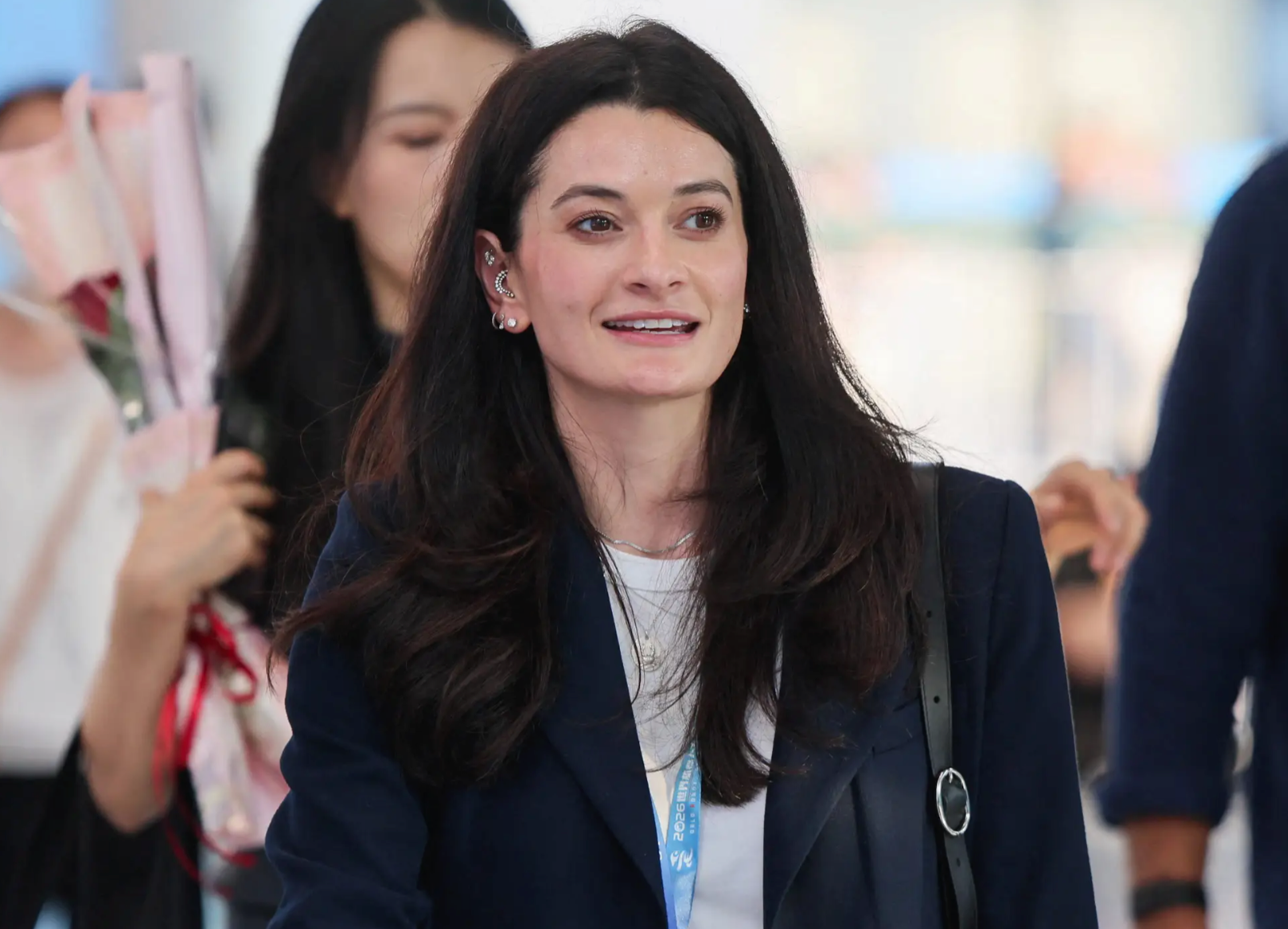
Madison Huang
A former Nvidia employee offered a character sketch: "Madison is a lot like her father — resilient, sharp-minded, and definitely not the kind of person to be content staying on the sidelines. She will be the first to raise questions and push for change."
Two former Nvidia employees said that while she may well take on a heavier leadership burden later, at a moment when the company urgently needs to settle its succession, she lacks the technical grounding to inherit her father's duties; her career has been concentrated in commercial and marketing work.
One of them was blunter: they could picture her running the company ten years from now, but on today's record she could not set Nvidia's technical direction, and a short-term handover would be a stretch.
A current Nvidia colleague gave the other side. Even without an engineering background, the colleague said, she presents her views clearly in technical discussions and holds her own. Her remit, by that account, includes shaping how Nvidia's technology is taken to market.
The family angle does not stop there. Two former employees described her brother, Spencer Huang, who works in the robotics business as a product management director, as noticeably more low-profile than his sister.
Why Does Madison Huang's Rise Matter — and Where Are the Limits?
Conclusion: influence and succession readiness are separate variables. A table keeps them apart.
| Dimension | What the record shows | What it does not establish |
|---|---|---|
| Commercial influence | Senior product-marketing role for physical AI; voice growing since 2020, visible by late 2023 | That it converts into authority over engineering or the product roadmap |
| Technical depth | Holds her own in technical discussions, per a current Nvidia colleague | That she can set technical strategy now; two former Nvidia employees say she cannot |
| Succession timing | Could lead ten years from now, per one of them | Near-term readiness; the sources urge caution on a quick handover |
| Family footprint | Spencer Huang holds a robotics product-management post | That family roles equal an organized, documented succession plan |
How Do You Assess Succession Risk in a Founder-Led Company? (4 Steps)
Conclusion: use a repeatable scan, not a headline. Four steps, in order.
- Map the roles. Write down who holds authority over engineering, product, and go-to-market, and who merely influences each. Influence without decision rights is a signal, not a succession.
- Separate commercial from technical. Marketing leadership and technology strategy are different jobs. A strong go-to-market operator is not automatically a technical successor — the two former Nvidia employees make exactly this point.
- Check the artifacts. Look for a written plan, an interim arrangement, and a named search scope. Nvidia's own transition announcement, dated November 12, 2026, set out an interim CEO and a search covering internal and external candidates.
- Watch the timeline. Track when influence first appeared (2020), when it became visible (late 2023), and when formal structures caught up. Gaps between these dates are where risk lives.
What Do the Data and Timeline Say?
Conclusion: the timeline shows a long-running gap between the company's scale and its formal succession machinery.
The dates are the useful part. Madison Huang entered in 2020; her widening scope was visible by late 2023; and the board only moved to a formal process around the November 2026 leadership change. Nvidia's Form 10-K, filed February 25, 2026, had already flagged the absence of a named successor as a risk, and coverage at the time placed the company's valuation near $4 trillion — a scale at which key-person risk is not a theoretical concern.
On process, the board also opened a separate board investigation into Jensen Huang, with outside counsel engaged, as reported by CNBC. That is a governance event distinct from the succession question, but it sits in the same window and shapes how the search is read.
Expert view adds context. Georgetown University associate professor Jason Schloetzer, who studies CEO succession, argued that a board failing to brief the market on succession arrangements a year or two ahead is making a mistake. Independent guidance follows a similar line: leading boards define the skills and traits a future CEO needs, and treat succession as an ongoing responsibility rather than a one-off decision.
What Are the Common Misconceptions?
Conclusion: most errors here come from collapsing influence into authority. Four traps to avoid.
- Influence equals succession. A loud internal voice is not a named successor. The two former Nvidia employees are explicit about the difference.
- Family name equals technical competence. Being Jensen Huang's daughter explains attention, not capability. The current colleague's point cuts the other way: she argues well in technical forums, but that is not the same as owning the roadmap.
- A transition announcement closes the question. It manages the interim; it does not reveal who sets technical direction long term. The distinction between founder image and board process is easy to blur.
- One quote settles it. Sources disagree in emphasis — a character sketch praising drive sits alongside warnings about missing technical depth. Hold both.
What Should You Do With This?
Conclusion: turn the story into a small, repeatable check rather than a prediction.
For readers tracking a founder-led company, the action is modest: record who speaks, who decides, and what the board has actually written down. Revisit the note each quarter. When a marketing leader's remit widens, tag it as a commercial signal. When a technical strategy owner is named, tag it as a succession signal. Do not convert one into the other. Where the evidence is thin — as it is on the successor's identity — say so plainly instead of filling the gap with a name.
Frequently Asked Questions
Is Madison Huang Nvidia's next CEO?
There is no sourced basis for that claim. Business Insider documents rising influence, and two former Nvidia employees say she lacks the technical depth for the role now; one of them frames leadership as a ten-years-from-now possibility, not an immediate one.
When did she join Nvidia, and what is her role?
A former Nvidia employee places her arrival in 2020. She holds the senior product-marketing role for physical AI, with influence that sources say exceeds the title.
Does her brother hold a technical leadership post?
Two former employees describe Spencer Huang as a product management director in the robotics business, and as more low-profile than his sister. That is a product-management role, not a stated technical-strategy role.
What is the single best signal to watch next?
Whether the board names who owns technical direction, rather than who owns go-to-market. That distinction separates a commercial signal from an actual succession decision.
Reusable Checklist
- List decision rights for engineering, product, and marketing — separately.
- Link each named person to a source and a date.
- Mark influence without authority as a signal only.
- Confirm whether a written succession plan exists, and when it was filed.
- Note interim arrangements; do not treat them as permanent answers.
- Record where sources disagree, and keep both readings.
- Re-check quarterly; update when roles or documents change.
References
- Business Insider — Inside Madison Huang's Growing Influence at Nvidia
- NVIDIA Newsroom — NVIDIA Announces CEO Transition (November 12, 2026)
- CNBC — Nvidia hires Wachtell Lipton to lead Jensen Huang investigation
- Harvard Law School Forum on Corporate Governance — How the Best Boards Approach CEO Succession Planning