
Apple’s M6 MacBook Pro Arrives: the 14-inch Laptop Adds Neural Accelerators, Wi-Fi 7 and up to 24 hours Battery — ItInsightsWorld
27 October 2026 — CUPERTINO, CALIFORNIA — Apple today moved the 14-inch MacBook Pro onto the all-new M6, and the pitch is about headroom rather than a new shape. Three layers change together: silicon (a 12-core CPU Apple describes as having the world’s fastest CPU core, and a 12-core GPU that is up to 30 percent faster in graphics and up to 25 percent faster in AI workloads than M5), on-device intelligence (Neural Accelerators built into each GPU core plus a Dual 16-core Neural Engine, which underwrite Siri AI and Apple Intelligence across macOS), and endurance (up to 24 hours of battery at the same performance whether the machine is plugged in or not). For M1 owners the step is larger still — up to 11x in graphics and up to 13x in AI. Around that core the 14‑inch laptop keeps what buyers already relied on — the Liquid Retina XDR display with a nano-texture option, a 12MP Center Stage camera, the six-speaker sound system and a full set of ports — while adding Wi-Fi 7, Bluetooth 6 and superfast storage. Offered in space black and silver and paired with macOS 27, it is a major jump for existing Mac users and for people arriving on a Mac for the first time; pre-orders open tomorrow, October 28, and availability begins Friday, November 6.
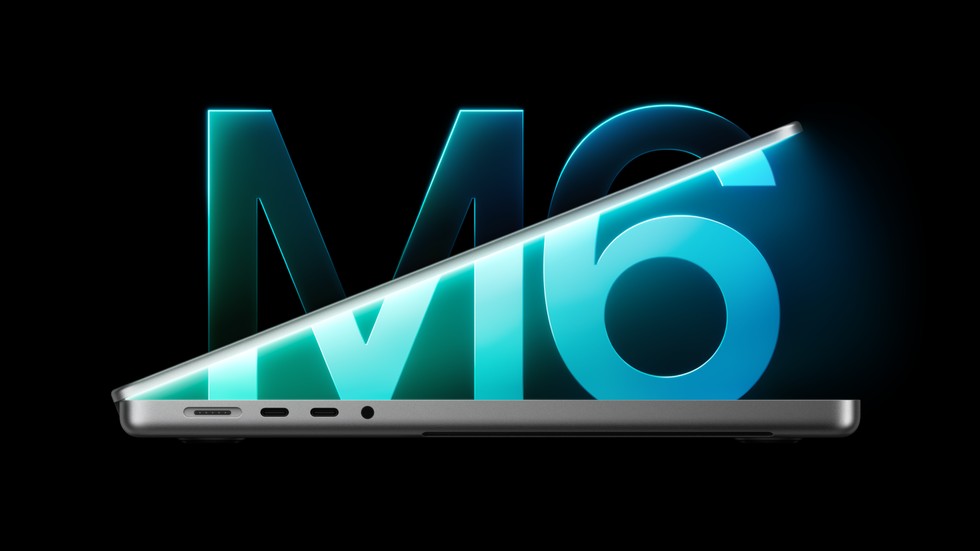
What ItInsightsWorld takes from the launch is a value argument rather than a redesign argument: the same 14-inch pro chassis is being asked to carry a faster CPU and GPU, local model execution and a longer unplugged workday.
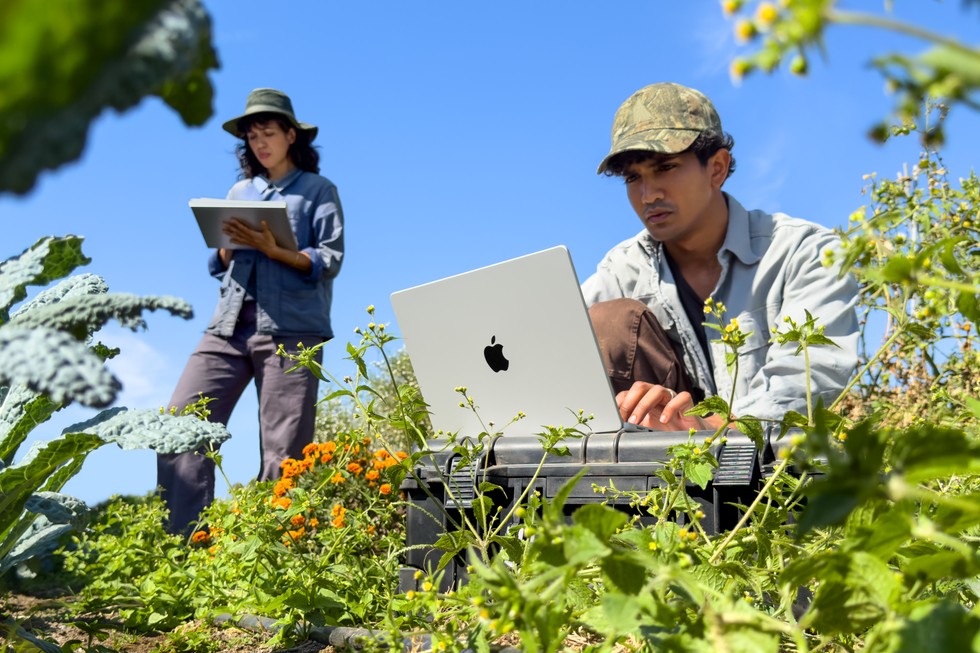
The audience is deliberately wide — next-generation performance and on-device AI packaged in a portable design that has to survive lecture halls, agency desks and travel days alike.
“The 14-inch MacBook Pro is the pro laptop of choice for a wide range of users — from college students, to business professionals across every industry, to multidisciplinary creators doing it all on one device,” said Shelly Goldberg, Apple’s vice president of Hardware Engineering. “With the powerful M6 chip, we’re taking performance to the next level, with a boost in CPU speed and graphics and even more powerful capabilities for on-device AI. With its amazing battery life, remarkable Liquid Retina XDR display, and even faster connectivity, the new 14-inch MacBook Pro with M6 delivers a fantastic combination of performance, capability, and value.”
Inside the Silicon: Cores, Cache and a Dual Neural Engine
M6 stacks a 12-core CPU, a 12-core GPU with Neural Accelerators in every core, a Dual 16-core Neural Engine and faster unified memory in one package. The CPU arrives with two more cores than before and is built for single- and multithreaded work at the same time, so moving between apps, compiling code and complex creative jobs all sit in one lane. The GPU likewise gains two additional cores, reaches up to 30 percent faster graphics performance compared with M5, and leans on a third-generation ray-tracing engine plus Dynamic Caching to optimise on-chip memory — which is where 3D modelling, photo editing and gaming feel quicker. For on-device AI workloads such as LLM prompt processing, Apple claims up to 25 percent faster performance than M5, while the Dual 16-core Neural Engine delivers up to 1.9x faster performance than M5 and works alongside the GPU on image generation, Super Resolution and AI upscaling. The Neural Engine also powers Apple Intelligence, keeping that processing on-device and energy-efficient, and running LLMs locally while preserving user privacy. Efficiency completes the picture: industry-leading performance per watt, up to 24 hours of battery life — the longest ever in a Mac — 16GB of unified memory as standard, configurable up to 32GB, and memory bandwidth up to 170GB/s.
Apple’s Published Workload Comparisons
Motion designers are the first group Apple calls out: modelling 3D objects, designing product visualisations and rendering animations. The measured deltas, compared with the 13-inch MacBook Pro with M1 and the 14-inch MacBook Pro with M5:
| Task | Workload | Versus 13-inch MacBook Pro with M1 | Versus 14-inch MacBook Pro with M5 |
|---|---|---|---|
| LLM prompt processing | Time to first token | up to 13x faster | up to 1.3x faster |
| Blender | Render performance with ray tracing | Up to 11.7x faster | up to 1.3x faster |
| Affinity | Image-processing performance | Up to 3.3x faster | up to 1.2x faster |
| Xcode | Project build performance when compiling code | Up to 2.5x faster | up to 1.3x faster |
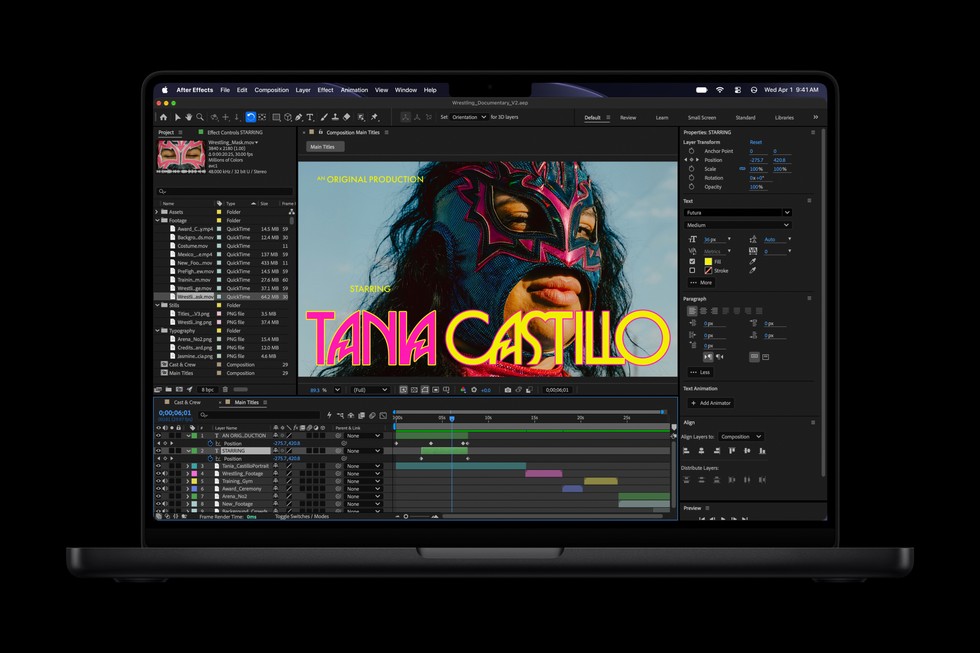
Compositing visual effects and adding cinematic motion graphics in popular video editing tools is the workload Apple points to for film editors and content creators.
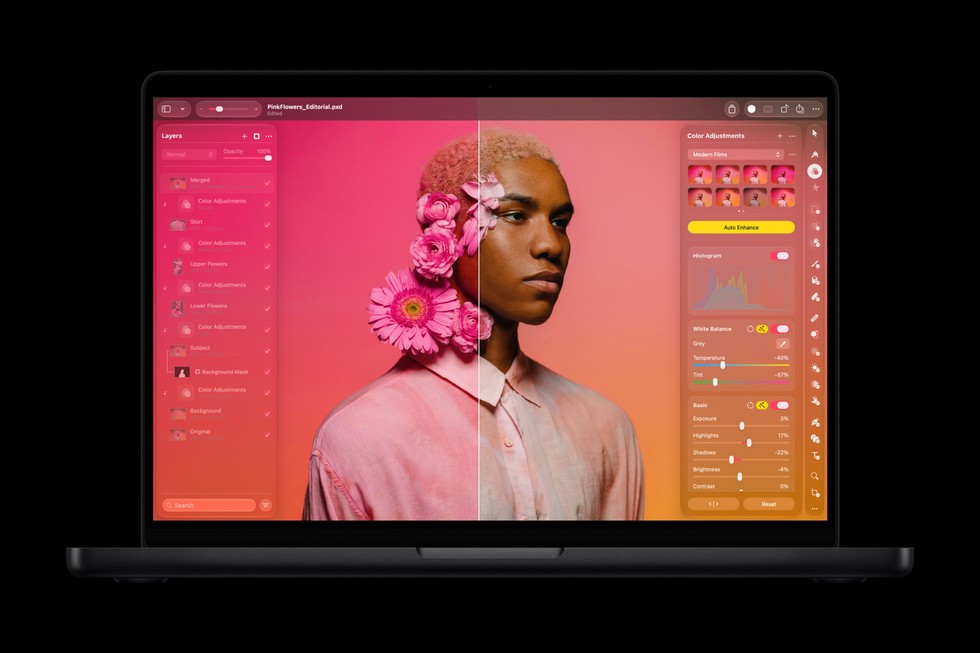
Complex AI-powered image adjustments in real time, in apps such as Pixelmator Pro, define the photographer and designer case.
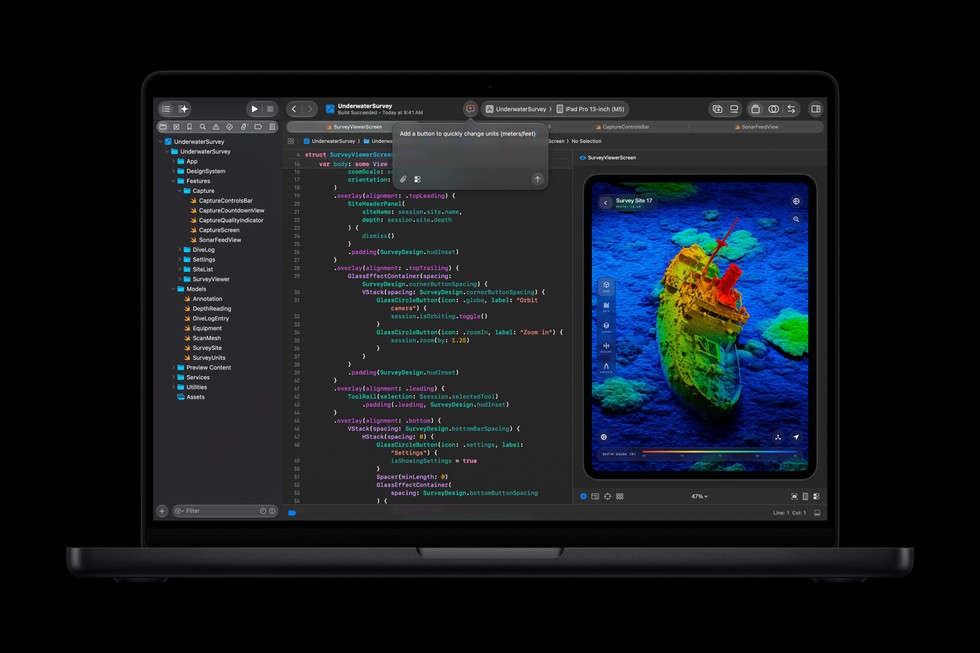
Build-and-test cycles in Xcode are the developer headline: blazing-fast compile times on the 14-inch MacBook Pro with M6.
Why This Generation Reads as an Upgrade Case
For customers moving from a previous-generation MacBook Pro with Apple silicon or an Intel-based Mac, the value sits in what is added on top of the performance leap:
- Endurance first. Battery life gains up to 14 additional hours for Intel-based upgraders and up to four more hours for users coming from M1, for up to 24 hours overall. Those users also get 16GB of starting unified memory, an additional Thunderbolt port, and the space black finish with an anodisation seal for fewer fingerprints.
- A display tuned for colour work. The Liquid Retina XDR display delivers up to 1600 nits of peak HDR brightness and a 1,000,000:1 contrast ratio, with deep blacks, brilliant highlights and vibrant colours; the nano-texture option dramatically reduces reflections and glare in bright or challenging lighting.
- Wireless and expansion. Wi-Fi 7 and Bluetooth 6 bring fast wireless performance and low latency, along with support for up to two external displays, while the ports — HDMI, MagSafe 3, three Thunderbolt 4 ports, an SDXC card slot and a headphone jack — handle high-speed peripherals, photo transfers and bigger workspaces.
- Camera, mics and sound. The 12MP Center Stage camera with Desk View keeps users framed on calls, joined by a studio-quality three-mic array and the six-speaker sound system with Spatial Audio.
- Fast charging. With a compatible higher-wattage USB-C power adapter, such as the 96W Power Adapter, the battery reaches up to 50 percent charge in just 30 minutes.
- Built to last. An enclosure made from 100 percent recycled aluminium is designed to stand up to everyday use for years.
- Better alongside iPhone. With Continuity, iPhone and Mac hand off tasks, share files and photos, and even let users control their iPhone from the 14-inch MacBook Pro; people switching to Mac for the first time can transfer settings, files, photos and passwords securely.
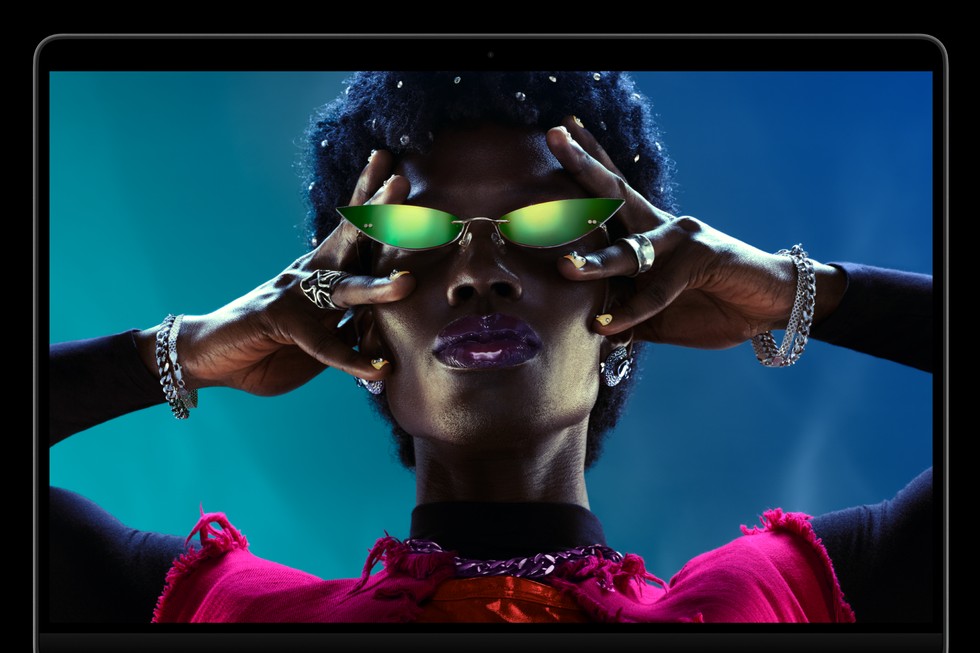
HDR material is where the panel argument is made: up to 1600 nits of peak brightness and a 1,000,000:1 contrast ratio render photos and video with deep blacks and vibrant colours.
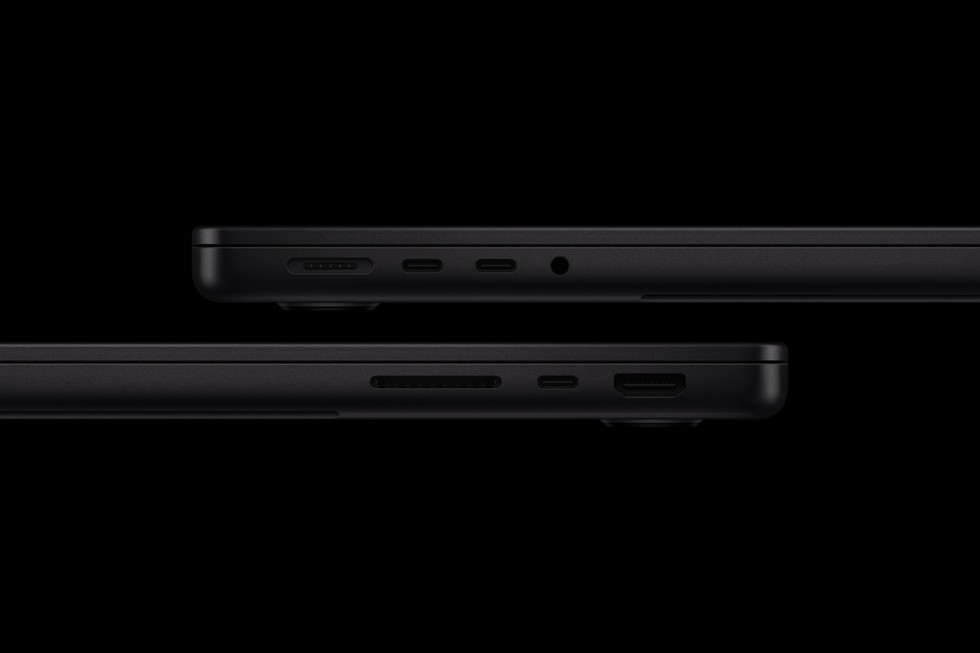
High-speed peripherals, photo transfers and multiple external displays are handled through the wide array of ports rather than through adapters.
macOS 27 Golden Gate Does the Assistant Work
The new 14-inch MacBook Pro with M6 comes to life with macOS 27 Golden Gate, whose centrepiece is Siri AI — described as a profoundly more capable, conversational and personal assistant. It can draw on personal context to find what users need in messages, emails and photos, answer questions on virtually any topic and complete tasks across apps, all under the privacy protections Apple applies to Apple Intelligence. Siri AI is integrated into Spotlight and systemwide context menus, a dedicated keyboard shortcut lets users ask about what is on their display with Visual Intelligence, and writing or editing with Siri works almost anywhere users type.
Apple Intelligence also makes apps smarter: in Safari it organises tabs into topics, notifies users of website changes such as product restocks or price drops, and enables custom extensions built from a description. Automations can be created in Shortcuts simply by describing them, and the Photos app gains intelligent photo editing tools. The system itself is more responsive and reliable after refinements to design, performance and search — Liquid Glass updates make the experience more focused and approachable, a new slider in Settings lets users tune it from ultraclear to fully tinted, and app icons are sharper and more defined.
Materials, Energy and the 2030 Target
The 14-inch MacBook Pro with M6 is built with the environment in mind and advances Apple’s plan to be carbon neutral across its entire footprint by 2030. It uses 45 percent recycled content overall, including 100 percent recycled aluminium in the enclosure, 100 percent recycled cobalt in the battery and, in a first for Apple, 100 percent recycled tantalum in multiple capacitors, and it is manufactured with 60 percent renewable electricity such as wind and solar across the supply chain. The laptop is designed to be durable and repairable and meets Apple’s standards for energy efficiency and safe chemistry, while its paper packaging is 100 percent fiber-based and designed to be recycled.
Pricing, Pre-Order Window and Services
Customers can pre-order the new 14-inch MacBook Pro with M6 starting tomorrow, October 28, in the Apple Store app in 35 countries and regions, including the U.S. It begins arriving to customers, and reaches Apple Store locations and Apple Authorized Resellers, starting Friday, November 6.
Pricing starts at INR 239900 and INR 227900 with education savings. Additional technical specifications and configure-to-order options are available from Apple.
Accessory pricing from Apple includes the 70W Power Adapter for INR 5800, the 96W Power Adapter for INR 8900, the 140W Power Adapter for INR 11900, and the World Travel Adapter Kit for INR 4900.
With Apple Trade In, customers can trade in a current computer and receive credit toward a new Mac, and can check a device’s worth first. Education pricing runs year-round for current and newly accepted college students and educators across MacBook Pro and a wide range of products and services, online and in stores; details are in the Apple Education Store.
AppleCare covers service and support: customers can choose AppleCare+ for the new Mac or, in available markets, AppleCare One to protect multiple products in one plan. Both include coverage for accidents such as drops and spills, theft and loss protection on eligible products, battery replacement service and priority support from Apple Experts.
Buying directly also unlocks Personal Setup, guided one-on-one online sessions in which a Specialist walks through setup or specific features; Getting started can continue with a Today at Apple session at the nearest Apple Store.
How the numbers were measured, and where features are limited
Testing was conducted by Apple in October 2026 using shipping competitive systems and select industry-standard benchmarks; further testing was conducted by Apple in September 2026. Results are compared to the 14-inch MacBook Pro with M5, 10-core CPU, 10-core GPU, 32GB of unified memory, and 4TB SSD, and battery life varies by use and configuration. More information is available from Apple.
Apple Intelligence is available with Siri and device language set to Chinese (simplified), Chinese (traditional), Danish, Dutch, English, French, German, Italian, Japanese, Korean, Norwegian, Portuguese, Spanish, Swedish, Turkish or Vietnamese; some features, devices and languages may not be available in all regions. Siri AI is in beta in macOS 27 and requires an Apple Intelligence–enabled device set to a supported language, and is not available for users under 13. Apple is working constructively with the EU in an attempt to find a path forward. Apple Intelligence features that rely on server-side models — including but not limited to Siri AI, intelligent photo editing tools, Image Playground and AFM 3 Cloud models in Shortcuts — are subject to daily usage limits that vary by feature, request complexity, system demand, system policies and other factors, with expanded access to be available for a fee in the future; use is subject to the Apple Intelligence terms and conditions.
iPhone Mirroring is available on Mac computers with Apple silicon and Intel-based Mac computers with a T2 Security Chip. It requires the user’s iPhone and Mac to be signed in with the same Apple Account using two-factor authentication, to be near each other with Bluetooth and Wi-Fi turned on, and the Mac not to be using AirPlay or Sidecar; some iPhone features, such as the camera and microphone, are not compatible.
Recycled or renewable content is the mass of certified recycled material relative to the overall mass of the device, not including packaging or in-box accessories. Packaging figures are a breakdown of US retail packaging by weight, with adhesives, inks and coatings excluded from plastic-content and packaging-weight calculations.
For ItInsightsWorld readers the verdict rests on what sits underneath the lid: unchanged chassis, unchanged display and port set, but a higher ceiling on CPU, GPU, local AI and unplugged hours, which makes this a component story rather than a cosmetic one. Questions or story tips can be sent to IT Insights at contact@itinsights.com. Reported by James Hartley.