
Apple's M6 MacBook Pro Lands in November for $1,999 — Here's What IT Teams Should Check First
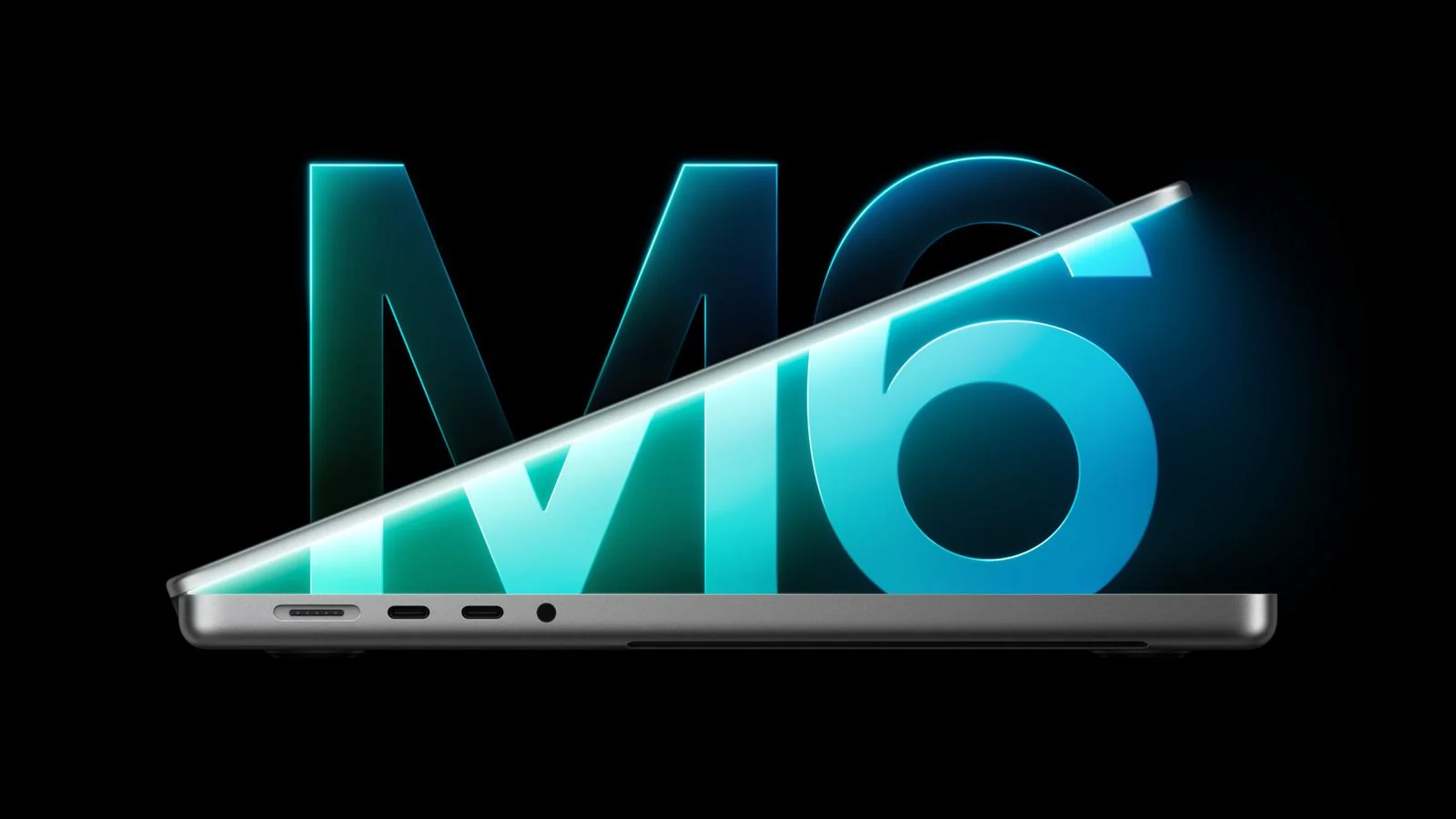
Preorders open October 28 in the US and the machines ship November 6, again priced from $1,999. The new 14-inch MacBook Pro is best read as a silicon-and-radio refresh rather than a platform change: the M6 rewrites the core layout, the neural engine configuration and the memory-bandwidth ceiling, while the chassis, the storage floor and most of the surrounding specification carry over. For anyone planning a fleet refresh, the practical questions are which core mix you are actually buying, which memory tier unlocks the bandwidth gain, and how long this generation is likely to stay on the market.
Core mix, not just core count: how the CPU was reconfigured
The M6 uses a 12-core CPU architecture made up of 2 super cores, 4 performance cores and 6 efficiency cores. The M5, by contrast, runs a 10-core CPU built from 4 super cores and 6 efficiency cores. The obvious difference is two additional cores; the structural one is that a separate performance tier has been inserted and the top super-core group thinned — a split aimed at balancing sustained heavy workloads against everyday energy draw.
GPU and neural engine: the published deltas
On the graphics side the M6 ships a 12-core GPU against the M5's 10-core GPU. Apple's own comparison figures claim graphics performance up to 30% higher and AI workload processing speed up to 25% faster, and the company expects those margins to show up in rendering, video processing, gaming and some local AI tasks. The neural block changes the most: the M6 adopts a dual 16-core neural engine system for 32 cores in total, replacing the single 16-core neural engine of the M5, and Apple has added extra neural accelerators within the GPU to improve the efficiency of on-device models.
| Item | M6 | M5 |
|---|---|---|
| CPU | 12-core CPU architecture: 2 super cores, 4 performance cores, 6 efficiency cores | 10-core CPU: 4 super cores, 6 efficiency cores |
| GPU | 12-core GPU | 10-core GPU |
| Neural engine | Dual 16-core neural engine system, 32 cores in total | 16-core neural engine |
| Memory bandwidth (24GB or 32GB memory) | 170GB/s | 153GB/s |
Local AI, Apple Intelligence and the limits of the claim
Apple's position is that the M6 further strengthens the MacBook Pro's ability to run Apple Intelligence features and local large language models. Keeping inference on the device reduces dependence on cloud servers for some tasks and helps protect user privacy. The outcome should still be treated as conditional: real-world results depend on model size, unified memory capacity and how far software has been optimised for the new hardware.

Memory bandwidth: an 11.1% gain tied to two configurations
For the 24GB or 32GB memory configurations the M6 reaches 170GB/s versus 153GB/s on the M5, about 11.1% higher. That extra bandwidth lets the CPU, GPU and neural engine reach shared data more quickly, which matters most for graphics computing and AI workloads. The scope caveat belongs in any procurement note: the uplift Apple published applies only to the 24GB and 32GB memory versions and cannot be transferred to every configuration.
Wi-Fi 7, Bluetooth 6 and a higher external-refresh ceiling
The new 14-inch MacBook Pro supports Wi-Fi 7 and Bluetooth 6, with those functions delivered by Apple's in-house N1 wireless chip. Where the router and network environment are compatible, Wi-Fi 7 brings higher transfer capability and lower latency, while Bluetooth 6 further updates the wireless connection standard. External display output also moves a small step: the machine can drive two 4K external displays at refresh rates up to 165Hz, above the 144Hz supported by the previous generation. For multi-screen offices, video editing and owners of high-refresh panels, that adds usable flexibility.
What stayed the same
Storage is unchanged. The new 14-inch MacBook Pro continues to start with a 1TB SSD, and because Apple already retired the 512GB entry configuration of the previous generation back in March 2026, this launch does not jump from 512GB to 1TB — it simply keeps the existing arrangement. Externally the changes are limited. Apple states that the other specifications of the new 14-inch MacBook Pro largely follow the previous design, and this update brings neither a fully redesigned body nor the long-rumoured OLED touchscreen.
Roadmap context: the product line is not finished
This release does not mean Apple has completed the MacBook Pro refresh. The market has continued to hear about a high-end MacBook Pro in preparation with an OLED display, touch input and a redesigned body — except that those products are expected to use M5 Pro and M5 Max chips rather than M6 Pro and M6 Max versions. Earlier reporting also indicated Apple may skip M6 Pro and M6 Max and go straight to M7 series high-performance chips in 2027. If that planning is accurate, the product cycle of the standard M6 MacBook Pro could be relatively short, with the large-scale design changes reserved for the next-generation high-end models.
Refresh guidance for IT buyers
In product-positioning terms this is a routine, chip-centred iteration: the M6 brings more CPU and GPU cores, stronger neural processing and a new generation of wireless technology. Whether it deserves your upgrade budget still comes down to workload. Users still running earlier Apple Silicon or Intel machines will likely find a clear performance argument; anyone already on an M5 MacBook Pro should test the up to 30% graphics uplift and the AI-compute improvements against the cost of replacing a machine that is not yet under-provisioned.