
KFC KWENCH Launch: How to Turn Drink Sounds Into a Practical Campaign Playbook
KFC launched KWENCH as a permanent drinks identity, using drink sounds to rebuild Can’t Get You Out of My Head in Australia. The practical answer is simple: treat the product’s physical traits as the creative mechanism, then connect that mechanism to a clear rollout plan, measurable audience insight, and permission checks before scaling.
By Sofia Jackson | ItInsightsWorld General
For readers who do not follow food marketing closely, this sounds like a small idea: make music from a fast-food drink. For decision-makers, the useful question is different. Why did KFC put Eleven drinks inside a campaign built by Special? Why spend on a soundtrack when the menu itself is the product? The answer lies in the gap between launching a new line and giving it a separate reason to exist.
What Is KFC Actually Launching With KWENCH?
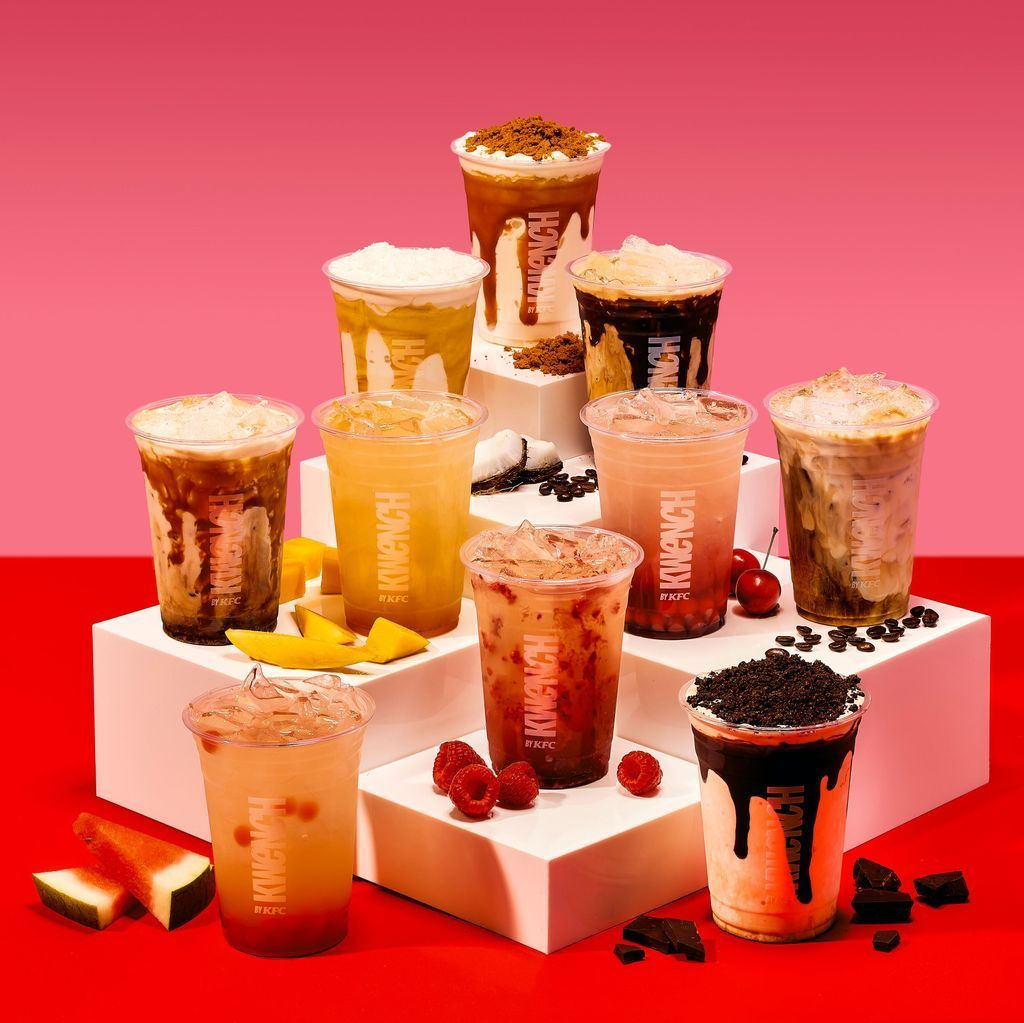
The short answer: a drinks sub-brand, not a limited-time menu test. KFC Australia’s It’s All You Can Drink About campaign was created by Special. It introduces Eleven drinks, or 11 flavors, across four families: Krunch Shakes, Boba Refreshers, Sparkling Lemonades and Frozen Spiders.
- Sparkling Raspberry Lemonade
- Watermelon Boba Refresher
- Caramel Krunch Shake
- Chocolate Krunch Shake
This is the kind of product architecture a general reader can understand quickly. The menu is not just “drinks at KFC”; it is a separate reason to visit. Colorful refreshers, textured shakes and frozen treats also give the campaign enough visual variety to support film, cinema, outdoor, social and digital placements. That matters because a new sub-brand needs a shelf-level identity: names, colors, textures and sounds all help the customer remember it.
Why Use Drink Sounds Instead of a Licensed Pop Track?
Because the sound is the proof. The launch film uses a familiar pop reference without making the song the whole idea. Leilani Croucher of Revolver directed the video, and Rumble Studios recorded and sampled sounds from the real beverages, so the music is built from sipping and slurping. In other words, the drink is not sitting under the beat; the drink makes the beat.
This choice matters for practical decision-makers. A background track can make any product look energetic. A product-made track ties memory to physical behavior: ice, texture, suction, straw, lid, frost, pour. That creates a stronger sensory link between brand and consumption. It also gives social teams shorter, more ownable cutdowns because the asset is not only a song clip; it is a beverage process.
The campaign also leans on category data cited by KFC Australia. Dentsu research from October 2026 says that 70% of consumers report that beverage choices reflect their identity or mood. A 2022 NielsenIQ and CGA report says that 40% enjoy experimenting with new drinks. Those numbers are not sales proof for KWENCH; they are market assumptions used by the campaign. Still, they explain the strategy: drinks are easy to personalize, and a sub-brand can feel more like self-expression than a side menu.
How Can Teams Copy the Idea Without Making It a Gimmick?
Start with an executable question: can the product’s own physical behavior carry the creative idea? If the answer is yes, the campaign has a reason to exist. If the answer is no, a soundtrack may be just decoration.
| Choice | Why it works | When it fails | Practical check |
|---|---|---|---|
| Licensed pop song | Familiar, easy to edit, strong reach | Costly rights, generic association | Can the song prove the product? |
| Product sounds | Sensory proof, ownable content | Audio may be messy or flat | Can the sound be captured cleanly? |
| Original jingle | Flexible for social cutdowns | Weak recall if not tied to product | Would viewers recognize the product without the logo? |
| Creator-style demo | Looks native and useful | May blur paid and organic reach | Is the claim testable by an ordinary buyer? |
Use this checklist before the first shoot:
- Map product behaviors: pour, shake, sip, crunch, fizz, frost and straw contact.
- Record at multiple settings before creative lock, not after the edit is due.
- Build one master film, then create cutdowns for social, search and point of sale.
- Tie media placement to a purchase moment, such as drive-through, app menu or delivery bundle.
- Plan measurement before spend: coupon lift, app add rate, repeat visits, or category share.
Rollout gives this kind of checklist teeth. The launch began across Australia on November 3, 2026, using film, cinema, outdoor, social, earned and digital placements. Further activity is planned throughout the Australian summer, according to KFC. That is a practical signal: creative novelty is only useful if distribution, media and store operations can survive the season.
The people quoted in the campaign cover the two sides of the decision. Holly McCarthy, marketing director, described KWENCH as a permanent sub-brand intended to attract new customers while giving existing KFC fans another reason to visit. Tom Martin and Jules Schreiber, Special’s creative leaders, framed the music-video idea as a way to keep the drinks at the heart of every frame. In plain terms: the business wants frequency, while the creative wants recognition. Both need the product to remain visible.
What Costs and Risks Appear After the Campaign?
For a reader outside marketing, the headline idea sounds cheap: record a drink. In practice, cost hides in craft. If the drink fizzes, freezes, shakes and pours inconsistently, the sound library can take longer than the shoot. If the melody is too recognizable, legal review becomes central. If the film is too surreal, the menu may look like a costume rather than a durable offer.
| Cost line | What to ask before launch | General-reader takeaway |
|---|---|---|
| Rights | Does the melody need clearance even when built from samples? | Clever does not automatically mean cheap. |
| Production | Can real sounds be captured cleanly across flavors? | Texture is part of the budget. |
| Store readiness | Will staff and equipment deliver the same result for every order? | A drink promise is an operating promise. |
| Measurement | What data will be reviewed after the first weeks? | Remember the campaign, but check the repeat order. |
One market context shows why operational scale matters. In a separate BNN Bloomberg release about KFC Canada, the company described a beverage expansion reaching more than 170 locations by summer’s end, 600 in 2027, and a $30 million investment by KFC Canada and its franchisees. Those are not KWENCH Australia results, but they show that a playful drink identity still needs distribution, equipment, staff training and budget support. Without that, a campaign becomes an ad, not a menu habit.
KFC has not disclosed campaign performance or sales figures, so whether it drives trial or repeat purchases remains unproven. That limitation is useful for general readers: judge the idea on execution and category logic, not on assumed proof. A campaign can be creatively clear while still needing business evidence.
FAQ: What Should General Readers Check First?
What is KWENCH?
KWENCH is KFC’s permanent specialty beverage sub-brand, introduced in Australia with 11 drinks across four families. It’s All You Can Drink About is the local campaign created by Special.
Why did the ad use sipping sounds?
Because Rumble Studios recorded real beverage sounds and used them to rebuild Can’t Get You Out of My Head. The drink becomes the instrument instead of sitting behind a familiar song.
Did the campaign prove sales?
No. The available reporting does not disclose campaign performance or sales figures, so readers should treat the concept as creative execution plus category research, not measured market results.
Can other brands copy it?
Yes, but only if the product has audible or visible behavior. A quiet service, invisible software or generic product may need a different proof. A food brand with texture, a cold drink with fizz, or a physical tool with sound can borrow this logic better than an abstract app subscription.
Sources and Practical Note
The main facts in this guide come from the KFC Australia and Special press release, November 5, 2026, and Campaign Brief, November 5, 2026. For market context only, see BNN Bloomberg’s KFC Canada launch report.