
iPod at 25: A Trade-off Review of Owned Music, Streaming and Single-Purpose Players | ItInsightsWorld General
By Nina Roberts · IT Insights
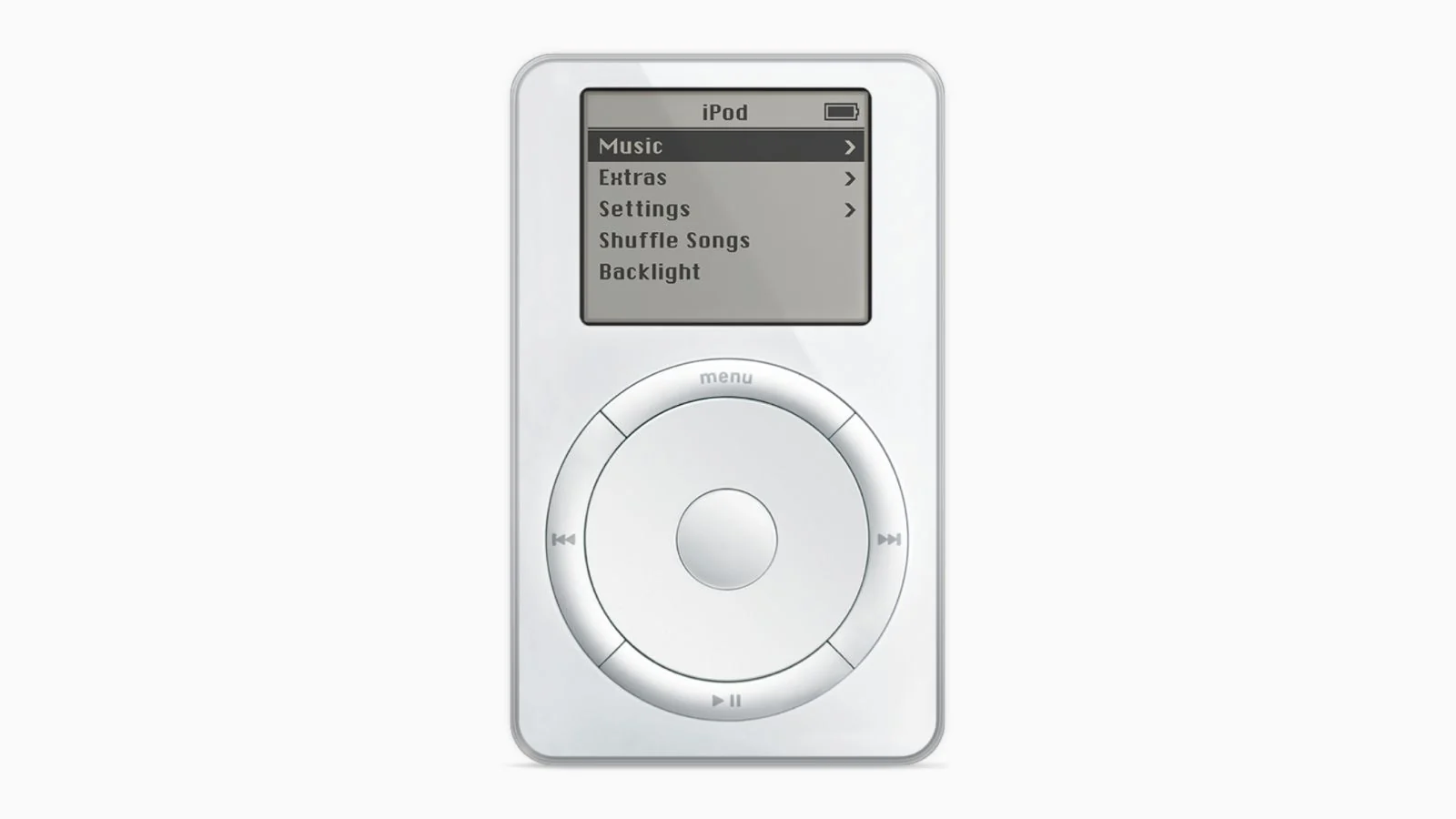
Short answer: the first iPod, unveiled by Steve Jobs on October 23, 2001 and put on sale on November 10, 2001, sold one bargain - pay $399 once and carry 1,000 songs you own outright. Twenty-five years later that bargain is still the yardstick for judging streaming, because a monthly plan keeps repricing while an owned library does not.
The dilemma I keep running into is not technical, it is administrative. A listener opens a subscription, pays it for six years, and then cannot play a single track on a device that lacks the app, the account or the network. Most households do not lack a way to listen; they lack a decision about which device owns the music. That decision is exactly what the iPod forced the industry to make in 2001, which is why its 25th anniversary deserves a cold comparison rather than a nostalgia post.
What did the original iPod actually deliver?
Conclusion first: the hardware was modest, and the claim was the product. Apple's own 2001 specification reads plainly by modern standards - but it removed a physical chore.
| Item | First-gen iPod (2001) | Why it mattered then |
|---|---|---|
| Storage | 5GB mechanical hard drive | A whole CD shelf, minus the shelf |
| Screen | mono LCD | Text only; no video, no apps |
| Control | mechanical scroll wheel | Browsing 1,000 songs by thumb instead of buttons |
| Battery | up to 10 hours | Long travel days without a wall socket |
| Price | $399 | Premium over portable CD players |
| Transfer | FireWire, the same port charged it | One cable for sync and power |
| Software | iTunes, auto-sync of collections and playlists | Management became the feature, not an afterthought |
| Speed claim | an entire CD in under 10 seconds; 1,000 songs in under 10 minutes | Apple's own published figures at launch |
The drive also held documents and other files, which was a hint of what portable storage would become. Judged on today's parts list, 5GB and a mono screen look humble; judged against what people were doing in 2001 - burning, labelling and carrying discs - it was a design-advanced music player.
Why the first reviews were not unanimous
Conclusion: adoption stalled on two ordinary problems, lock-in and price, not on the idea. The first iPod worked only with Mac computers; Windows users were left outside. Many consumers considered $399 too high, and some reviewers openly doubted whether the device was genuinely revolutionary.
Apple's fix was iteration, not marketing. The second generation moved to a touch-sensitive wheel; in 2003 the third generation introduced the 30-pin dock connector that accessories later relied on; in 2004 the standard model gained a colour display, and in 2005 it gained video playback.
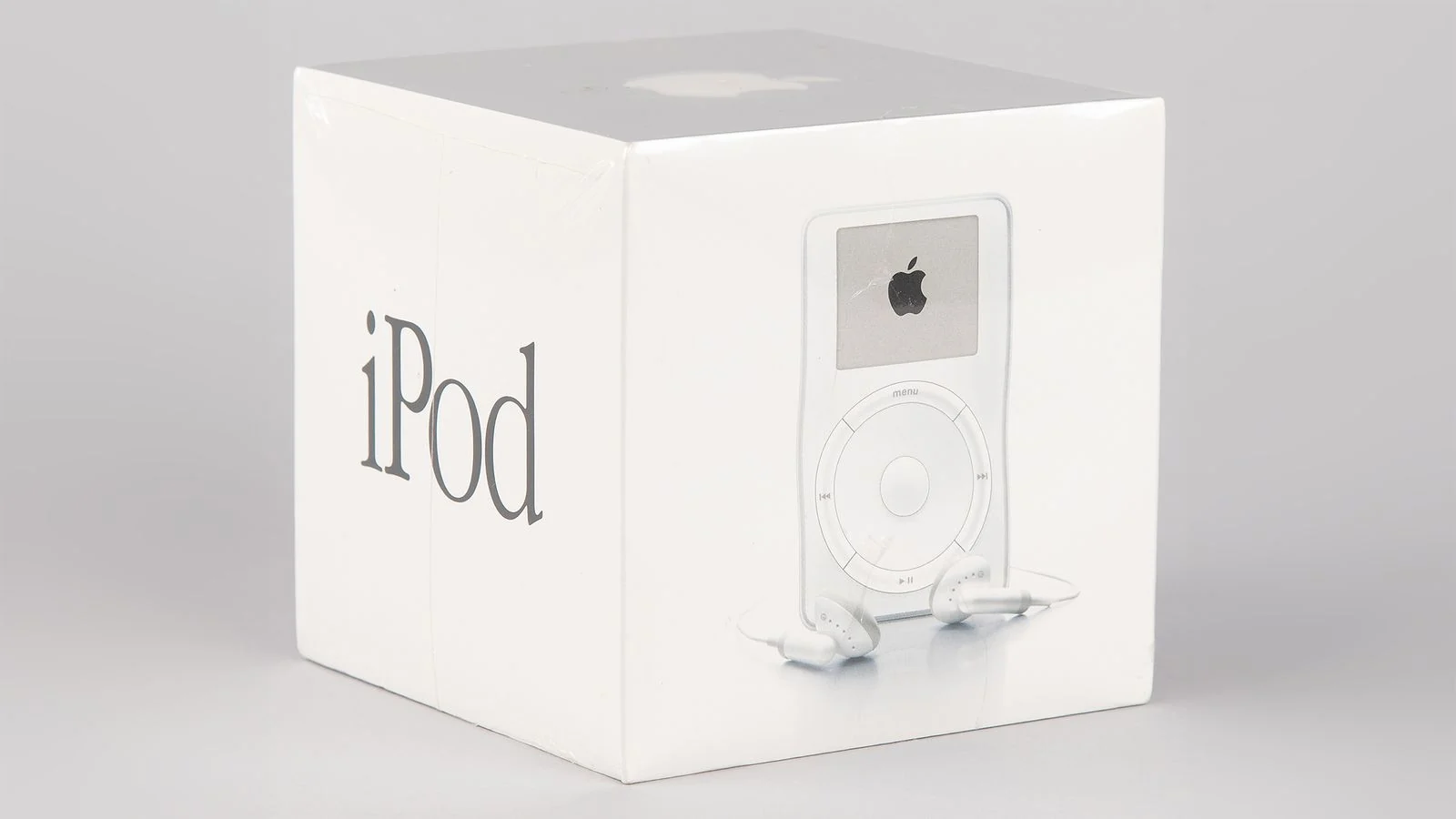
How did one player become a 21-year product line?
Conclusion: the line survived by splitting into use cases, and ended by being absorbed. The timeline is the clearest teaching artefact of this anniversary.
| Date | What shipped | Trade-off it resolved |
|---|---|---|
| October 23, 2001 | Steve Jobs presents the first iPod at Apple headquarters | "1,000 songs in your pocket" |
| November 10, 2001 | First iPod goes on sale at $399 | Hard drive replaces disc portability |
| 2003 | 30-pin dock connector on the third generation | Accessories and car audio |
| 2004 | iPod mini: anodised aluminium shell in silver, gold, pink, blue and green, and the first Click Wheel | Size and colour as purchase drivers |
| 2005 | iPod shuffle (no screen) and iPod nano (flash memory instead of a mechanical drive) | Cheap and light versus large library |
| April 2007 | Apple announces cumulative sales past 100 million units | Under six years from launch |
| September 2007 | iPod touch: 3.5-inch Multi-Touch screen, Wi-Fi, Safari browser | Interactive features of a smartphone, no cellular radio |
| 2010 | Sixth-generation iPod nano, square design, wearable with a third-party strap | Player as wrist accessory |
| October 2011 | Cumulative sales pass 304 million units | Peak of the dedicated player |
| September 2014 | iPod classic withdrawn | The big-drive model ends |
| July 2017 | iPod nano and iPod shuffle discontinued; iPod touch remains alone | One SKU left |
| May 2019 | Seventh-generation iPod touch with A10 Fusion, up to 256GB | No further hardware update followed |
| May 10, 2022 | Apple ends iPod touch production; a 21-year line closes | Music playback absorbed by other devices |
Smartphones were the reason. A single device folded music playback, internet access, messaging and applications together, and the standalone player's market shrank with each generation of handset. Apple's stated position on May 10, 2022 was that the listening experience continued through iPhone, Apple Watch, HomePod mini, Mac and iPad, with Greg Joswiak, Apple's senior vice president of worldwide marketing, saying the spirit of iPod would live on in those products. That is an unusually clean way to describe a takeover, and it is worth reading as a business lesson: the iPod's real contribution was not the player, it was the habit of carrying a library - and the hardware-plus-software-plus-content model that made Apple Music possible.
Owned files or a monthly plan: what does the cost ledger show?
Conclusion: ownership wins on price per listening hour once your favourite list is small and stable; streaming wins when breadth and discovery matter more than control. The numbers below come from original announcements, not from vendor marketing.
- The purchase model. Apple opened the iTunes Store on April 28, 2003 at 99 cents per song with no subscription fee, and reported more than one million songs sold in its first week (Apple newsroom releases, April 28 and May 5, 2003). At that price, the iPod's headline capacity of 1,000 songs was roughly a $990 one-time outlay, on top of the $399 device.
- The rental model. Spotify's US Individual plan moved from $10.99 in July 2023 to $11.99 in June 2024, and to $12.99 from February 2026, according to CNBC's January 15, 2026 report and Variety's June 2024 coverage. Three increases in three years.
- Our arithmetic, clearly labelled as analysis. At $12.99 per month, a single plan costs $155.88 a year; a one-time $990 owned library equals about 6.4 years of fees. Held flat for 25 years, the subscription reaches roughly $3,900 for the same listening time - and stops working the day you cancel. This is not a forecast; it is a break-even calculation a reader can repeat with local prices.
The catch nobody mentions in anniversary pieces: the 2003 store solved a pricing problem, not a portability problem, and it was the iPod that made paying 99 cents per track feel natural. Owned files still play on hardware with no account sign-in; streamed tracks do not.
Which player fits which listener today?
| Criterion | Used iPod classic or iPod nano | iPhone with a streaming app | iPod touch (last model) | Apple Watch or HomePod mini with Apple Music |
|---|---|---|---|---|
| Library you control | Yes - files stay on the device | Partial, tied to the app | Partial, tied to the app | Partial, tied to the service |
| Works offline with no account | Yes | No | Only cached tracks | Limited without the phone nearby |
| Distractions | Almost none - no notifications | High | Moderate | Low |
| Future software support | Effectively none | Years | Fixed since 2019 | Active |
| Repair reality | Battery and drive are wear items | Service network exists | Ageing parts | Sealed hardware |
| Best fit | Focus listening, workouts, commutes | Discovery, new releases | Kids or a shared household player | Hands-free home use |
Demand for the "no notifications" column is not a rumour. Back Market figures reported by Morning Brew in February 2026 put average growth of refurbished iPod sales at 15.6% per year since 2022; eBay search counts cited by Axios and repeated by BGR rose 25% for iPod classic and 20% for iPod nano between January and October 2025 against the same months of 2024; and in a December 2025 survey by writer Emily White, 32% of respondents were Gen Z. Single-purpose hardware is not a dead category - Apple itself still ships it, and our own comparison of Apple's two $299 devices puts the same trade-off question to the living room that the iPod settled for the pocket.
Where the anniversary story usually goes wrong
- Confusing the two dates. The 25th anniversary of the sale traces back to November 10, 2001; the unveiling by Steve Jobs was October 23, 2001.
- Scoring 2001 specs against 2026 specs. 5GB versus 256GB says nothing about what the device replaced.
- Calling 2022 a failure. iPod classic ended in September 2014, iPod nano and iPod shuffle in July 2017, and iPod touch on May 10, 2022 - a handover to iPhone, Apple Watch, HomePod mini, Mac and iPad, not a collapse.
- Assuming subscription prices are fixed. Three US price increases in three years say otherwise.
- Ignoring the boring cost. The iPod needed iTunes on a computer; a used player today still needs a working sync routine, which is labour, not money.
Checklist before you buy a used player
- Confirm the port and cable you already own: the first iPod moved music and charged over FireWire; from 2003 the 30-pin dock connector took over.
- Ask the seller for battery history. A unit rated for up to 10 hours when new degrades, and the mechanical drive in older models is shock-sensitive - bad sectors show up as freezes mid-song.
- Test a sync on the computer you actually use today, Mac or Windows, before committing.
- Decide which library you will legally load onto it: purchased files or your own rips, not exported subscription tracks.
- Price the total, not the sticker: player plus shipping plus a replacement battery is a real budget line.
- Write down the exit rule. If you end up paying for both a subscription and a player for a full year, one of them should go.
FAQ: what readers actually ask about iPod at 25
Was the iPod Apple's biggest product?
By unit volume it is hard to beat: 100 million sold by April 2007 and more than 304 million by October 2011. By strategic effect, it is the precursor that makes iPhone and Apple Music comprehensible.
Why did dedicated music players disappear?
Consolidation. One handset absorbed playback, internet access, calls and apps, so the reason to carry a second device narrowed to storage, battery and freedom from notifications.
Is a used iPod cheaper than streaming?
For a fixed favourite list, yes - the arithmetic above shows why a $990 owned set of 1,000 songs matches only about 6.4 years of a $12.99 plan. For a listener who wants every new release the day it appears, no owned device competes.
What is the iPod's lasting contribution?
It changed how digital music is bought, managed and heard, moving it off the computer hard drive into daily life, and it taught Apple how to bind hardware, software and content services together.
What to do next
Three moves, in order. First, list the 200 to 500 tracks you replay constantly; that is your real library, and its size decides whether ownership or rental is cheaper. Second, run one week on a single-purpose player or an old phone with notifications off, and note how much listening changed when the screen stopped asking for attention. Third, set a price rule now: if your streaming plan rises again, decide in advance whether you cut the plan or cut the device. Twenty-five years after 1,000 songs went into a pocket, the useful lesson is not that the gadget was brilliant - it is that whoever owns the library owns the decision.
Reference sources
- Apple Newsroom, "Apple Launches the iTunes Music Store", April 28, 2003 - https://www.apple.com/newsroom/2003/04/28Apple-Launches-the-iTunes-Music-Store/
- Apple Newsroom, "iTunes Music Store Sells Over One Million Songs in First Week", May 5, 2003 - https://www.apple.com/newsroom/2003/05/05iTunes-Music-Store-Sells-Over-One-Million-Songs-in-First-Week/
- Apple Newsroom, "The music lives on", May 10, 2022 - https://www.apple.com/newsroom/2022/05/the-music-lives-on/
- CNBC, Spotify raises US Premium pricing, January 15, 2026 - https://www.cnbc.com/2026-01-15/spotify-subscription-price-premium-us.html
- Variety, Spotify price increase to $11.99, June 2024 - https://variety.com/2024/digital/news/spotify-price-increase-premium-streaming-plans-1236023317/
- Morning Brew on Back Market refurbished iPod sales growth, February 24, 2026 - https://www.morningbrew.com/stories/2026-02-24/gen-z-is-putting-down-phones-and-picking-up-ipods
- BGR on eBay search growth cited from Axios, May 2026 - https://www.bgr.com/2158017/ipods-making-comeback-thanks-to-gen-z-loophole/