
iPhone Duo eSIM in Real Use: What Travelers Save, and When a Second Phone Still Helps
Apple’s first foldable, iPhone Duo, has moved the conversation past hinges and screen size to a more practical question: can one phone replace the usual pile of travel cards? For cross-border workers, the answer is useful but limited. It can simplify a kit, especially for domestic dual-number users, yet it cannot yet make “one phone everywhere” automatic. This ItInsightsWorld review compares the eSIM rules, the real-world friction points and the traveler profiles that should consider a backup device. The late-October IT Times field visits to Shanghai outlets show why.
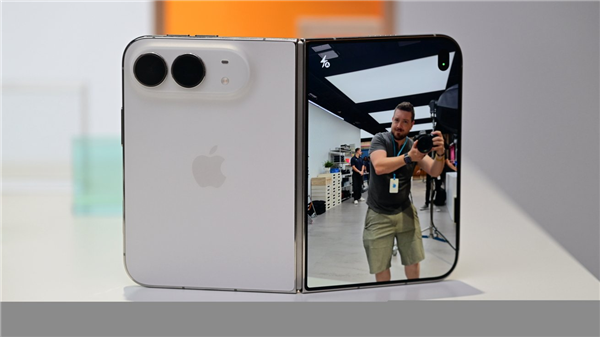
The short verdict: better organization, not a complete replacement
iPhone Duo’s eSIM design is best understood as a management upgrade, not a guarantee of one-device global operation. For a user who keeps one number for work and one for personal life in China, converting both to eSIM can reduce card swaps and make travel packing lighter. For a frequent international traveler who needs a local number in each destination, the China-mainland model’s limit of two cards still forces choices: adding a third overseas eSIM profile means removing one existing profile from the phone.
What the Shanghai carrier checks revealed
The starting point is a simple comparison: China-mainland iPhone Duo versus overseas hardware. Staff at three branches in Shanghai — China Mobile, China Unicom and China Telecom — confirmed the same core rule. The China-mainland version supports two eSIM profiles active at once; overseas versions of the same hardware can store up to eight. If a user already has two domestic eSIM numbers, adding one overseas profile requires deletion of a domestic profile from the device. The staff’s explanation was not a phone-call cancellation warning; it was a storage limit. “Only the profile written to the device is removed; the number is not cancelled, and the owner can visit a branch in person after returning to restore it.” This matters because a traveler’s real bottleneck is not the telecom account, but the device’s writable profile slots.
Another finding cuts through a common marketing assumption: eSIM and physical SIM share the same radio network, so signal strength does not become magically stronger. What eSIM can improve is mechanical reliability — no loose card tray or worn chip over years of swaps.
Case A: the tournament manager who still needs a backup phone
Jiang Ming, whose name was changed, manages a sports team that travels across leagues, friendly matches and different host countries. Before iPhone Duo, his routine required two phones and three SIM cards. One primary phone carried his Chinese work and private numbers. The other phone existed for local connectivity; in each country he would buy a local SIM for contact with organisers, other teams and transport apps. After ordering iPhone Duo early, his plan sounds clean: the large folding screen can replace a tablet for schedules, tactics and player statistics; two domestic numbers can become eSIM profiles; at the destination he can download a local carrier plan directly.
But the device rules change the plan. With December delivery ahead, Jiang Ming’s question list is practical: if he buys one local card abroad, must he delete a domestic number? Does eSIM improve reception? Can an out-of-province number be converted in Shanghai? After the IT Times field checks, he revised the setup. His working number and family number stay on the main iPhone Duo as two domestic eSIM numbers. When he competes abroad, the old backup phone remains in his kit, using a physical local card for short-lived, location-specific tasks. The lesson: eSIM can reduce the daily carry, but “one device” is a workflow choice, not a universal promise.
Case B: the dual-number commuter who may save time and risk
Chen Feng, also a pseudonym, is a long-term dual-number user in Shanghai. He keeps an Anhui hometown number for banking and social accounts, plus a Shanghai China Mobile number for work. When iPhone Duo arrived, his first worry was that a number from another province might need to be moved back to its original province before conversion. Carrier staff told him that, with the person, identity document and device present, cross-province physical SIM to eSIM conversion can be handled directly and free of charge. The underlying plan benefits remain unchanged; eSIM is an electronic form, not a different tariff category.
The same visit exposes a less intuitive rule: the carrier, not the phone, decides the convenience. If both numbers belong to the same operator, a single carrier branch can write multiple eSIM profiles. If the two domestic lines are from different operators, the user must visit the corresponding self-operated outlets separately. “One outlet” only works within one carrier’s system. This difference matters for iPhone Duo buyers who assume a phone feature controls network relationships.
China Mobile staff also noted that the supported handset base has widened: there are already over ten China-mainland eSIM phones, including iPhone Air and iPhone Duo plus multiple models from other major brands. That reduces the risk of buying a phone whose feature list assumes broad support.
Comparison table: which travel profile fits iPhone Duo’s eSIM rules?
| Traveler profile | What eSIM helps most | Where the friction appears | Decision tip |
|---|---|---|---|
| Domestic dual-SIM professional | Convert two lines to eSIM, avoid card tray handling and keep both numbers on one phone | Out-of-province service and cross-carrier dual lines may require separate branch visits | Confirm whether both lines are on one operator before planning a single-stop transfer |
| Short business-trip traveler | Keep one home number visible while adding a temporary local profile abroad, if only one domestic eSIM needs to be temporarily displaced | Deleting a profile may feel risky unless users understand the number remains active | Take a photo of carrier profile names and keep backup login or roaming option if available |
| Frequent cross-border manager | Fewer physical cards, cleaner packing, same number for home contacts | China-mainland two-card ceiling means the third destination profile cannot simply coexist | Keep a second cheap phone or roaming plan for local numbers instead of forcing one-device operation |
| Family or small-office line manager | Main-sub cards under one operator can be organized in phone settings without physical swaps | Device failure, migration, or service verification still requires device and ID | Treat eSIM as digital SIM, but retain the original carrier verification habits |
Real-name limits: what “one ID” still controls
eSIM and physical cards also follow the same “one ID, five numbers” real-name management rule. The same identity document can hold no more than five numbers under one operator. China MIIT News Network notes that this continues the MIIT phone-user real-name requirement; eSIM, as an electronic SIM form, is included in the existing management system. For business users with multiple lines, the practical question is not only how many profiles a phone can store, but whether the identity registration already reaches the carrier-side ceiling.
Pre-purchase checklist before converting to iPhone Duo eSIM
- Check your current carrier lineup: two lines from the same operator are easier; mixed operators require two visits.
- Bring the physical phone, identity document and account holder information; carrier staff need IMEI and EID verification for activation, transfer or replacement.
- Do not assume overseas eSIM counts are available: the China-mainland limit is two; an overseas iPhone Duo version may store up to eight, but mainland numbers may not enter overseas networks normally.
- Ask whether the local branch supports out-of-province conversion; some locations have narrower service scopes.
- Keep a fallback: if you rely on verification codes, keep one physical-SIM backup or a tested roaming path before deleting a profile.
- Confirm plan equity: if you used a certain plan under a physical SIM, the same plan benefits should remain after conversion.
Common misconceptions: what eSIM does and does not solve
Misconception one: eSIM equals better signal. In practice, both SIM types connect to the same base stations. The stability advantage is about physical wear, not coverage magic.
Misconception two: removing an eSIM profile deletes a phone number. The branch staff’s statement clarifies the distinction: profile deletion from a device is reversible at a carrier branch; the account itself is not automatically cancelled.
Misconception three: online activation is already standard in China. The current default still emphasizes in-person handling because of identity and device verification. However, signs of change exist: at MWC26 Shanghai, an industry source told IT Times that Chinese carriers may offer online eSIM services in the second half of this year. Before that broader step, China Unicom had already run an “eSIM Online Eligibility Draw” event, giving selected customers access to submit an online request through the Unicom App.
Misconception four: Apple’s eSIM-only direction is unique to iPhone Duo. Apple’s own iPhone cellular guidance notes that iPhone 14 models and later in the United States are activated with eSIM and do not support a physical SIM; this shows the industry has been moving this way for years, but regional rules still determine whether a buyer can fully rely on it.
How eSIM became a phone conversation instead of a watch feature
The technology is not brand-new. Around 2015, eSIM first became practical in smartwatches and other wearables. From 2017 to 2018, China Unicom and other carriers introduced services built around the “One Number, Two Terminals” idea, allowing a watch to stay connected beside a phone. That early stage trained the ecosystem while the main role of eSIM remained a secondary card. Only in recent years, as flagship phones reduced physical trays and expanded eSIM support, has eSIM moved into mainstream primary-phone use.
Scale is still uneven. The China Academy of Information and Communications Technology report said that by the first quarter of 2026, global eSIM connections had passed 1.3 billion. In China, cumulative eSIM connections had passed 230 million, with the IoT sector contributing more than 180 million. That leaves phone-side eSIM at the early stage of commercial trials. GSMA’s eSIM mass-market analysis also puts global eSIM smartphone penetration at about 5% by the end of 2025, with 10% expected by the end of 2026 — useful background for readers who hear strong hype but still encounter physical card workflows.
Regulatory movement supports a wider path. On October 13, 2025, the three major carriers — China Mobile, China Unicom and China Telecom — announced MIIT approval for phone-side eSIM commercial trials, followed by nationwide service launch across 31 provinces, regions and municipalities. One year later, users still faced three practical gaps: regional rights, offline processing dependency and device-side profile limits. In September 2026, MIIT issued the “Information and Communications Development 15th Five-Year Plan,” which explicitly called for orderly advancement of embedded SIM card applications and new service filings — a signal that online processing and broader compatibility may improve.
FAQ: quick answers for iPhone Duo eSIM buyers
Can I keep two domestic numbers on China-mainland iPhone Duo?
Yes. The China-mainland model supports two eSIM profiles, which is enough for many dual-number users. The limit becomes a problem when a third overseas eSIM card is needed.
Is eSIM migration faster than moving a physical SIM?
No, not yet in the current mainland carrier workflow. Physical cards can be moved between devices by tray, while eSIM migration usually needs a branch visit, ID check and device re-provisioning. The old profile configuration becomes invalid.
What if my number was registered in Anhui but I live in Shanghai?
Cross-province conversion may be handled in Shanghai if the person, ID and device are presented. The plan benefits remain the same; the difference is that the phone no longer depends on the card tray.
Should I delete a domestic number before buying a local SIM abroad?
On a China-mainland iPhone Duo, adding a third overseas eSIM card requires removing one profile from the device. If the local service can be handled by an old backup phone with a physical SIM, that can be a lower-risk choice.
Will eSIM stop working if I change phones?
The profile is device-bound. Replacing a phone is not a simple tray swap; users should plan a carrier branch step, especially when the device is new or the number is tied to high-risk accounts.
Action recommendations: build the workflow before buying the phone
- Map your numbers into three groups: always-on home numbers, temporary work numbers and destination-only numbers.
- Decide which group can live on the phone, which can stay on a backup device, and which should remain roaming-based instead of local.
- Visit the relevant carrier branch before a trip to confirm whether mixed-operator or cross-province services can be completed in your city.
- Keep the old backup phone as a verification-code and local-data fallback until you have used the new eSIM flow successfully at least once.
- Reevaluate in six months: if online processing and wider carrier compatibility improve, some travelers may move closer to a one-phone model; for now, treat iPhone Duo as a smarter dual-SIM device, not a universal international phone.
The final judgment is straightforward. iPhone Duo’s eSIM experience rewards users who want fewer physical cards and predictable domestic number management. But cross-border users should not confuse “cleaner hardware” with “complete network freedom.” If your trips require three or more active numbers, the China-mainland two-card boundary still needs a second phone, roaming strategy, or a carefully timed profile swap.