
iOS 27.2 Has Landed: Apple Pencil and Edge Light Arrive for the iPhone Duo Across Apple's 27.2 Rollout
By James Hartley — ItInsightsWorld
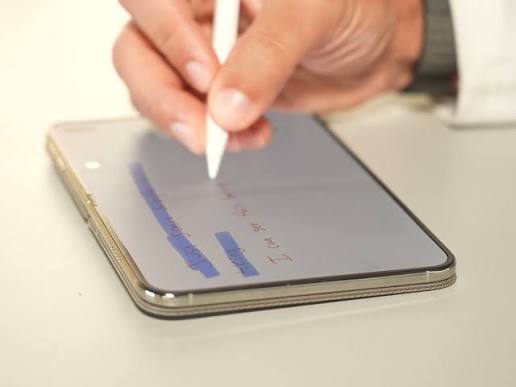
The iPhone Duo has moved a step closer to tablet territory. On October 26 local time, Apple released the final build of iOS 27.2, turning a commitment it had set for later in 2026 into something users can actually switch on: Apple Pencil compatibility for the foldable handset, together with a new Edge Light capability built for video calling. Siri, the Photos app, FaceTime, Apple TV, Apple Podcasts, Apple Music and several other system apps are adjusted in the same release, which ships alongside matching updates for macOS, watchOS, visionOS, tvOS and HomePod.
The headline item: a stylus for the folding screen
Apple had already said the foldable would gain a compatible stylus during 2026; with iOS 27.2 that promise is fulfilled. The enlarged interior canvas when the device is unfolded lets handwriting, sketching and finer pointer work happen through the pen, which is what pushes the iPhone Duo into small-tablet territory for certain tasks.
Two displays frame that experience: a 7.6-inch inner display and a 5.4-inch outer display. Because parts of the control interface were redesigned for iOS 27, the transition between folded and unfolded states is meant to feel more continuous. For anyone who writes by hand, the roomier inner panel simply gives notes, annotations and illustration more space to work in.
Two qualifications are worth keeping in view:
- The actual reach of Apple Pencil support depends on individual device support and on how far each application has been adapted.
- Adding a stylus does not mean iPad applications run directly on the iPhone Duo; developers still have to tune for the folding screen's aspect ratio, interaction model and system interface.
Edge Light turns the display edge into a fill light
The second hardware-level software trick is Edge Light, aimed at facial lighting during video calls. It produces illumination from the edge of the screen so a face reads brighter when the room is dark — a practical improvement for indoor, nighttime or mixed-lighting meetings.
Siri AI reaches into the Messages app — and five more languages
The release widens Siri's artificial-intelligence layer. After the update, Siri AI can surface suggested actions inside the Messages app, letting people act on the content of a conversation without leaving it. Apple is also broadening language coverage for these AI features, adding French, Japanese, Korean, Portuguese and Spanish.
Photos and Image Playground learn to read SynthID marks
The Photos app and Image Playground gain support for SynthID, the artificial-intelligence watermarking technology developed by Google. SynthID embeds detectable markers in AI-generated material, and the new detection capability can flag content carrying that mark. The limitation is explicit: the system is not able to identify every AI-generated image, only material produced with a compatible watermarking technique.
Media apps: profiles, a reworked queue, a new logo and two cameras
Around the entertainment apps, the changes are smaller but visible:
- Apple TV on the phone gains user profiles, so each person can manage their own viewing experience more separately.
- Apple Podcasts drops its previous "Up Next" queue in favour of two highlighted areas — "New Shows" and "Continue Listening" — making the latest episodes and unfinished ones easier to reach.
- Apple Music adopts a new application logo in this cycle.
- FaceTime group calls add dual-camera capture, showing the front-facing self-view and the rear-facing scene at the same time — useful when a speaker needs to be on screen while pointing a device at an object, a room or a piece of work.
The whole 27.2 cycle beyond the phone
Apple's software iteration did not stop at iOS 27.2; the same numbering carries across the rest of the portfolio.
| Platform | Release | Status in this cycle |
|---|---|---|
| macOS | macOS 27.2 Golden Gate | Released with the iOS 27.2 news |
| watchOS | watchOS 27.2 | Released with the iOS 27.2 news |
| visionOS | visionOS 27.2 | Released with the iOS 27.2 news |
| tvOS | tvOS 27.2 | Released with the iOS 27.2 news |
| HomePod | HomePod 27.2 update | Released with the iOS 27.2 news |
Where this leaves the foldable
Read together, the release is both an ordinary feature drop and another brick in the foundation Apple is laying under the iPhone Duo: stylus support widens the handwriting and creative potential of the hardware, while Edge Light answers a routine, everyday complaint about video calls. Whether the large folding display finally earns its keep still comes down to three things outside the update itself — how fast applications are adapted, how coherent the interaction design becomes, and how consistently developers follow up with targeted optimisation.