
ItInsightsWorld General: Intel Shares Plunge 23.43% in Thursday After-Hours on Weak Fourth-Quarter Sales View
Intel shares were sold aggressively in Thursday after-hours trading, plunging 23.43%, after the chipmaker tied a softer fourth-quarter sales outlook to a longer period of weakness in the PC market. The company forecasts fourth-quarter revenue of $15 billion to $16 billion, below the $17 billion average from Bloomberg-compiled analyst estimates and below some forecasts of more than $18 billion. For adjusted earnings per share, Intel pointed to 25 cents, versus the Wall Street expectation of 43 cents.
Reaction and Guidance Snapshot
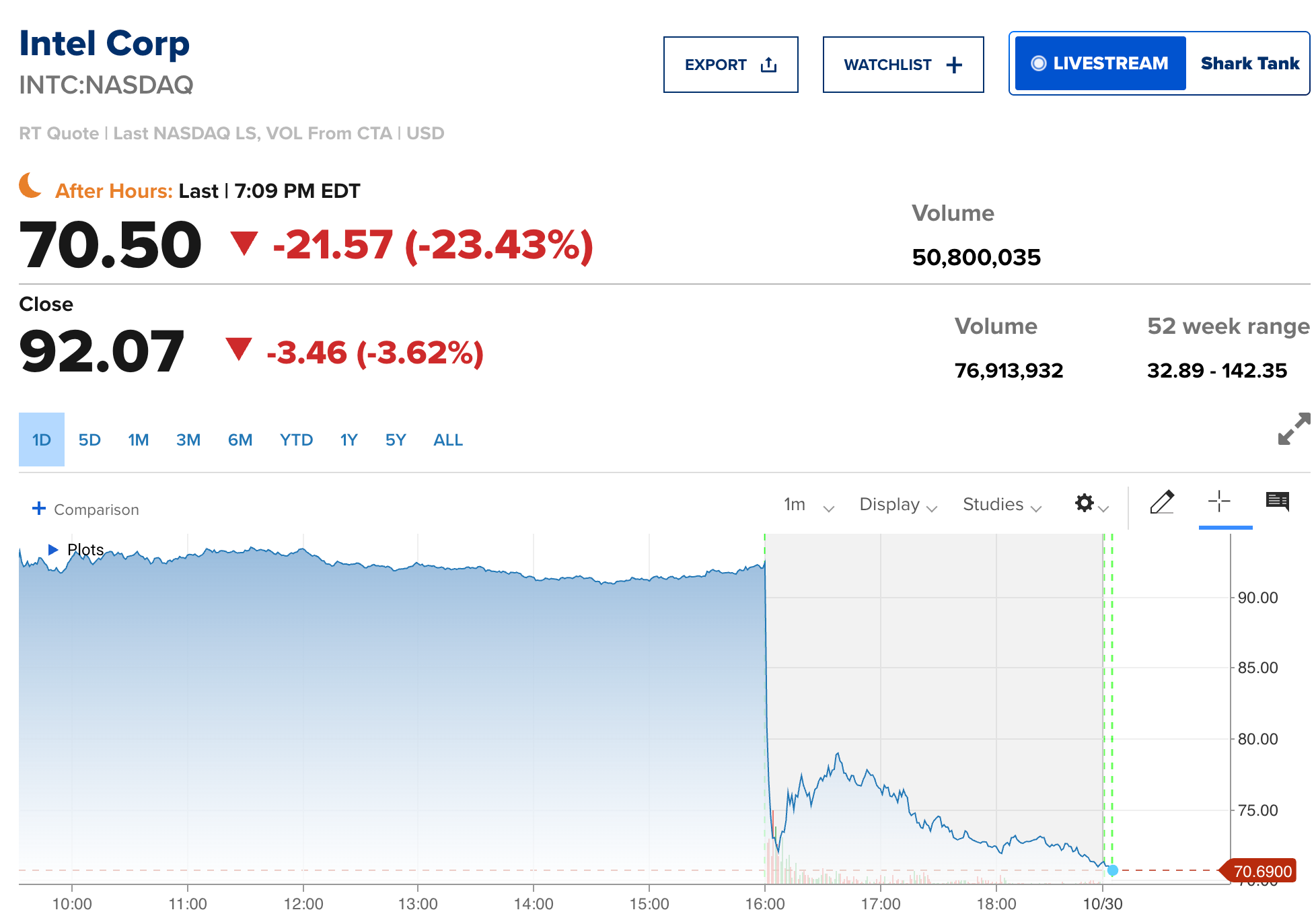
Rewritten caption: The market reaction intensified after regular trading, with Intel shares down 3.6% by the Thursday close and then falling 23.43% in Thursday after-hours trading.
| Guidance item | Intel estimate | Consensus or contrast point |
|---|---|---|
| Fourth-quarter revenue | $15 billion to $16 billion | $17 billion Bloomberg average; some forecasts above $18 billion |
| Fourth-quarter adjusted EPS | 25 cents | 43 cents Wall Street expectation |
| Thursday share move | Down 3.6% at close | Down 23.43% in after-hours |
PC Weakness, Memory Costs, and Supply Constraints
Laptop and desktop makers remain a major customer base for Intel, but memory chip shortages and soaring component prices are squeezing demand and PC shipments. Chief Executive Officer Lip-Bu Tan said the data-center segment would have performed better if it were not for shortages of some raw materials and a production halt at a factory in Israel. The company has said the fatal explosion at the Israeli plant will lead to about $600 million in lost revenue within two quarters.
In a conference call, Tan said: “I am somewhat disappointed because we did not meet strong customer demand this quarter. We face short-term challenges, including manufacturing supply shortages, unprecedented memory chip tightness, and the resulting weak PC demand.”
On the PC market, Tan added: “One of the main challenges is essentially memory chips. Memory prices have risen sharply. I expect that, by 2027, this will become a very severe problem for all of us. We are not the only company affected; the whole market has been hit.”
Downtime Duration and Long-Term Capacity Plan
Intel expects the PC downturn to last at least until the first half of 2027. It said the PC market will decline by 10% next year after a 12% drop this year. Despite the near-term pressure, the company remains optimistic about long-term demand for its products and is increasing investment in new equipment to raise capacity. Tan said Intel has growing confidence that it can attract orders from other chipmakers to use Intel factories to produce chips for those companies.