
ItInsightsWorld General Briefing: Intel Adds Classiq to Close the Missing Layer of Its Quantum Stack
A research effort is being converted into a product line. Intel has spent more than a decade assembling quantum components — silicon spin-qubit chips, control electronics and software — and its proposed purchase of Classiq reads as the attempt to attach paying customers to that inventory. Intel CTO Pushkar Ranade put the gap plainly on a media call: “We haven’t really done much by way of customer engagement or trying to commercialize our technology,” he said, adding, “We believe we have most of the elements of the quantum computing stack except for the very top platform layer,” which is exactly the layer the acquired company supplies. The ItInsightsWorld briefing below separates the transaction into its moving parts: what the platform layer contributes, how the two software stacks connect, why silicon spin qubits anchor the hardware plan, and whether a hardware owner can operate a neutral toolchain.
What the platform layer contributes
Classiq builds tools that enable users to design quantum algorithms and execute them on a range of hardware. Acquiring that capability lifts Intel to the upper platform layer of the quantum stack and gives the company access to enterprises preparing for commercially valuable quantum workloads.
Subject to regulatory approvals, Intel expects the deal to be completed in the first half of 2027. No purchase price was disclosed.
In Ranade’s account, the purchase stretches Intel’s offering from quantum chips and control electronics into the software used for application development, while also reshaping how the company positions its quantum work externally.
“This is not going to be a high-margin business from day one,” he said. “This is really a bet on the future.”
That bet depends on two variables: scaling Intel’s spin-qubit technology, and serving an industry in which several competing approaches are still pursued in parallel. Intel has stated that Classiq’s support for other quantum hardware platforms would be maintained.
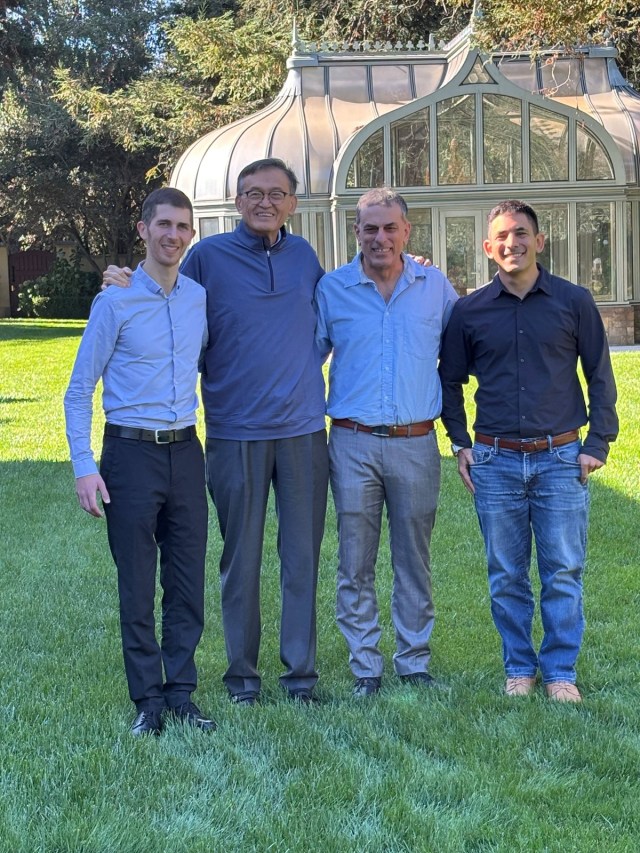 Left to right: Nir Minerbi, co-founder and CEO of Classiq; Lip-Bu Tan, CEO of Intel; Yehuda Naveh, co-founder and CTO of Classiq; Amir Naveh, co-founder and CPO of Classiq (Source: Intel Corporation)
From gate-level hand work to abstraction
Classiq began from a premise articulated by co-founder and CEO Nir Minerbi: software would become the limiting factor as quantum hardware progressed.
Quantum programming in the early days was mostly performed at the gate level, something Minerbi likened to designing a chip transistor by transistor. The company instead pursued a higher level of abstraction, letting developers specify what a quantum program should do while its software builds the circuit.
“We embraced many of the technologies that allowed scaling up in classical computing, like EDA technologies, modeling, synthesis, compilation,” Minerbi said on the media call.
That model, Minerbi said, has helped companies, universities and government organizations assemble quantum teams without turning every participant into an expert in quantum computing: industry specialists bring knowledge of their own problems while collaborating with people who understand quantum algorithms.
He listed BMW, Lufthansa, Comcast, Wells Fargo and Merck as Classiq users. These organizations are building teams, creating intellectual property and developing applications in anticipation of more capable quantum hardware.
“All of them are preparing for the day when commercial value could be extracted from this hardware,” he said.
A distinction is worth holding onto: the software can be used today to explore and prepare applications, but Minerbi’s remarks do not indicate that those applications already deliver a commercial advantage on Intel quantum processors.
 Izhar Medalsy
Where the two software stacks meet
Intel’s existing software layer sits beneath Classiq’s platform. Anne Matsuura, Intel’s senior director of quantum software and system architecture, described the handoff: Classiq produces algorithmic quantum circuits, which then pass into Intel’s hybrid quantum-classical compiler and runtime.
“Our compiler deals with both the quantum and classical parts of a quantum program, and it separates them and optimizes them separately,” Matsuura said on the media call.
Matsuura further clarified that Classiq’s algorithmic circuits differ from the physical circuits and wiring inside a quantum computer, with the software operating several layers above the hardware. That split mirrors a wider challenge in quantum computing: linking an end user’s problem to hardware whose characteristics vary across systems.
Izhar Medalsy, co-founder and CEO of quantum software startup Quantum Elements, views the two firms as supplying complementary capabilities — Classiq concentrating on translating end-user problems into quantum circuits, while hardware providers handle the characteristics of their own systems.
“Classiq has done a strong job of understanding enterprise needs,” Medalsy told EE Times. “The acquisition is a signal that Intel wants to engage more directly with end users and their applications.”
Quantum Elements works closer to the hardware, using digital representations of quantum processors to help build software for different systems; Medalsy described its work and Classiq’s as complementary.
Silicon spin qubits and the factory argument
Intel selected silicon spin qubits as the foundation of its own quantum hardware. Compared with some competing approaches, spin qubits can be fabricated using processes related to semiconductor manufacturing, which could be advantageous for a company with Intel’s fabrication experience.
Ranade said Intel produces qubit chips and control electronics at its fab in Hillsboro, Oregon, and that the company labels the two processes as follows.
| Process label | What comes out of it | Letter meaning |
|---|---|---|
| 18AQ | Qubit chips | Q stands for quantum |
| 18AC | Control electronics | C stands for cryogenic |
The qubit process uses interconnect geometry and design rules based on Intel’s 18A technology, Ranade said, but the process for making the qubit device itself is distinct and needs some specialized equipment. He said more than 90% of the process equipment is the same.
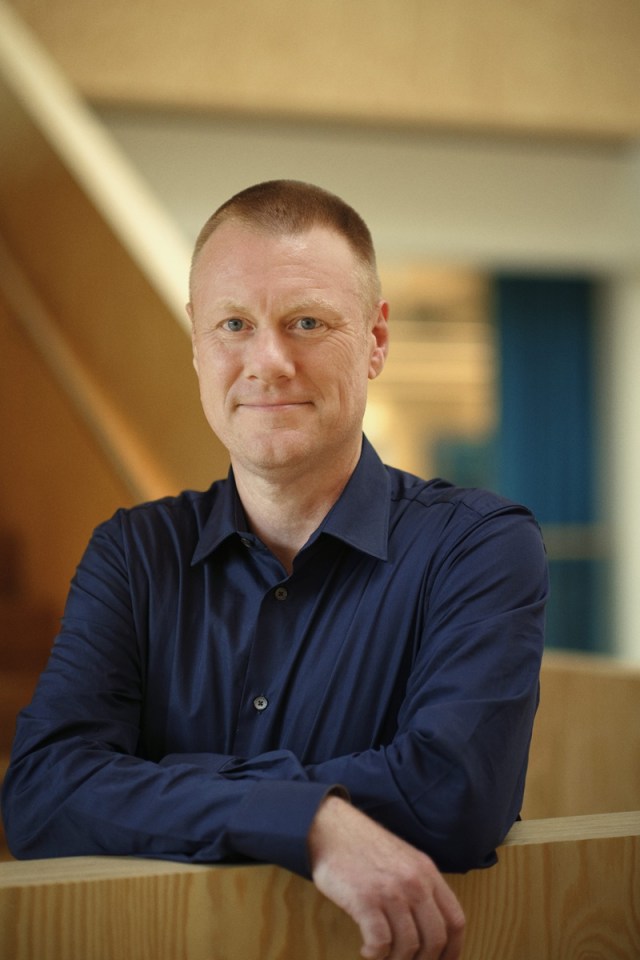 Owen Lozman
An investor’s read on strengths and limits
Owen Lozman, managing partner of the Copenhagen-based quantum investment fund 55 North, regards Intel’s semiconductor manufacturing and packaging capabilities as strengths, and notes the company’s demonstrated ability to run development and testing cycles quickly. Even with those advantages, Intel still faces challenges in scaling spin qubits into a useful quantum computer.
“There are a lot of engineering challenges to overcome, even if you get the physics right,” Lozman told EE Times.
Those challenges include achieving uniformity across spin qubits and managing the wiring and control signals required as systems expand. Lozman’s fund has invested in Groove, another company developing spin-qubit technology; he said 55 North does not hold a position in Classiq.
As hardware development continues, Lozman sees value in providing developers with software to prepare applications and understand the resources their algorithms will require. The acquisition, in his view, gives Intel an experienced team working on a software layer it did not previously own.
“I think you have to kind of move early,” he said. “I think they get an early mover advantage.”
Can a hardware owner run a neutral toolchain?
Intel’s commitment to spin qubits gives its own hardware a clear direction. Classiq, by contrast, has built a platform designed to work across a broader field, where companies pursue different approaches and the eventual leaders are not yet clear. The question this raises for the acquirer is whether it can use Classiq to strengthen its own quantum offering while preserving the confidence of customers and hardware providers that rely on cross-platform software.
For Medalsy, independence matters. His company also works with multiple hardware partners, and he said customers pay close attention to whether a software provider is tied to a particular system. “I think keeping yourself independent and not coupled to any specific hardware provider is extremely important,” he said.
Intel’s stated position covers several commitments:
- Continue supporting Classiq’s existing integrations.
- Maintain a hardware-agnostic platform.
- Remain open to providing foundry services, photonics and advanced packaging to companies pursuing other modalities.
Medalsy believes the company will still have to manage concerns that come with changing ownership. “Time will tell if the industry will accept that as a neutral play or maybe more of a fully integrated approach,” he said.
When asked what commitments or safeguards would preserve partners’ confidence, Minerbi said the response so far had been positive. He argued that hardware vendors need access to end users and that Classiq can help provide it; during the call, he did not identify specific safeguards.
Ranade repeated that Intel’s own qubit development will remain focused on spin qubits, while the platform stays open.
“We are completely agnostic to the modality” when it comes to the Classiq platform, he said. “Our intent is to have Classiq continue to support all modalities.”
Minerbi argued that the combination could let Intel reach other hardware providers as well as end users. Such relationships could create customers for Intel’s manufacturing capabilities while widening the reach of Classiq’s software.
Lozman believes Intel has good reasons to preserve that breadth. Supporting other platforms can give the company visibility across the ecosystem, he said, while helping it recover the value of its investment. He added that Intel will need to manage those relationships carefully, balancing the advantage of ownership against the value of a platform used by others.
“It’s not easy,” Lozman said. “It will take a lot of discipline.”
Intel spin qubit wafer (Source: Intel)
Read as a whole, the transaction tells the market three things: Intel identified a missing layer and priced its absence by buying it, it has set a window in the first half of 2027 for the deal to clear review, and it has committed publicly to openness it will now be tested against. For anyone tracking the quantum sector, the most informative signal in the coming months will not be the hardware roadmap but whether competing machine makers keep treating the acquired platform as shared ground.